August 21, 2024 at 7:37 am ET: Story updated with updated remarks from Dan Hermansen, MyDefence CEO
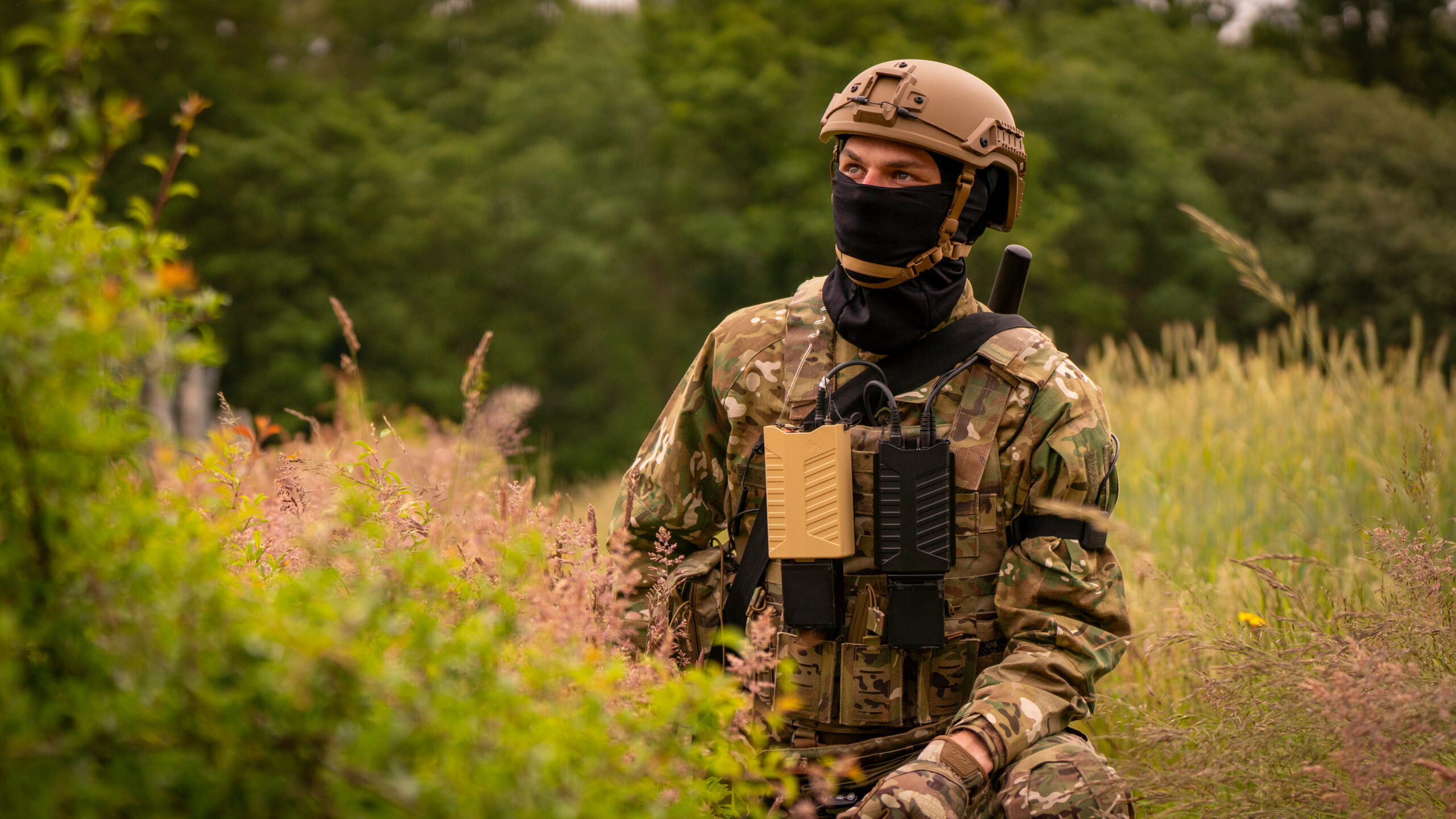
BELFAST — The NATO Support and Procurement Agency (NSPA) has formally activated a three-year framework agreement with Danish radio frequency drone detection company MyDefence that provides alliance members with the opportunity to acquire the firm’s Wingman drone detection solution.
The technology is designed to protect allies against small unmanned aerial systems (sUAS) attacks and could plug capability gaps in the wake of an unprecedented proliferation of drones in international conflicts.
NATO originally approved the small counter-UAS contract in April, a first of its kind for the alliance, but an NSPA spokesperson confirmed to Breaking Defense today that “the activation of the procurement agreement,” went ahead on Monday.
The contract was awarded via Cobbs Belux BV, a Belgian distributor of defense equipment, enabling it to offer both the Wingman product and DroneShield’s Dronegun Mk4 to NATO nations.
In a Monday statement, MyDefence said that the agreement “marks a historic milestone in military procurement and enhances NATO’s operational readiness.”

Localizing tactical communications for sovereign, NATO-ready C3I
Beyond foreign sales, Rafael’s model enables tech transfer, local engineering, and is a template for NATO partners.
Company CEO, Dan Hermansen, added, “Our life-saving technology is now positioned to play a crucial role in providing NATO forces with comprehensive protective solutions against unmanned aerial systems. This collaborative approach highlights our commitment to enhancing the safety and effectiveness of NATO operations and the common goal of providing NATO forces with comprehensive protective solutions against unmanned aerial systems.”
Addressing the growth of drone technology in Ukraine, MyDefence suggested that based on a 2023 report “cited by Russia state media” 3,500 First Person View (FPV) operators have been trained by the Russian Ministry of Defence, while Moscow is also “believed to produce tens of thousands of FPV drones per month.”
It is impossible to verify those figures, though Russian Minister of Defence Andrei Belousov also claimed in July that the country is producing around 4,000 FPV aircraft per day.
Various reports have said that Ukraine could hit a target of domestically producing two million drones by the end of 2024.
The rise of, and the operational effectiveness of small drones, especially when attacking more expensive enemy equipment has led to increasing demand for C-UAS solutions.
Ukraine has benefitted from an array of these sorts of systems, supplied by military aid partners including “thousands” of SkyWiper Electronic Drone Mitigation 4 system and SkyWiper Omni, delivered by Lithuania, according to an Unmanned Airspace report.
At a NATO level, the alliance said that results of a large scale counter drone technology exercise held last year in the Netherlands, featuring 15 allies, would help it to “identify optimal C-UAS architectures, common requirements, and technical interoperability standards to adopt going forward in support to the air security of Allied and Partner Nations.”
Breaking Defense Video