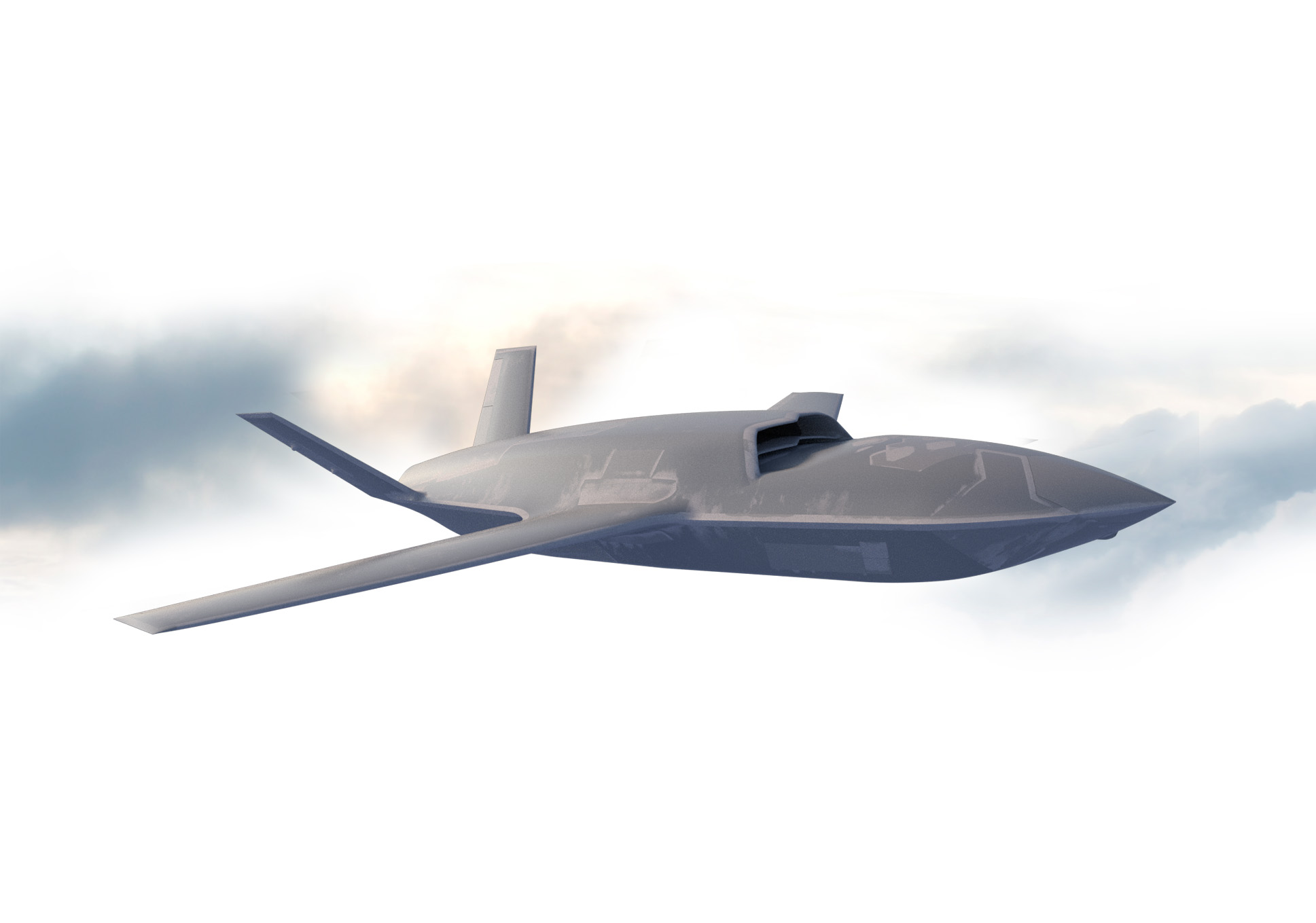
Tough new threats to the U.S. Air Force and its allies mean air combat must evolve.
Prospective adversaries are fielding more capable combat aircraft than ever and are also building more of them. Air superiority will remain central to national power, but the old American orthodoxy around it can’t keep up.
Human-flown fighters are essential, but they’re also expensive and time-consuming to design and produce. Complicating the challenge is the need to recruit, train, and retain human pilots.
Today, current-model fighter production in the United States is all but maxed out. Even a miraculous rain shower of new money—which isn’t in anybody’s forecast—could not build many more aircraft quickly or add many more pilots to result in a substantially larger fighter force soon.
As for future-model fighter production, the defense establishment has balked at the cost, complexity, time, and even basic philosophy associated with a new platform. All this means that it’ll be years before the Air Force, the joint force, and international allies can field an exquisite new “sixth-generation” fighter.
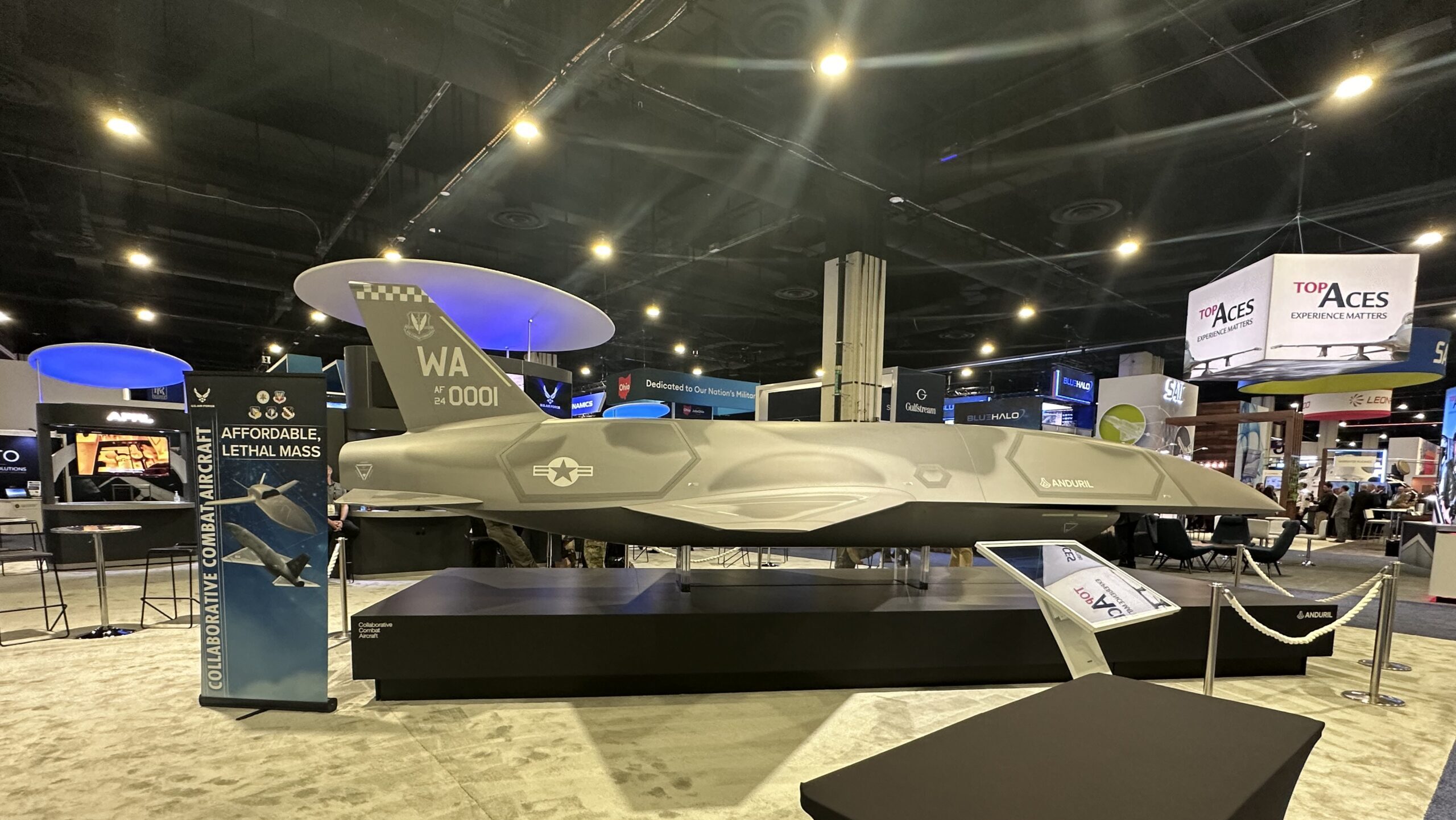
Daunting as these challenges are, the good news is that the Air Force and its partners have an answer: the Collaborative Combat Aircraft, or CCA.
The new school of air superiority
These highly capable autonomous jets fly alongside, or far ahead, of traditional combat aircraft formations. They sense, communicate, and act just like traditional warplanes, but also in some ways that no previous class of aircraft could. Following months of test and evaluation, it’s clear that the strongest contender to become the U.S. and international CCA is the model offered by General Atomics Aeronautical Systems, Inc.
CCAs solve several problems at once. Because they’re smaller and don’t need onboard accommodations for a crew, they’re much less expensive per copy than a fighter. This—and the freedom from having to match every aircraft with at least one pilot—also means they can be put into large-scale production quickly. Large numbers of CCAs then can give “mass,” as military planners call it, to the U.S. and allied air forces—sheer numbers of aircraft that can outmatch hostile forces.
This means the friendly aircraft sent to make first contact with hostile ones can be unmanned, keeping precious human pilots back from danger. It means air component commanders can take on more risk with those aircraft and those engagements. And it means that, in the event of a conflict, the U.S. Air Force and its allies and partners can quickly replace units lost to attrition—something that cannot be said about traditional fighters and certainly human pilots.
The task now before the Defense Department, military services, and international allies is what specific Collaborative Combat Aircraft to produce. GA-ASI’s proven status as the leader in uncrewed aircraft makes it the obvious answer.
Experience matters
Having spent more than 30 years inventing, testing, proving, and operating unmanned systems, no one has more experience. The company has delivered more than 1,100 aircraft and built a fleet for U.S. and international users that has recorded more than 8 million flight hours, many of them in combat.
Autonomous combat jets have been a big part of that experience. The company’s MQ-20 Avenger® has been operating since 2009 and contributed heavily toward Air Force and other programs that support operationalizing combat aircraft autonomy.
GA-ASI has logged more than 37,000 hours of jet flights of every kind, including detailed air combat simulations, and the company has more than 1,000 software engineers dedicated to further refining the artificial intelligence, machine learning, and other systems that make these aircraft work.
Most recently, the Air Force Research Laboratory commissioned GA-ASI to build the XQ-67A Off-Board Sensing Station, an unmanned jet that proves out many of the key concepts for new-generation aircraft. XQ-67A validates that an aircraft can be built from a highly producible common core, which enables not only high rates of production but great variation in models.
Think of the core like the base model of a vehicle used in automotive production. Factory workers build a steel cage, common chassis, and other components, and can then turn that into a family car or a luxury sedan, depending on customer orders. This lowers unit costs, speeds production, and provides greater choice for buyers.
No other aerospace and defense manufacturer is poised to deliver a CCA as capable as the one built by General Atomics, or one as economical, producible, and flexible.
This is important because the builder for this program must be able to deliver a high-performing aircraft at scale on time and on budget. Only a well-established manufacturer with deep expertise and active production could do so. GA-ASI is already ahead of its time.
Another thing the Air Force must guard against are calls to turn CCA into an ever-fancier, ever-whizzier, ever-more-expensive boutique aircraft. Some in the aerospace world likely feel this type of platform gives them the advantage, but the risks are so great that it would put the Air Force right back where it started: not with agile mass for air combat but with a handful of silver bullets too precious to actually use—and unable to even the odds against prospective adversaries.
When the city police department needs a new fleet of patrol cars, it doesn’t buy Lamborghinis. The virtue of CCA is that it can be good enough to get the job done for U.S. and international military forces, but also be practical and cost competitive.
General Atomics Aeronautical Systems, Inc., offers all that and is ready now to start delivering this new wave of aircraft, which will rewrite the rules of airpower.
PHOTOS: AFA 2024

 Gallery