WASHINGTON — Defense engineering firm ARA and teammate Boeing have been selected by the US Air Force to prototype a new, air-dropped bunker buster bomb that could eventually succeed the weapon used to strike Iranian nuclear facilities in June, the companies recently announced.
Under the two-year contract with an undisclosed value awarded by the Air Force Life Cycle Management Center (AFLCMC), ARA will design the bomb itself and Boeing will craft the weapon’s tail kit, according to a Sept. 5 press release from ARA. Boeing will also assist with integration efforts.
“We are honored to continue supporting AFLCMC with innovative solutions that advance their mission. The ARA-Boeing Team has unique expertise, and this award emphasizes the trust that [the AFLCMC Armament Directorate] places in ARA’s proven capabilities and long-standing commitment to excellence,” ARA CEO Rob Sues said in the company’s release.
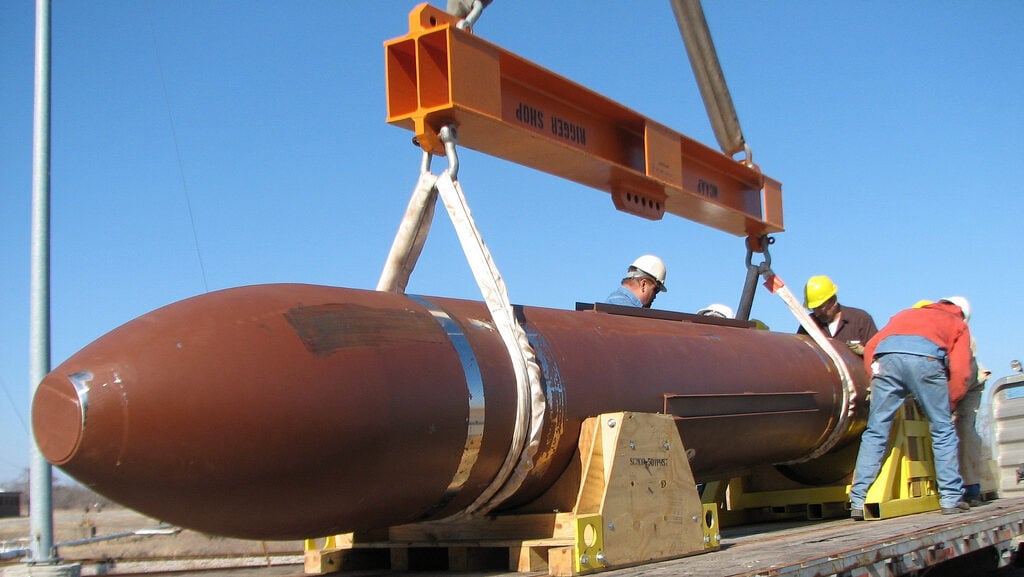
The new bunker buster, known as the Next Generation Penetrator, is the planned successor of the GBU-57 Massive Ordnance Penetrator (MOP), which is manufactured by Boeing. The ARA-led team will produce both subscale and full-scale prototypes, according to ARA’s release, with the goal of “evaluat[ing] capabilities against hard and deeply buried targets that pose critical challenges to U.S. national security.”
The MOP was used in combat for the first time to strike Iran’s nuclear facilities on June 21, targets that US officials said were in mind when the weapon was developed. The bombing, known as Operation Midnight Hammer, saw the US drop a total of 14 MOPs between two locations — Fordo and Natanz — and hit surface targets at a third in Isfahan. Administration officials have claimed the sites were all “obliterated,” but leaked government assessments have reportedly concluded that while the Fordo site suffered severe damage, Isfahan and Natanz may be able to recover relatively quickly.
Air Force industry surveys have stated a desire for a warhead weighing no more than 22,000 lbs. that is capable of blast, frag and penetration effects, with a goal of delivering 10 subscale and three to five full-scale warheads within 18 to 24 months of contract award. The MOP can currently only be carried by the B-2 Spirit stealth bomber and is expected to be integrated with the forthcoming B-21 Raider. It’s not clear what aircraft may be capable of carrying the Next Generation Penetrator.
The Air Force is requesting roughly $73.7 million for the next-gen bunker buster in fiscal 2026, and plans to wrap up prototype demonstration by the end of FY27, budget documents say.
Breaking Defense Video