WASHINGTON — The Army has set out on a pilot effort to bestow authorizing authority for cyber terrain to corps commanders, according to the service’s chief information officer.
Previously, much of this terrain and the capabilities were centrally managed, but that is not how the Army typically fights with physical platforms, where commanders control and own all the risk of their assets. Now, the service is trying to afford commanders the right level of risk to fight their fight.
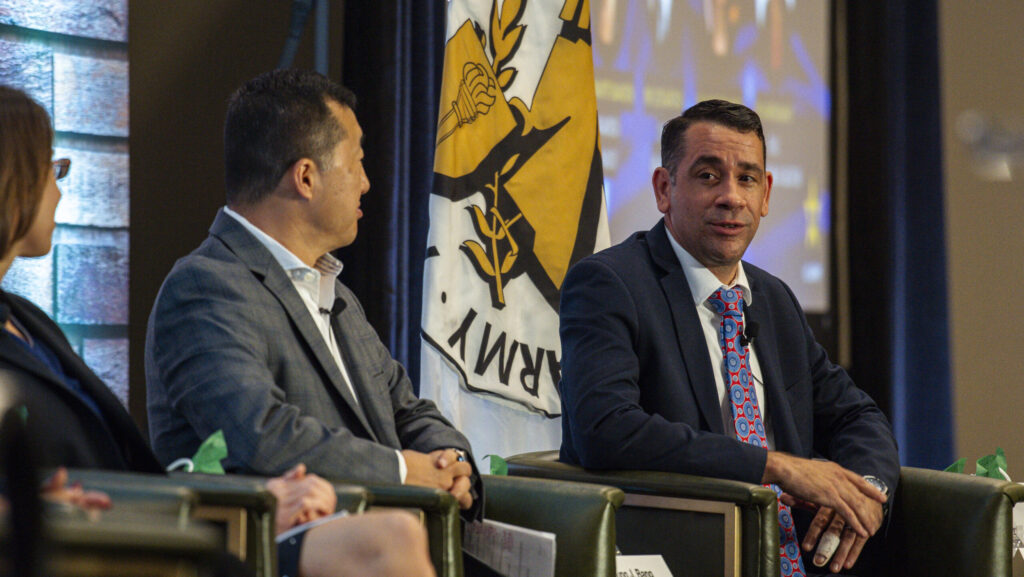
“For the first time ever in the Army, we actually push those authorizing official authorities down to a corps commander to make sure that they can manage their cyber terrain and fight their cyber terrain versus having some headquarters element who’s disconnected from that fight doing it,” Army CIO Leonel Garciga said during a webinar hosted by Federal News Network Thursday. “It’s a reimagining of how we do that work and really letting commanders have that decision space to make some of those decisions on the cyber terrain that they manage on behalf of the nation … that’s a real operational next level of how we’re going to get those authorities in the right place in the fight.”
A pilot with XVIII Airborne Corps has been going on for the past three months with I Corps slated next. Garciga said they are working with the Army G6 to receive implementation guidance and taking lessons to drive that guidance to accelerate efforts.
In the past, a corps commander would often have to go back to a program executive office to receive permission to do something on network equipment they were issued or go back to the Department of the Army for permission just to operate or move that equipment from garrison to theater.
The Army is trying to change that paradigm given a commander owns the responsibility for how to get connected and its cybersecurity posture.
“We really pushed out on reimagining what a corps commander could do and having this thought that corps commanders are issued cyber kit, we want them to be able to maneuver that,” Garciga said. “That delegation was really about just putting the risk in the right place for the right risk decision maker. It made a lot of folks uncomfortable and some folks are still uncomfortable, but it’s really about how we’re going to fight and how we’re going to fight in the future.”


Voyager is accelerating access to space
After manifesting 1,400 payloads aboard the ISS, Voyager is applying its mission management expertise to the next generation of space stations, ensuring uninterrupted mission readiness and success from the ground to space.
Garciga explained that for some things that might have a critical vulnerability, units will still have to come back to headquarters. Ultimately, it comes down to giving that commander greater flexibility — “within reason.”
“There’s flexibility, but within reason. I think they’re still going to fall under the same umbrella that most of our authorizing officials fall, but instead of having to reach back to some program office or have to reach back to another command or an ASCC [Army Service Component Command], they’re going to have that capability organic,” he said. “The big thing is making sure that they’re manned, trained and equipped to support that requirement and take on those risks and put that overhead that was done somewhere else, back on to commanders.”