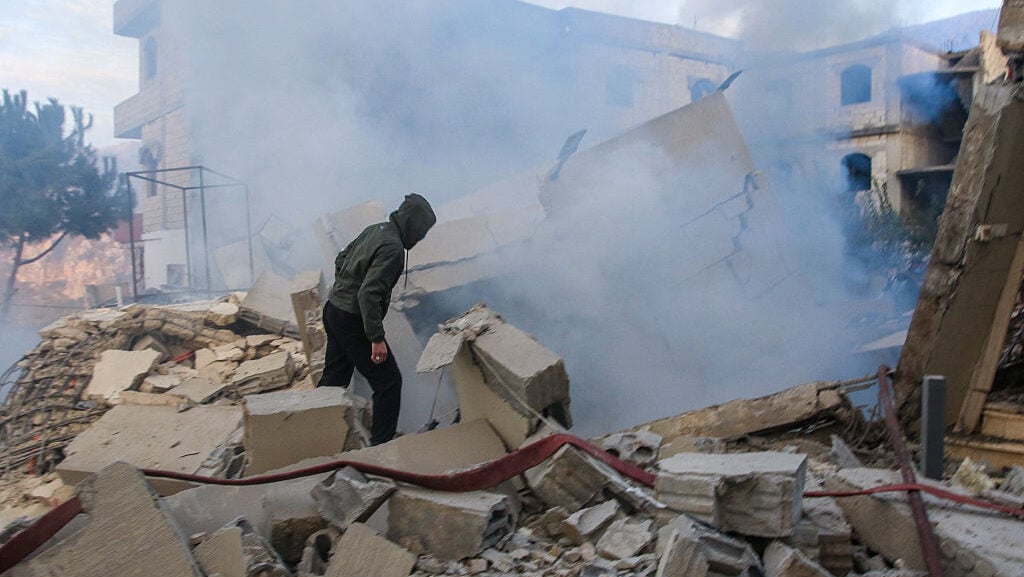
BEIRUT — In recent days some hope for longterm peace in Lebanon was raised following a high-profile visit by the Pope and historic face-to-face talks with the Israelis. But multiple experts held to a dimmer view, telling Breaking Defense that as long as Israel believes the Lebanese government isn’t doing enough to disarm Hezbollah, Jerusalem will likely escalate hostilities in the coming months.
“I definitely think there’s a rising concern of any conflict escalation. It’s one way. It’s Israel escalating more in Lebanon,” Middle East Institute Senior Fellow Paul Salem told Breaking Defense. “The reason being clear [is] that although Lebanon is disarming Hezbollah, [it is] not completed yet.”
It’s been just over a year since Lebanon and Israel agreed to a US-brokered ceasefire, in which Israel said it would withdraw from Lebanese territory and the Lebanese government said it would “prevent” Hezbollah from “carrying out any operations against Israel.” But in the year since some Israeli forces remained in Lebanese territory, the Lebanese government has not fully disarmed a defiant Hezbollah and Jerusalem continues to strike purported Hezbollah targets in Lebanon, including in the capital of Beirut.
“We expect the Lebanese government to uphold its commitments, namely, to disarm Hezbollah,” Israeli Prime Minister Benjamin Netanyahu said in early November. “We won’t let Lebanon become a renewed front against us, and we’ll do what’s necessary.”
Among Israel’s allegations, Salem said, is that Hezbollah is “reorganizing and is able to get some weapons through, and that there are some weapons in private houses that [the Lebanese] army is not checking. The bigger picture is that Lebanon is doing this [disarming Hezbollah] in a phased approach, which might take two years or three years, and Israel, possibly backed by the US, wants it done much quicker, right away.”
The analysts said that’s what could prompt Israel to escalate military actions in Lebanon — even if they didn’t agree on exactly what Israel would do.
“I expect an escalation of Israeli strikes. First [because] Israel is always threatening. Second, Hezbollah claims to have regained its deterrent power. And third, it [Lebanese government] has not fully implemented Resolution 1701,” retired Lebanese armed forces general Wehbe Katicha told Breaking Defense, referring to a 2006 Israel-Hezbollah peace agreement.


Keeping sensitive information safe in a new AI era
Why edge and endpoint security can’t be an afterthought.
Dina Arakji, an analyst at the global risk consultancy Control Risks, said that even if a “high degree of disarmament occurs south of the Litani River [in southern Lebanon], Israel will continue to target Hezbollah in eastern Lebanon and strike any rearmament attempts.
“Ultimately, disarmament will remain a political issue rather than one resolved solely through LAF [Lebanese Armed Forces] operations,” said Arakji, also a non-resident fellow at MEI.
As such Arakji said additional strikes are likely and that a “limited ground operations” in southern Lebanon was a “possibility.”
“Israel’s core objectives remain to degrade Hezbollah’s military capability and obstruct its efforts to regroup or replenish its arsenal,” Arakji said.
Salem said he expected “much larger” strikes against Hezbollah targets, though he said it was unlikely Israel would go after Lebanese Armed Forces targets. The strikes may include “more areas of the Beqaa [Valley] and positions in Syria that maybe they [Israel] still think Hezbollah is smuggling from.”
Katicha, who also said another ground invasion is possible, said the point is “no one knows the scale Israel will adopt in this escalation.”
He said that as long as residents of northern Israel do not believe they can return back to their villages out of fear for their safety, “the war will continue.”