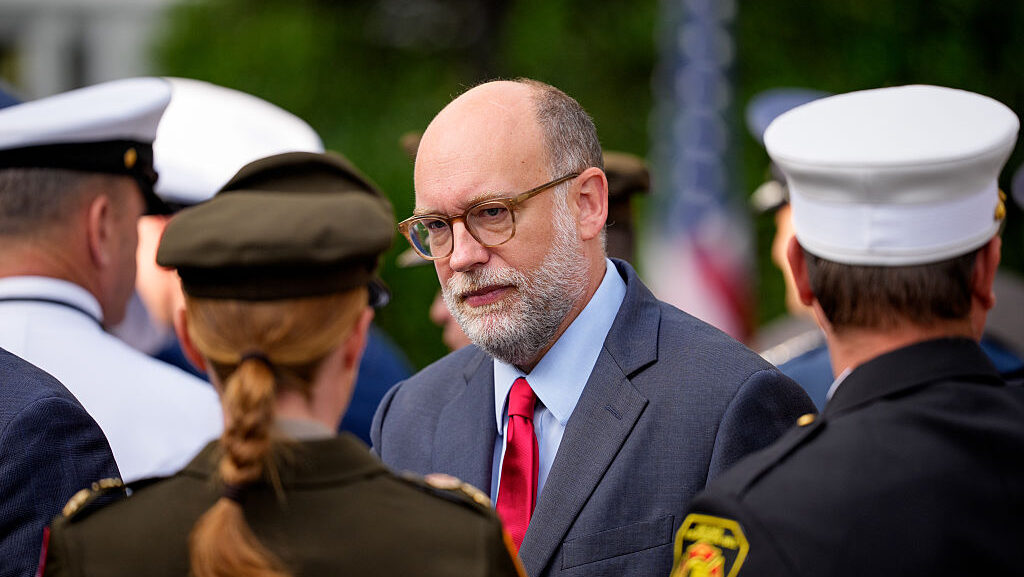
RNDF 2025 — The director of the Office of Management and Budget defended the Trump administration’s use of the budget reconciliation process to boost defense funds without also giving money to Democrat priorities, and left open the door to using the mechanism again in the future.
“Have we made another decision yet on another reconciliation bill? No we have not,” Russell Vought said during a fireside chat at the Reagan National Defense Forum today.
Vought characterized the use of reconciliation, which added $150 billion in mandatory defense spending, as a “paradigm shift” and “major success” that can unlock funds for Trump’s defense priorities like shipbuilding, Golden Dome and nuclear modernization without needing votes from Democrats — which often involves matching defense funding with additional money for education, healthcare or other Democrat-led priorities.
Over the past year, Vought’s gambit on reconciliation has garnered criticism from Democrats and even some Republicans, such as Sen. Mitch McConnell, the chairman of the Senate Appropriations defense subcommittee, who contend that one-time boosts through reconciliation bills is not a substitute for dependable, yearly budget increases.
Vought said today he wanted to “send that clear message that from a resource perspective, the resources will be there” for defense spending priorities. But he did not elaborate on how much Defense Department’s budget request would grow in fiscal 2027.
“We will make sure that we continue to grow, there will not be a hole there,” he said.
Meanwhile, during his keynote speech today, Defense Secretary Pete Hegseth surmised that defense spending could exceed the 3 percent GDP mark where it is today.
“I don’t want to get in front of the president and his desire to properly shape what the budget should look like, but just reading the tea leaves … I believe it will be going up,” Hegseth told the audience at Reagan.
In practical terms, that means the annual defense budget could exceed $1 trillion, although Hegseth did not say whether reconciliation funds would be used to get to that total. (The FY26 budget request relies on reconciliation to meet the $1 trillion total touted by Vought and other Trump administration officials.)
Rep. Don Bacon, R-Neb., who leads the House Armed Services Committee’s cybersecurity and IT subcommittee, was even more bullish, stating that the Pentagon needs a budget equivalent to at least 4 percent of GDP — creeping up on the 5 percent pledge the Trump administration pushed for other NATO members.
“Right now, I’m getting mixed signals from the administration. Are we going to sustain the spending? Are we going to drop back down to what we had last year before we did the $150 billion plus-up?” he asked. “We showed commitment this year with $150 billion plus-up, and it’s what we need if we want to replace our ICBMs [intercontinental ballistic missiles], [buy] new bombers, if we want to have an air defense or missile defense for our country.”
Rep. Adam Smith, HASC’s top Democrat, told Breaking Defense he was skeptical about Vought’s pledge to “grow” defense spending.
“He’s in front of a defense crowd,” he said. “He’s not going to stand up in front of a defense crowd and say, ‘Suck it, people. You’re not getting the money you need.’”