WASHINGTON — Pentagon leadership has made “no decision” yet about a potential reorganization that would affect the future of US Africa Command, but a senior official warned that whatever happens, someone needs to keep a close eye on the continent.
“I do believe there needs to be some entity that spends every day looking at Africa,” a senior AFRICOM official told Breaking Defense, on the condition of anonymity. “It’s complex enough, it’s important enough. … [It] doesn’t actually demand a lot of resources but given the threats that are there, given the challenges that are there, and the opportunities, I do believe that we need some entity, some organization, that wakes up every day and focuses on Africa.”
In December The Washington Post reported the Defense Department was weighing a significant reorganization of the combatant commands that could see AFRICOM subsumed with US Central Command and US European Command under a new US International Command. Before that reports emerged that AFRICOM could be shifted under EUCOM.
“There’s no decision on that” potential reorganization, the senior AFRICOM official said Thursday, later adding, “I don’t know that AFRICOM is going to be merged, I don’t know that’s the case by any means.”
Asked about the potential moves, a Pentagon spokesperson told Breaking Defense Friday, “We have nothing to announce at this time.”
According to the official, the threat from terrorist groups in Africa is, if anything, increasing.
“We have done a great job putting pressure in Iraq, Afghanistan, Syria to push that threat out of the Middle East. It is now an African threat,’ the official said.

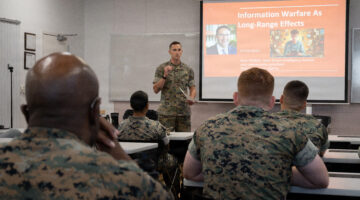
Winning the information war is as much about ideas and perception as it is about data
"Being able to tell the commander you don't need to do something is actually a pretty powerful message, as well."
“The [terrorist] affiliates now are connected more than they have been,” they said. “Five years ago, they were pretty isolated. Now, ISIS in the Golis Mountains in Somalia talks with Lake Chad Basin, talks with Sahel. They’re starting to integrate. … They’re becoming more cohesive,” they said.
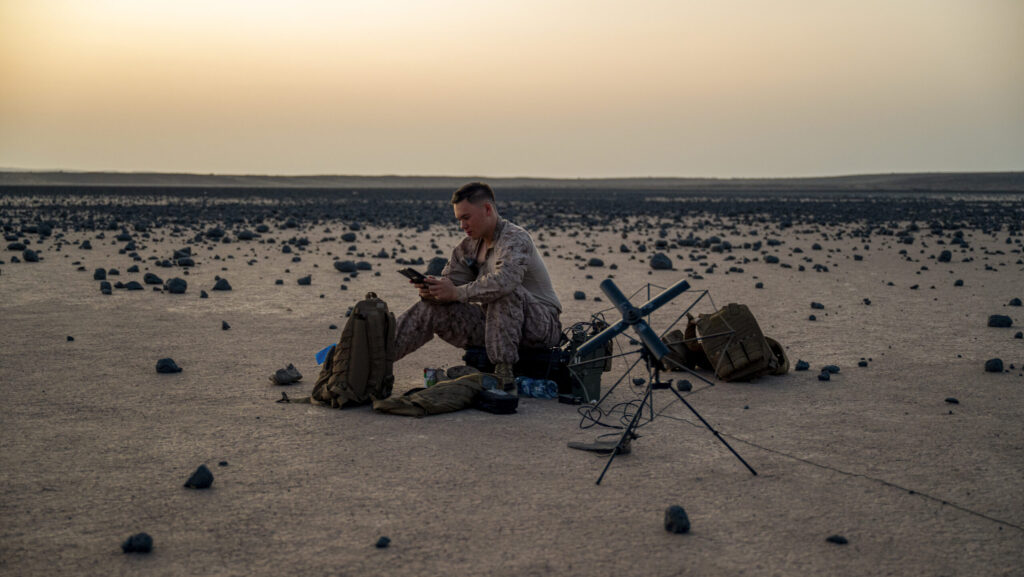
The US military is trying to keep an eye on the threats, but the official said it’s been unable so far to fully replace surveillance capabilities it had when US forces were based in Niger. The US pulled out of Niger in September 2024 following a coup there. Before that, American forces there used an array of intelligence, surveillance and reconnaissance capabilities including MQ-9 Reaper drones to target alleged terrorists throughout the region.
In the intervening 16 months, however, the Pentagon has not found a way to completely replace that lost capability beyond ramping up “constructive engagements” with countries like Nigeria, Morocco and Tunisia, the official said.
“We do have some ISR assets in West Africa, but we’re working to find a way to make that a little more persistent,” the official said.
Those arrangements vary, and can range from supporting schools training up new recruits to the December 2025 coordinated strikes on ISIS-linked militants inside Nigeria.
Although the senior AFRICOM official was reluctant to disclose which enhanced ISR options are currently under consideration, the official noted that they run the “entire spectrum” and the command is interested in putting some options to the test during exercises like African Lion and Flintlock.
“Those are two areas where I can say, ‘Hey, what’s emerging in Ukraine, what’s emerging as the character of war is changing? How do we bring that to our African partners, and then how do we bring that into other forms of sensing and understanding?’” the official added.
But AFRICOM’s quest to increase ISR assets in the region and incentivize new international partnerships comes at a time when the Trump administration has imposed tariffs on countries there while also cutting back on soft-power levers like humanitarian aid.
At the same time, the administration is reinforcing military efforts on the Western Hemisphere with the new National Security Strategy noting that the US should “remain wary of resurgent terrorist activity” in parts of Africa but without any long-term “presence or commitments.”
When asked if AFRICOM has lost resources thanks to the shift in focus closer to the homeland, the official said AFRICOM “has always been on a shoestring.”
“So I’m not sure there’s been a huge shift. … The AFRICOM budget has been declining,” the official said, lamenting the “steady decline in assets” that also means a steady decline in personnel.
“When we lost access, then where are those people going to go? So a lot of those assets went home,” they said. “We’re trying to find opportunities to bring some of that back.”
Breaking Defense Video