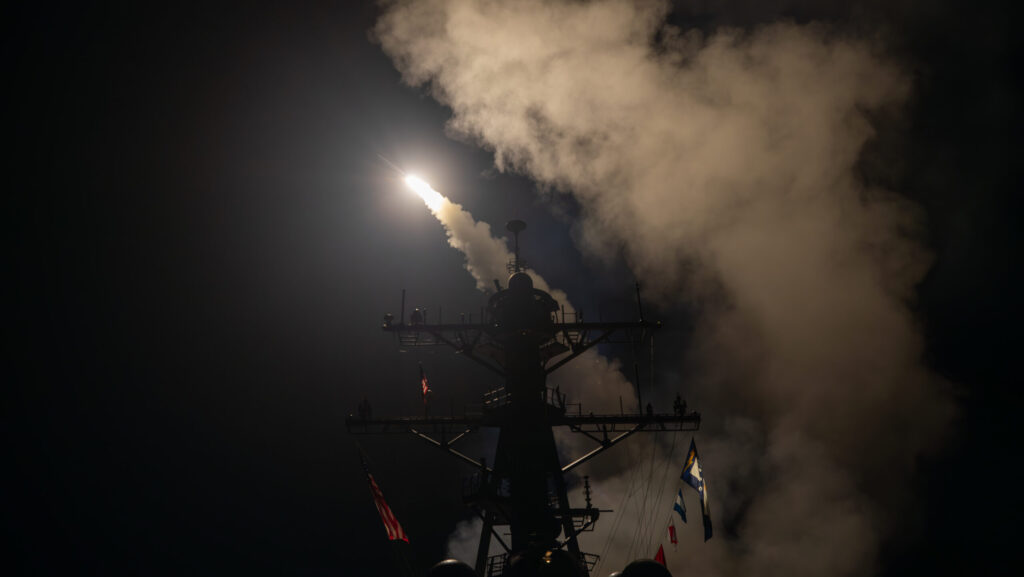
WASHINGTON — RTX has inked a plan with the Pentagon to ramp up production of five munitions, including the Tomahawk cruise missile and AMRAAM air-to-air missile.
The framework agreements announced today are the first between RTX’s Raytheon’s weapons unit and the Trump administration, which has called on defense contractors to make larger investments in their factories and prioritize speeding up weapons production.
The deals may also signal a positive shift in the relationship between Raytheon and the Trump administration, which appeared shaky after President Donald Trump in January criticized the company by name for being the “least responsive” to the Pentagon’s needs.
Under the terms of the agreements, Raytheon will increase annual production of Tomahawks to more than 1,000; AMRAAMs to at least 1,900; and Standard Missile-6 to more than 500, the company said in a press release. It will also increase production of the Standard Missile-3 IIA and accelerate production of the Standard Missile-3 IB.
An RTX spokesperson declined to comment on current annual production levels, though the company stated that production for some munitions will double or even quadruple as a result of these agreements.
Once contracts are finalized, the agreements will span up to seven years, RTX stated. The RTX spokesperson declined to comment on when contracts are expected to be definitized.
“These agreements redefine how government and industry can partner to speed the delivery of critical technologies and are a direct result of the administration’s Acquisition Transformation Strategy and commitment to deliver the best technologies faster,” RTX CEO Chris Calio said in a statement.


Why Bigger Fences Aren’t Enough in the Age of Drones
Traditional thinking about how to protect facilities must adapt to new threats such as drones or downstream attacks.
The RTX agreements follow recent deals the Pentagon has made with Lockheed Martin on PAC-3 and THAAD, as well as an agreement that will see the department invest $1 billion in a spin-off of L3Harris’s solid rocket motor business.
RTX announced during earnings last week that it would increase its investments in its facilities and factories from $2.6 billion to $3.1 billion in 2026. That bump in capital spending includes the internal investments necessary to enable the multiyear production hike announced today, RTX said.
Long term, the agreements are structured under a “collaborative funding approach designed to preserve upfront free cash flow,” RTX said, signaling to investors that the company’s free cash flow projections will not be negatively impacted by the increase in capital spending.
Breaking Defense Video