BEIRUT — The US-Israeli conflict with Iran expanded into Lebanon overnight, as the armed group Hezbollah and the Israeli military traded fire there.
After the strikes, in which at least 31 people were reportedly killed in Lebanon, the Lebanese government demanded that Hezbollah “hand over its weapons,” calling any military activity by the group “illegal.”
“The Lebanese state declares its absolute and unequivocal rejection of any military or security actions launched from Lebanese territory outside the framework of its legitimate institutions,” Prime Minister Nawaf Salam said today after a cabinet meeting.
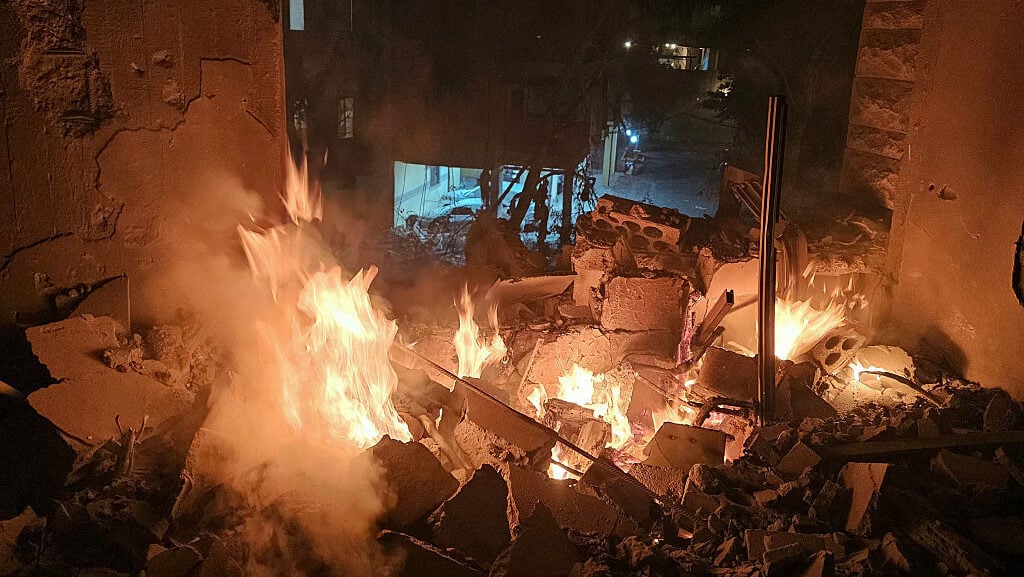
During the night Hezbollah launched a number of missiles from South Lebanon. That prompted a furious reaction from Israel, which attacked targets in South Lebanon and a southern suburb of Beirut multiple times. Open source videos show that missiles from South Lebanon were intercepted shortly after launch.
Hezbollah said in a statement today their attacks were a “legitimate defensive response” and were conducted in response to the killing of Iranian Supreme Leader Ayatollah Ali Khamenei.
Retired Lebanese armed forces general Maroun Hitti told Breaking Defense that Hezbollah’s attack on Israel has “instantly transformed Lebanon from fragile bystander to active battlefield,” describing the situations as “harsh and asymmetric.”
It involved “rocket and drone fire from Lebanon, massive Israeli retaliation across Lebanese infrastructure, targeted decapitation strikes against Hezbollah assets,” Hitti told Breaking Defense.
Eyes On Iran’s Proxies
Ahead of the exchange, there was an open question about whether Hezbollah would join the fight on the side of their decades-long patron. The group has been greatly weakened over the past two years by Israeli military operations, including an unprecedented operation in which Israeli intelligence booby-trapped thousands of Hezbollah pagers and walkie-talkies.
“Hezbollah in Lebanon has been severely degraded. Its senior command structure has been dismantled down to lower operational levels. Strategic weapons depots and infrastructure have been hit significantly. It has lost much of its operational freedom in the south, and its logistical corridors and tunnels have been disrupted,” Ali Bakir, defense analyst and professor at Qatar University, told Breaking Defense.
Hezbollah has yet to respond to the Lebanese government’s demand, but in the meantime observers are closely watching Iran’s other historical proxies, including Kataib Hezbollah in Iraq and Houthis in Yemen.
Kristian Alexander, a security and defense analyst based in the Gulf, theorized that those groups are, for now, exercising “restraint because escalation at this stage carries high strategic risks for them and for the states that host them.
“Iraqi militias face immense pressure from the Iraqi government to avoid jeopardizing national stability, while the Houthis, though capable, know that expanded attacks on Red Sea shipping would trigger aggressive countermeasures by the United States and its partners,” he said.
The Iraqi group is “less of an impactful actor,” to analyst Ryan Bohl, but he said he’s surprised the Houthis haven’t begun strikes in the Red Sea.
“It is entirely possible [that the] Houthis calculate that politically speaking they benefit very little from intervention in this particular conflict,” he said.
Breaking Defense Video