The conflict in Iran has shown that integrated air and missile defense (IAMD) systems are effective overall, but has also revealed key weaknesses and supply chain issues.
Iranian attacks on US assets and other targets in the Middle East have combined ballistic missiles and drone swarms to prevent IAMD systems from being able to stop everything, and interceptor stockpiles quickly dwindled as wave after wave of attacks occurred.
Breaking Defense discussed the effectiveness of IAMD, supply challenges and preparing for future attacks utilizing tactics such as drone swarms with Tom Karako, director of the Missile Defense Project at the Center for Strategic and International Studies (CSIS).
Breaking Defense: What are we learning about the effectiveness of current air and missile defense systems and how they can be improved in the future?

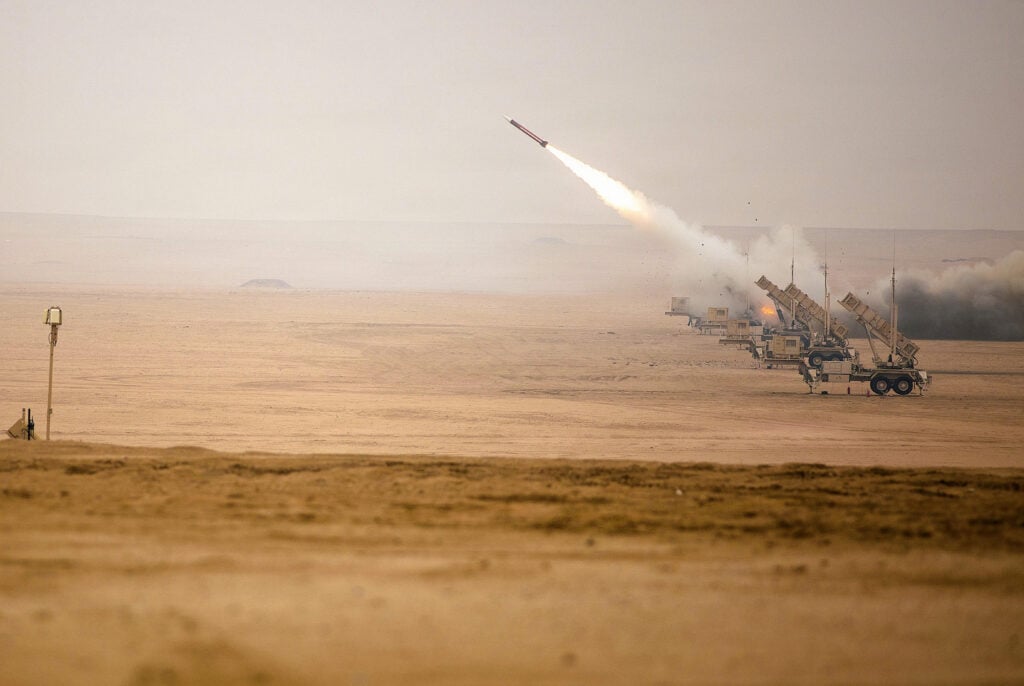
Karako: It was not so long ago that in polite society in Washington, DC, you still heard people say that you couldn’t hit a bullet with a bullet. The events of the past five years, but really the events of the past 10 months, have put that silliness to bed. The hundreds of missiles intercepted last summer in the defense of Israel and the hundreds of missiles intercepted [recently] is truly stunning. The degree to which we have been mostly catching the ballistic things is impressive. What is getting through appears to largely be these cruise missiles. People call them drones, but when you have a 1,000-kilometer range UAV (unmanned aerial vehicle), it deserves to be called a cruise missile.
Other than lives lost, of course, the worst, and some of the most significant, reported strikes have been the targeting of our THAAD/TPY-2 radars. This is a big freaking deal. I think we could point to about 10 publications from the CSIS missile defense project over the years where we keep warning about the suppression of our air and missile defenses. We go in and we suppress enemy air defenses on hour one. That’s the first thing you do. But we have been insufficiently attentive to the spectrum of complex and integrated attack.
Iran tried to do this last year with Israel, and we, and the Jordanians, and all these other people swatted just about everything down. It was pretty remarkable. They tried to have all the aerial and ballistic stuff arrive at the same time. In fact, what that meant is that we could send a bunch of airplanes out to shoot them down the aerial stuff and then the Israelis cleaned up the ballistics. In this case, it’s more sustained. They appear to have gotten better at the drone threats, for instance, and that’s concerning.
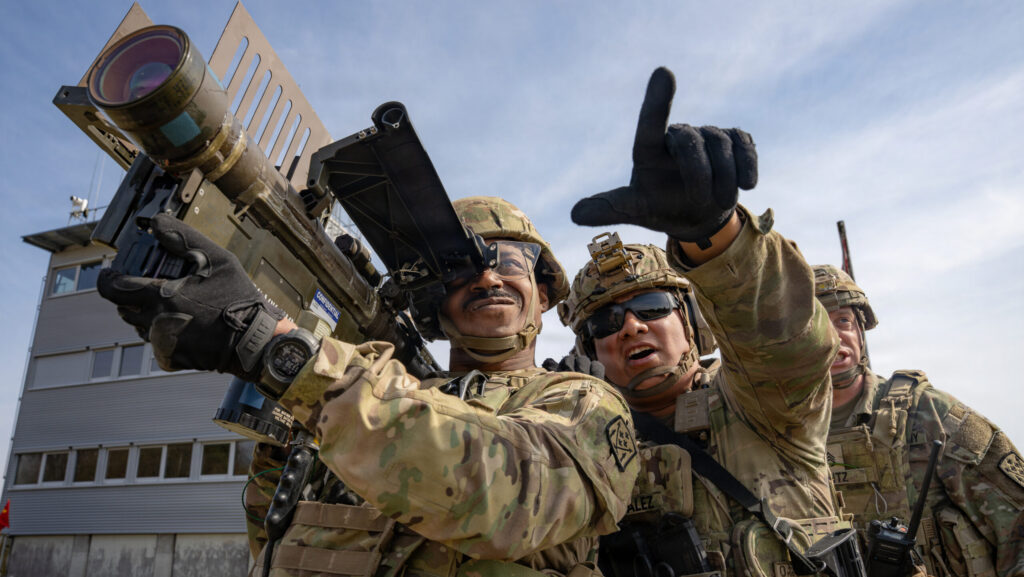
It’s not as if we haven’t seen this problem coming. One of my complaints is that nobody seems to be aware in the popular circles of any air defense below a Patriot. But there’s these whole categories of things called short-range air defense (SHORAD), counter-UAS and all this stuff that has been reinvigorated since about 2017. But the actual funding has been a little anemic in recent years. Now you’re seeing people hit the panic button.
Our missile defenses are working very well. The danger is that people have quickly come to take them for granted. We run the risk of running out, and not just for this conflict. They said during the COVID years that we need to flatten the curve. Well, we’re flattening the curve for the rate of Iranian missile launches. That’s good. But we can’t keep this up indefinitely. What I worry about is we’re not going to have enough for the China thing, if we’re deterring the China thing. We needed to do a munitions ramp before we vaporized a couple trillion dollars of interceptors. Now we need it even worse.
What is the biggest challenge right now? What’s being done well versus not so well?
The line between air defense and quote-unquote missile defense is a bit fuzzy, and becoming more fuzzy. It comes down to what is the engagement altitude, what is the kind of threats that particular interceptors are optimized against?
There does not seem to be as many ballistic missiles getting through. It mostly seems to be a drone problem. That’s because we have, all things considered, been neglecting the air defense problem for a long time. We’ve taken air superiority for granted. We’ve neglected SHORAD. We neglected all these things because we’ve taken air superiority for granted.
As we move forward, how do we prepare for these complex attacks that include drone swarms that offer more flexibility than traditional ballistic missiles or can potentially be launched in numbers that overwhelm defense systems?
These things can be killed. They’re not that robust. The killing part is not the hard part. It’s the sensors, and therefore the threat classification. When these things pop over the horizon, you only have a short period of time to get after them.
Then it’s the need for capacity and training. The short answer is you need a whole lot more of this and it needs to be distributed among the joint force. It’s not going to be Army specialists that can do this everywhere all the time.
One of the important considerations is the cost of interceptors vs. the cost of what they are intercepting. Does that mean we’re moving toward more non-kinetic ways of intercepting things like swarms of cheap, expendable drones?
Not necessarily. It has to be a mix of kinetic and non-kinetic. Kinetic is not going to be the panacea. Number one, you probably are going to have defenses that are more expensive than the offenses. That’s OK. That’s the nature of things. The cost exchange ratio of all the damage that these things have caused also needs to factor into this. It’s about the cost and the affordability of operational success. Everybody just likes to look at the cost for a round. It’s not about the cost per round. It’s about are we achieving operational success?
It’s cost versus value. The value is what you defend. The cost police are nevertheless correct, as well, and you can’t just hand wave away the cost problem by saying the defended asset is more expensive. Well, that’s true, but what cost do we put on defending the homeland? Does that mean we can spend a trillion dollars a year on missile defense of the homeland because, hey, the homeland is worth many trillions. No, you still have the affordability question.
Then it comes down to can you afford to be a global superpower and can you afford to project power to the other side of the globe? The costs of the interceptors are meaningful. They are just one of many factors and they are one of many costs.
Is there a system available that can scale up to effectively combat drone swarms?
There is, and it’s called the LIDS (Low, Slow, Small UAS Integrated Defeat System). It uses an interceptor called the Coyote and there’s both kinetic and non-kinetic Coyotes. It’s a drone that flies out and kills another drone with an explosion in the case of the regular Coyotes or with a non-kinetic payload with a non-kinetic version.
The thing that’s not appreciated is everybody keeps repeating the same tired cliche and headline about you shouldn’t kill a $40,000 drone with a $4,000,000 missile. Well, then start buying more of the kind of UAS things that are already available, already fielded and already operational. Just go and turn up the volume dial on that. The drone dominant stuff talks about counter-UAS. Well, then, let’s go. Show me the money and start buying stuff.
Is there a particular aspect of air and missile defense that you are worried about right now?
The siren right now is capacity. For defenses generally, but most notably for C-UAS. I mean, it’s all been said at this point. Everything I have to say is something we’ve published countless times.
There’s one more thing, and that is I don’t think we’ve had an article that hasn’t had a version of the warning of complex and integrated attack, which is to say mixing and matching. Air threats and ballistic missile threats, other things. That’s what Iran tried to do last summer, and we kind of thwarted it. But it’s what they’re pulling off this year. It is an all-too-deadly confirmation that complex and integrated attack is a central piece of the character of war right now.
Breaking Defense Video