Naval Warfare

Saildrone unveils new medium unmanned surface vessel for anti-sub warfare, ISR

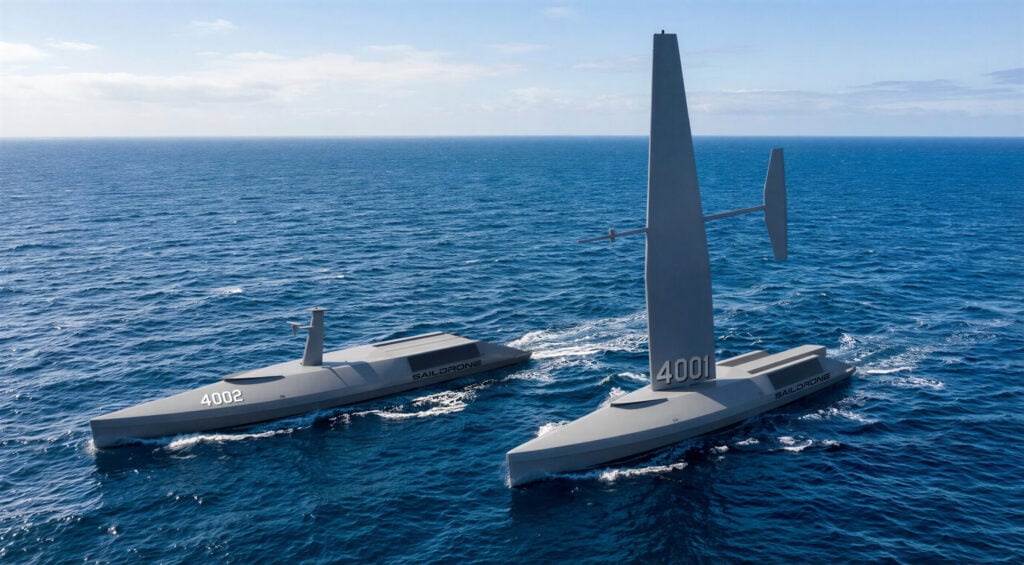
The MUSV comes in two variants: the Spectre Silent Endurance, and the Spectre Stealth Strike.

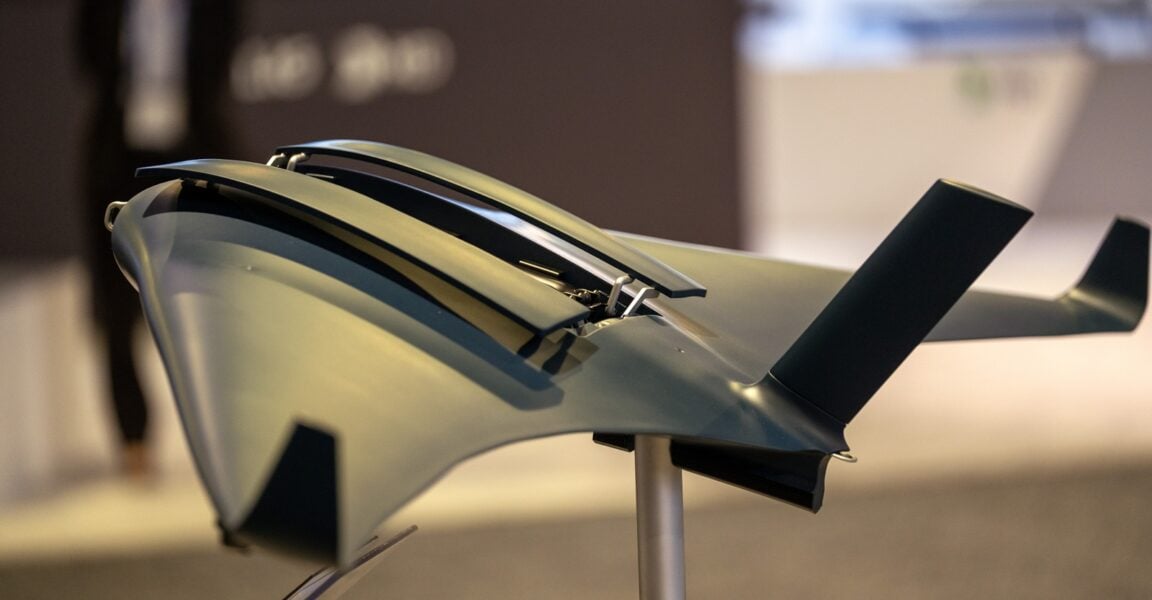
Saildrone has unveiled a new MUSV geared toward anti-submarine warfare operations. (Saildrone)

NATIONAL HARBOR, Md. — California-based maritime drone manufacturer Saildrone unveiled a new medium unmanned surface vessel (MUSV) that the company said can be optimized for anti-submarine warfare (AWS) and intelligence, surveillance, and reconnaissance (ISR) operations.

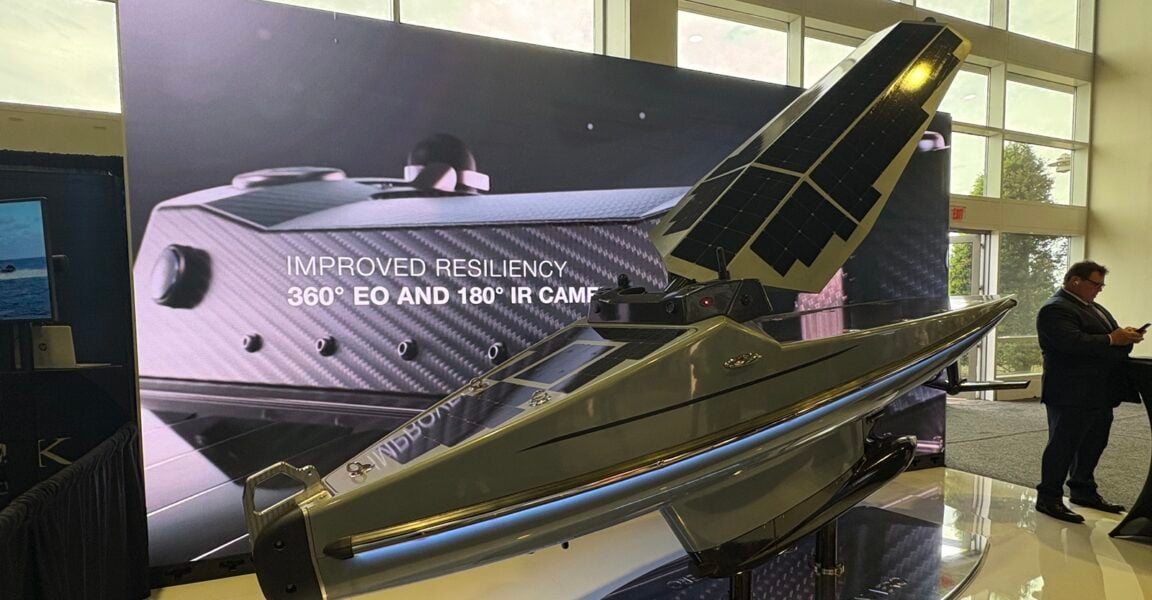
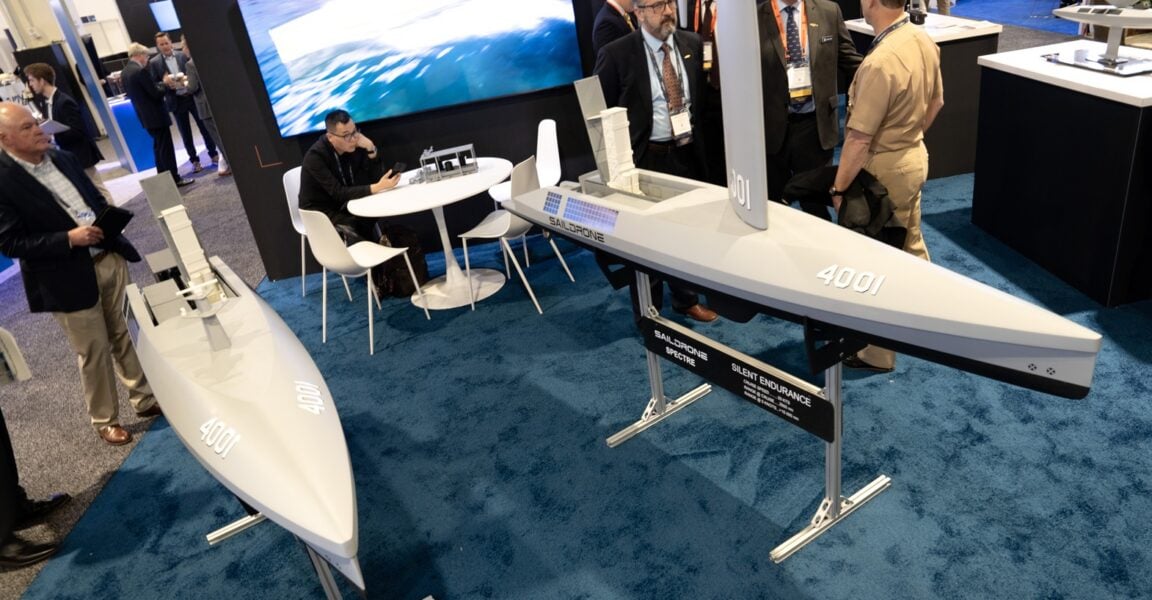
The new MUSV comes in two variants: the Spectre Silent Endurance that employs a Saildrone wing and is geared for anti-submarine warfare and other acoustically sensitive missions, and the Spectre Stealth Strike, which doesn’t have a wing and is designed to accommodate higher sprint speeds, and features a lower-profile configuration for kinetic strike roles. 

“Spectre is the result of 25 years of continually pushing the boundaries of what’s possible. A unique design evolved through the hard lessons of operational experience in the real world,” Richard Jenkins, Saildrone’s founder and CEO, said in a statement as the systems were unveiled at the Sea Air Space Exposition here. “Spectre is not a craft hurriedly readied to meet a particular RFP [Request for Proposal], but diligently evolved over multiple years to meet the operational requirements of our customers and fill critical capability gaps in the ASW domain.”

Spectre, which has been in the works for two years and is 52-meters long, includes a concealed payload deck to hold two 40-foot containers, up to five 20-foot containers, and other combinations that weigh more than 70 tons. 

The Navy announced in March a new MUSV marketplace as it seeks to acquire USVs quickly by focusing on production-ready, mission capable platforms already in the MUSV space. The first iteration of the marketplace closed on Friday, and Jenkins said that Saildrone submitted a Spectre proposal to compete.

Meanwhile, Chief of Naval Operations Adm. Daryl Caudle has said he is developing a “containerized capability campaign” that aims to deploy modularized payloads like drones or missiles quickly.

That initiative could also be relevant for Spectre, for which Saildrone teamed up with Lockheed Martin to configure the platform to accommodate multiple Lockheed Martin payloads, including the Mk70 VLS Launcher. 

“It’s a lower price way of putting more players on the field, which the CNO has said is an important thing,” Paul Lemmo, vice president and general manager of sensors, effectors, and mission systems at Lockheed Martin, told reporters today. “So you’ve got more shooters on a fairly inexpensive platform, instead of a multi-billion dollar destroyer.” 

Each of the vessels cost approximately $40 million, depending on the payload and configuration, according to Jenkins. 

The Spectre will be built at Fincantieri’s shipyard in Green Bay, Wis., that Saildrone says has the bandwidth to produce five of the MUSVs annually. Construction on the first vessel is imminent, and sea trials for that MUSV are expected in early 2027. 

PHOTOS: Sea Air Space 2026

PHOTOS: Sea Air Space 2026

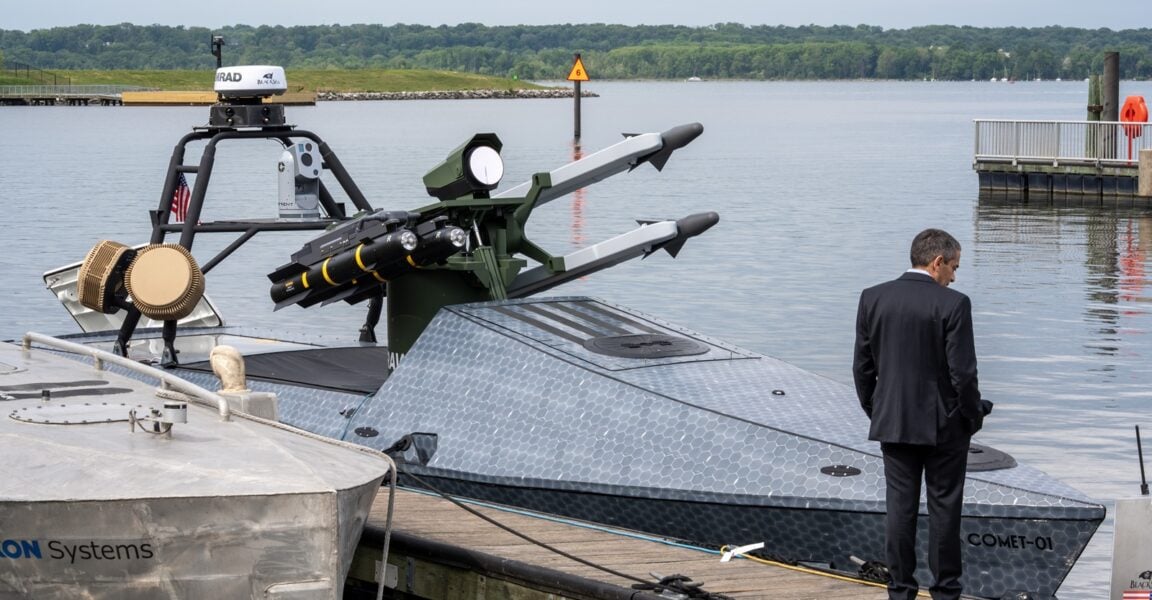
The Black Sea Comet -01 43’ High Speed Interceptor is pictured on the docks outside the 2026 Sea Air Space conference at Maryland’s National Harbor. (Daniel Woolfolk / Breaking Defense)
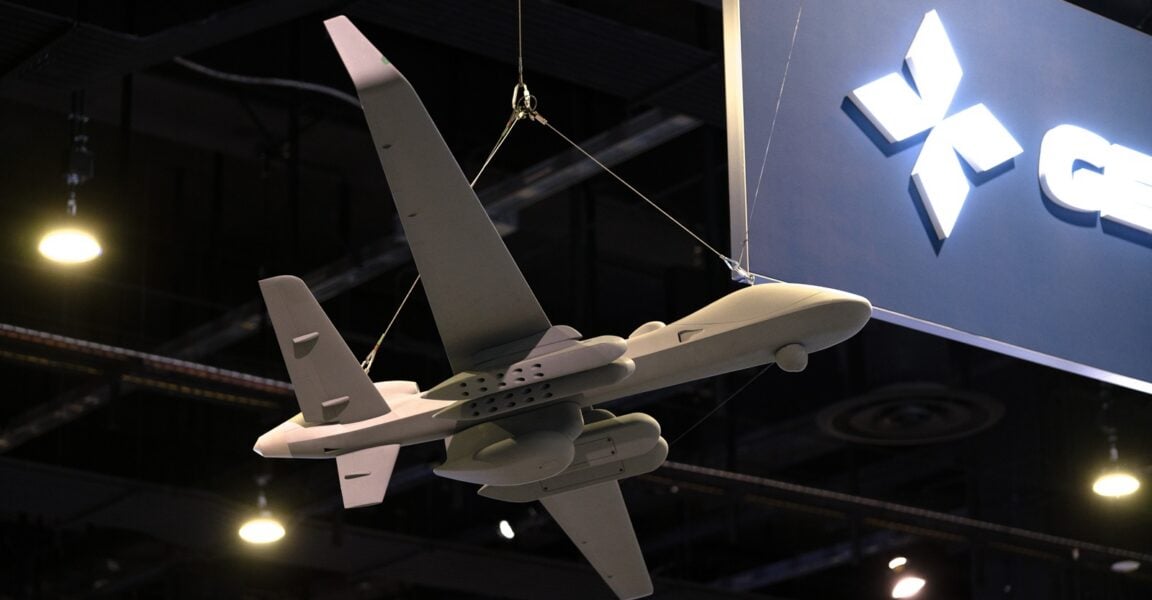
The MQ-9B SeaGuardian is seen here during the Sea Air Space conference at Maryland’s National Harbor. (Daniel Woolfolk / Breaking Defense)
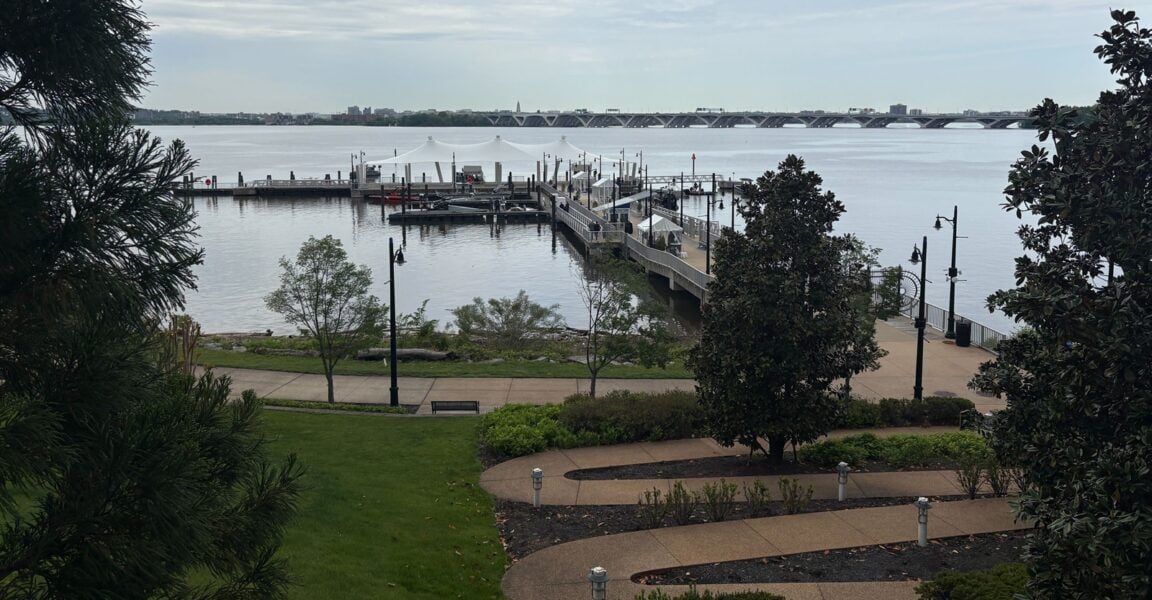
A view of the dock where several naval systems are positioned for display outside the 2026 Sea-Air-Space conference at the National Harbor, Md. (Daniel Woolfolk / Breaking Defense)
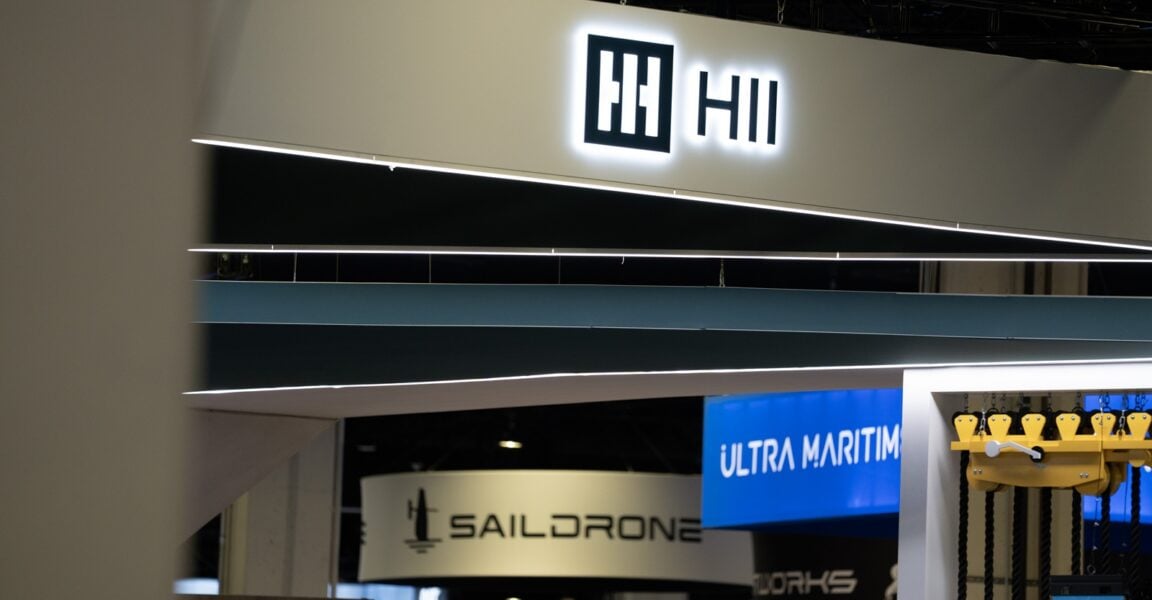
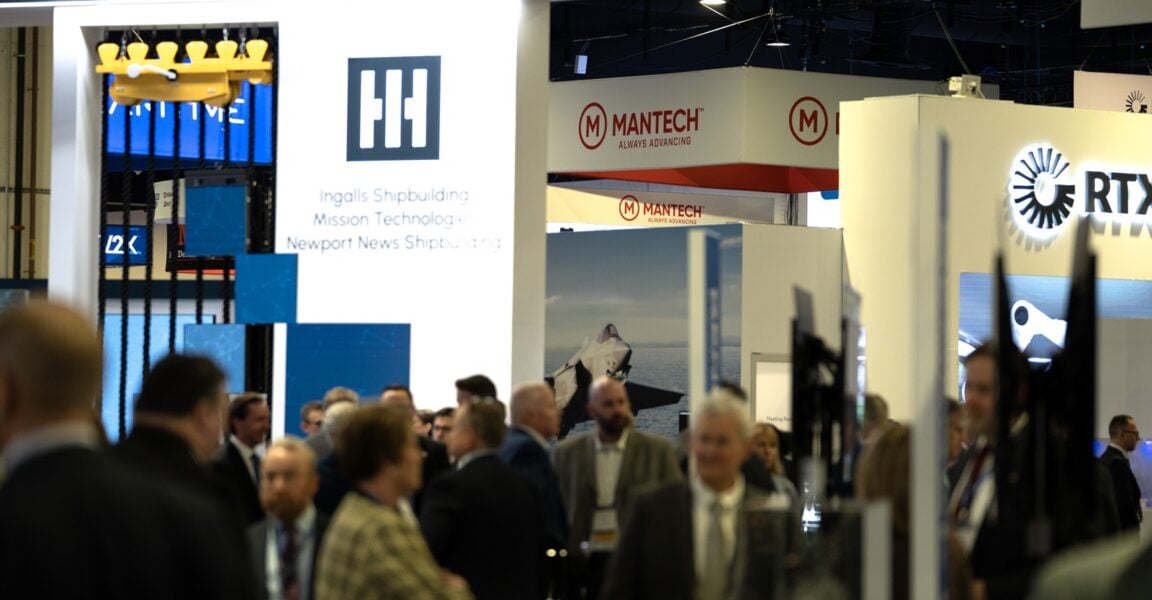
Maritime companies UltraMarine, Saildrone and HII set up their displays on the show floor of the Sea Air Space conference at Maryland’s National Harbor. (Daniel Woolfolk / Breaking Defense)
The General Atomics Electromagnetic Unmanned Underwater Vehicle as seen at the Sea Air Space conference from Maryland’s National Harbor. (Daniel Woolfolk / Breaking Defense)
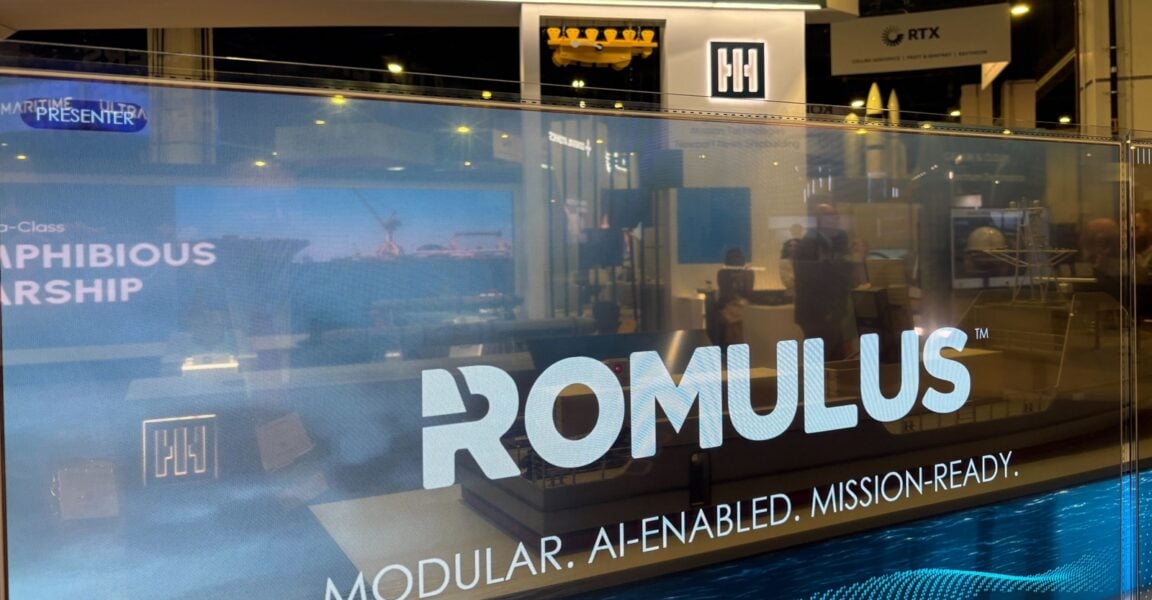
A display for Romulus, an autonomous ship from HII, is pictured on the show floor at the Sea Air Space conference from Maryland’s National Harbor. (Daniel Woolfolk / Breaking Defense)
A Triton autonomous underwater and surface vehicle from Ocean Aero is displayed at the Sea Air Space conference at National Harbor, Md. (Daniel Woolfolk / Breaking Defense)
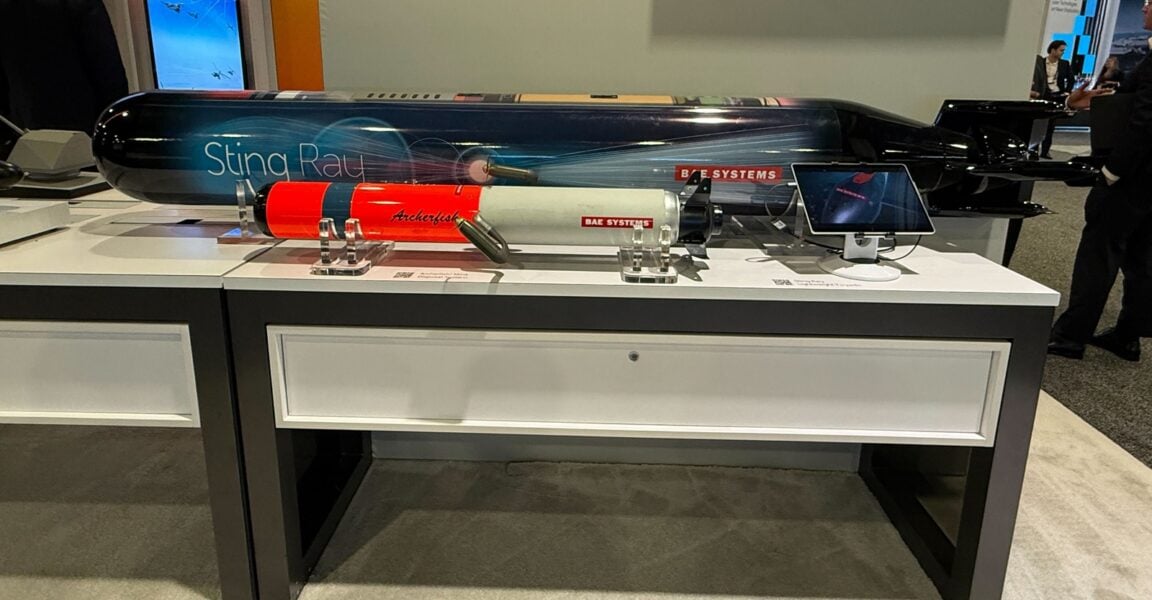
The Archerfish mine disposal weapon is displayed alongside a Sting Ray torpedo from BAE Systems at the Sea Air Space conference at National Harbor, Md. (Brendon Smith / Breaking Defense)
A view of attendees and booths on the last day of this year’s Sea-Air-Space conference at the National Harbor, Md. (Daniel Woolfolk / Breaking Defense)
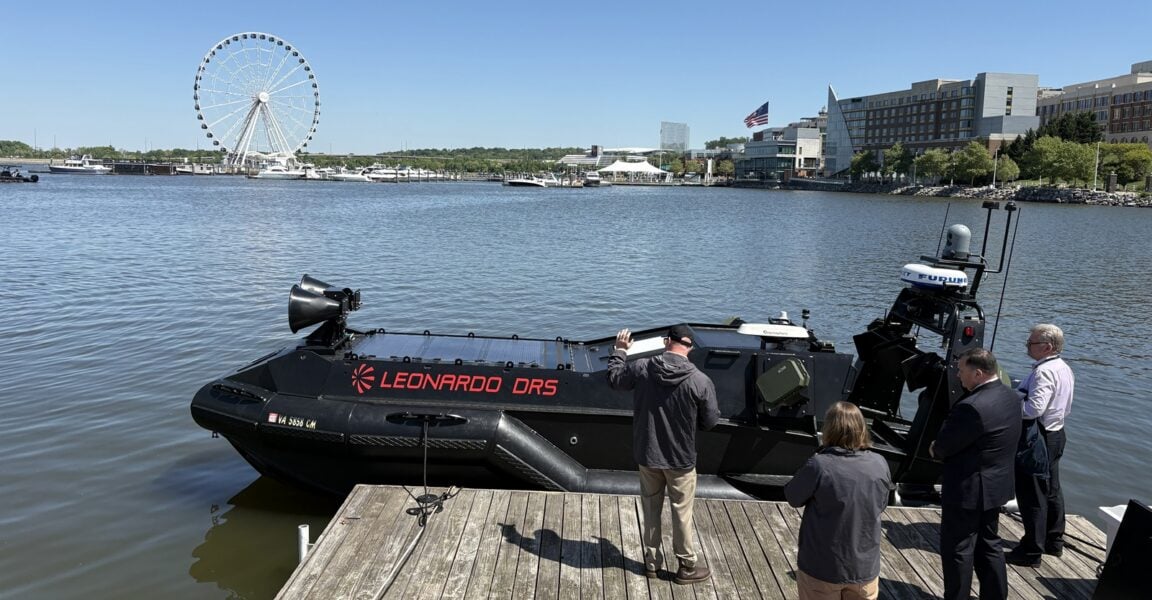
Leonardo DRS showcased its Autonomous unmanned surface vessel, which is integrated with its Maritime Mission Equipment Package. (Daniel Woolfolk / Breaking Defense)
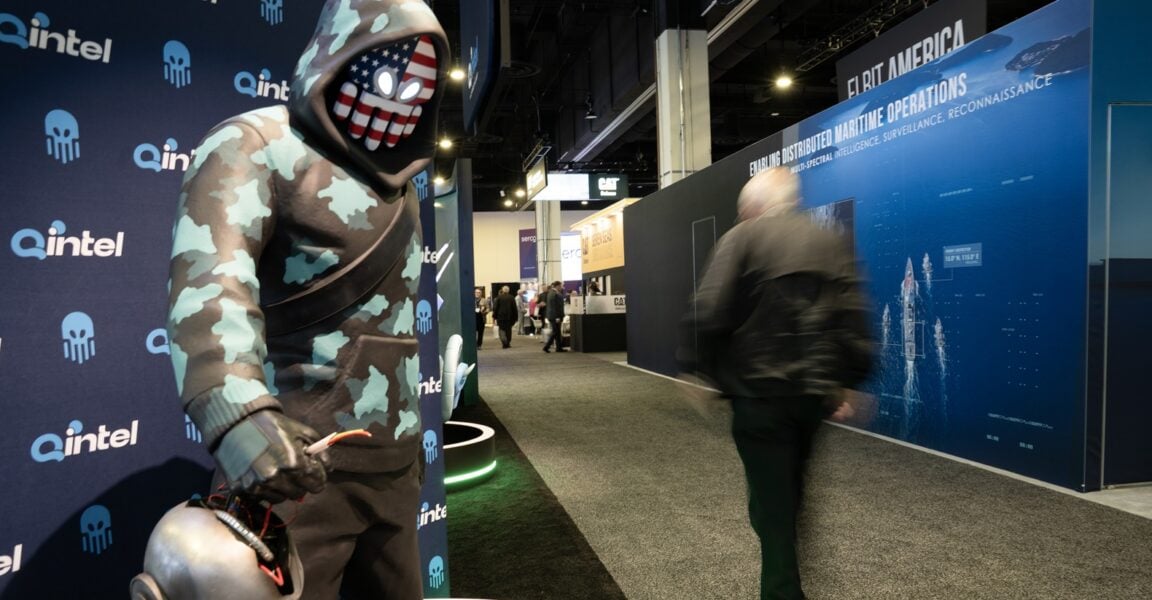
A dramatically camouflaged model stands at Qintel’s booth. (Daniel Woolfolk / Breaking Defense)
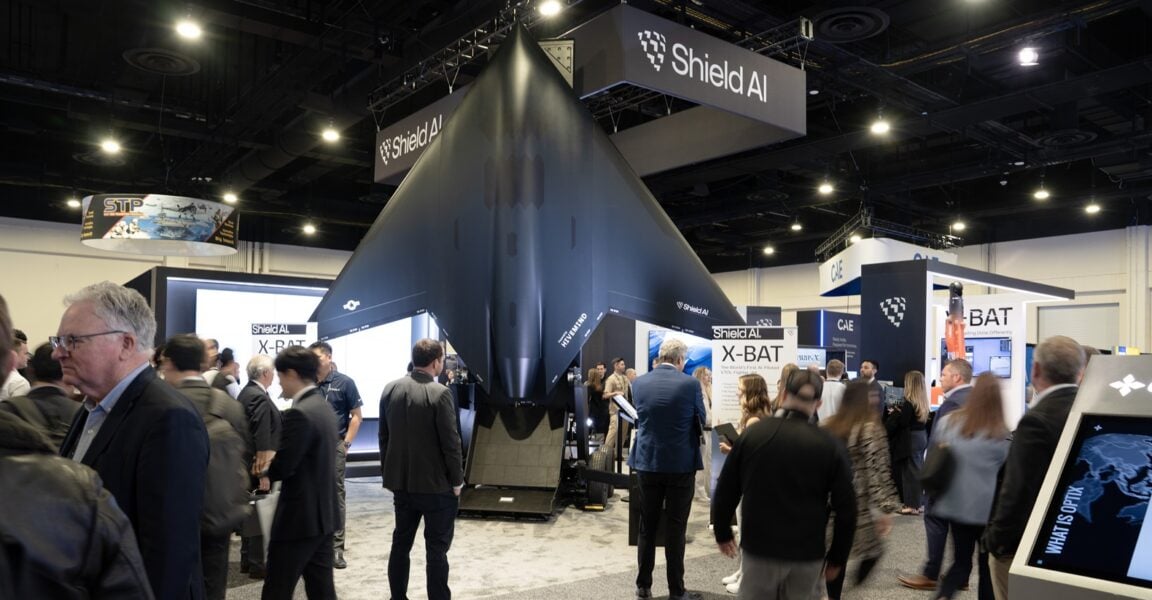
Shield AI’s X-BAT is an AI-piloted VTOL fighter jet apparently ready to blast off. (Daniel Woolfolk / Breaking Defense)
Former Navy Secretary Carlos Del Toro visits with sailors at the Sea-Air-Space conference. (Daniel Woolfolk / Breaking Defense)
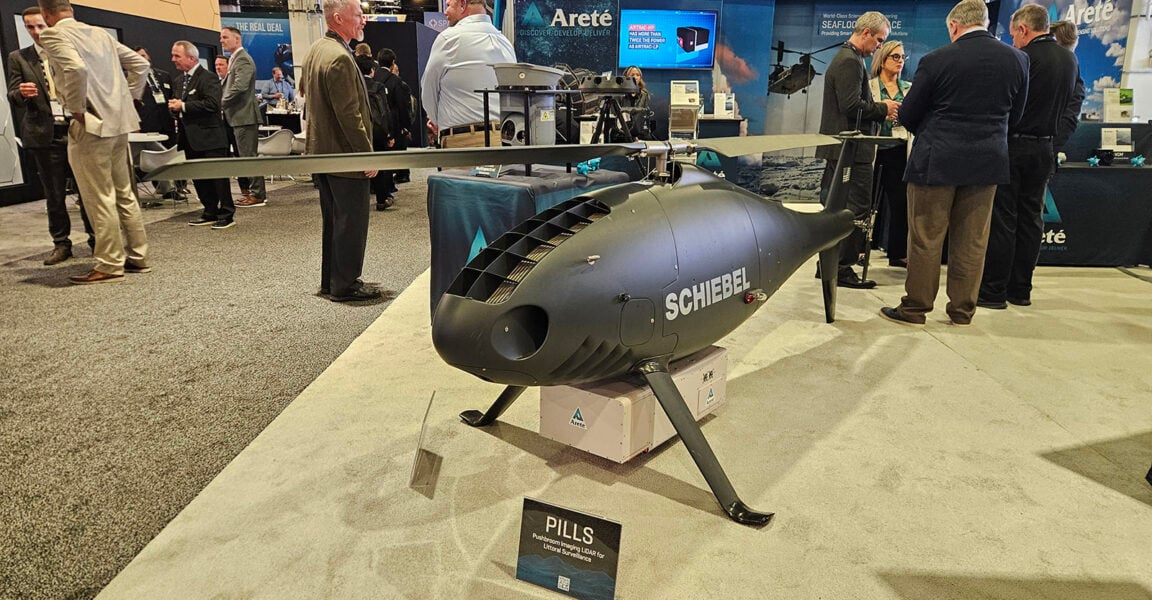
Schiebel displays the PILLS unmanned rotorcraft at Sea Air Space 2026. (Breaking Defense)
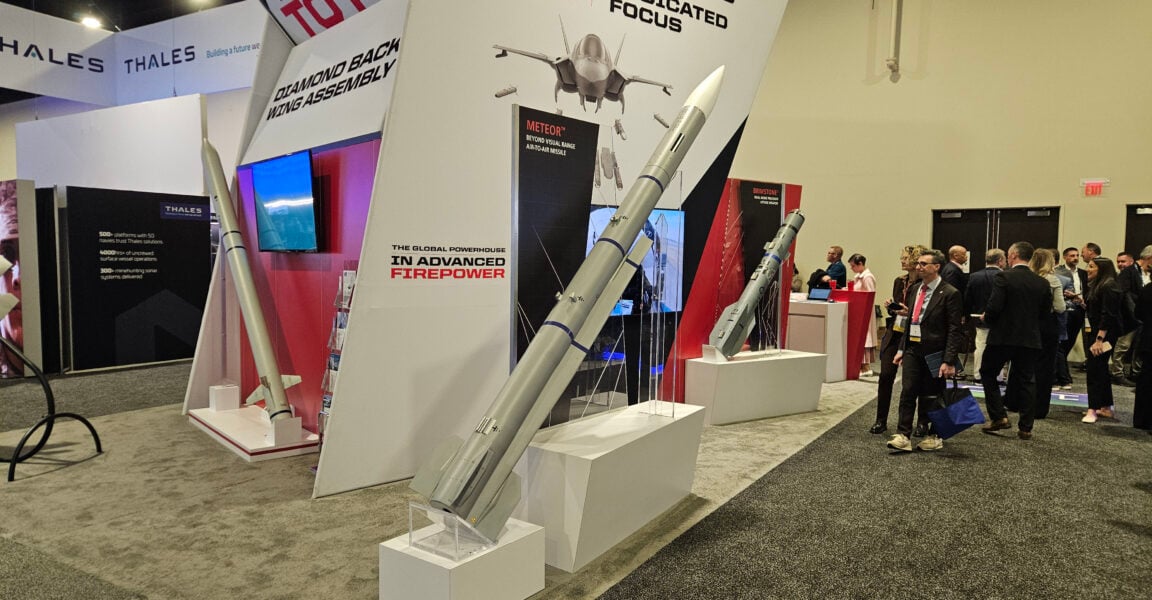
An American arm of European missile-maker MBDA displays the Meteor missile at Sea Air Space 2026. (Breaking Defense)
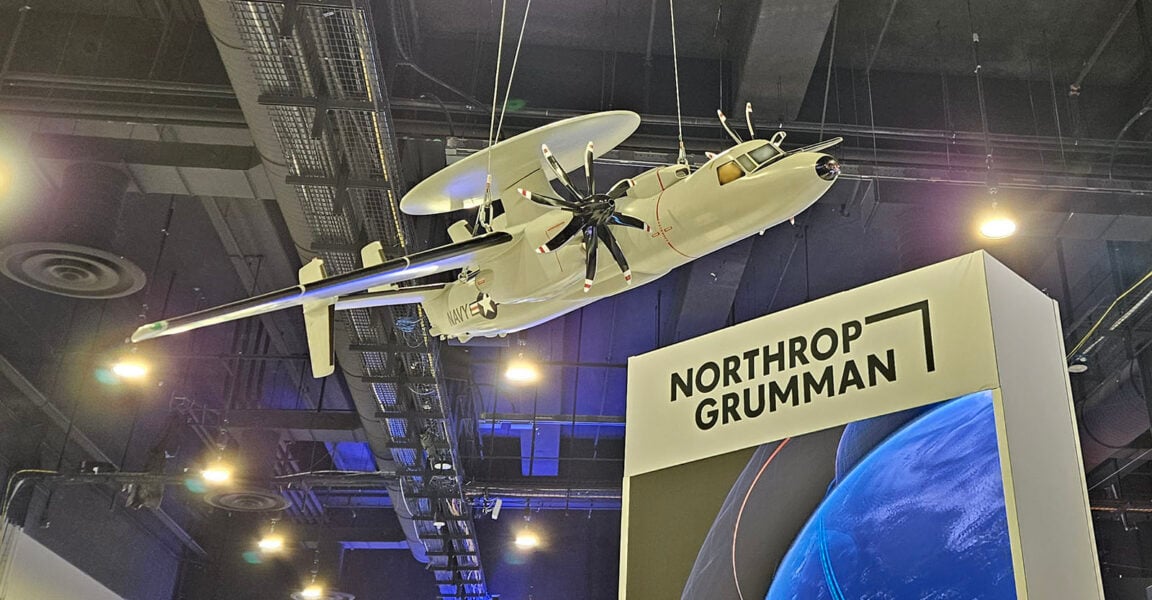
A Northrop Grumman surveillance plane (model) looms over attendees at Sea Air Space 2026. (Breaking Defense)
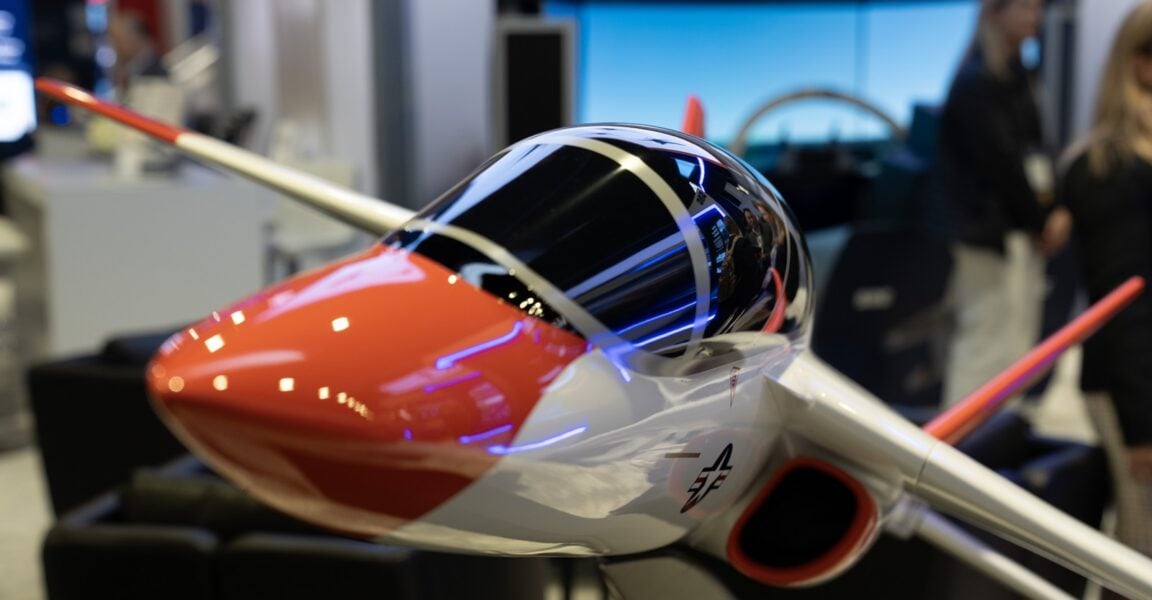
An SNC Freedom Trainer on display at Sea Air Space 2026. (Daniel Woolfolk / Breaking Defense)
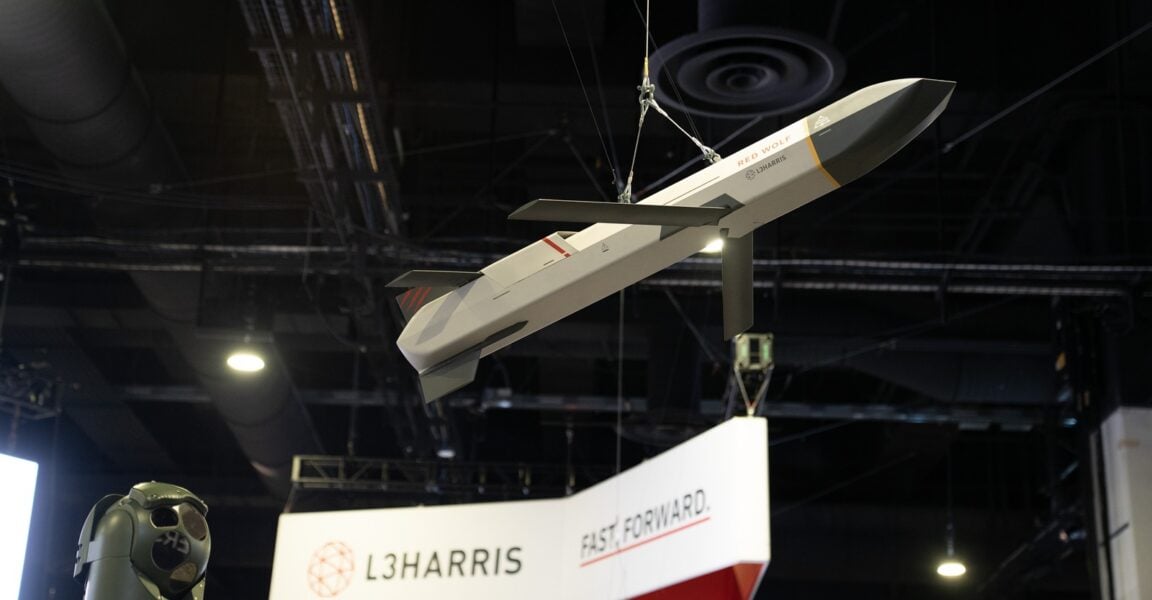
The U.S. Naval Air Systems Command selected L3Harris to develop its Red Wolf munitions for the Marine Corps’ Precision Attack Strike Munition program. (Daniel Woolfolk / Breaking Defense)
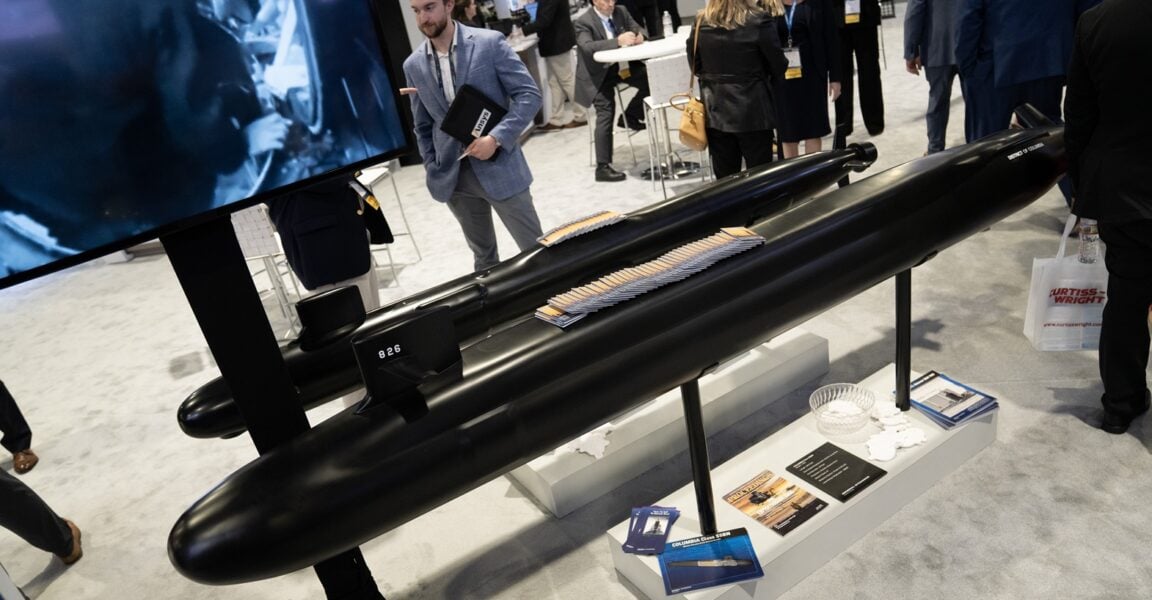
General Dynamics Electric Boat Columbia Class submarine (front) and Virginia Class submarine (back). (Daniel Woolfolk / Breaking Defense)
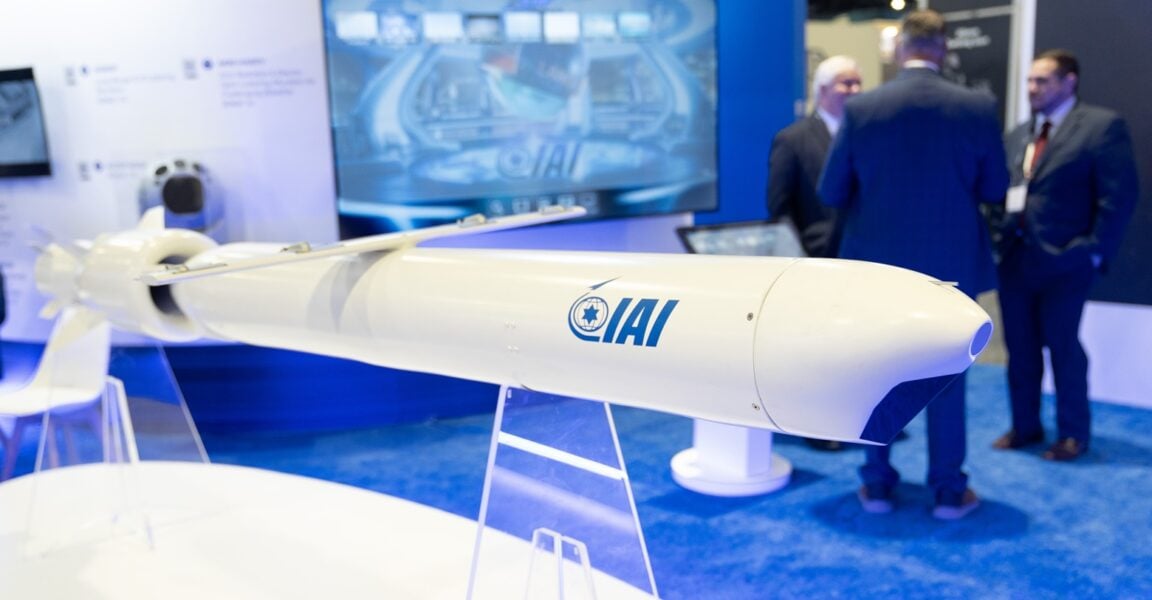
IAI’s Sea Demon - Affordable Surface to Surface Cruise Missile on display on the show floor. (Daniel Woolfolk / Breaking Defense)
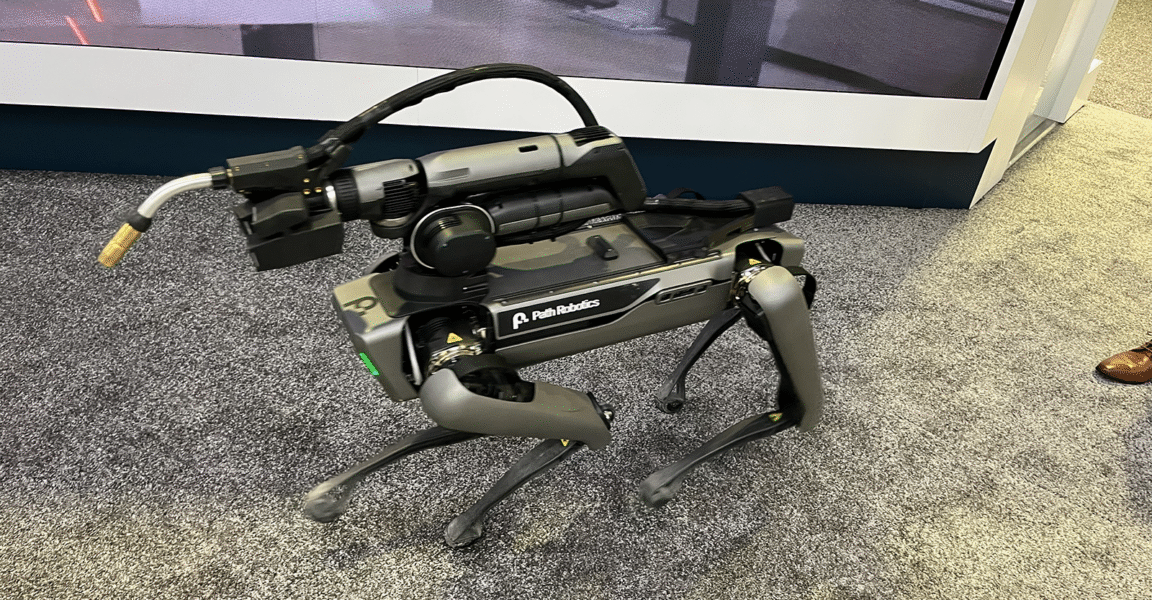
Path Robotics robot "dog" with welding torch on its "head," as seen at at Sea-Air-Space 2026. (Sydney Freedberg / Breaking Defense)
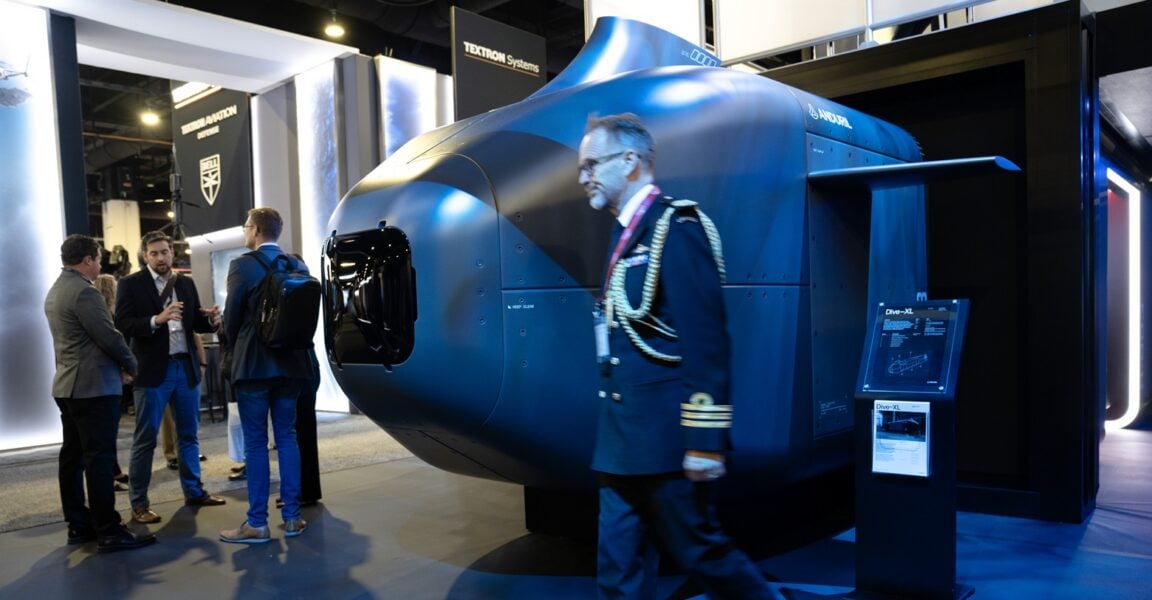
Anduril displays its Dive XL nose and this year's Sea Air Space. (Daniel Woolfolk / Breaking Defense)
Saildrone released a wingless Spectre USV. (Daniel Woolfolk / Breaking Defense)