ANKARA, Turkey — In collaboration with the Netherlands, Belgium said today it is investing €3.1 billion ($3.5 billion) on the joint acquisition of two modern air defense systems, radars and command vehicles as Russian threats drive Europe to spend more on lucrative ground-based capabilities.
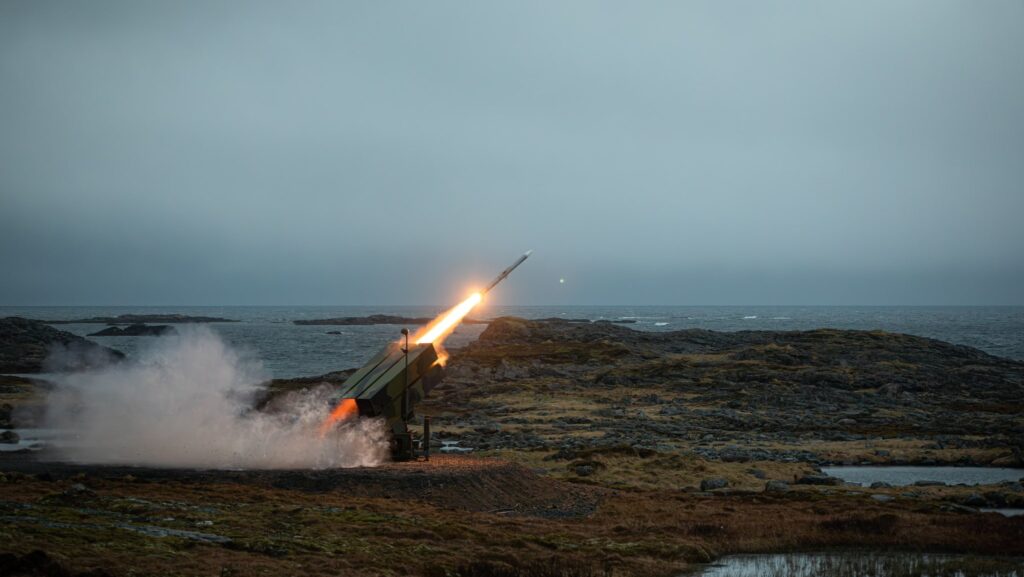
During a ceremony here at the NATO Summit, officials from the two countries signed a cooperation agreement covering the multibillion procurement of 10 Kongsberg National Air-to-Surface Missile (NASAM) launchers, 20 Rheinmetall-made SkyRanger 30 assets, 14 Thales-supplied GM200 Multi-Mission Radars and 54 Iveco-manufactured command vehicles.
“After twenty years without one, Belgium will build again its own powerful air defence capability through this joint procurement,” said Theo Francken, Belgium’s defense minister, in a statement. “This step is essential for the protection of our population and critical infrastructure.”
The statement stressed that partnering on a matching ground-based air defense architecture would maximize cooperation between Brussels and The Hague across training, maintenance, logistics and operational deployments.
“This [package] will enhance interoperability within the BENELUX, NATO, and the European Union,” it added. BENELUX is a three-way European coalition comprising Belgium, Luxembourg and the Netherlands.
Francken added in a translated post on X that several Belgian companies will contribute to the development of launch systems, software, electronics, radar components, cybersecurity products and maintenance.
Though Belgium is contributing $3.5 billion to the overall air defense package, the Dutch level of investment remains unclear. The Netherlands Ministry of Defence was unable to provide details about its investment as of press time.
Brussels latest NASAMS purchase comes after a decision to temporarily lease a single unit, which is set for delivery in mid-2027, according to a local media report. It also said that a decision is pending related to a Belgian long-range air defense capability requirement, involving interest in the US Patriot system and MBDA’s SAMP/T.
Belgium signed off on a series of other programs and initiatives during the Summit, including the joint procurement of up to 10 Saab GlobalEye surveillance aircraft to replace the alliance’s aging E-3 fleet. It also approved a letter of intent with the Czech Republic, Poland, Spain, Turkey and the United Kingdom relating to Airbus A400M transport aircraft cooperation.
Further, alongside a coalition of five other European partners, Brussels moved out with a plan to collaborate on a NATO initiative based on strengthening defenses against low-altitude aerial threats, including Russian Shahed long-range attack drones.
More broadly, allies announced a plan to spend more than $40 billion in counter-drone capabilities over the next five years. The effort is backed by the standing up of a “counter-drone marketplace” to validate the systems are “NATO-tested” and “NATO-compatible,” according to an alliance statement.
Breaking Defense Video