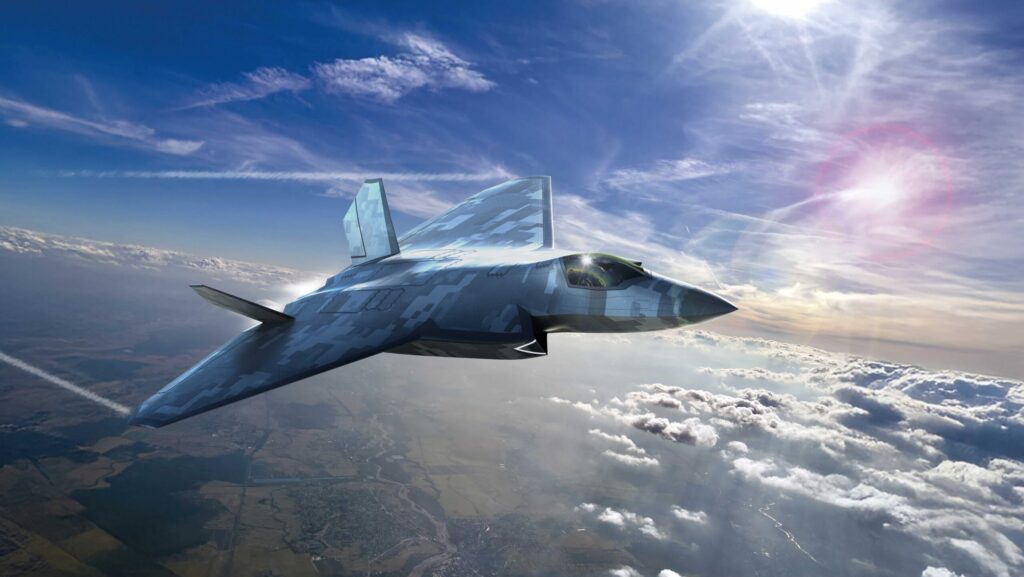
WASHINGTON — The tri-national partnership behind the sixth-generation Global Combat Air Programme (GCAP) has awarded a £4.6 billion ($6.1 billion) contract to fund the rest of the “concept and assessment phase” of the program and push ahead with “joint detailed design development.”
The 18-month contract, awarded by the GCAP Agency on July 3, formally goes to Edgewing, the consortium of developers for the project pursued by the UK, Italy and Japan. The new money follows an April contract for £686 million.
“This contract award marks another significant milestone for the programme, underlining the pace of progress and reinforcing GCAP as a flagship example of innovative defence collaboration,” an announcement from the GCAP Agency said. “Jointly funded by the three nations, the contract will drive the next phase of key design and engineering activity for the programme.”
GCAP is the lone sixth-generation fighter development program in the works in Europe, after a French-German-Spanish effort dubbed the Future Combat Air System fell apart last month.
Masami Oka, GCAP Agency Chief Executive, suggested in the July 3 announcement that GCAP is on stable ground.
“With this long-term funding, the future of GCAP has never been more assured,” he said.
The joint vote of confidence also follows a significant commitment from the UK, which last week earmarked £8.6 billion over the next four years to GCAP pursuits as part of its much-delayed Defense Investment Plan.


MQ-9B and Gambit Series: Advancing European Defense Capabilities
GA-ASI will build Gambit aircraft in Europe, partnered with European-based companies, with airframes available for international procurement starting in 2027.
According to the GCAP Agency, the program hopes to see a next-gen stealth fighter delivered by 2035, which “will have the capabilities required to secure advantage in the most demanding operating environments.”