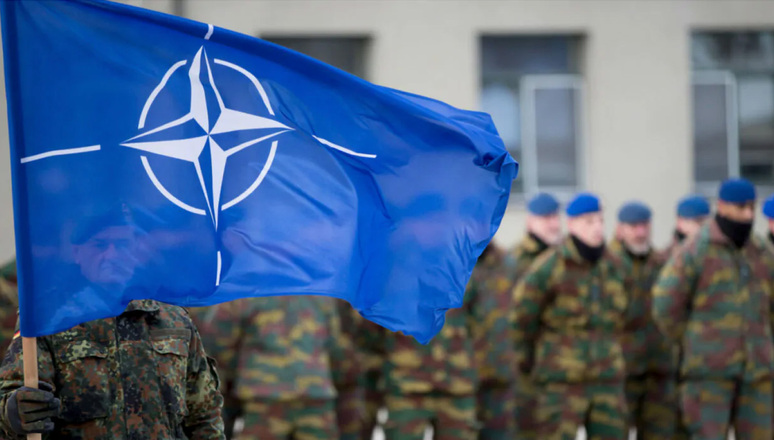
MILAN, BELFAST and BEIRUT — As the NATO summit in Ankara approaches, several analysts say that recent conflicts and shifting defense priorities have strengthened the relationship between Turkey and NATO allies, including for their respective defense industries, but real pressure points remain.
“Turkey’s relationship with NATO is arguably in a stronger position than it has been for several years,” Burcu Ozcelik, senior research fellow for Middle East security at RUSI, told Breaking Defense on July 2. “European allies increasingly recognize that strengthening NATO’s southern flank, securing the Black Sea and managing crises across the wider neighbourhood are central to allied security. Turkey is well-positioned to contribute across all three.”
But a senior Turkish official recently suggested that Europe hasn’t gone far enough in embracing Turkey as the continent works to boost its defense capability amid US demands.
“We believe excluding such an important capacity (Turkey) from Europe’s defence initiatives is a strategically inaccurate approach,” Turkish Defence Minister Yasar Guler told Reuters last week. He reportedly said his government expects a more “visionary approach” from Europe in the future.
And, experts said, some geopolitical stances taken by Turkey have created obstacles of their own, from the acceptance of Russian air defense equipment that got Turkey kicked out of the US-led F-35 program years ago to its current tense relationship with fellow NATO member Greece.
“Ankara does not want to be absorbed into European or American geopolitical priorities, especially when these may conflict with Turkish interests in the Black Sea, the Middle East, or the Eastern Mediterranean,” said Serhat Süha Çubukçuoğlu, director of the Turkey program at TRENDS Research & Advisory. “In other words, Turkey wants more weight in NATO, but on terms that allow it to remain an autonomous regional power.”
The Ties That Bind
One recent telling example of the tightening of ties between Turkey and NATO was, according to the Atlantic Council’s Rich Outzen, the help Ankara received during the Iran conflict.
Outzen, senior non-resident fellow at the Atlantic Council, said allies provided air defenses that intercepted missiles over Turkish airspace. This was not always the case; During the Syrian conflict, for instance, Outzen said Ankara requested aerial support but the request was not met in a “substantive way.”
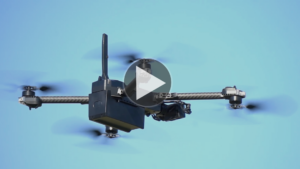
Analysts also pointed to Ankara’s significant contributions to both staffing NATO positions and participation in the alliance’s exercises. Turkey’s largest contribution was recorded this year as part of Steadfast Defender, where it sent more than 2,000 troops and the TCG Anadolu carrier. The deployment marked NATO’s first operational use of armed drones — the Turkish-made TB3s drones — from a flat-deck ship on the TCG.
Paul Taylor, senior visiting fellow at the European Policy Centre, noted Turkey’s support for Ukraine, a priority issue for NATO Secretary General Mark Rutte, including “preventing Russian warships from entering the Black Sea.”
“It also gave Ukraine valuable military assistance with the Bayraktar drones early in the war, helping Kyiv develop its own drone industry, and it helped ensure Ukrainian grain continued to reach world markets,” he said. These moves have been fundamental to NATO’s push back against Russian aggression.
Generally, Rutte himself has acknowledged that Turkey is “extremely important to NATO.”
“It has one of the strongest armies in the alliance … and has the advantage of a massive defense industry,” he said in an interview last week with Anadolu Agency.
Sticking Points
Despite greater convergence and closer ties in the current geopolitical security landscape, experts noted there were areas in which Turkey’s national interest collide with those of NATO, the US, or other individual members.
TRENDS’s Çubukçuoğlu said he expects the country will seek a larger role in European defense in the future, especially as the continent looks for new industrial capacity, but there are constraints. Specifically, he noted that a number of European actors, “especially France, Greece, and the Greek Cypriot Administration,” prefer an “EU-centered defense agenda that limits Turkey’s role.”
Perhaps referencing that limitation, Turkey’s Guler reportedly told Reuters that Ankara supported a fairer burden-sharing effort by NATO as the US pulls back. “It is expected that contacts and efforts on creating a concrete roadmap to strengthen the European pillar will intensify at the Summit,” he said. The Turkish Ministry of Defence did not respond to Breaking Defense’s request for comment for this report.
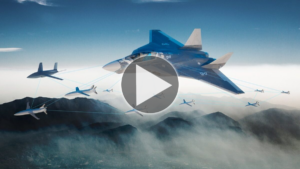
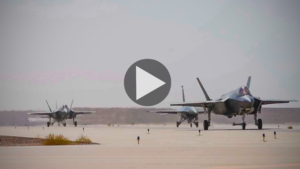
When it comes to the US, years-long stumbling blocks in US-Turkey relations have had to do with aircraft: Turkey’s ejection from the F-35 program in 2019 after it purchased Russian radars and a prohibition on US delivering additional General Electric-made F110 engines that would power Turkey’s indigenous next-generation fighter jet, the KAAN.
RELATED: What’s in a pin? Trump dons golden F-22 during Erdogan meeting
President Donald Trump has suggested one or both issues could be resolved — and Reuters reported late last month the US had approved the F110 deliveries — but as of this report both remain stalled.
“The F110 breakthrough is significant, but it reflects a narrower area of practical convergence — the F-35 issue remains politically and strategically much heavier,” Çubukçuoğlu said. “I do not think Turkey’s primary objective today is simply to return to the program as its priority is increasingly to develop KAAN.”
Signs At The Summit
Of course the summit itself, beginning Tuesday, will likely offer a clearer picture of where Turkey and NATO stand.
The analysts said that signs of enhanced industrial cooperation at the summit would demonstrate that Turkey is becoming a more influential player in the alliance, stressing that the country’s defense sector has much more to offer beyond low-cost drones.
“The sector has evolved rapidly across advanced aerospace, naval systems, missiles, electronic warfare, space technologies and next-generation combat aircraft,” said Ozcelik.
In Çubukçuoğlu’s view, considering the nature of political sensitivities, a deepening of cooperation with France on the MBDA-made SAMP/T air defense missile system or air defense architecture more broadly “would be a major signal” from the summit that Turkey’s stature in the alliance is growing.
Ozcelik added that if the set-piece event “reflects a greater emphasis on integrating Türkiye into long-term capability planning and European defence-industrial cooperation, that would be a strong indication that its influence within the alliance continues to grow.”
Breaking Defense Video