Editor’s Note: After publication of this story, the official X account of CASI shared a statement “that Air University has decided to close the China Aerospace Studies Institute,” despite the Air Force’s previous statement on the status of the organization. Breaking Defense has requested clarification from the service and will update this story with more information.
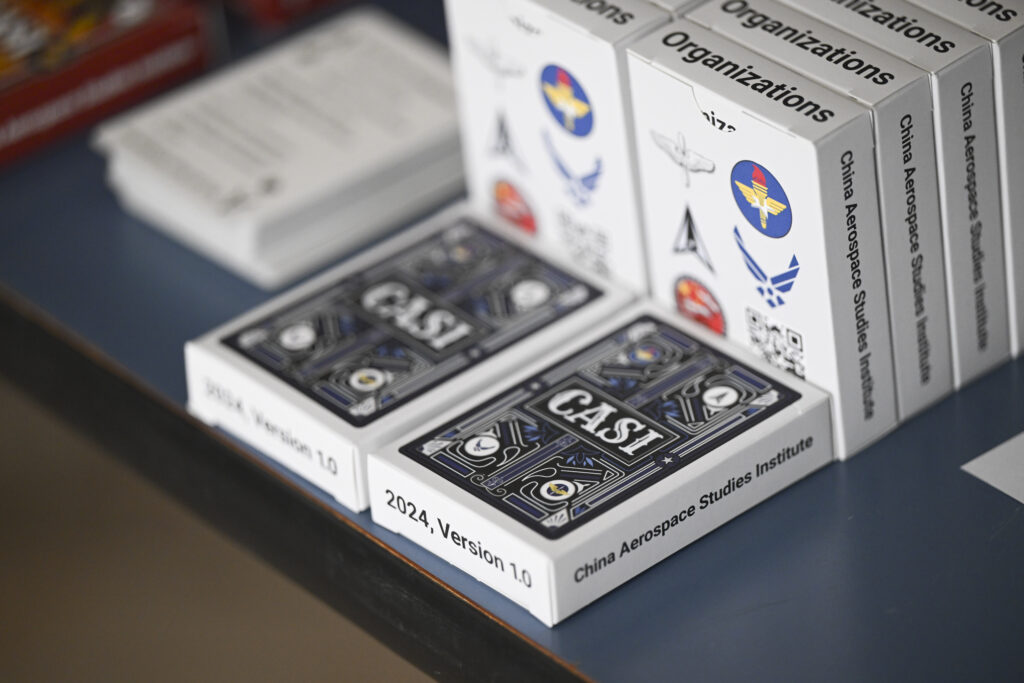
WASHINGTON — The Air Force is eliminating civilian staff roles for a service-run organization dedicated to studying Chinese airpower, but is not closing shop on the research entity, according to an Air Force spokesperson.
In a statement to Breaking Defense, the spokesperson said that in response to “an ongoing civilian restructure within” the Air Force’s Air Education and Training Command, civilian staff “will no longer be assigned to China Aerospace Studies Institute (CASI).” The spokesperson added that CASI’s “mission continues” and will be executed by “leveraging assigned military service members to accomplish its objectives.”
Affected civilian employees “will continue in their current positions until further notice and will be evaluated for reassignment,” the spokesperson said.
CASI is a premiere, government-run think tank that regularly publishes research on Beijing’s air and space forces. The entity shares its findings within the US military and the broader defense community to promote understanding of China’s military prowess, with the goal of shaping policy and strategy.
The organization’s most recent work was published Monday. The paper, entitled From Vision to Vigilance: How Beijing’s Space-Science Roadmap Builds a Real-Time Kill Webb, explores how technologies ostensibly geared toward space exploration could instead “support persistent, multi-spectral coverage across the Pacific with near-real time refresh,” the paper’s introduction reads. Those technologies could then be used for military purposes to aid what defense officials call a “kill web,” essentially a network of integrated sensors that can provide multiple ways to track and strike a target.
Trouble at CASI first surfaced on Monday when a civilian staffer posted online about roles being eliminated, including a claim that the Air Force planned to “shutter” the institute. The move, coming the week that Chinese President Xi Jinping is slated to visit the United States, prompted questions about similar study projects run by the Army and Navy.


Winning the information war is as much about ideas and perception as it is about data
"Being able to tell the commander you don't need to do something is actually a pretty powerful message, as well."
The Naval War College told Breaking Defense that “[t]here are no anticipated changes to manning or capacity at the China Maritime Studies Institute at the U.S. Naval War College.” Army University did not respond to a request for comment about the status of the China Landpower Studies Center, which is run by the US Army War College.
The reduction at the CASI mirrors moves championed last year during the height of the Department of Government Efficiency effort, where an analysis by Breaking Defense and the American Enterprise Institute found tens of thousands of civilian positions were axed across the Defense Department. Steep cuts have since prompted the Air Force to seek thousands of new hires, according to Air & Space Forces Magazine.
Diana Stancey in Washington contributed to this report.
Breaking Defense Video