Land Warfare

Didn’t get picked for IFPC interceptor competition? Army says come demo anyway

The service will continue working with the Lockheed Martin and Boeing-Anduril teams but also hosting “shoot-off opportunity” for additional vendors, explained Lt. Gen. Frank Lozano.

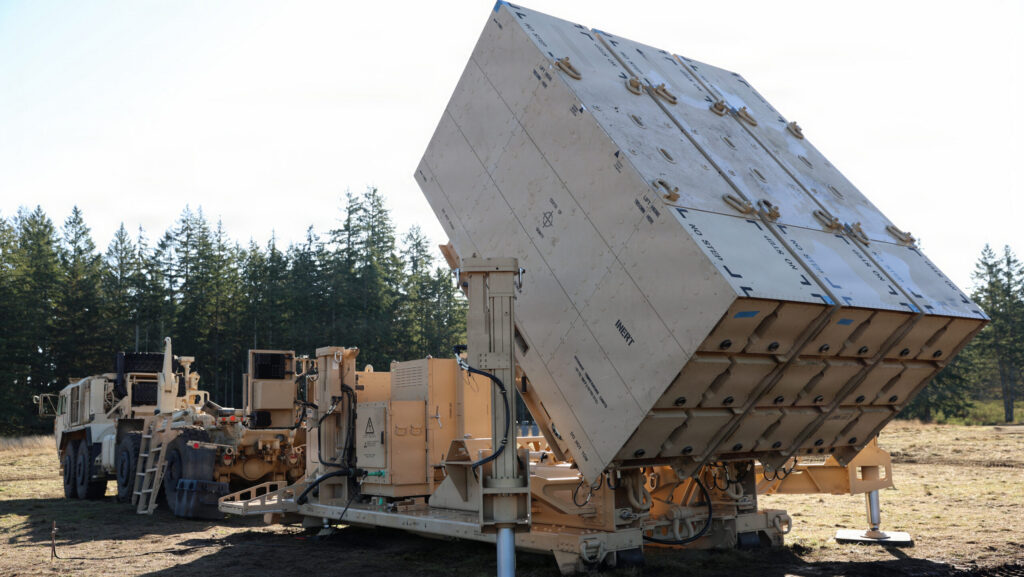
A Heavy Expanded Mobility Tactical Truck and one of the launchers assigned to 1st Battalion, 51st Air Defense Artillery, 1st Multi-Domain Task Force, participates in new equipment fielding, training, and gunnery certification of the Integrated Fires Protection Capability (IFPC) on Joint Base Lewis-McChord, Wash., Nov. 20, 2025. (U.S. Army photo by Staff Sgt. Brandon Rickert)

WASHINGTON — After tapping two teams to continue development for a second interceptor for its Indirect Fire Protection Capability (IFPC) Increment 2 launcher, the Army is creating a way for other vendors to keep competing, according to a three-star general.

Lt. Gen. Frank Lozano the Portfolio Acquisition Executive for Fires described the effort as an “off-shoot opportunity” that the service will pursue even as it works with competition winners Lockheed Martin and a team-up from Boeing and Anduril. The opportunity would allow for another competition planned for the fourth quarter of 2027. 

“We wanted to turn up the heat on that program,” Lozano told an audience Tuesday at the annual Association of the US Army conference. “I want to run an in parallel, what I call an in-strike competition.”

“We basically just said, ‘Hey, if there’s any other company who didn’t make the first cut … but oh by the way, [if] you continue to invest in its second interceptor capability, we’d love for you to come out to the range,’” he later added. “We’ll give you range time. We’ll present targets and will allow you to recompete with an opportunity to get back into the program fold.”

The service is using the same set up for the for next generation short-range interceptor program, allowing other companies to compete against Lockheed and Raytheon who are under contracts with the Army and competing for a production deal.

The move comes as the Pentagon looks for ways to ramp up critical munition production and refill its stockpiles. In recent months the department has inked a series of framework agreements designed to pave the path of multi-year contracts.

A Question Of Budgets

When it comes to Army programs, acquisition czar Brent Ingraham told the same audience that the service will need to see where the 2027 defense budget lands and make sure these munition deals are a funding priority.

The challenge for the Army and other services is, in part, centered on the administration’s decision to place a large swath of the munition buy inside a reconciliation request instead of the base budget. Lawmakers are not yet moving forward with that reconciliation request and defense officials may reshuffle the base budget request. 

“Depending on where a budget lands, what a top line looks like, whether there’s a reconciliation or not … all those things will drive us to figure out how we ensure that we continue to give the right demand signal to industry” on critical munitions, Ingraham said.

Despite the rash of framework agreements, he acknowledged, “I can’t expect industry to sort of invest like we’ve been asking them to invest on a wish list or a dream.”

Should the CR run for a full year, the Army may need to “reprioritize” funds to make sure the dollars are there to support the multi-year buys, he said.

PHOTOS: AUSA 2026

PHOTOS: AUSA 2026

Attendees file in during the first day of the 2026 Association of the US Army annual conference in Washington, DC, on October 12, 2026. (Breaking Defense)
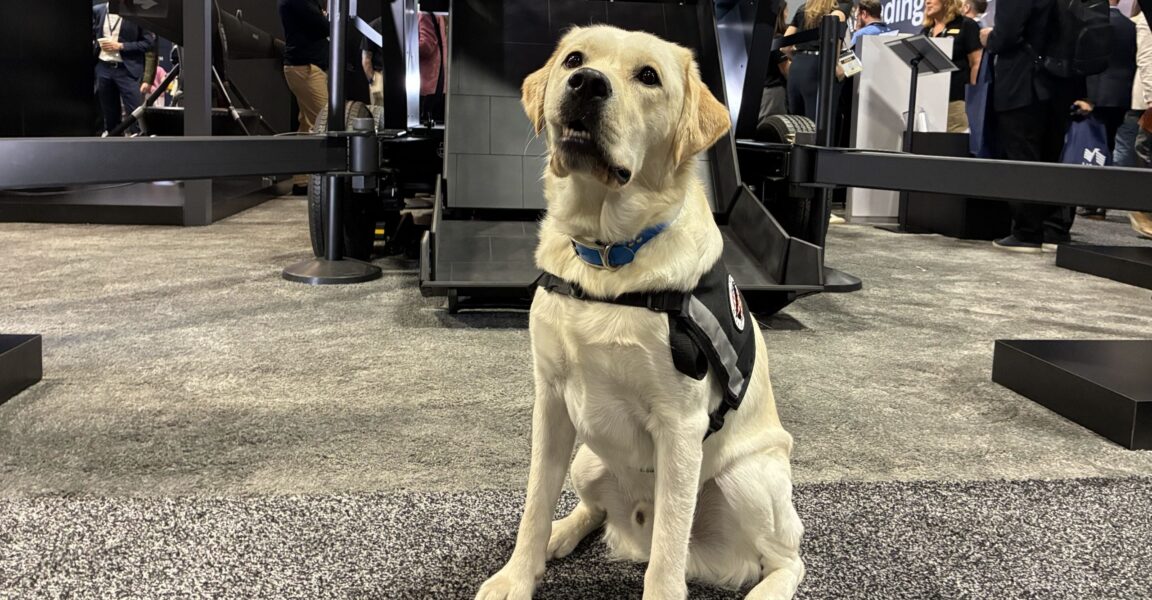
Patriot, who is expected to go to a wounded veteran when the dog’s training finishes, is happy to greet attendees outside the Shield AI booth on the show floor. (Breaking Defense)
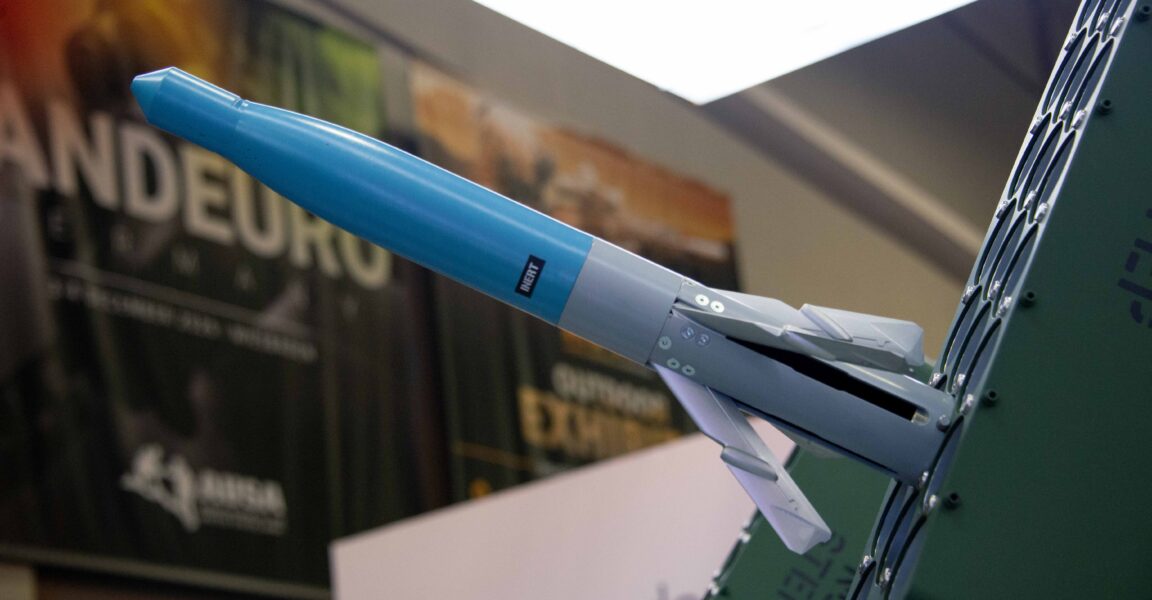
A close-up look at a munition from Sierra Nevada's Brawlr (Battery Revolving Advanced Weapons Launcher Reconfigurable) air-defense system, as seen at the 2026 AUSA conference. (Breaking Defense)
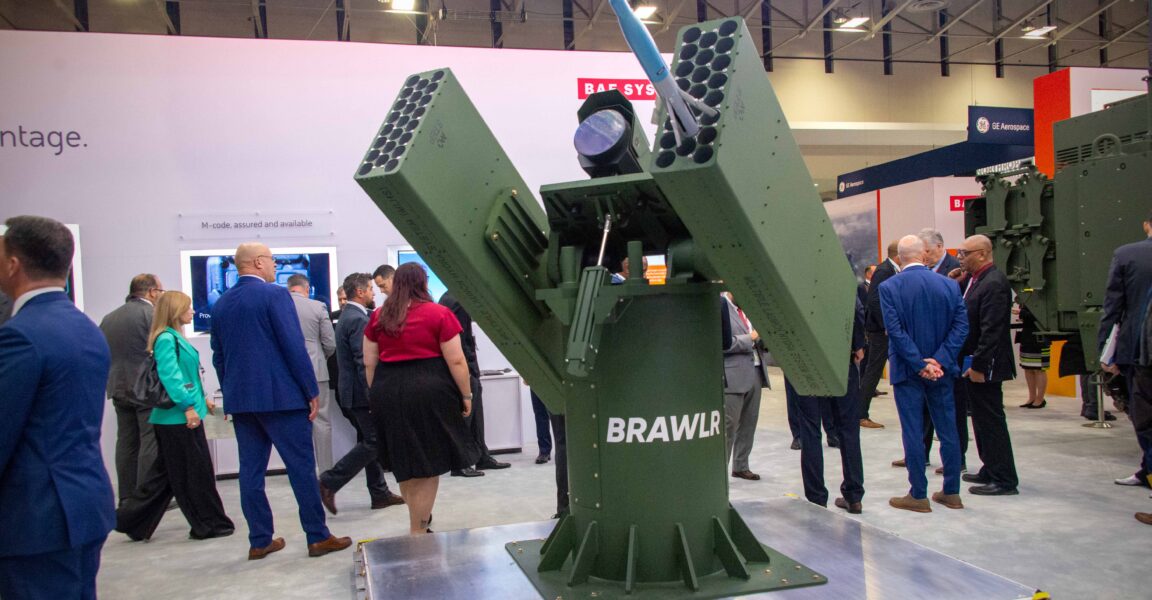
A wider shot of Sierra Nevada's Brawlr air-defense system at the 2026 AUSA conference. (Breaking Defense)
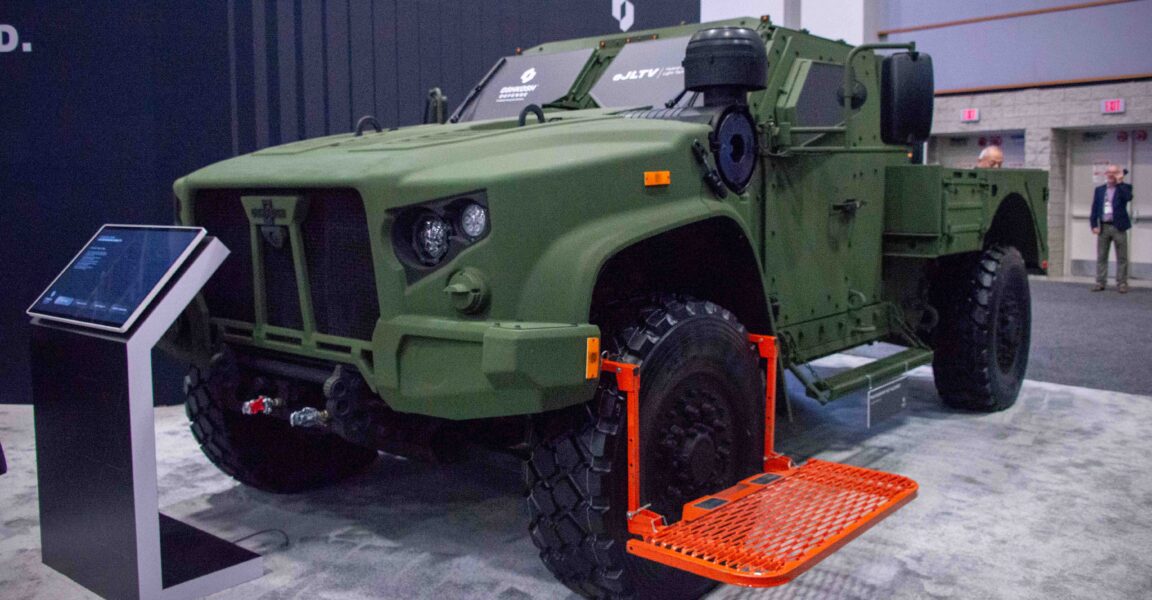
Oshkosh's electric Joint Light Tactical Vehicle on the AUSA show floor Oct. 12, 2026. (Breaking Defense)
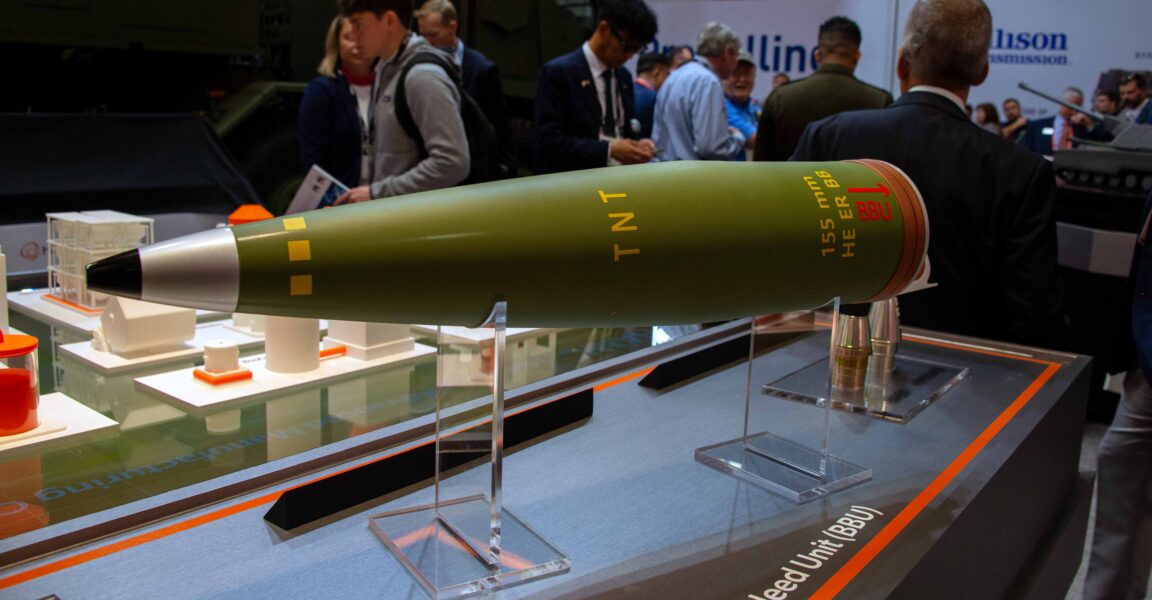
Hanwha Defense USA showed off its 155 mm artillery shells at the 2026 AUSA expo. (Breaking Defense)
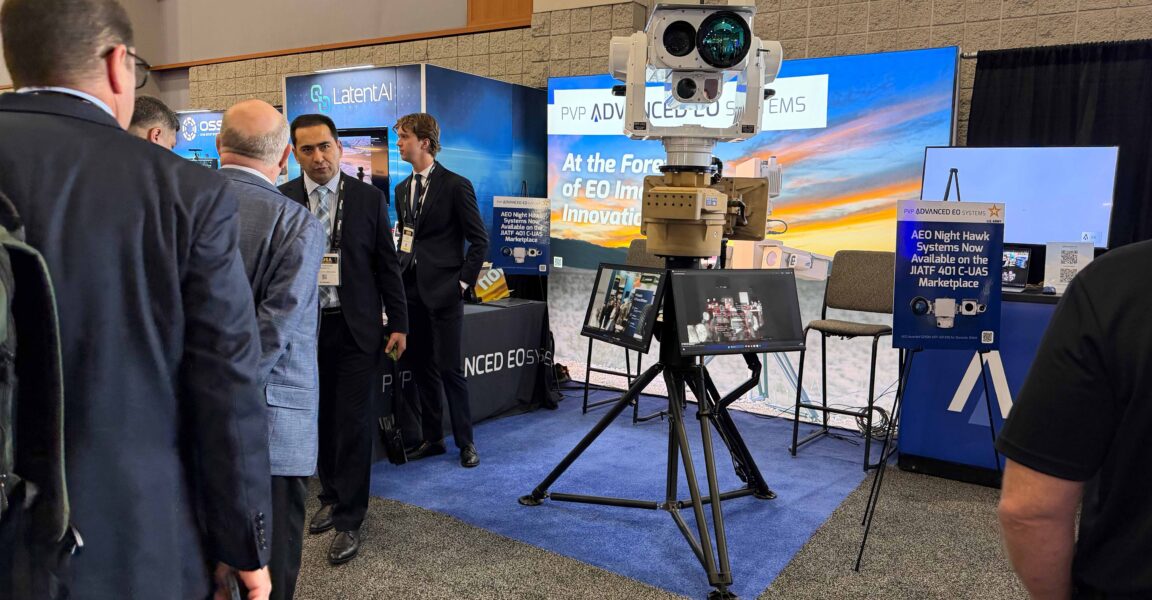
AEO Night Hawk Systems displayed their surveillance assembly, with sensors honing in on bystanders at the 2026 AUSA conference in Washington. (Breaking Defense)
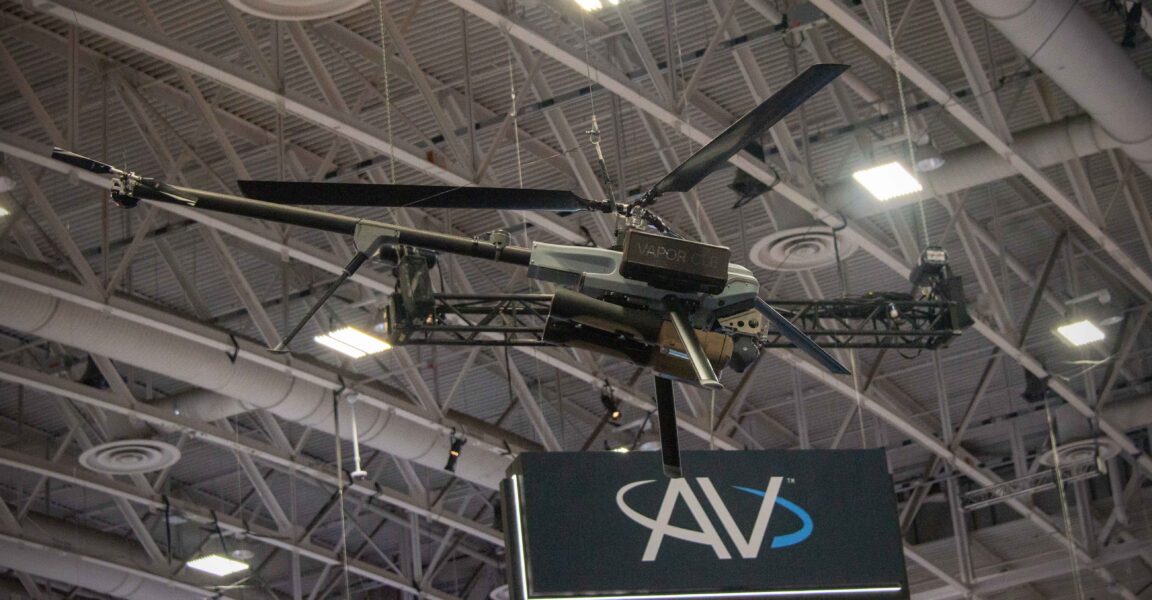
AeroVironment’s VAPOR is an all-electric, single-rotor vertical takeoff and landing (VTOL) helicopter unmanned aircraft system. Here it is suspended above attendees at the 2026 AUSA conference. (Breaking Defense)
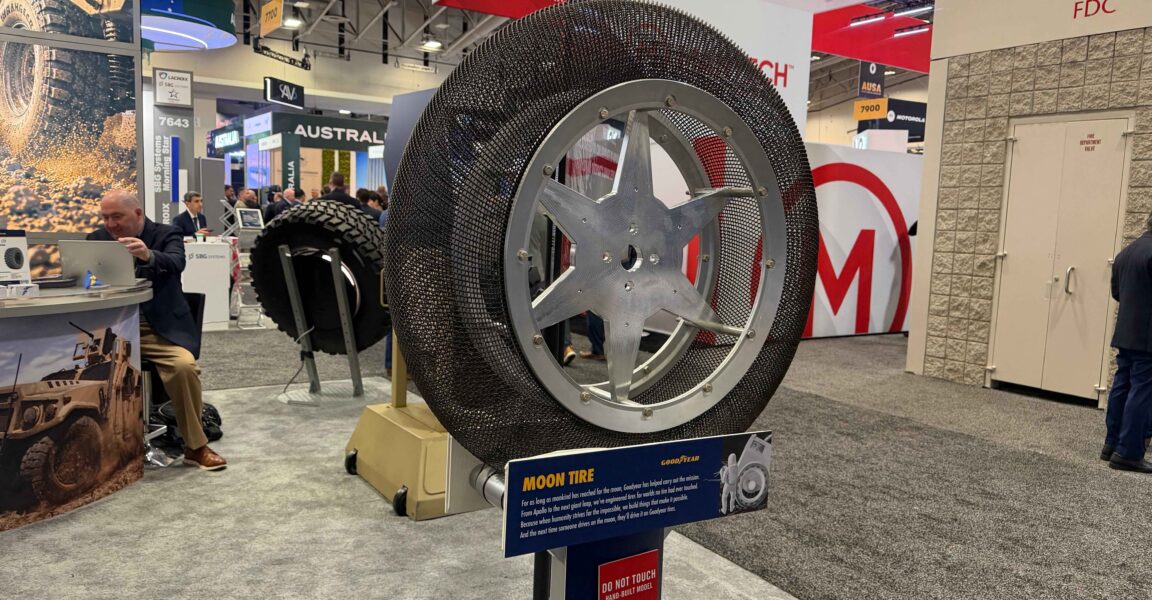
Goodyear representatives brought a sturdy but very unusual "moon tire" for lunar exploration to the 2026 AUSA expo. (Breaking Defense)
Colt optics had one of the busiest displays, with dozens of attendees observing a wall of assault rifles with specialized optics at the 2026 AUSA expo. (Breaking Defense)
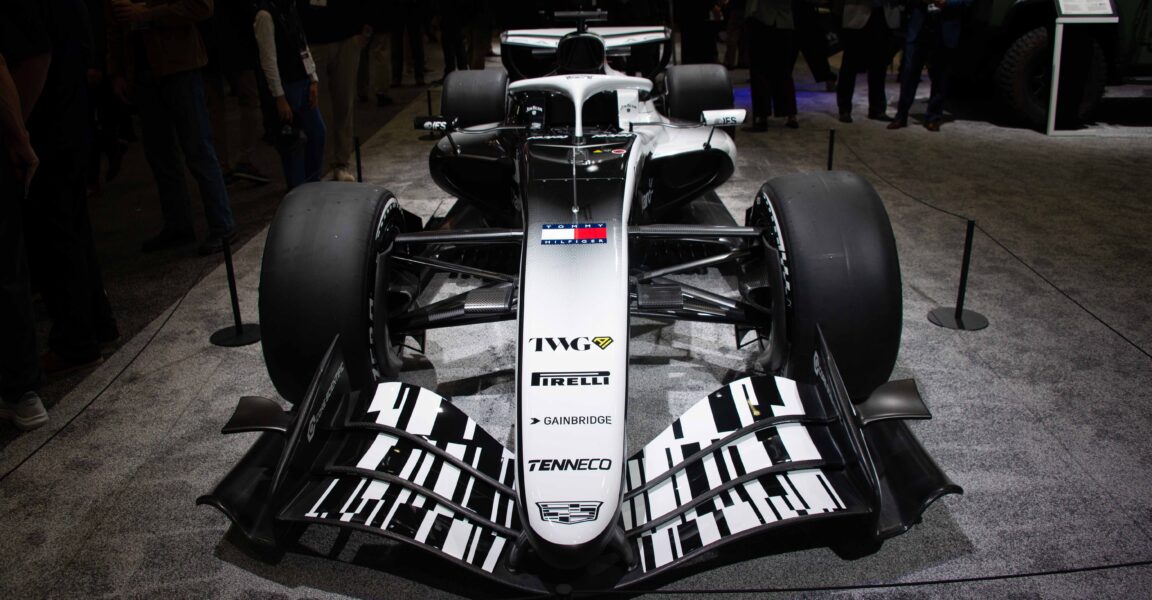
Cadillac brought its Formula 1 team racecar to the 2026 AUSA conference in Washington. (Breaking Defense)
AUSA mascots Sgt. Hero and George Washington descend the escalator at the 2026 annual conference. (Aaron Mehta / Breaking Defense)
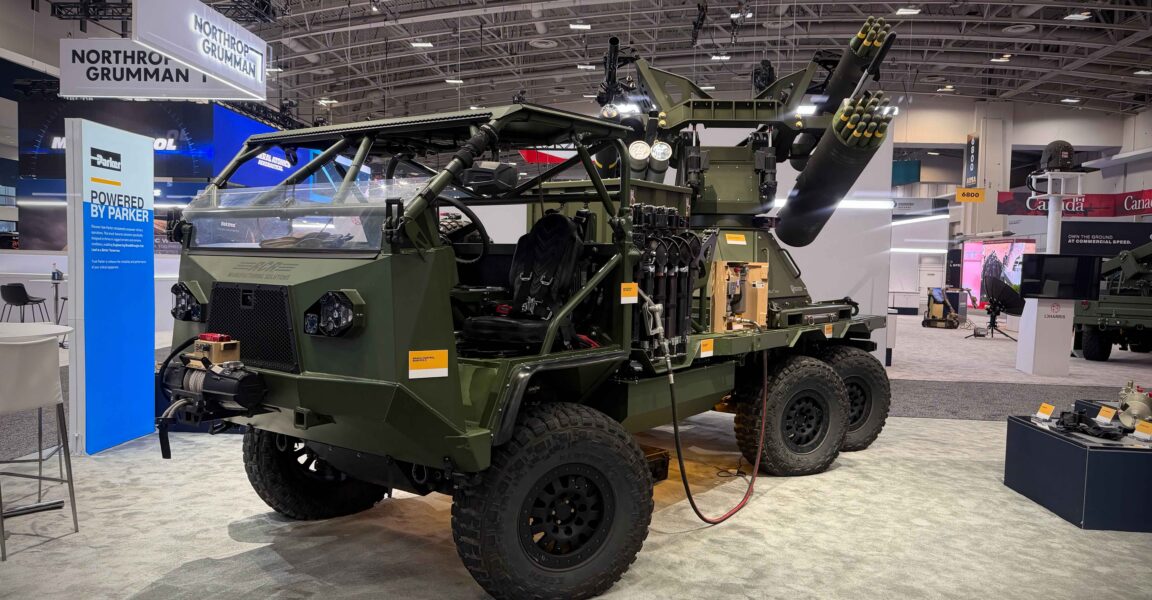
Parker Hannifin showcased many of its components onboard the MDH Strategic Services Airwolf c-UAS system, which is shown here fixed atop the RCR 6WAP vehicle. (Breaking Defense)
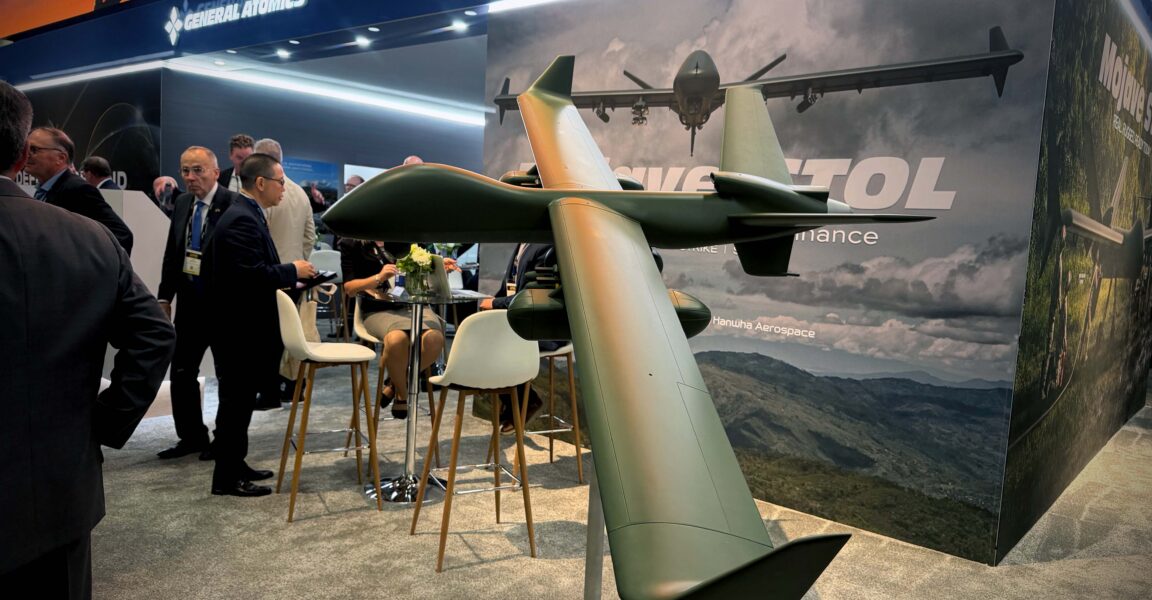
General Atomics Aeronautical Systems Inc. and Hanwha Aerospace co-developed the Mojave short takeoff and landing (STOL) uncrewed aircraft, pictured here at the 2026 AUSA trade show. (Breaking Defense)
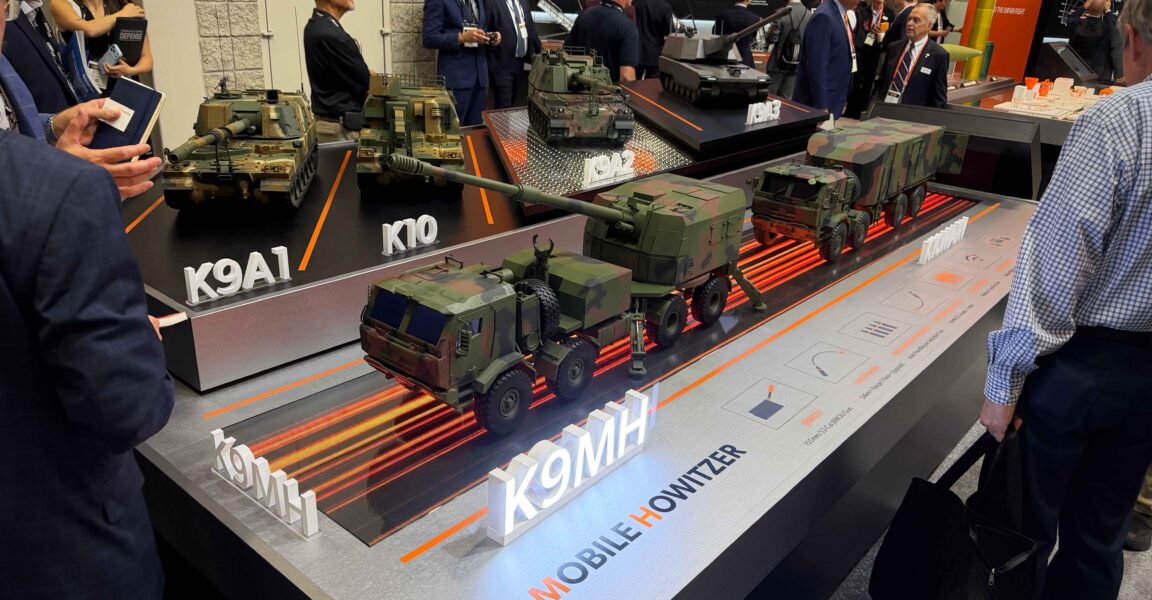
Hanwha Defense USA displayed a range of scale model armor and artillery systems on the AUSA show floor. (Breaking Defense)
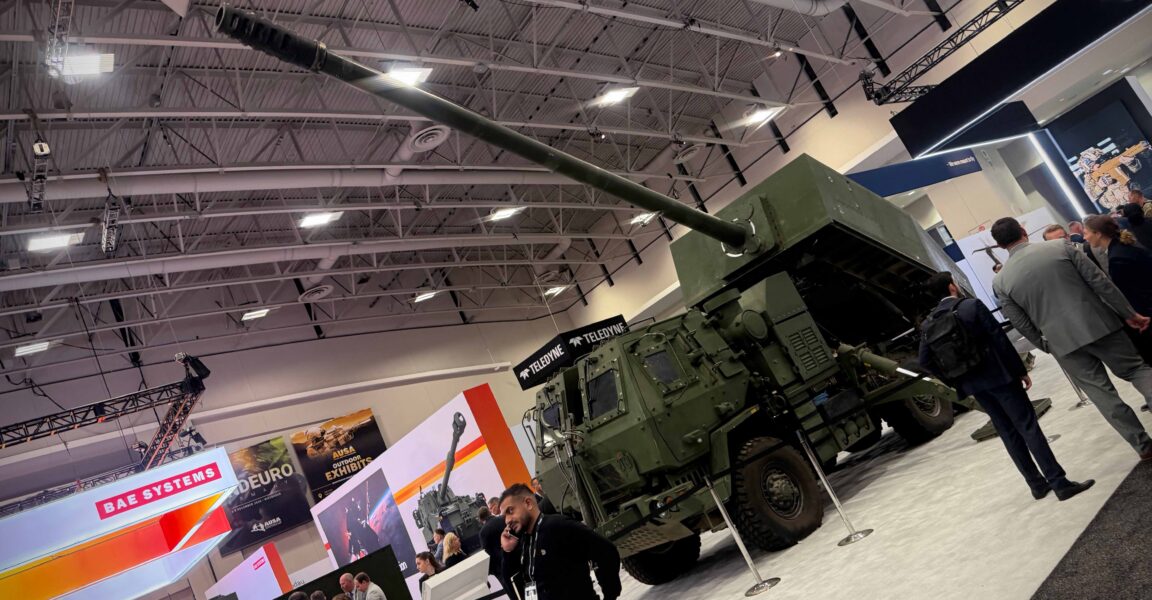
BAE’s Multi-Domain Artillery Cannon System stands tall at the 2026 AUSA trade show in Washington, DC. (Breaking Defense)
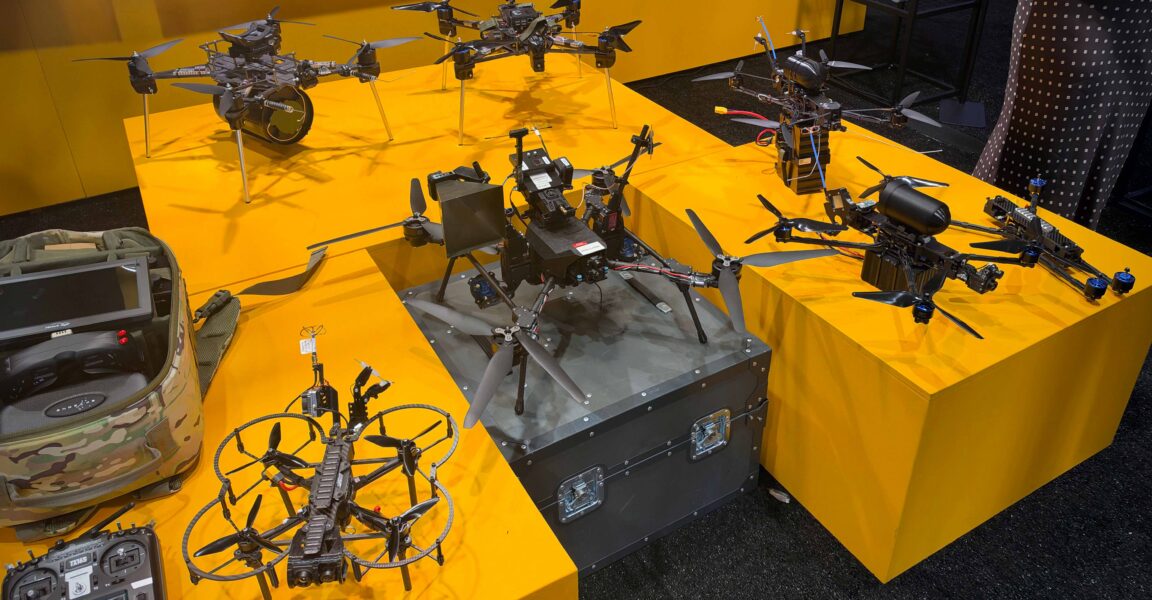
The Ukrainian military’s 3rd Army Corps brought a variety of small drones to the 2026 AUSA trade show. (Valerie Insinna / Breaking Defense)
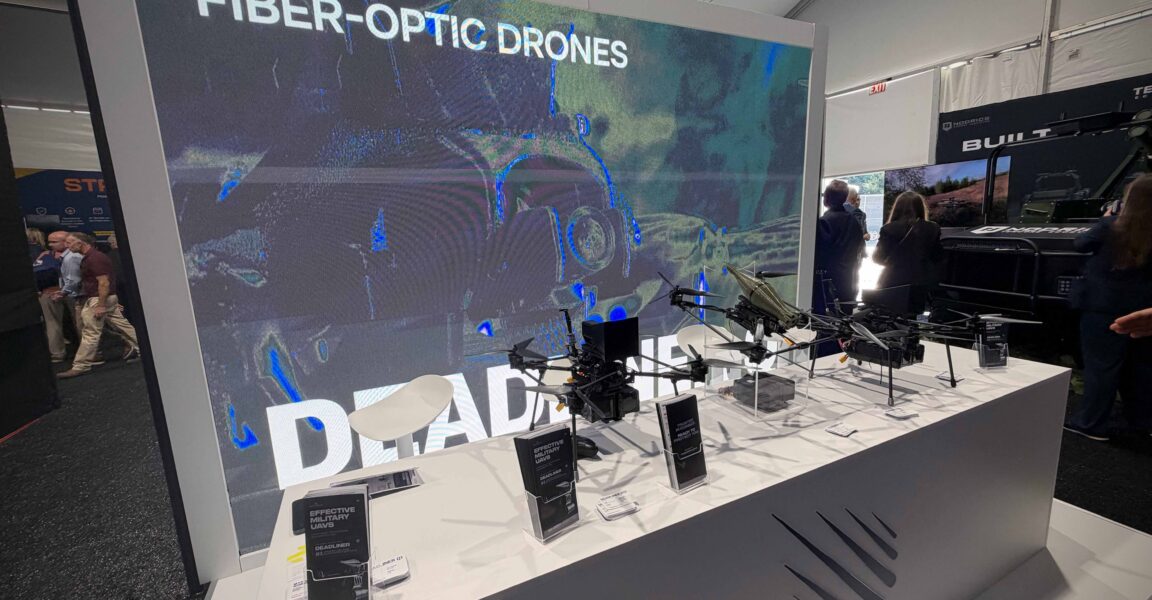
Kyiv-based defense tech firm Stellarion brought several fiber-optic drones to the 2026 AUSA expo. (Valerie Insinna / Breaking Defense)
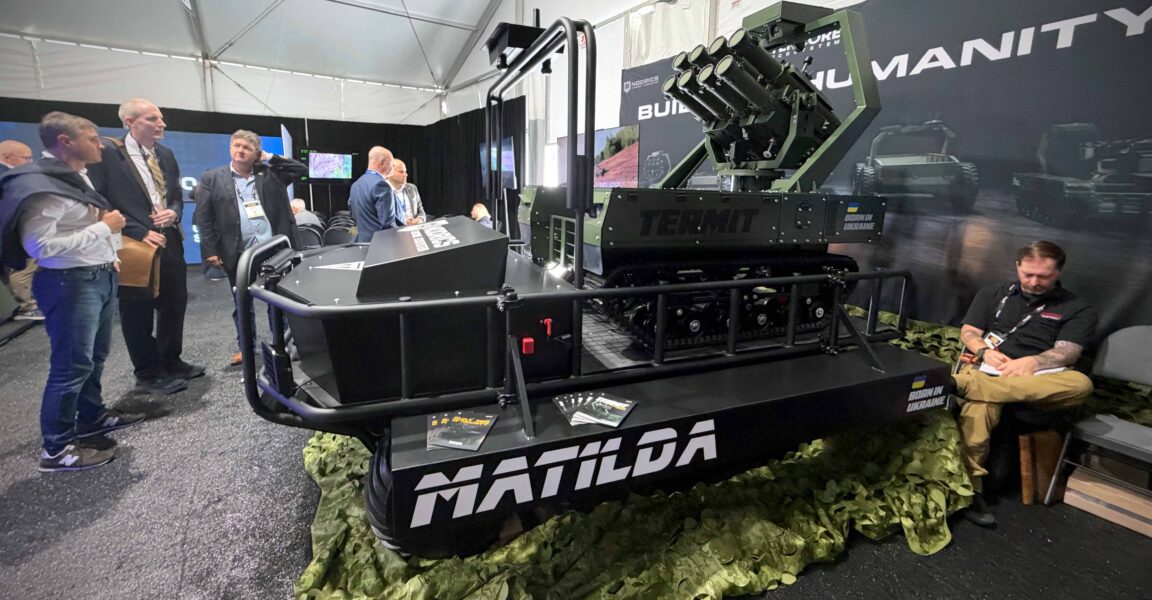
Ukrainian defense firm Tencore showcased an amphibious unmanned ground vehicle called MAT1LDA (Mesa Associates’ Tactical Integrated Light-Force Deployment Assembly), which is carrying Tencore’s TerMIT ground robot, at the 2026 AUSA trade show. (Valerie Insinna / Breaking Defense)
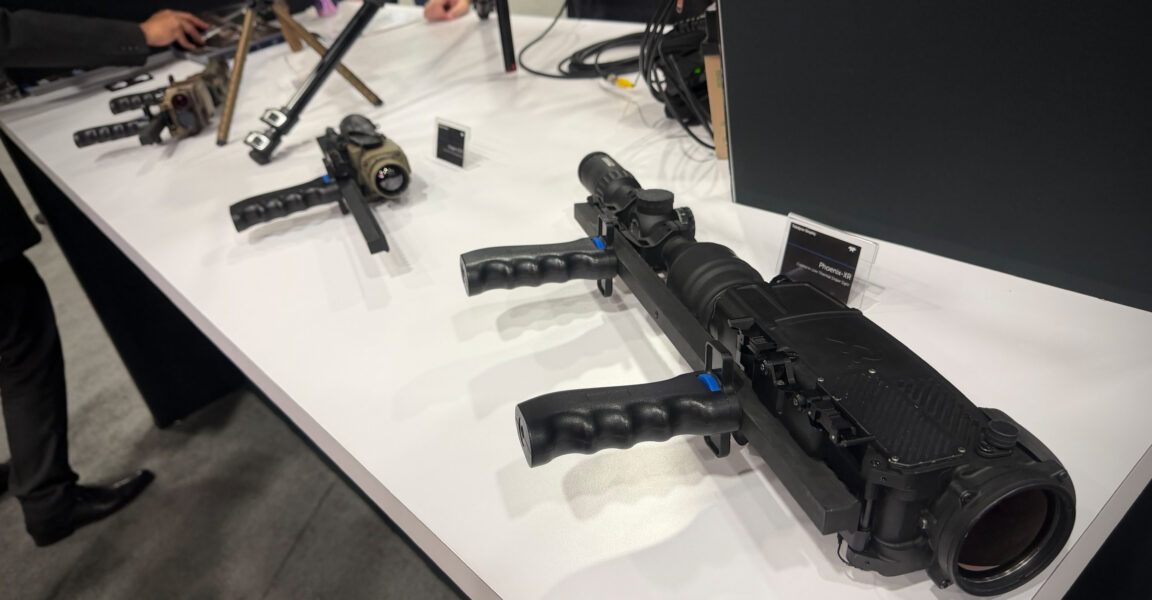
Teledyne Qioptiq brought several thermal weapons sights including the Phoenix-XR (right) and the Dragon-C12 S (middle) to the 2026 AUSA conference. (Breaking Defense)
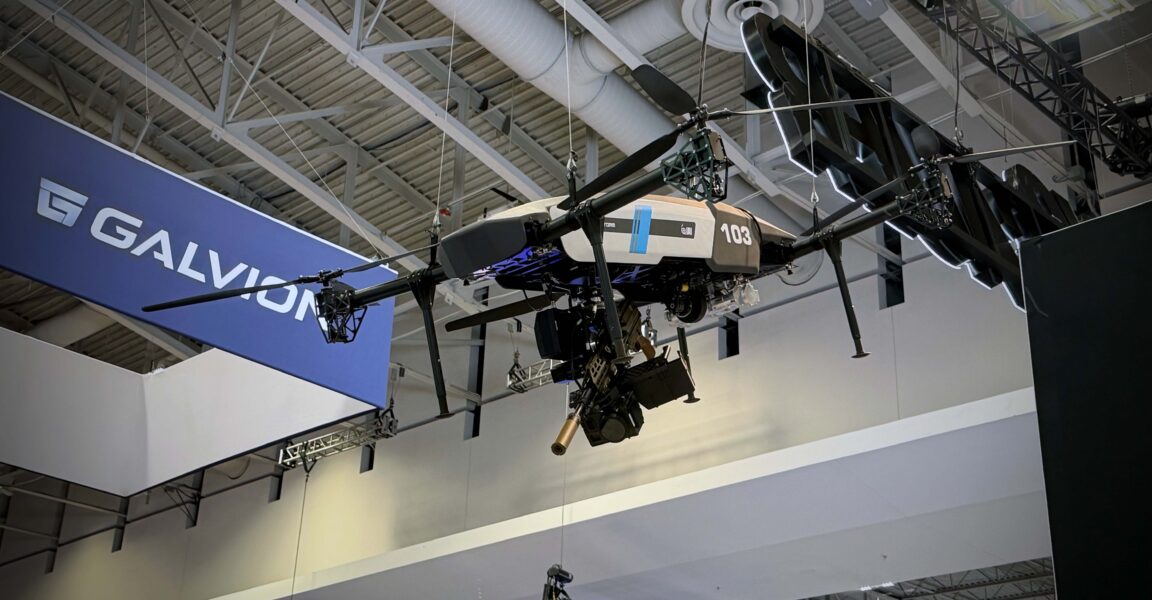
Israel Aerospace Industries’ and Sig Sauer’s Fire Storm 250 armed tactical quadcopter hangs above attendees of the conference. (Breaking Defense)
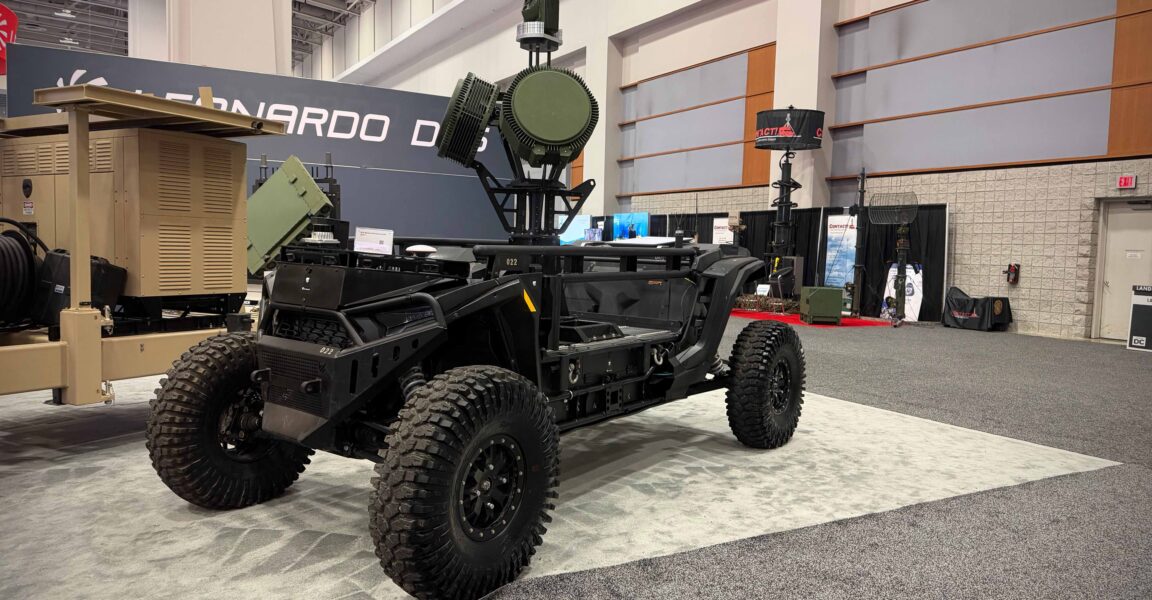
OverlandAI’s ULTRA autonomous ground system hosts a multi-mission hemispheric radar from Leonardo DRS, shown here at the 2026 AUSA expo. (Breaking Defense)
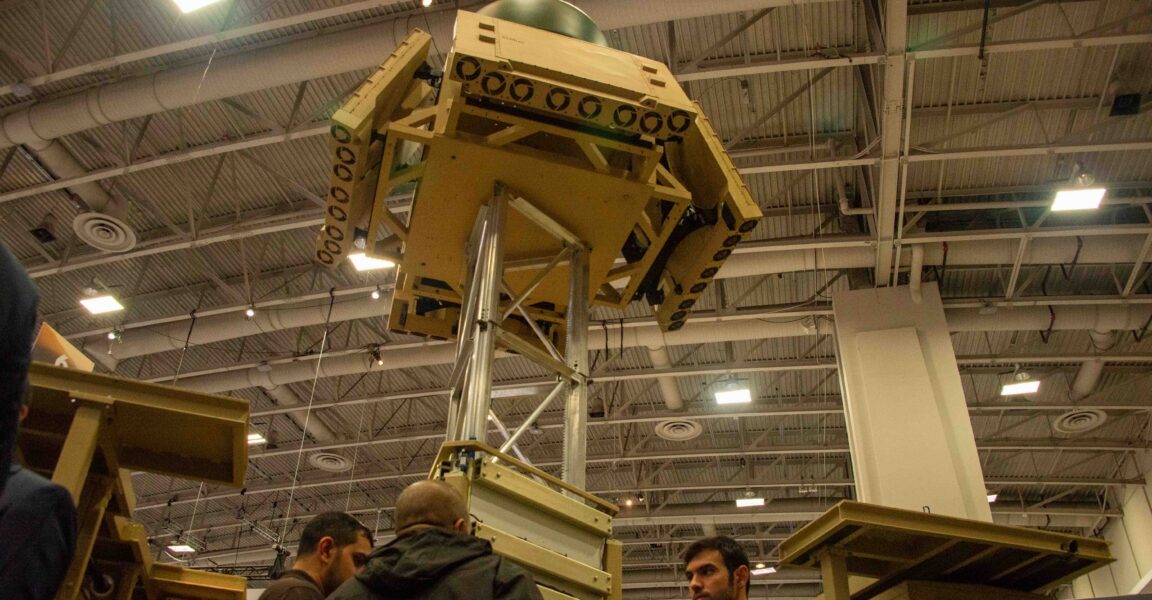
Leonardo DRS displays its Extended Mast Surveillance System, which features an exMHR radar system on a trailer platform with an extendable mast for a higher-altitude perspective. (Breaking Defense)