WASHINGTON — The Army is adding a year to pilot its data operations center as the service works to determine what a permanent organization would look like, officials said today.
“We are extended from Oct. 1, 2026, to Oct. 1, 2027,” Chad Nash, deputy of the Army Data Operations Center (ADOC), said of the organization at the AFCEA Data Forum. “What that will allow us to do is to continue gathering our findings, continue to allow us to gain metrics on what we’re seeing in volume of scale in terms of the challenges and those stovepipes that we may have.”
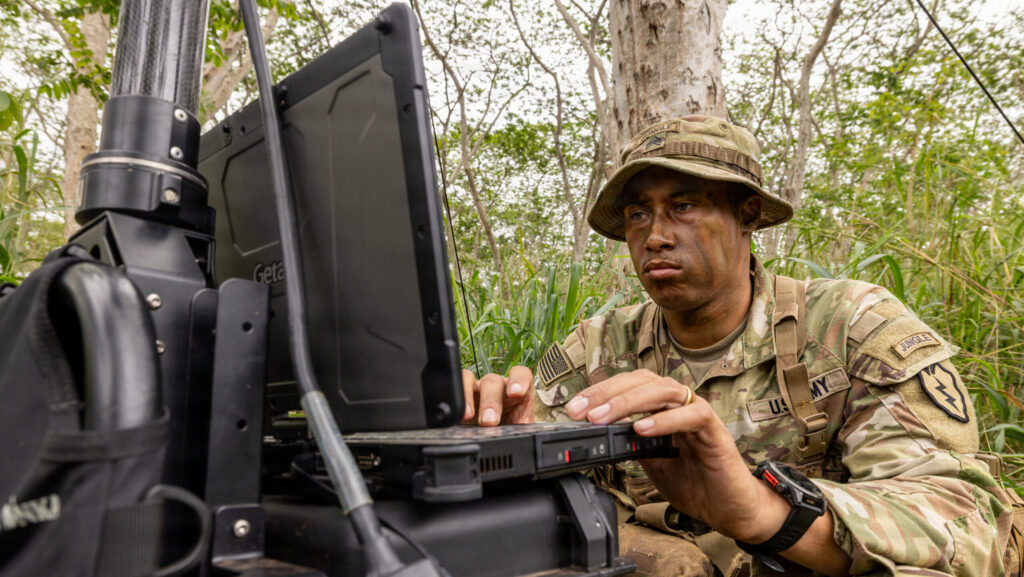
The ADOC was officially established in April under an initial 180-day pilot program as a clearinghouse for moving information and data across the world. For many formations, particularly at the tactical edge, there was no straightforward way to resolve problems with their systems, and the center was established in part to serve as a help desk to assist those units with accessing information.
Col. Reginald Evans, director of the Command and Control Future Capability Directorate and the ADOC, told Breaking Defense on the sidelines of the summit that there are “still some long lead process items that will need to take place, such as formalizing the structure” of the ADOC. That includes determining the personnel requirements and finalizing the billets needed to staff the organization.
Even if the Army formalized the organization today, it still wouldn’t have enough people to permanently fill the billets, Evans said. For now, the center will continue relying on personnel borrowed from other organizations at Aberdeen Proving Ground, Maryland.
Evans said Army officials believe they have identified the right mix of personnel, but need more time to formalize the organization’s structure and put staffing in place.
Officials noted they continue to learn and refine processes along the way.

Trust the “Super Intelligence” for mission-critical operations
Ensuring SI models and their underlying data are kept secure is critical to building digital tools that can be deployed readily in warfighting environments.
“We’re only learning more. We’re only getting better, and certainly as we as we solve these tactical challenges, we’re evolving our processes and in some instances, actually creating new processes using technology to make those things better,” Nash said. “Things that took in the beginning maybe two months to solve, we’re able to solve those problems in days.”
As the pilot continues, officials will make additional recommendations to senior Army leaders, who will ultimately approve whether to establish the ADOC as a permanent entity.
“Our senior leadership will ultimately make the decision post extension on the program, the duration and the extension of the final leg of the ADOC,” Nash said.
Breaking Defense Video