
WASHINGTON — Defense tech company Anduril Industries has inked an agreement to buy ExoAnalytic Solutions, one of the premier American firms specializing in satellite and missile tracking, Anduril announced today.
“We’re still pending legal paperwork, but we have entered into a definitive agreement to acquire them,” Gokul Subramanian, Anduril’s senior vice president of engineering, told reporters. “This is a company we’ve been working with closely for the last several years on a number of programs, and they are experts in space domain awareness and missile defense.”
The company is not disclosing the value of the sale, he said, as the final contract has yet to be signed. According to corporate sales intelligence platform ZoomInfo, privately owned ExoAnalytic is valued at about $15.6 million. Breaking Defense has reached out to ExoAnalytic for comment.
ExoAnalytic brings three key capabilities to Anduril as it seeks to expand it’s space portfolio primarily aimed at US military missions, Subramanian said.
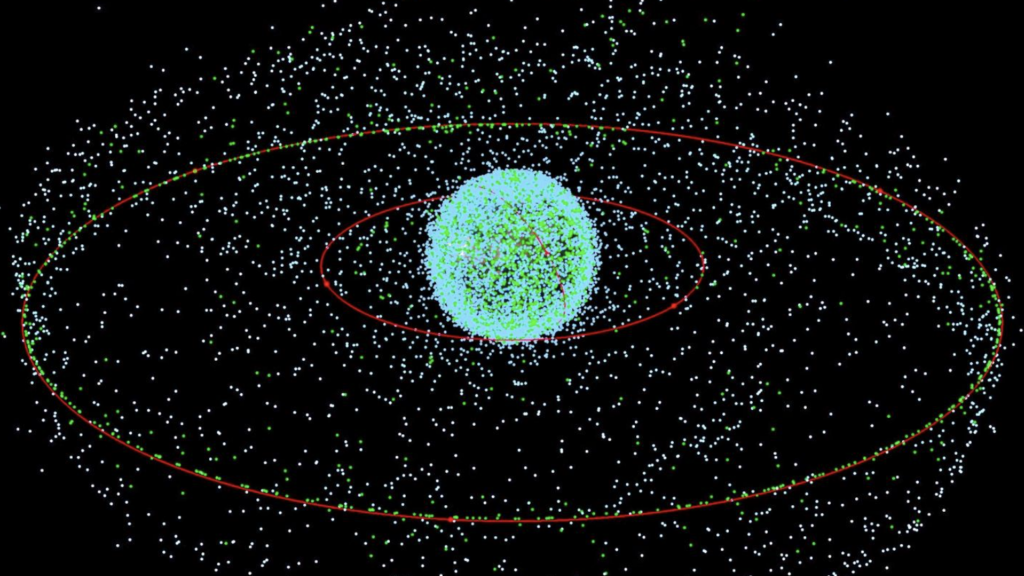
The first is the company’s global network of 400 telescopes that track space objects in geosynchronous Earth orbit (GEO), some 36,000 kilometers in altitude and where many high-value US defense and intelligence satellites are stationed.
“They run the largest telescope network on planet Earth, and they are, in our belief, … the best in class leaders at GEO space domain awareness,” he said.
ExoAnalytic shares its tracking data with the Space Force via the Commercial Integration Cell, as well as the Commerce Department’s fledging (and troubled) program to create a civil space traffic management system designed to take over US Space Command’s burdensome mission of warning non-military operators about potential on-orbit crashes.

Building logistics networks for contested environments
Explore how software, edge AI and resilient connectivity can strengthen military logistics in contested environments. Join Breaking Defense on Oct. 21 and earn 1 CPE credit.
In addition, the company provides space situational awareness as a service, as well as data products, to commercial operators.
“We plan to continue offering ExoAnalytics’ capabilities as a service to anyone who wants them, both the government customers who want to buy it as a service, but also industry. And ExoAnalytics currently supports industry direct sale of that data to a number of different providers. There will be no change to that,” Subramanian said.
At the same time, he stressed that Anduril’s planned investments in ExoAnalytic space tracking network would focus on “next generation products that start to become less commercial in nature and more fit for purpose, and you’ll hear more from us on that in the future.”
While Anduril focusing its growing space business for national security customers and missions, the company is planning to continue to provide commercial space situational awareness services, Subramanian said.
Second, ExoAnalytic is a key supplier of missile tracking sensors and software to the Pentagon.
“They are experts in digital signal processing, seeker theory, seeker design and estimation of targets — discriminating the hard body, discriminating the target from other things that might be in the environment,” Subramanian explained.
Finally, he said that the company supports the US national security community, as well as Anduril itself, with modeling and simulation.
In particular, he said, the ExoAnalytic team will be supporting Anduril’s future self-funded satellite demonstrations, three of which have been announced over the past two years. Anduril has been coy about those missions, with its website listing partner companies but showing graphics for each of the three cheekily labeled “Redacted” and empty of details such as satellite dimensions, launch dates and missions.
However, Subramanian said that one mission ExoAnalytic’s capabilities will support is the planned launch with propulsian startup Impulse of a highly maneuverable satellite equipped with an Anduril-designed long-wave infrared sensor as well as a mission data processor based on its Lattice software.
Such sensors are optimal for detecting and tracking ballistic missiles via their heat plumes immediately after lift-off, thus potentially contributing a foundational capability to the space-based boost-phase interceptors planned by the Trump administration as part of its ambitious Golden Dome air-and missile-defense shield.
Anduril originally had hoped to launch that satellite last year, but the schedule has slipped into this year.
According to Subramanian, the ExoAnalytic team of some 130 people will be “fully absorbed” by Anduril rather than organized as a separate subsidiary.