
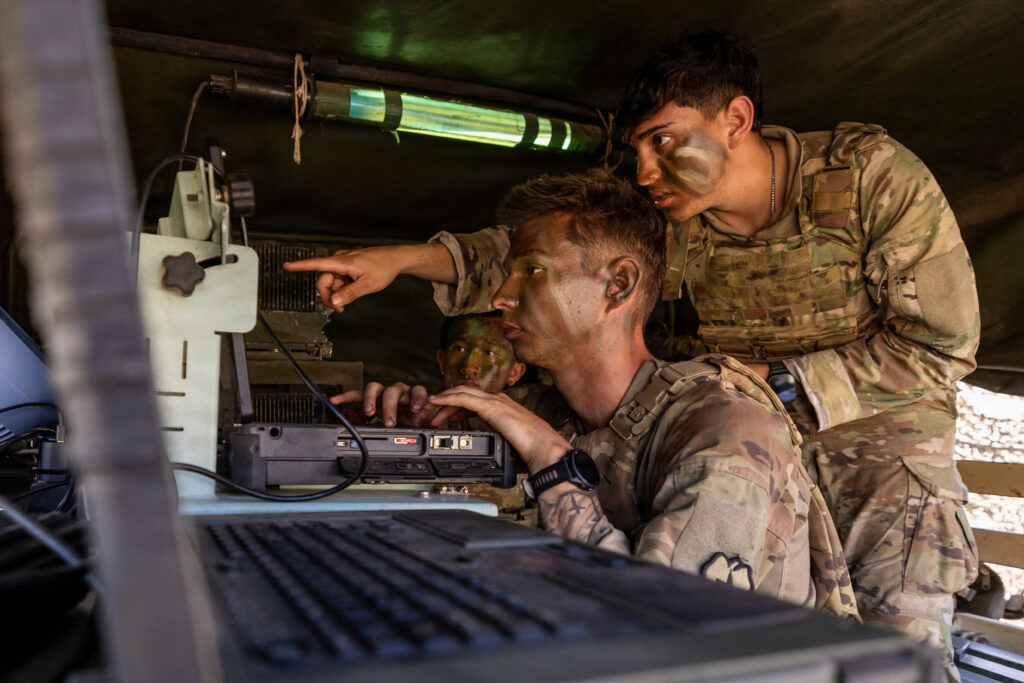
The Army’s work with the 25th Infantry Division (ID) in Hawaii is providing an operational test bed for Next Generation Command and Control (NGC2), bringing soldiers, software developers, and technology providers together to rapidly refine capabilities in the field.
Through a series of Lightning Surge exercises, the 25th has tested an open architecture that connects sensors, fires, airspace, and other data while allowing developers to respond to soldier feedback with software changes in hours or days. Lockheed Martin is the Full Stack Operational Implementation Lead for the Army’s 25th ID.
The goal is to replace platform-specific systems and lengthy development cycles with a modular approach that can add new technologies quickly, use artificial intelligence (AI) to support faster decisions, and extend lessons from the 25th ID across the Army. In this Q&A, Breaking Defense discusses the effort with Chandra Marshall, vice president and general manager for Multi-Domain Combat Solutions at Lockheed Martin.
Breaking Defense: What specifically is NGC2 intended to change for the Army? What problems does it solve for warfighters that they couldn’t solve before or took too long to solve?

Marshall: The purpose of NGC2 is shifting the paradigm to a mission-centric operation. The Army wants a composable architecture with common applications and core services, which allows them to rapidly integrate new software, weapons, and sensors into the architecture without rework.
NGC2 breaks down silos and stovepipes for new capability, across all echelons of the Army. It establishes a common framework so that you can quickly insert capability.
Using a Modular Open System Approach (MOSA) and AI, we can help decision-making for the Army. AI combs all the data that is out there and turns it around to commanders very quickly, reducing latency from minutes to seconds for warfighters.
AI is obviously just one tool that enables quicker decision making for the Army. It’s not making decisions for the Army, it’s correlating data to provide recommendations to commanders with the right information at the right time so they can make quick decisions about what actions they need to take.
We hear a lot about the importance of a ‘data layer’ in NGC2. What exactly is it?
It’s the way that data is passed through the system – the layer that ingests the data and makes it available to any application or operator, depending on their role, access level, and warfighting function. The system automatically knows, based on the rules that you set, who that information is applicable to and what level of the Army it should go to. That gets data to soldiers that need it – fast.
How is the work with the 25th ID changing the way C2 capabilities are developed, tested and refined?
It’s refreshing to work in an environment where the Army did not give us a strict set of requirements. They gave us objectives. That has enabled us to move at speed and make changes to our software based on what we’ve learned in the field from the soldiers and warfighters at the 25th.
They give us feedback real time so we can make software changes within minutes, hours, days, depending on the complexity of the feature. When we conduct Lightning Surges, it’s about operational fight-tonight capability the 25th ID can use now. It’s not a prototype, so it’s been powerful in that regard.
In under 10 months, with a very efficient budget, we’ve been able to deliver NGC2 solutions to the Army that the 25th ID used operationally across PACOM and exercised during Balikatan.
Give us an example of soldier feedback, a specific thing that you were able to quickly make better based on a soldier working on it at Schofield Barracks?
During our Lightning Surge 4 demo, soldiers told us: “We don’t want to have to interact with the screen. We want to just talk into the microphone and have the system understand the commands.”
We came up with a solution we called an AI-driven hand mic, and integrated it with an Army edge device. Now they can speak commands directly into the microphone without having to physically interact with the screen, which made operations smoother, faster, and largely hands-free. We designed, built and delivered that update within days.
Draw us a picture of what this new NGC2 capability would do for soldiers out in the field.
Lightning Surge 1 and 2 laid the foundation. Lightning Surge 3 and 4 showed our architecture in action. In Lightning Surge 3, we fused sensors, fires systems, and airspace into a single cloud enabled picture.
Why is that important? It compresses the sensor-to-shooter timelines because they get a real-time view of the battlefield – and in this case, it was across the Indo-Pacific.
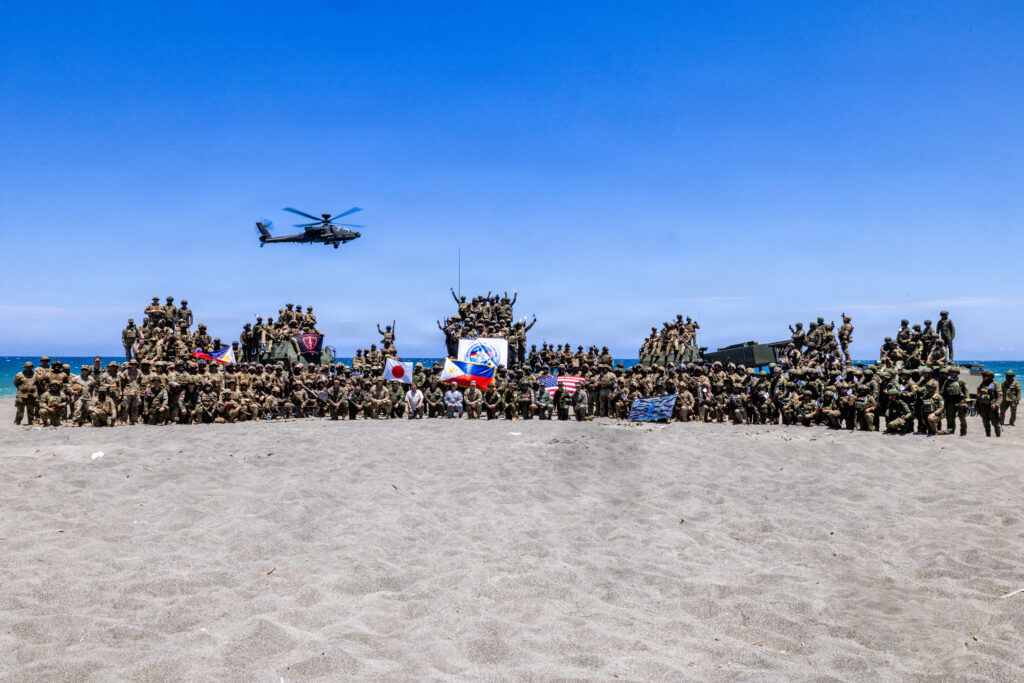
We did that exercise across both the 25th ID in Hawaii, in the Philippines and across PACOM. It was the first demonstration of cross-domain data sharing in the 25th ID environment across multiple locations.
How does the Army’s development and procurement approach to the NGC2 program differ from traditional single-winner acquisition programs?
We have decades of experience working with different software technology providers. With NGC2, the Army is bringing together a broad spectrum of small businesses, non-traditional innovators, and commercial technology.
For us, and the work that we’ve done at the 25th as the operational implementation lead, we have a strict onboarding and offboarding process. We want the best solutions for the right pieces of the architecture. We evaluate that and work with the Army to make those decisions.
Typically, it’s hard to remove a supplier out of an architecture. In the open architecture that we’ve established, if something isn’t working or it’s not the best for the architecture, it’s very easy to switch out capability to be the best.
Tell us what a few partners bring to the team in support of the 25th ID.
To date, more than 60 companies have contributed or are under analysis to be a part of the Army’s NGC2 ecosystem. Just to name a few, the data platform for the 25th was based off of the Raft Data Platform ([R]DP) product. Amazon Web Services, we use a product called Wickr Chat, a cloud network and cyber collaboration tool. Rune Technologies delivered TyrOS for contested logistics.
Final thoughts and takeaways?
NGC2 is all about speed and quality. We’ve proved that we have a modular approach that’s very lean and we can develop and deliver a full-scale solution for the Army.
Our open architecture lets any vendor plug in, meaning that the Army can continuously add in best-in-class capabilities without costly re-work.
The ecosystem is future ready with AI decision aids. We’ve already demonstrated them. They’re very powerful. NGC2 will be the foundation for what’s to come as new technologies emerge to keep the force ahead of emerging threats.
We’re excited to continue to work and partner with the Army as we go to execute these next few Lightning Surge events in support of the 25th. And we are excited for the future for NGC2 as far as potential extension to other divisions within the Army of the capability that we’ve developed here.