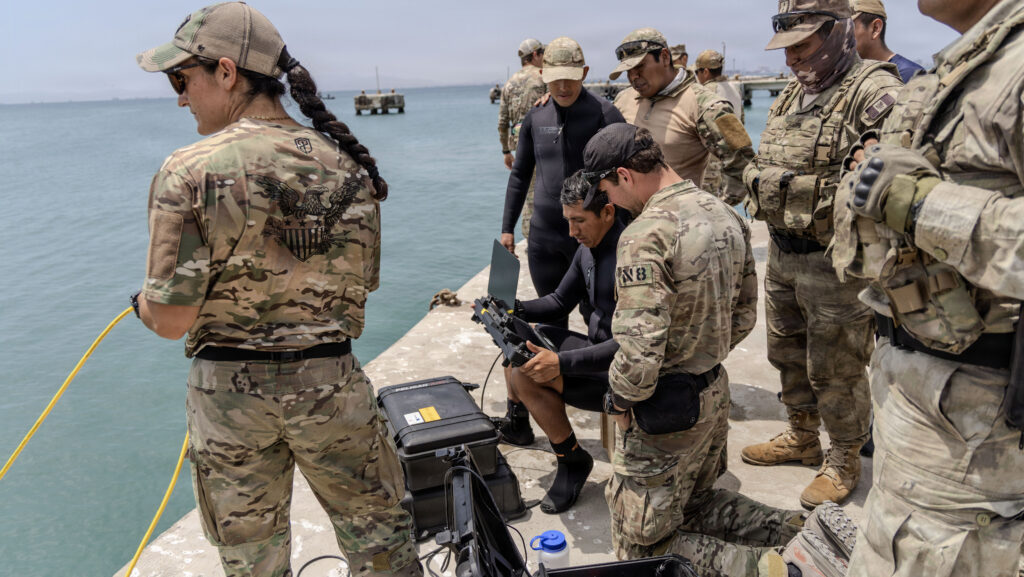
Maritime mines are a concern for the US and its allies in a number of regions, including the Strait of Hormuz and the South China Sea. In addition to being a threat to military vessels, mines can slow or halt commercial traffic through important trade and oil routes.
Breaking Defense spoke with Bryan Clark, director of the Hudson Institute’s Center for Defense Concepts and Technology, on the threat of mines, how they can be neutralized and the role of remote mine hunting in keeping personnel out of harm’s way.
Breaking Defense: Why are maritime mines such a serious threat in some of these strategic choke points like the Strait of Hormuz or the South China Sea?
Clark: Partly because they’re so easy to obtain or build, and then deploy. The Iranians even have rockets that can deploy mines at a standoff distance into the strait. That’s just an example of how easy it is to put these mines out there because you don’t need to precision guide them. You just drop them into the approximate area of the channel and that’s going to be sufficient to hold up traffic.
Mines don’t have to be sophisticated. There are obviously very sophisticated ones that look for particular acoustic or magnetic signatures. There are some that’ll measure how many ships go across and detonate on the third or fourth ship, but they don’t need to be smart in order to be effective. All you need is somebody to detect the mine and know that it’s there, and it’s going to cause vessel traffic to stop until the mine threat has been eliminated.
The barrier to entry is low. Countries can easily field a capable mine-laying capability or mine-laying force and then deny access in a critical strait or choke point. You have countries out there for whom mines are the main weapon, like Finland. When they think about having to face off against the Russians, the first thing they plan on doing is mining the Gulf of Finland, which prevents access to and from Sevastopol or St. Petersburg. You’ve cut off one of Russia’s only warm water ports by closing off the Gulf of Finland, and that’s for them their primary offensive capability.
For Iran, obviously the drone revolution has given them another offensive weapon, but mines have always been one of their main go-tos in terms of offensive weapons. It’s always been perceived that they would try to use them to close off the Strait of Hormuz because it is such a narrow choke point and so vital to global commerce.
The other thing about mines that makes them more potent as a threat is that you’d only need the threat of a mine in order to close off access. If you have a mine detection or even a concern about mines, vessel traffic will generally stop until the threat’s been verified or validated, or shipping companies decide to accept the risk and either pay higher insurance rates or accept the potential loss of their own ship. It’ll impact shipping even if you just have the threat of a mine without the physical presence of them. That makes them an effective tool even for small countries.
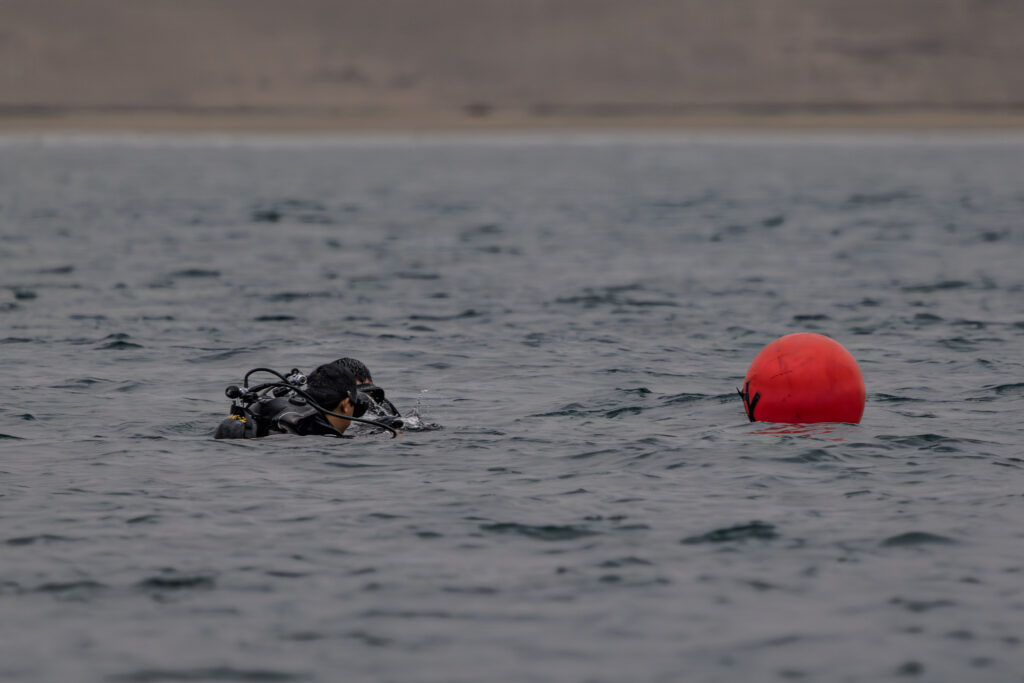
How do you determine if a mine is a valid threat?
You can’t discount the threat. Because shipping companies don’t want to accept the risk of them being wrong or you being wrong if you say, ‘there’s not really a mine threat’ You have to take it at face value.
The first thing you do is find a channel that’s mine-free. That’s what the US did early on in the war. They used the remote-mine hunting systems they had to verify that the channel along the Omani coast was free of mines. Once you’ve verified a channel free of mines, it doesn’t necessarily matter that there might be mines elsewhere. You can lead ships through that safe passage, and then if you want to increase traffic or provide for more two-way traffic, then you have to expand the channel and search a larger area.
How does the Navy currently hunt and neutralize mines, and how has that task become less dangerous?
It used to be very dangerous, because you’d have to send a human-operated minesweeper out, which puts people at risk. Mine-hunting ships have been traditionally wooden or fiberglass to avoid creating a magnetic signature. They use a sonar system on the front to detect the mines and then they will have a sweep system they tow on the back or they’ll use neutralization systems to neutralize the mines after they find them.
Now the systems they use are robots. They have active sonars on board that they use to search for mines. It becomes kind of like a Roomba, where the robots go up and down the route looking for mines in the water column. They’ll stay near the surface and then look down into the water, and as long as the water is not extremely deep, they’ll be able to see the first 100 or 200 feet of water and detect mine-like objects.
They’ll identify things that they think are mines. When they do their run and come back, you download all the data off of them into a computer, which has processing software that helps you to figure out what are things that need further investigation.
Then you can send out another set of robots to investigate the things that might be mines to get a better idea of whether they’re really mines or if they were objects dumped on the seafloor or, things floating in the water that aren’t mines. That usually narrows down how many things you have to investigate further.
At the point you’ve determined there’s mine or mine-like objects in the water that have to be neutralized, you then send out a helicopter or a small boat with a mine neutralization system on it, which is a floating vehicle that has little torpedoes that’ll come off of it and those are fiber-optically guided to the target. You have a video screen and a joystick, and you steer those mine neutralizers to the mine and they detonate on that object.
Either they blow up the mine – if it’s a mine – or they punch a hole in it and it sinks to the bottom. These mine neutralizers have been around for 20 years or so, but they do keep the people out of the minefield.
It keeps people out of the minefield because now you don’t have to have the minesweeper driving into the minefield anymore. You can also do it at a greater scale. Because I can buy a lot more robots than I can buy minesweepers, because every minesweeper needs a crew and people are expensive. If you want to expand your mine-hunting fleet, you end up having to buy a bunch of manned ships. If you’re buying robots instead, you can buy a bunch of robots, store them, and then bring them out when you need to do the mine-hunting operation.
As you look forward, what do you see as the capabilities that will be needed most for counter-mine operations?
Onboard processing and communications. One of the limitations of the current way of doing it is you have to have the vessels or the vehicles doing the mine hunting come back and download all their data, then analyze it and then send out another set of vehicles to go investigate the likely mine areas to verify, and then send out another set of vehicles to go do the mine neutralization – helicopters and small boats with mine-neutralization systems. It’s a multi-pass setup the way it is now.
If instead you had onboard processing from these mine-hunting vehicles, the underwater vehicles looking for the mines could come up and transmit data back to you immediately and say, ‘I finished path one. I found a bunch of mines or potential mines. They’re here.’ Then you can quickly decide whether to send another vehicle out there right now to investigate, or to just send the mine neutralization system out immediately.
You should be able to get to a point where you can do this in a way that is just robot after robot after robot.