
The National Commission on the Future of the Navy: The time is now
In this op-ed, leaders of the congressionally mandated commission lay out an ambitious plan to assess the Navy's woes and recommend solutions.

In this op-ed, leaders of the congressionally mandated commission lay out an ambitious plan to assess the Navy's woes and recommend solutions.

In this op-ed, Dustin Walker and Mackenzie Eaglen of AEI assert that the US will struggle to keep hitting 3 percent of GDP spending if the budget doesn't expand dramatically.


Partnerships with outside industry are a cornerstone of the kingdom’s ambitious growth strategy.
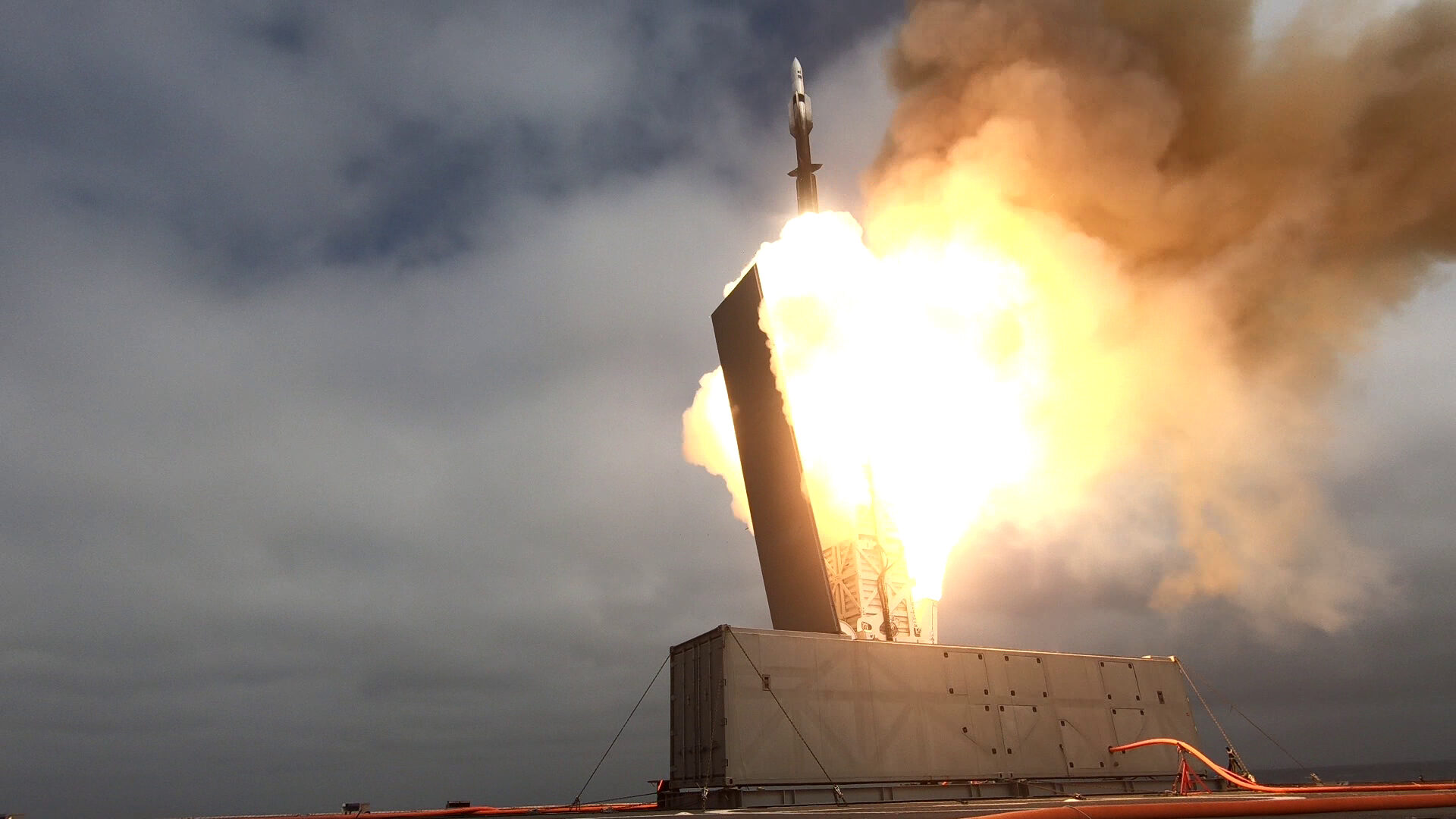
In this op-ed, Mackenzie Eaglen and Cole Spiller of AEI lay out why the Pentagon shouldn't be so quick to retire old technologies in favor of newer ones.

"The president and Congress must go beyond one-off supplemental measures" to support Naval shipbuilding, writes Mackenzie Eaglen of the American Enterprise Institute.

"Under-manned units over-operate, resulting in an unrested and less specialized force. And the only real solution to this issue is to add fresh bodies to the force," writes Mackenzie Eaglen of AEI.

AEI's John Ferrari and Mackenzie Eaglen write that in failing to adjust its budget to the realities of inflation, the Pentagon is careening towards budgetary trouble.


On today’s battlefield, mobility isn’t optional - it’s mission-critical.

With the long saga of the fiscal year 2022 budget looking like it will be finalized in March, eyes now turn to the FY23 defense budget and what it might look like. Between Russian aggression, inflation and a Congress that appears supportive of increasing defense spending, it’s unclear how high the Pentagon’s budget will go. […]

Even though a short spending freeze seems mostly harmless, it is clear the US military cannot buy back time.

It will take time for the Biden administration to build its national security and defense strategies. In the absence of a new defense strategy, the most logical route for Congress would be to plan a two-year budget deal that buys back readiness and investment lost to the Budget Control Act.

The Pentagon remains stuck in the “success” of the 1990s and Desert Storm, which hinders its ability to take advantage of revolutions in smartphone, cloud computing and social media technologies.


As threats evolve, the winning model ties digital engineering to manufacturing capacity and a reindustrialized supply chain.

The Pentagon must avoid the ancient Roman tactic of “burning the bridge behind them” by immediately throwing aside older weapons systems in favor of wholesale investments in new technologies and platforms. While force modernization is necessary, the Department of Defense does not have the time, track record, or the funding to rapidly field replacements to […]

Mackenzie Eaglen knows Congress (after all, she did work there) and she takes readers through the most important policy debates sparked by the two versions of the 2021 National Defense Authorization Act. Read on! The Editor. Much of the public debate about this year’s National Defense Authorization Act (NDAA) has focused on the renaming […]

This year’s battle of the budget between the services has been much more public than any in recent memory, as Breaking D readers know. Mackenzie Eaglen, who writes for us regularly on Congress and the budget, does a deep dive and presents the results of which service really wins in the budget — and why […]

Pentagon officials seek to show they are reorienting to great power competition with China by shifting money under the flat defense topline. The goal is to spend a more defense dollars on high-end capabilities to match the National Defense Strategy instead of pleading for more, new money. The tradeoffs will become very real for members […]