
Going long: Army to unveil new ‘deep sensing’ cross-functional team
In the meantime, the service anticipates the return of delayed Dark Eagle hypersonic testing this summer, acquisition chief Doug Bush said.
In the meantime, the service anticipates the return of delayed Dark Eagle hypersonic testing this summer, acquisition chief Doug Bush said.
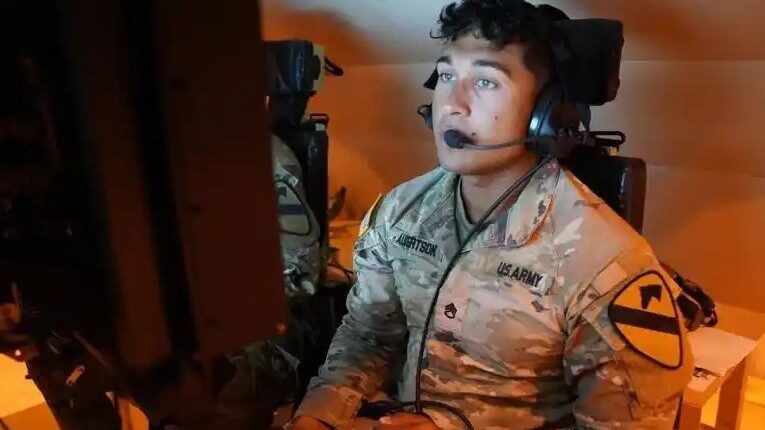
With the Robotic Combat Vehicle Light set to enter service in 2028, young soldiers are providing vital feedback on prototypes, tactics and user-friendly interfaces.

Government can’t stop to update systems, so modernization has to happen without interruptions.

Other R&D focus areas next year include software applications and energetic materials, or chemicals found in weapon systems, a key area of value for the Army.

The Army has nixed future "Capability Set" upgrade packages for brigade networks in favor of smaller, more frequent updates, with the most complex technology reserved for division and corps HQs.

“The Marine Corps Software Factory is about outcomes, creating advantage for Marines at the tactical edge, today,” Deputy Commandant for Information Lt. Gen. Matthew Glavy, said. “The MCSWF will provide viable capabilities to enhance mission readiness through the power of information.”

AEI's John Ferrari asks five important questions that the Army needs to answer before committing to high-dollar procurments during its modernization push.


The Sixth Domain is not defined by geography. It’s a new kind of conflict in which autonomy and networked systems allow thousand-dollar consumer electronics to destroy multi-million-dollar conventional weapons systems.

"The evolution of OWT shows how 3D terrain and information services are becoming essential tools for planning and decision-making not just for the U.S. Army but for a wide range of military, civil and commercial institutions," Maxar's Tony Frazier said.

“We can't wait 12 to 18 months to do a big, expensive exercise; We need to do that at the right point in time," said AFC Commander Gen. James Rainey.
“I would love to say that solving a problem is all that we should be doing at Army Futures Command, but it’s not,” Lt. Gen. Thomas Todd said. “We really have to be designing the Army of 2040 and beyond. In order to do that, you can’t wait on technology in 2040.”

Long-range precision strikes are now so deadly that even rear-area support units must spread out and take cover to survive — which puts unprecedented strain on command & control networks.

Do more with less: streamline workflows, reduce duplication, invest upfront to save long-term.

The Army needs to “put a timeline to allow our industry partners to see where our gaps may be, use their technology and their understanding to develop potential solutions and then bring them out,” Brig. Gen. Guy Jones, deputy director and chief of staff of Army Futures Command’s Futures and Concepts Center, said.

Lt. Gen. James Rainey, the Army's deputy chief of staff for operations, plans and training is earmarked for Austin, Texas.

The announced assignments will see new faces heading to important acquisition posts in the Army.

After a directive confused some lawmakers, a provision in the NDAA threatens to nullify a potential shake-up of the Army's acquisition bureaucracy if representatives don't receive additional information about who's doing what.