Trust the “Super Intelligence” for mission-critical operations
Ensuring SI models and their underlying data are kept secure is critical to building digital tools that can be deployed readily in warfighting environments.

Ensuring SI models and their underlying data are kept secure is critical to building digital tools that can be deployed readily in warfighting environments.
AI and software can improve logistics, but only if they work with limited bandwidth.

Both aircraft are designed to evolve as threats and mission requirements change.
Autonomous capabilities give the Navy a way to clear mines without putting sailors in harm’s way.
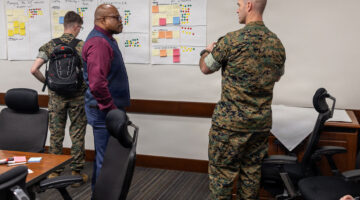
Autonomous agents and mission-specific software promise faster responses to emerging threats.

From autonomous warfare and drone innovation to acquisition reform and defense industrial base challenges, Breaking Defense examines the key developments and strategic priorities shaping the US Army’s future at AUSA 2026.

“I’m joining OpenAI to help the United States and our allies put this technology to work responsibly, for the people who keep us safe," Dan Driscoll said in OpenAI's announcement.
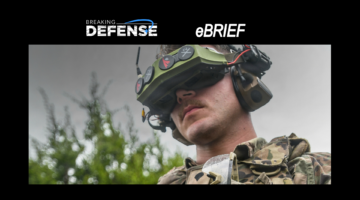
There is no single answer to the drone threat, pushing the Pentagon toward a broader mix of defenses.

Maj. Gen. Stephen Purdy, the Space Force’s portfolio acquisition executive for advanced programs, said the service wants to field cislunar capabilities by the end of fiscal 2029.

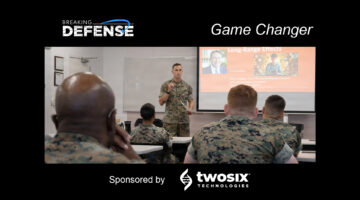
As social media and AI amplify dis- and misinformation campaigns, effectively countering them requires a coordinated response.
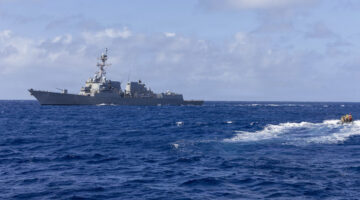
The Intelligent Perception System will help sailors understand a flood of sensor feeds while collecting data to train improved AI models, the company said.

“What we’re building is a soldier that can adapt a piece of robotic kit to the mission, to the enemy, to the terrain,” said Maj. Gen. Jason Slider, commander of the John F. Kennedy Special Warfare Center and School.
As social media and AI amplify dis- and misinformation campaigns, effectively countering them requires a coordinated response.
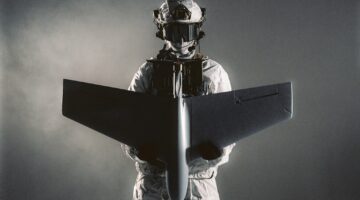
The company is headquartered in L.A. but partners closely with Norwegian arms-maker Nammo, which provides the anti-tank warheads and a range for live-fire testing.
The next phase of Zero Trust reaches beyond users and devices, experts discussed during a Breaking Defense webinar.

Gecko Robotics will utilize its inspection technology and its AI-powered software to conduct non-destructive testing (NDT) on these submarine components.
There is no single answer to the drone threat, pushing the Pentagon toward a broader mix of defenses.