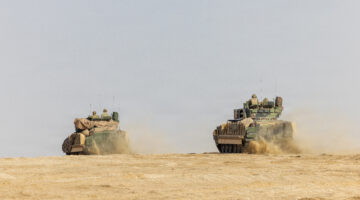
Power at the sprocket: It’s the transmission that gives tracked vehicles their control
Army vehicles like Bradley need greater power at the sprocket for speed, braking, and maneuverability.

Army vehicles like Bradley need greater power at the sprocket for speed, braking, and maneuverability.
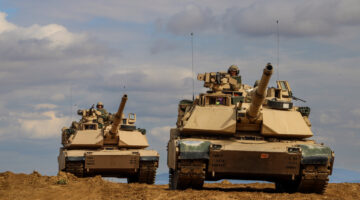
As new drones, networks and weapons come online, the Army faces a power crunch that senior officials are asking industry to help solve. “And it's not by buying more generators," Brig. Gen. Troy Denomy, PAE for Maneuver, said.

Explore how software, edge AI and resilient connectivity can strengthen military logistics in contested environments. Join Breaking Defense on Oct. 21 and earn 1 CPE credit.
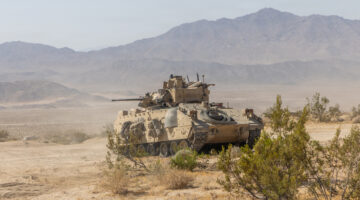
“We have an aging fleet, and we have modernization on the horizon, but it's not coming fast enough," Brig. Gen. Beth Behn, commanding general of TACOM, told Breaking Defense.
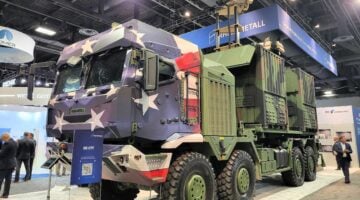
When it comes to other programs that could see a reworking, the official pointed to a recent commercial solutions opening for the Common Tactical Truck program.
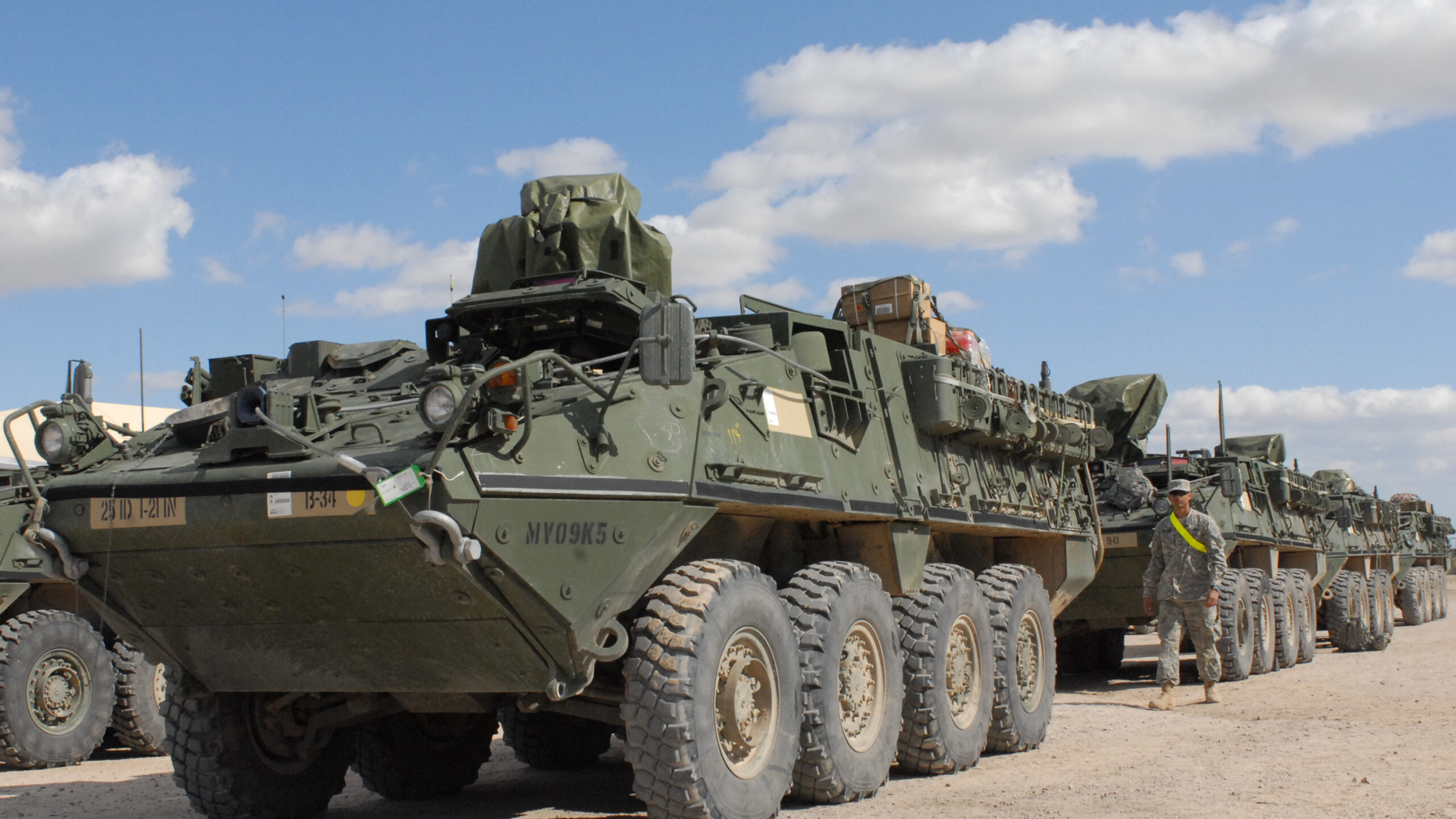
The service has sent hundreds of ground combat vehicles to Ukraine since February 2022, and Maj. Gen. Glenn Dean warned that “sustainment challenges” abound without additional dollars.

Soldier feedback "is going to be absolutely essential and will give Congress and the taxpayers more confidence that what we are developing to deliver the warfighters is what they actually need,” Brig. Gen. Geoffrey Norman said of the XM30.

GE Aerospace’s investments in the F110 are paying off in both production and delivery performance.
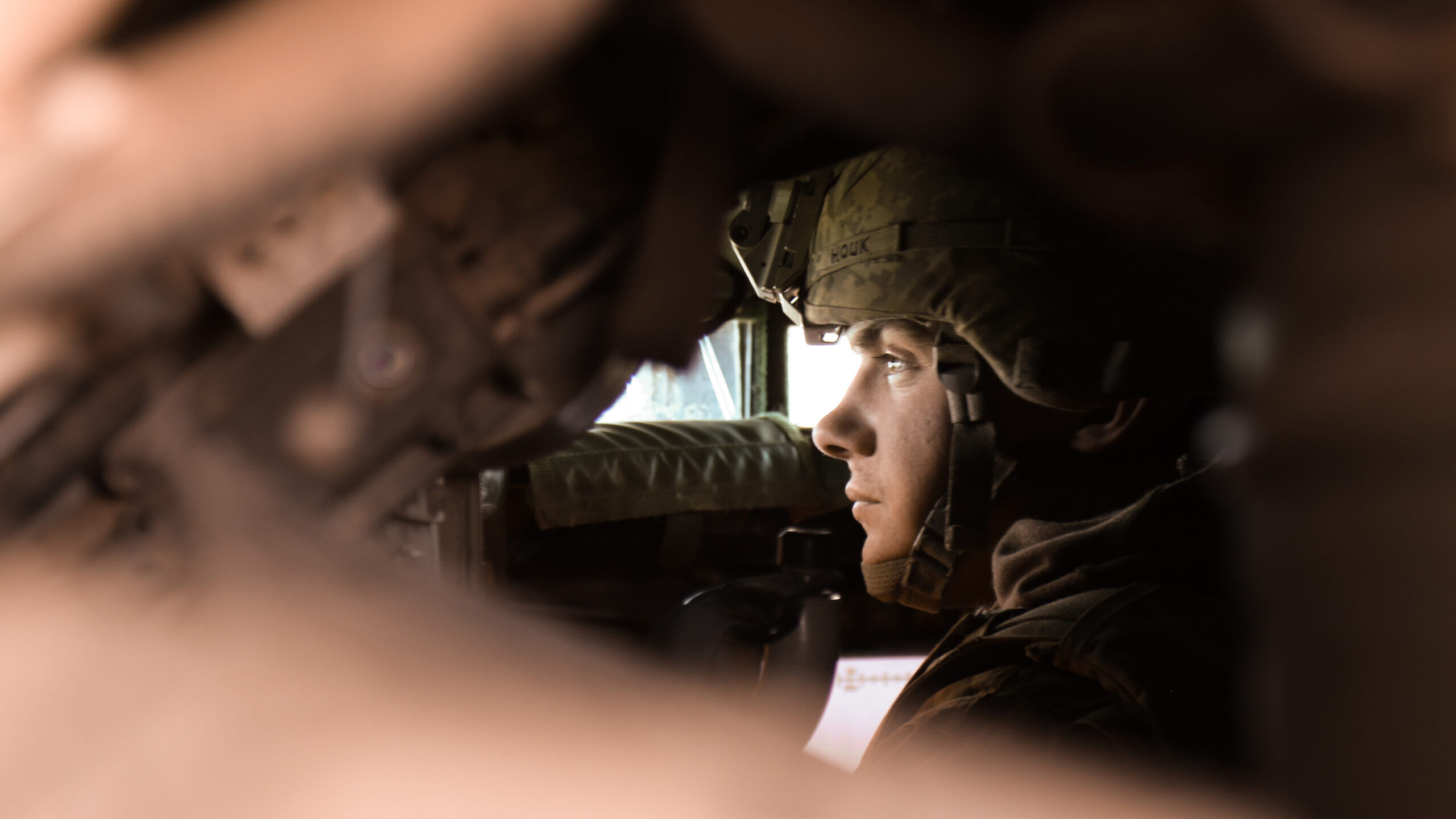
“While we are disappointed with the result, we remain focused on producing quality vehicles and expanded capabilities for soldiers,” said a spokesperson for BAE Systems, among the competitors not chosen to move forward.
The service announced that the Optionally Manned Fighting Vehicle (OMFV) program will now be called the XM30 Mechanized Infantry Combat Vehicle, and revealed new details about its basic design.
Twenty-five more combat vehicles and an unspecified amount of munitions have been earmarked for Ukraine.
“We're going to keep all options on the table,” Pentagon press secretary said when asked if M1 Abrams tanks could also be bound for Kyiv in the near future.

Traditional thinking about how to protect facilities must adapt to new threats such as drones or downstream attacks.

As the Optionally Manned Fighting Vehicle enters phases three and four, a senior Army official details some requirements but says the service is flexible.

With the release of the Pentagon's FY23 budget request likely only a month or so away, defense experts offered their best guesses about what programs might be on the chopping block.
“If this works, we would use this kind of technology and apply it as we look at our requirements for other vehicles in the future,” said Stan Darbro, deputy director of the Army RCCTO.
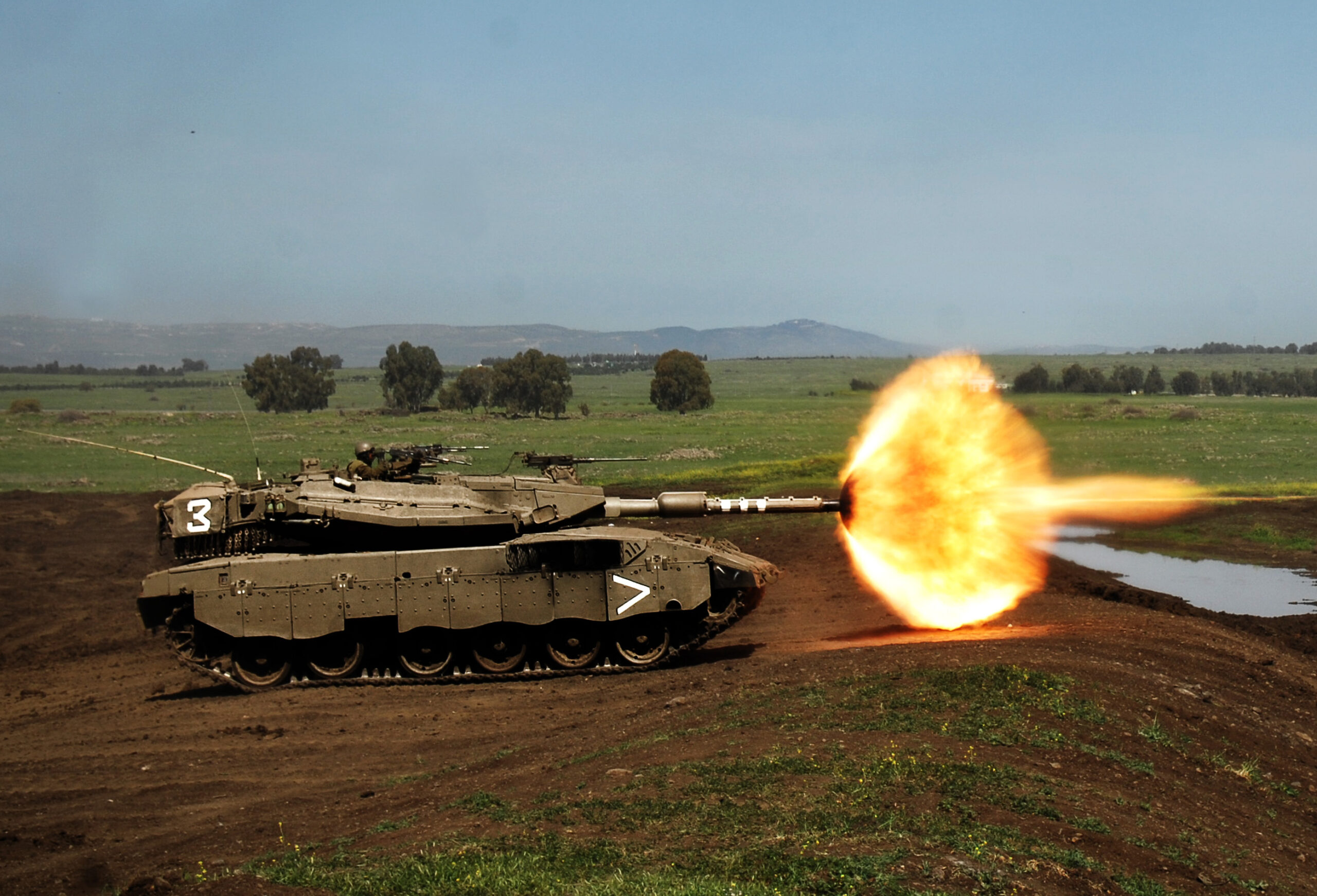
If there’s one thing that Army leadership agrees upon, it’s the need for improved survivability of soldiers and machines against modern anti-tank weapons like the Russian Kornet and Chinese HJ-8 guided missiles, as well as Russia’s tandem warhead RPG-29 rocket propelled grenade that can bore a hole into a tank with a molten jet of metal.