Friend or foe becomes the question as skies fill with potential adversaries
Quickly and accurately identifying friendly forces requires IFF attuned to drones.

Quickly and accurately identifying friendly forces requires IFF attuned to drones.


The real advantage comes when legacy, new, next generation and cutting-edge systems can work together in the battlespace.
There is no single answer to the drone threat, pushing the Pentagon toward a broader mix of defenses.

"No other country is able to organize exercises of such scale in the Middle East," Jean Loup Semaan, a senior research fellow at the Middle East Institute, told Breaking Defense.

"At the senior levels, there are so many two- and three-star Australians that knew two- and three- and four-star Americans. They would call each other or VTC each other, and nobody knew," one interviewee said. "We didn’t know, and we kept saying, hey, we would really appreciate it if you let us know what’s happening ... so we can help facilitate the outcomes."


UAE companies like NIMR, EARTH, EDGE, and Abu Dhabi Ship Building work with Leonardo DRS to address Middle East threat scenarios.

Govini's Billy Fabian said that for some JADC2 problems, the DoD has a "closing window... before the next generation of capabilities are too far along in development. Otherwise, it risks making its interoperability challenges even worse."
From autonomous warfare and drone innovation to acquisition reform and defense industrial base challenges, Breaking Defense examines the key developments and strategic priorities shaping the US Army’s future at AUSA 2026.

The USS Dwight D. Eisenhower Carrier Strike Group (CSG) and the French Charles de Gaulle CSG are cooperating at levels of integration rarely achieved in the past. Indeed, "it is at the request of US CENTCOM Commander Gen. Kenneth F. McKenzie to the French Army deputy commander for Air-Land operations (SCOAT for ‘’sous chef des opérations aéroterrestres de l’armée de Terre’’) that the French Air Naval Group (GAN for ‘’groupe aéronaval’’) assume command of US Naval Forces Central Command (NAVCENT)’s Task Force (CFT) 50 from March 31st till April 24th’’, explains a French military officer.

After decades fighting guerrillas and terrorists, France is refocusing on Russia and China with increased budgets, intensified training, stronger divisions, and new armored vehicles — much like the US. But the French approach is still very different.

Enhancing interoperability across Arab states’ defense systems remains a holy grail that even alliances such as NATO find hard to achieve.
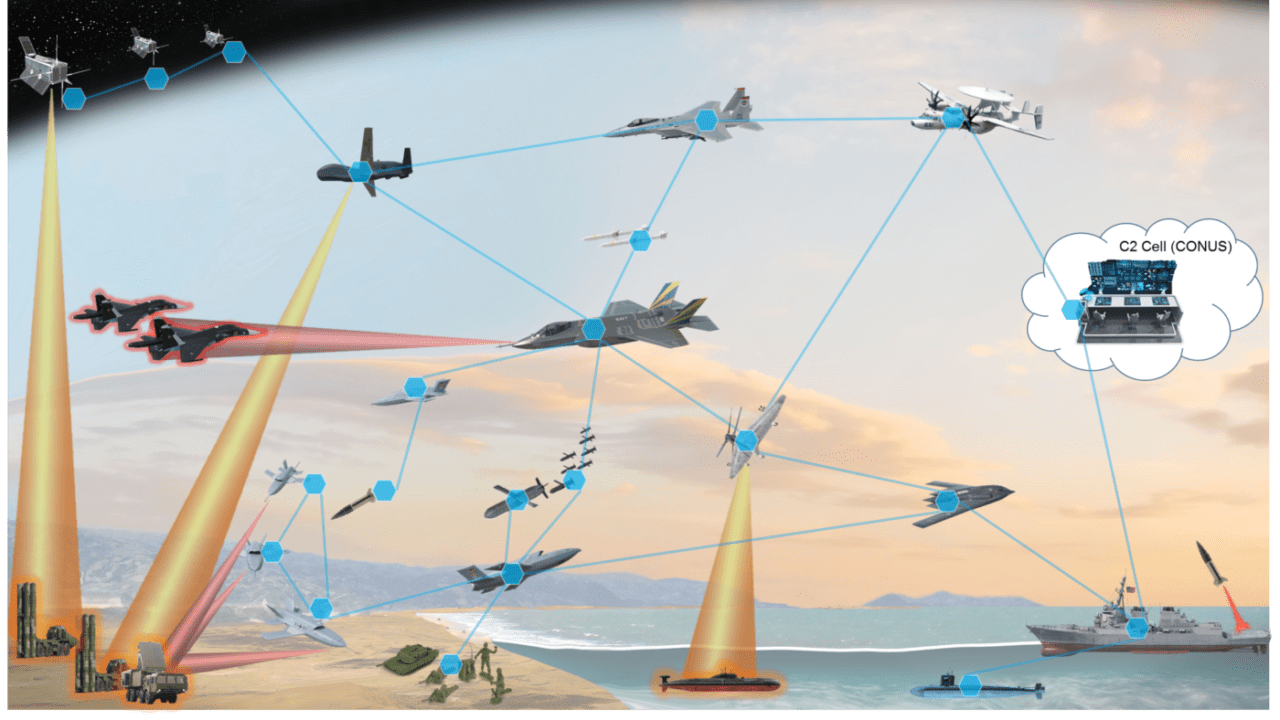
Military hierarchies are, by necessity, rigid structures. DARPA’s ‘Mosaic Warfare’ project aims for something much more fluid and adaptable, with AI doing the logistical grunt work so human commanders can get creative.

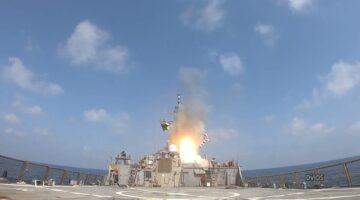
Expanding manufacturing capacity is critical to producing missiles, radars, and launch systems.

The industry study is designed to help NATO "better prepare and operate within a multi-domain environment."

The test was a big achievement for two much-criticized programs: the Joint Strike Fighter and the Army's IBCS network -- and for the services' struggle to work better together in a future war.
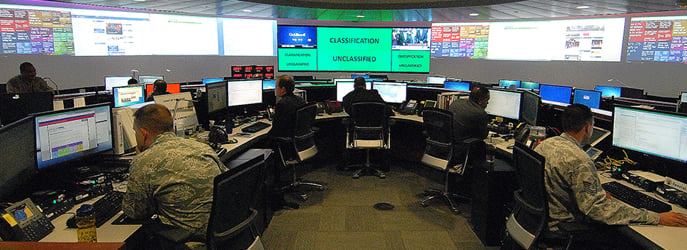
The military needs a globe-spanning network to counter threats that no single theater command can cope with. That takes more than just technology.

For the first time, the US plugged its high-altitude THAAD into the Israeli missile defense network -- just one of the ways the two countries are cooperating against Iran.