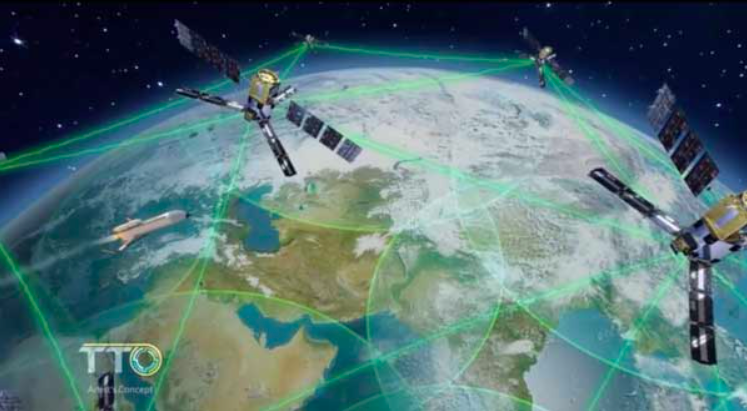
DARPA’s Mandrake 2 satellites: communicating at the speed of light
Mandrake 2's next trick, after demonstrating optical intersatellite links, will be using lasers for space-to-ground communications.
Mandrake 2's next trick, after demonstrating optical intersatellite links, will be using lasers for space-to-ground communications.

SpaceLink intends to put four data relay satellites in Medium Earth Orbit, to complement and backup the Space Development Agency's Transport Layer.

Government can’t stop to update systems, so modernization has to happen without interruptions.
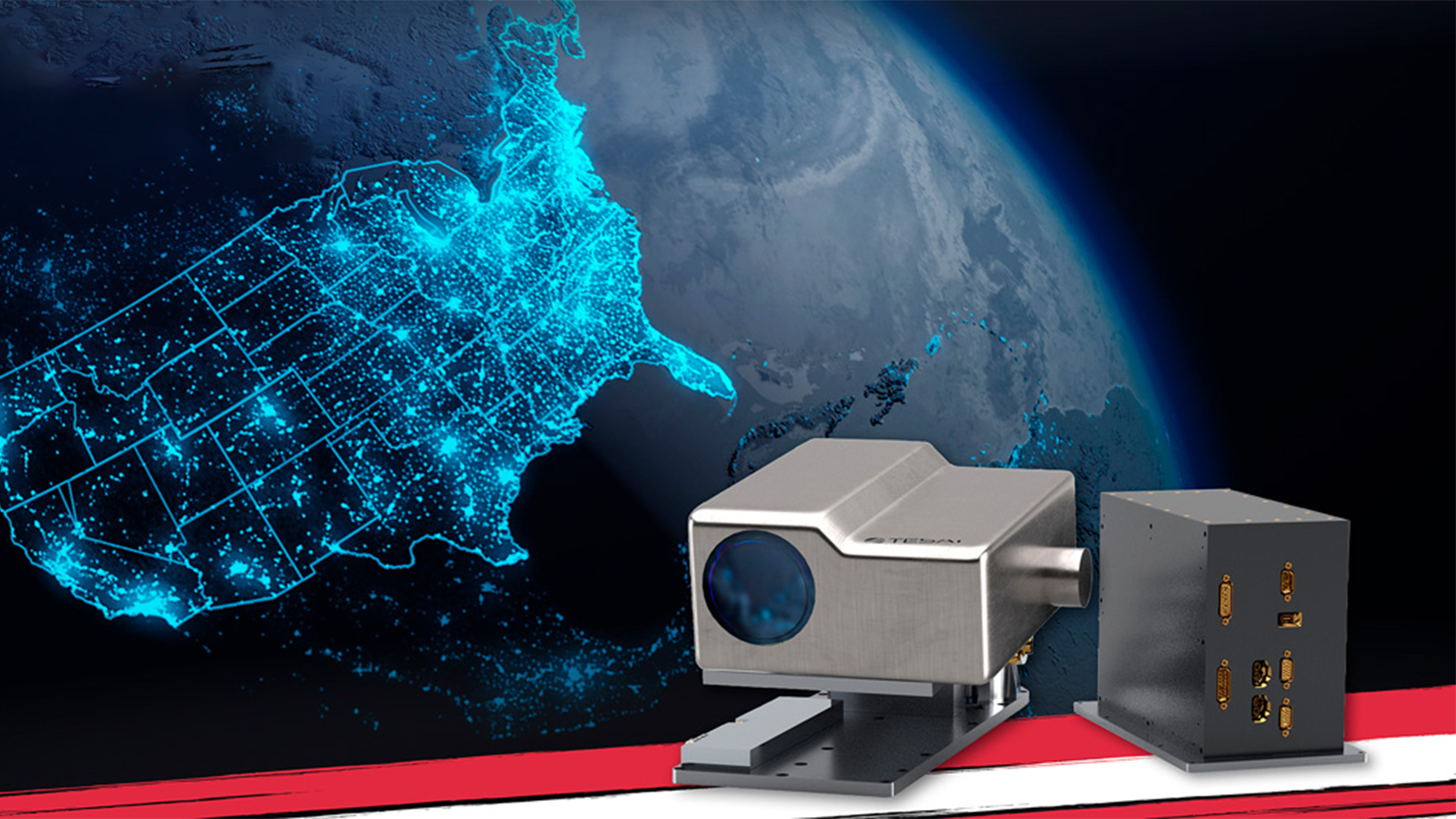
"I'm focusing on laser communication terminals because I think that's the strongest candidate to build in the US," Rob Geckle, CEO of Airbus U.S. Space & Defense, told Breaking Defense.

The defense prime also for the first time revealed that its partners in developing the secure OISL system: laser communications firm Mynaric and space avionics company Innoflight.

"Undersea cable infrastructure is ripe for sabotage," said Karen Jones, one of the authors of the study.

Fourteen vendors have been chosen to complete designs for two different pieces of an optical terminal that can connect incompatible LEO sats.


The Sixth Domain is not defined by geography. It’s a new kind of conflict in which autonomy and networked systems allow thousand-dollar consumer electronics to destroy multi-million-dollar conventional weapons systems.

Optical intersatellite links, or OISLs, use lasers to zip data between satellites on orbit — a technology that is both the central node and the biggest challenge in SDA's effort to build a multi-layered National Defense Space Architecture.

The Aerospace study found that controlling the creation of dangerous space junk is a regulatory arena "where clarity is badly needed," for one.

SDA intends to choose three contractors next year to design and build up to 144 new satellites.

Two of the experiments, each involving two satellites, are focused on laser links: one between satellites themselves; the other from satellites to a MQ-9 Reaper drone on the ground.

Breaking Defense Europe will launch May 4 with Tim Martin and Elisabeth Gosselin-Malo as co-editors.

"We really focused on payloads that had tactical utility, because they were an underserved market," said Blackjack program manager Stephen Forbes.
The Transport Layer will form a 'mesh network' of communications/data relay satellites, linking all DoD command and control networks, to enable JADC2.

"Getting a laser beam on a spacecraft to point to a laser receiver on another spacecraft accurately enough with the right power levels, the right waveforms, etc.,-- it's not an easy thing," said General Atomics VP Nick Bucci.