An A-10 "Warthog" flies low over two ground troops.

An A-10 Warthog flies low over two Joint Terminal Air Controllers

The authors are with the Mitchell Institute for Aerospace Studies.

Army Lt. Gen. H.R. McMaster issued a warning April 5 to the Senate Armed Services Airland subcommittee saying that the service will be  “…outranged and outgunned by many potential adversaries in the future….” This statement garnered much attention in the media, but it artificially assesses Army capabilities in a stovepipe and fails to account for the realities of joint power projection. Bottom line: the individual services don’t fight wars, the Combatant Commanders do by assembling an optimized mix of forces from each of the services to execute a given strategy to attain a desired set of conditions against a specific threat.

Lt. Gen. H.R. McMaster at AUSA

Lt. Gen. H.R. McMaster

Focusing too much on individual service capabilities without recognizing how they fit within the broader joint construct reflects classic Washington D.C. parochial budget posturing. While it is important that each service is adequately equipped, it is crucial to ensure that such priorities are defined within a broader strategic context.

No war has been won through the mere presence of personnel or material—whether they are infantry, tanks, ships, or airplanes. If that were the case, the United States would have prevailed in Vietnam with the presence of half a million US boots on the ground in 1968, or through the expenditure of over one trillion dollars on personnel and resources over the past 14 years in Afghanistan and Iraq. Bottom line—it takes an insightful, flexible, and prudent strategy to deliver victory in any military operation.

History stands in testament to this reality. No amount of bravery at a personal level can overcome the lack of a robust plan. Whether discussing the strategically bankrupt Rolling Thunder bombing campaign from 1965 through 1968, the failed 1980 Operation Desert One rescue mission In Iran, or the poorly planned and botched execution of Operation Anaconda in Afghanistan in 2002—the raw projection of personnel and equipment into harm’s way without a viable course of action leads to disaster. It is fundamentally immoral to ask America’s sons and daughters to exercise bravery and sacrifice to fill the void of inadequate strategy.

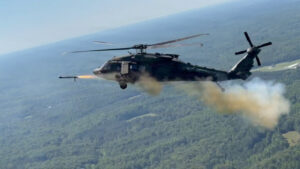
National security challenges must be actualized in terms of ends, ways and means. This is a process best executed in a truly joint fashion—using the right force in the right place at the right time—considering the capabilities from each of the services. What was troubling about General McMaster’s testimony is that he advocated a single service approach. Contrary to his testimony, it is exceedingly unlikely the US Army will ever be “outranged and outgunned” because when the U.S. goes to war it does so with components from all the services—not just the US Army.

To put it simply, a soldier on the ground working in coordination with a B-1, B-52, the assets of a carrier air wing, or standoff munitions from a ship is afforded immense range and overwhelming firepower. Those capabilities assembled as a joint task force create a synergy greater than any single service component alone.  In short, the combatant commands will never allow the US Army to be “outranged and outgunned.”
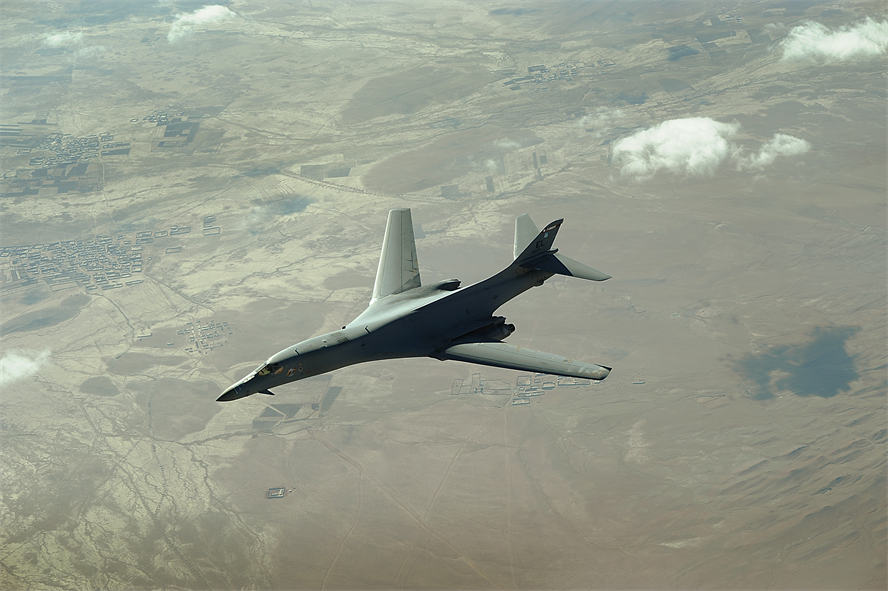
B-1 Bomber over Afghanistan

B-1 Bomber over Afghanistan

Shortchanging modernization in all the armed forces over the last several years has handicapped key power projection capabilities, but it is hard to imagine a scenario in which US leaders would put land forces in harm’s way without the capability for air strikes, aerial resupply, aero-medical evacuation, precision navigation and timing, command and control functions via aircraft, Intelligence, Surveillance, and Reconnaissance (ISR) from air and space-based assets, standoff fires from ships, sea-based logistics, the ability to communicate through the electro-magnetic spectrum, etc.

Assuming every conflict solution involves occupying land is an unfounded and risky assumption. Instead of pushing individual service solutions to gain budget support, military leaders need to focus on creative, insightful ways to secure desired objectives without projecting undue vulnerability. As Army Gen. George Patton said: “The object of war is not to die for your country, but to make the other dumb bastard die for his.”

The United States requires the best Army, Navy, Marine Corps, and Air Force in the world to present leaders with the widest variety of options to meet our security interests around that world.  Rarely do we get a choice regarding when and where we will send forces into harm’s way. Those realities demand a balanced, ready set of forces able to dominate in air, space, cyberspace, on the ground, and at sea to meet our national security strategy.  Wise national security leaders will shape Army interests, Navy interests, Marine Corps interests, and Air Force interests into American interests. It is critical that policy and budget decisions, along with their associated talking points, reflect this objective.

Comments

  • leroy

    What we see is the same old game being played by the four services – they are all crying DANGER in order to garner more money for their individual services. This parochialism must stop. As is correctly pointed out by the authors, the U.S. military is a joint force, and as such no one arm fights on its own. This was best evidenced during all of the Iraq Wars, where joint operations assured rapid victory. More rapid than anyone would have ever believed possible prior to Desert Storm.

    Is there a lesson for the service chiefs here? Stop it! The American people are going to see the boys crying wolf, and politicians will respond appropriately. Speaking of money, when is enough, enough? Better that one voice address all service’s concerns – the office of the Secretary of Defense. Citizens will make judgements from there. Cautious ones, because in the age of information We The People are much better informed. Well … most of us.

  • leroy

    “Rarely do we get a choice regarding when and where we will send forces into harm’s way.”

    Really? I respectfully disagree. Vietnam, Iraq – these were not wars of necessity. The Founders warned us against involvement in foreign entanglements. Seems too many decision makers either didn’t listen, or thought they knew better.

  • BorgWorshipper

    True the US is joint, against nobody opponents. The plausible fear is that is not the case against real opponents. As long as the US has air dominance, it really does not matter what China, Russia, Iran, has in the way of ground combat capabilities. The whole point, is whether that is the case, and what cost, in time and lives and equipment, for the US to make it true. If one assume the US will be limited in air assets, like Col HR McMasters thinks, then his job is really hard and really deadly, and new thinking and training is required.

    Actually it is more interesting to see if the US can do combined arms against a modern opponent, with sophisticated air defenses, and air power. Or, would be a war of attrition of air and SAM assets, before any side can move their troops to occupy territory.

    The way I see it, either the US Army or Air Force needs to prevail in capabilities, but not necessarily both. Either way, this mean the USAF would need a much bigger budget, even at the expense of the US Army. With an impotent Air Force, the Army needs more to prevail.

  • ArkadyRenko

    This is an argument for the retirement of the US Army as a high-end warfighting branch. The authors say: “it is hard to imagine a scenario in which US leaders would put land forces in harm’s way without … precision navigation and timing, command and control functions via aircraft, Intelligence, Surveillance, and Reconnaissance (ISR) from air and space-based assets, standoff fires from ships, sea-based logistics.” Yet that is exactly the situation that the US Army would face if there was a military conflict in the Baltics. There would be heavy GPS jamming, there would be long range anti-ship and air defenses deployed around the theater, and there would not be time to conduct a full anti-access campaign before the Russians achieve their military objectives.

    Later, the authors say: “Assuming every conflict solution involves occupying land is an unfounded and risky assumption. Instead of pushing individual service solutions to gain budget support, military leaders need to focus on creative, insightful ways to secure desired objectives without projecting undue vulnerability.” This is correct, in the abstract. But the US Army is not considering the abstract, the US Army is considering a land-war in Eastern Europe against Russia. In that situation, what alternate “creative, insightful ways” prevent a Russian take-over within 48 hours?

    There has been expressed a concern that all military services have become drunk on the relative power of the last 25 years, the post-Soviet era. In that era, the US chose it’s conflicts and enjoyed total technological, economic, and initiative advantage over it’s enemies. However, in certain regions and in certain contexts, that relative power has disappeared.

    This article shows that the leading intellectual lights of the USAF find it very difficult to consider a military conflict initiated by another country and conducted in a manner advantageous to that other country. I would say that this article, more than anything else, indicates the threat to the “Joint Force.” The Army says that there are major threats from Russian technology, which include a deliberate approach to denying USAF access to battlefield. The USAF says that the Army shouldn’t worry, because there will never be a situation where the Army is sent into a contested environment. (Tell that to a Brigade stationed in Eastern Europe)

    We see here not a ongoing debate, but a statement by one side that there is no threat and no debate.

    • minutemanIII

      The army simply used only partial data to paint an incomplete and flawed picture. As Vietnam and Iraq taught us, achiving an objective and holding said objective can be two different things.
      Going to your Baltic example, a creative and insightful way of stopping or slowing them may be to open a new frot in places that are closer to our allies and deployed assets. Russia focouses on the baltics while Turkey, SA, Isreal, US storm into Syria and Iran. In such a case Russia would either lose two steps in the ME for one step in Europe or have to slow its pace and split its assets. The whole idea in Europe was not to initially stop a Russian invasion at the front but to slowly retreat until NATO forces could mass with more than a singular bregade. When NATO forces do mass and start to push east our campaign in the ME should be pushing north in a flank move.
      Also about an ADA2 the USAF does not have to completly take it down. It just has to poke holes and open corridors. Yes we would face jamming, ASMs, ect but so would Russia. Their OTH missile ability is only as good as its remote target data gathering platforms.

      • Clausewitz

        That’s literally one of the stupidest things I’ve ever heard. “Hey guys, Russia just invaded Latvia so we should focus on establishing an invasion force to hit not just Syria but Iran too”. Quite aside from the two obvious facts of 1. that does fuck all for the poor citizens of Latvia and 2. the US coalition would sustain heavy casualties (far more than the Russians in their own Baltic campaign), I seriously doubt the US would ever be that creative (or rather, stupid).

        More to the point, NATO forces would amass with…what exactly? Most members these days can barely afford to launch aircraft on patrol. Even the UK has trouble scrambling fighters and ships to rapidly intercept Russian incursions into our spaces. Even if the whole alliance accelerated onto war budgets, it doesn’t mean they can magically erase years of malaise.

        • minutemanIII

          It would be less of a gambit to over run Syria and Iran than push Russians out of the three Baltic states. Mostely because SA, UAE, turkey, isreal would be the main combatants. It helps the citizens of the baltics in that the ME could be included to reach a favorable position in any peace agreement.

          Of course the bulk of NATO forces would be US but there would be enough allied help with different weapons systems to make a push.

          You mention this turning into a larger conflect and this is true but I am sure Russia would see such probable escalation in its min/max solution in its decision to invade the baltics.

          • ArkadyRenko

            In what world would Saudi Arabia, UAE, and Turkey openly work with Israel?

            In what world does Saudi Arabia and the UAE have a competent military?
            In what world would Saudi Arabia, UAE, and Israel willingly join a war against Russia over the Baltics?

            You’re geopolitical solutions are fantasy.

          • minutemanIII

            http://www.haaretz.com/wwwMobileSite/israel-news/1.558512

            I think its time for you to get over the 70’s SA’s Sunni majority has been at odds with Iran’s Shia ever since the mullahs took over. SA and isreal have openly expressed their interest to work togeather.

            Turkey has openly expressed its willingness to invade Syria. Turkey has shown its obvious concern with its shootdown of the Russian jet. Turkey is also a NATO member.

          • Ionosphere

            You realize that the Russians have at least 1 short-range ballistic missile stationed in Syria with a nuclear warhead pointed straight at Erdogan? Turkey will not be invading Syria anytime soon.

          • minutemanIII

            Article 5 would already have been cited with the initial invasion of NATO members in the baltics.
            Turkey being a nuclear armed NATO member does have nuclear deterrence ability. Turkey alreadyhas grounds to cite article 5 with Russian jet incursions. Do you remember when they shot down that jussian jet a short time ago?

            In fact turkey has already been shelling Syria and the Russians have openly expressed concern about Turkey’s possible invasion of Syria. There are many reports that Turkish troops carry out clandestine operations inside Syria already.

          • Ionosphere

            But if Turkey is shelling Syria, then that means that Turkey is the aggressor. They cannot expect NATO to back them up. Especially since Erdogan’s frequent abuses of power make him more of a liability than an asset. I hear the last meeting between him and Obama didn’t go so well……..

            http://www.independent.co.uk/news/world/middle-east/turkey-president-erdogan-barack-obama-press-freedom-behind-my-back-a6966281.html

          • minutemanIII

            Turkey has cited terrorist attacks from IS and Kurdish groups eminating from syria as its grounds for action. Turkey has labeled Kurdish groups as terrorist well before the war in Syria.
            Of course this is all irrelevant to the topic at hand, that is a hypothetical Russian invasion of tha baltics. Please stay on topic or I will ignore further irrelevance from you.

          • Ionosphere

            Then I’m not sure why you were talking about Turkey invading Syria to begin with.

          • minutemanIII

            Read the op. In it I suggest a counter to Russian invasion of NATO member batlic states could be to open a new front while NATO masses troops for a counter attack on the baltics. That is based on the assumption that Baltic defenders would eventually be pushed out by the Russian blitzkrieg before NATO could mass a counterattack.

          • majorrod

            Don’t agree in the least with your second front approach aptly criticized above but in short let’s risk WWIII instead of building an Army that can deter a war.

            Letting Poland, the low countries France etc get overrun while massing forces to push the enemy back was a very expensive approach.

          • minutemanIII

            Russia blitzkrieging three NATO nations is risking ww3 in and of its self.

          • majorrod

            Maybe they wouldn’t blitz if we had a defense? This is the benefit of deterrence.

            There’s also something to be said about quickly being able to change a military outcome. This is why counterattacks are almost doctrinally required IMMEDIATELY after losing an objective. Allowing the enemy time allows them to build defenses and lose will (see Crimea).

          • minutemanIII

            I suggest you read the topic here of the army being out gunned. This scenario was about range and the lack of air support.

            Deterrence is a different topic all togeather.

          • majorrod

            LOL, yeah this is not about deterrence says the guy talking about second fronts.

            Yeah, let’s not talk about deterrence or being able to respond conventionally by enhancing the Army. That has much less to do with the subject of Gen McMaster saying the Army is in dire shape.

          • minutemanIII

            Ok so how does deterrence work when the Russians have already taken the baltics as the op would have this senario start out as.

          • majorrod

            It doesn’t. That’s why we have to increase the Army’ capability which is the point McMaster was making.

            You were suggesting escalation/second front as a solution.

          • minutemanIII

            Of course it does not. You want to boost deterrence, fine but do not hide that behind a false premise of being out gunned when that is simply not the case.

          • majorrod

            You misunderstand “outgunned” or take it to mean only one thing.

            You seem to think simply if explosives can be provided from other branches one is not outgunned. No.

            First you assume that other services firepower can be brought to bear. Not a surety in an A2D2 environment.

            Second you assume other branches can provide that support in every situation. Again no. We may have in all recorded history of the thousands of TLAMs ever fired the first use of a TLAM as CAS. We aren’t going to have it for every instance. “Could” it happen, Sure, just as likely as a meterite killing you as you read this.

            Finally you fail to comprehend the Army is fighting at very reduced levels when it comes to the availability of weapon systems as well as comparing the capabilities/range of our advesaries’ weapon systems to ours.

          • Clausewitz

            1. You have GOT to let me know how you managed to get the Arabs and Israelis to work together, and the Turkish to actually do something with their army.

            2. I don’t think it does help the Baltic citizens. Russia knows it could quite comfortably hold itself in the Baltics and it could afford the loss of Syria and Iran because it would still maintain its hold over Azerbaijan, though they might well outright invade and absorb the little republic in that situation, which would give them a staging ground for air and missile strikes against coalition forces in Iran.

            3. It becomes less a matter of probable escalation and more a matter of how far everybody on our side is willing to go over three little nations on the Baltic Sea. To be honest, I’m having a hard time seeing this Arab-Israeli coalition being able to stomach the casualties from a long-term occupation of Syria and Iran, not just from Russian counter-strikes but also from domestic sources.

            We have to consider the possibility of tactical nukes. If Russia sees its sovereignty as being threatened by the movement of NATO/anti-Russian forces beyond Iran, it is conceivable that they will launch tactical nuclear weapons at these formations. What happens at that point is anyone’s guess.

          • minutemanIII

            http://www.haaretz.com/israel-news/1.558512
            http://www.presstv.com/Detail/2016/01/23/446968/Israel-Iran-Saudi-Arabia-Netanyahu/

            SA and isreal have each openly expressed their willingness to work togeather. In a short summery SA Sunnis have had it out for Iran’s Shia ever since the mullahs took over. Hamas helping Iran’s Shia militas fighting SA backed Sunni rebals in Syria compounded this mutual benifit between isreal and SA. Just get an update of events in the last 20 years in the ME and other reasons for such an alliance is quite obvious.
            Turkey has much reason to invade Syria. Infact Russia has openly expressed concern with a Turkish invasion. Again a quick update of the last 10 years in ME events will make this premise more obvious.

            2. Russia’s need for warm water port in Syria is critical. Also Russia’s loss of the ME compounded by likely overwhelming NATO counter attack in the baltics will put Russia in a strong position to want to make peace before before they lose barganing chips in the baltics. Also with allied takeover of ME likely Chechen rebels supported by new supply lines will be yet another thorn in Russia’s side.

            3. A Russian invasion of the baltics is escalation enough. I totally agree that in the end it all comes down to how far everyone is willing to go. If NATO troops stop at the Russian border I find it unlikely Russia will use nukes on soil they are trying to influence.
            In the Iran nuclear talks we were begging isreal no to hit Iran. Iraqi and SA Sunnis would love nothing more than a takeover of the shia. Syria is already half occupied by SA backed Sunni rebels and strong occupation of us backed kurdes. Turkey would love to get in on it if only to decrease Kurdish influence. I suppose that the length of occupation of Iran is relayed to the NATO counter attack in the baltics.

            In some NATO could likely brokerpeace in the baltics through its ME take over compounded by the prospect of its counter attack in the baltics. In such a case the US and NATO can find a favorable agreement with very minimal losses, if any should the counter attack in the baltics not need to take place.
            I think you can agree, being in russias position of having losses in the ME, possible Chechen uprising and depletion from invasion of baltics with the prospect of overwhelming NATO counterattack the price/cost to Russia is much greater to have the baltics than to NATO.

          • blarg

            What NATO counter attack?
            The US would take YEARS to build up troops & material in Europe to attack Russia
            The Idea that somehow invading syria & iran will force Russia to back down is madness.
            Turkey would be bombed into the stone age if they invaded Syria.
            SA is losing the war in Yemen, their army is a joke

            Only a marxist would want to start another pointless brothers war among christian countries, which is what all this talk about russia is aimed at.

          • minutemanIII

            Except Russia is the one annexing these “christian countries” through use of force.

            If Russia bombs turkey it will be taking on the second largest NATO power, while fighting their invasion of the baltics. In this case the second front will have required Russia to split assets in the baltics to fight turkey. Thus making the Russian forces decided and easier to conquer. Russia would have a hard enough time with just turkey. I can not see how they could prevail over them while fighting a NATO counter attack in the baltics. NATO has a rapid response force of 40,000 men that can deploy in 24-48 hours and up to 55 ships including baseline 9 ageis ships.

        • Malfunctions

          I would hate to see the time when America looses Air superiority, however, without additional spending and a lot of technology, we are quickly in danger of loosing it…in my opinion.

      • ArkadyRenko

        Clausewitz already addresses the strategic stupidity of your response, I will focus on the last paragraph.

        You say “the USAF does not have to completely take [the ADA2] down. It just has to poke holes and open corridors.” But, this is not what the Mitchell Institute authors promise. They say that the US Army will never be deployed without continuous Joint Support. Your very scenario posits that continuous Joint Support will not exist.

        Return to the McMaster argument, he says that the US Army has major weaknesses in artillery, air defense, and ground-based electronic warfare. Those are persistent capabilities, their employment does not require air superiority.

        What you intend as a reassurance reveals the narrowness of the Joint Force. The Joint Force has been accustomed to continuous air supremacy, the trade-offs were acceptable with air supremacy. When that is threatened, a disturbing number of capabilities disappear.

        Continuous battlefield interdiction, which can be accomplished by artillery, is presently the purview of the USAF. When air defenses still exist, interdiction cannot be conducted at will. So, the US Army operates under an interdiction threat from the Russians which it cannot reciprocate.

        Air Superiority requires continuous air coverage over the battlefield. That cannot happen while hostile air defenses are operational. Ergo, the forward elements of the US Army will operate without organic air defense and without assured Joint Force air defense.

        Electronic warfare in a contested environment has been abandoned by the USAF. It can provide minimum value here to a Joint Force operating under a hostile ADA.

        The above represent a break from the post-Cold War norm, but they are not unique. In the Cold War, the US Army prepared to operate in environments when the enemy maintained an active air force and ADA. The Mitchell Institute is defending an ideal military environment which no longer exists, to defend the USAF share of the military budget.

        • minutemanIII

          The USAF only has to get within 600 miles of the target area to launch missiles. With such range total destruction of air defences is unnecessary. The TLAM has a range of 1000 miles. Short of violating the IRBM treaty our systems are at their max.

          Your claim that the USAF has “abandoned” EW systems is simply false. We just contracted the new MALD-js, f-35 and f22 are demonstrative of this.

          • ArkadyRenko

            Are you saying that the USAF will use it’s limited supply of stand-off munitions to conduct battlefield support? That is a huge waste of those munitions. Those TLAMs would be better used to strike strategic targets or fixed operational targets, not try and hit mobile formations.

            As for the abandoned EW, MALD-J is nice, but it is an expendable system. F-22s and F-35’s are limited to X-Band. The USAF has no penetrating, reusable, multi-band EW systems.

          • minutemanIII

            Given the US’s use of JSOWs in Iraq I fail to see the what would lead one to think that we would develop and build such things to not use them.

            The TLAMs cluster munitions that individually target armor vehicles after release were designed exactly for the mission you claim would be wasteful.

            MALDs being expendable makes them all the more useful. Matter of fact MALDs were not at all abandoned. Please show me some data that proves the MALDs are no longer produced.

            The x band radar is a target illumination system.

          • majorrod

            “The TLAMs cluster munitions that individually target armor vehicles
            after release were designed exactly for the mission you claim would be
            wasteful.”

            No, TLAMs were not designed to hit large formations of moving armor. The time these type of weapons take to cover the distance from launcher to target make them HIGHLY unlikely to be used in that role and even less likely to be used in a situation where enemy armor is in contact with friendly forces/armor.

          • minutemanIII

            Cluster munitions were designed exactly for large formations. Given that the TLAM can adjust course and can hit moving targets (as well as the sub-munitions) I fail to see why they would not work. Of course it is unlikey they would be used for such things because we have much better means. However should those other means not be possible I fail to see what would stop it from filling such a role. The cluster munitions can be directed by our ground forces or our armor forces.

          • majorrod

            You are assuming an omniscient intelligence picture from the point the enemy launches that attack through the decision to launch a TLAM and the uninterrupted maintenance of that picture during the flight of the TLAM potentially from hundreds of miles away. There’s an awful lot of weak links in that long tenuous chain.

            Could it happen? Sure. There might happen to be the right warhead on the right platform in range with the right amount of time to make the decision and with no other conflicting requirements. We could also launch a hypervelocity weapon once its developed from the states with only an hour flight time. Highly unlikely to the point it’s really not worth discussing in the CAS debate unbless one is trying to not discuss more important issues.

          • minutemanIII

            The whole reason of this debate is to go over options when air support is an impossibility.

          • majorrod

            I guess I’m hung up on realistic options vs.never before utilized approaches. Like I said, out of the thousands of TLAMs launched name one that’s been used as CAS…

          • minutemanIII

            I already went over this. I am not going to try to prove a negitive. When have we ever been outgunned?
            We already agreed that it could be done.

          • majorrod

            Yes. It could be done. Just like the use of Nukes in CAS.

            Not likely. Not even wildly possible but it “could” happen.

            BTW, we’ve never not had air superiority. Using your logic there’s no need to be concerned…

          • minutemanIII

            False. I pointed out different ways we could use long range weapons to suppliment a lack of air support.

            Even so the argument here is to fund the army at the cost of otherbranches.

          • majorrod

            No it’s not false anyone can page down and find the specific things you said.

            “the argument here is to fund the army at the cost of other branches.” Really? Where is McMaster saying to cut funding to other services or reduce their budgets.

            BTW, I’m warmed about your sense of budget equality. Were you protesting the Army cuts? Cuts that were greater than any other branch?

          • minutemanIII

            The budgeting is over and done with for now. What you have now is what you get now.

            The military looks at what they have and prioritizes based on needs. We need new SSBNs, LRSBs, f-35s and to build up our cyber forces. Those are the priority.
            Personally I was not a fan of any of the cuts, but I am not going to believe a misrepresentation of the overall picture.

          • majorrod

            Congress can allocate funds at anytime and there’s always next year’s budget.

          • minutemanIII

            Yep, there is always next year.
            Not going to hold my breath about any extras though this year.

          • Curtis Conway

            “X band is used in radar applications including continuous-wave, pulsed, single-polarization, dual-polarization, synthetic aperture radar, and phased arrays. X band radar frequency sub-bands are used in civil, military, and government institutions for weather monitoring, air traffic control, maritime vessel traffic control, defense tracking, and vehicle speed detection for law enforcement.[2]

            X band is often used in modern radars. The shorter wavelengths of the X band allow for higher resolution imagery from high-resolution imaging radars for target identification and discrimination.” Wikipedia

            Since any radar can be jammed, I suppose X Band is used for EW equipment.

          • minutemanIII

            Oh I agree but it is not its primary function. Furthermore the f-35 and f-22 have dedicated we systemy.

      • MagenD

        Yea… well, you’re “simply using only partial data to paint an incomplete and flawed picture” because 1…. there will be NO WAR with Russia without CHINA!!! And 2… Russia (And China) have amassed enough Nuclear Firepower to DISOLVE America and the EU 5 times over!!!

        So EVERYONE’s BLAH, BLAH, BLAH…. is just that….

        And NOW your Army is wearing High Hills and driving PINK TANKS and don’t even KNOW WHAT BATHROOM their supposed to use….

        Thus… the moral of the Story…. it’s OVER~~~~

        • minutemanIII

          Sorry but turkey on its own has enough fire power and man power to take Russia on by its self.
          The US has the Ohio class ssbn that has 24 launch tubes and each trident has 8 mirvs. We have 16 of these ssbns that on their own could turn Russia and China into radioactive parking lots, never mind the land and air nuclear weapons and that is just the US.
          If China was to take a side and start combat operations in the area India, Japan, Australia, ect would have no choice but to enter on the side of NATO.

          All you have is ideologue rabble rousing.

  • CharleyA

    Maybe because the USAF cannot decide what its priorities are? If the the USAF was trusted to provide strategic guidance, it would claim it could win wars with airpower alone. Hint: this has been disproved over and over…

  • ycplum

    As I said in that last article, give the Army responsibility for Close Air Support.

    • sferrin

      They don’t have the money. (No, the USAF doesn’t either, which is why they wanted to retire the A-10.)

      • ycplum

        while true, I believe the Army will be more likely to scratch up a few dollars faster than the Air Force if the Sequestration ever ends.

    • Supernova1987

      The Army might be more interested in filling that mission with more artillery and drones than CAS planes.
      The TOS-1A sounds like a good idea to have a massive firepower at relatively low cost. They could make a similar system, like for instance by mounting a pod of Zuni rockets on old M-113s, using thermobaric warheads. The launcher could be designed also to use the laser guided Zuni. Or perhaps develop a rocket with a thermobaric warhead for the MML.

      • majorrod

        Thermobarics are a tad tricky. They work best in enclosed spaces and when used outdoors have to consider altitude and weather to ensure an adequate oxygen content for proper ignition. One of the advantages of artillery is it’s always available. Degrading that with a very specific use type warhead is contradictory.

        The TOS is pretty specific to Russian NBC units. It was designed to use high heat thermobaric weapons to scorch areas contominated by chemical weapons. It’s secondary use is to blanket cities with nuclear like effects. The latter is an approach we don’t ascribe to and neither is really similar to the typical CAS mission.

        Artillery and CAS have some very different qualities and shortcomings. The major advantage of CAS is it’s relatively quick ability to respond to a need on the battlefield. You can get a plane in range of an unforeseen target/situation much quicker than you can get an artillery system. Trying to make artillery fulfill a CAS role is indicative of an effort to redefine CAS or not understanding its use.

        • Curtis Conway

          You know majorrod, I’m a Squid and I get it. Most of these guys scare me. Don’t ever want them watching my back.

        • Supernova1987

          What is the hellfire with the thermobaric warhead used for?
          As for CAS, what if you can have small survivable drones that can designate targets from low altitude ( below cloud cover )? If you combine such drones with fast weapons like a rocket fired at 3-5 miles ( beyond line of sight ), wouldn’t it have the same effect?
          As for striking fortifications, they would be dealth with with the thermobaric variant.
          Also a rocket the size of a Zuni would be very easy to reload.
          Of course if the system cannot be deployed a CAS plane is needed.
          Just asking sorry if it sounds stupid mmh..

          • majorrod

            Thermobaric hellfires would be appropriate for target effects inside closed structures of any kind e.g. bunkers and buildings as long as you can get them through a window or on some kind of delay to penetrate thinner walls.

            Drone designators are in use. The problem is they are easy for near peer nations to shoot down. Small drones have small ranges, flight times and most likely have to be fielded, carried and deployed by ground forces. There’s also the question of compatibility with fixed wing. Not insurmountable but you likely won’t see every rifle platoon having to lug one of these around flying laser designators aren’t really as “light” as you think when you have to carry it on your back.

            You know, you also have to consider ordnance mix on the aircraft. It’s not like the ground commander can ask for a plane to be launched with a thermobaric on it. USAF CAS requests have to be submitted and approved to the air commander 48 hours before the battle happens. So ground commanders not only have to predict they might need CAS. They also have to be prescient on what kind of fight it will be to have unique munitions on board. The Navy and Marines have a somewhat condensed loop because of the way they fight (and different mindset, notice the lack of CAS debate in their circles?) which is why they have the reputation of providing better CAS. (They also work for the ground commander.)

          • Supernova1987

            From what I have read, the research on invisibility is progressing quickly, as you can see in these articles:

            https://www.sciencedaily.com/search/?keyword=invisibility#gsc.tab=0&gsc.q=invisibility&gsc.page=1

            Such technology could be used to render the drone invisible. It would have to have a very low RCS and thermal signature also.

            As for the weight, the technology of exoskeletons and robotic mules is also progressing rapidly. Lockheed is working on powering its HULC exoskeleton with fuel cells to increase the autonomy to 3 days of operation with a 200lbs payload.

            Also the emergence of AI and advanced interfaces would make it easier for the JTAC to control its drone and send the order to the artillery or the CAS plane ( like the PCAS ).

            The PCAS could even use new weapons like the pike mini rocket or the XM-25 to fire through windows and to attack the enemy from behind. An XM-25 with a lengthened barrel and a 20 rounds magazine could be quite effective at significant range guess.

            As for the artillery system, I think that kind of mission would require a weapon with a high maneuvrability to be able to hit almost vertically, so maybe a slower rocket than the zuni would be more adapted. The switchblade could be used but it cost quite a lot. Mortar munitions would be a good weapon to use too. Maybe a combination of mortar rounds ( guided and unguided ), and switchblades would work fine. Also the mini drone could guide a hellfire/APKWS launched from an MML.
            Also it would be nice to have the ability to resupply the troops in contact with so they don’t run out of ammunitions. The JTAC would receive the resupply from either a cargo drone, a pallet launched from a plane or a ground vehicle, and would distribute the ammunitions to the soldiers in contact with his mini drone.

            If the JTAC had that kind of capability, there wouldn’t be as much need for CAS planes when the artillery is available. So that protocol to ask for air force CAS assets wouldn’t be required.

      • ycplum

        Can’t say I know the inner thoughts of the Army leadership, but I suspect they will want a mix of assets available. The issue isn’t whether they will want a CAS aircraft, but how many. IMHO, of course.
        .
        By the way, thermobaric bombs/warheads are not suitable for CAS. They are a wide area munition.

        • Supernova1987

          Maybe they’ll consider using more XM-25s to get the job done. In this video the soldier says it may replace artillery and CAS:

          https://www.youtube.com/watch?v=f2ZpNaqAVC8
          I was thinking of thermobaric rockets because the artillery doesn’t have as much wide area capability as before since the retirement of the M-26 rocket with submunitions. A rocket would be pretty accurate at 4-5 miles range and the warhead wouldn’t be too big. The idea is to kill the enemy infantry before they get too close.

          • ycplum

            I can definitely see the usefulness of a thermobaric warhead, but not in a danger close situation.
            .
            The XM-25 can potentially help, but it won’t eliminate the need. I saw a documentary where there a SF team, threatened with being overrun by two companies of Iraqis. They called in for an air strike. The pilot was sayin how it was difficult to to the enemy and friendlies. There was a heart stopping moment after release of the bombs when the F-16 pilot was not sure if he killed his own troops.
            .
            They were outside of artillery support.

          • Supernova1987

            I believe I have seen that documentary. The XM-395 could be usefull too I guess in that kind of scenarion, the warhead is not too large.

            Mini drone/missile like the switchblade might have a role here too but they cost a lot. This concept is interesting too:

            https://www.youtube.com/watch?v=zYKmVEWzkxo
            It can loiter for 2 hours and can be recovered. They could be launched from a vehicle a few miles behind where the troops are.

          • ycplum

            If you are are a small team (half dozen) and face large numbers (two companies or more), you really need CAS.
            .
            And our troops have frequently faced off against superior numbers, mainly because we we can bring in heavy firepower. In the open, with some distance between enemies and friendlies, the other aircrafts are fine. In woods, jungle or built up areas, you may need to eyeball the enemy before firing.

          • Supernova1987

            Yep, the A-10 has the unique ability of being able to fly low and slow to search for concealed targets, it was made for that. It is quite cost effective for that role.

          • ycplum

            I believe it has the lowest operating cost in our fighter/bomber inventory.

          • Supernova1987

            It is cheaper than the F-16 to operate. Between retiring A-10s and F-16s it’s a tough choice. The F-16 can carry APKWS but it is still not as good as an A-10. The fact that the F-16 carries 4 AAMs is a plus to defend against enemy CAS planes and helicopters.

          • ycplum

            We ready need both, exactly what proportions … I will leave that up to thers.

    • Ionosphere

      So remove the B-1 Lancer, the F-15E, the F-16C, and the AC-130 from close air support? Why on Earth would they want that? The Army would not want any part of this plan of yours.

      • Curtis Conway

        Maaannnn! Ionosphere is really in the . . . ionosphere. However, as previously stated: “Army RW attack assets use close combat attack (CCA) procedures. CCA is not synonymous with CAS, and the Army does not consider its attack helicopters a CAS system.”

        Excerpt from: Joint Publication 3-09.3 Close Air Support, I-5.c(1).

      • ycplum

        It all comes down to mission coverage. Every aircraft you mentioned are good aircrafts, but even taken together, there isn’t full coverage of the CAS mission spectrum. The AC-130 can only be used in a permissive environment or one where the opponent has no (or limited) sophisticated AA assets. The fast jets and bombers mentioned are not suitable for danger close CAS missions were you need precise ordinance with limited yields to avoid friendly fire. The Apache has excellent capability for danger close CAS missions, but it does not have anywhere near the payload of the A-10 (or equivalent) or the speed to get where it is needed and stay there (endurance).
        .
        You can think of the A-10 as the shortstop. He covers a small area, but it is a critical area that would be difficult for another position to adequately cover.

        • Ionosphere

          The fast jets and bombers mentioned are not suitable for danger close CAS missions were you need precise ordinance with limited yields to avoid friendly fire.

          And with modern PGM’s there is no problem with that. You can drop a bomb from an F-16 and it will be precise enough to avoid friendly fire.

          • ycplum

            True, for hitting the target, but you may need some one to come in low and slow to acquire the target, particular in areas with vegetation or semi-built up. Laser designators are not standard issue.

    • Uniform223

      EVERYONE who thinks they know “whats best” always says that… it doesn’t make it true.

      • ycplum

        True, but it doesn’t make them wrong either. Even a broken clock is right twice a day. LOL

  • David James

    Ok so…While our ground forces may get torn to shreds by enemy’s who can kill them at greater ranges than they can fight back, Its ok because our Navy and Air force can win the war.

    How comforting.

    • minutemanIII

      You grossly missed the whole premise of the article.

      • David James

        Yeah I admit there is logic there however it all stands on the crux that we have total air superiority.
        Will it not be likely during war that our ground forces be asked to operate under enemy air defense coverage?
        (How many expensive stand off weapons could we expand over small ground engagements to make up for this deficiency?)

        I think we should not allow our ground forces to be outclassed because we believe so strongly in our unopposed Air power, is it not exactly the kind of arrogance an adversary worth their salt would exploit?

        • minutemanIII

          Even in an a2/ad environment the USAF can strike from over 600 miles away with JASSMs and our navy need be within 1000 miles for TLAMs. Just a short time ago the US went over counteract for 4000 more TLAMs.

          The army has the ATACMS that is launched from MLRS and has a range of over 300 km.

          Unless we want to start violating the IRBM treaty we are essentially at the limit of range.

          • David James

            Agreed, you make good points. However I just cant imagine we would use those large expensive stand off weapons like TLAM’s for small tactical engagements in which our armor is getting outraged and outgunned.

            The same kind of situation led to Sherman crews having some of the highest causality rates in the war during WW2, they too had far superior support and standoff capability by air and sea.

          • minutemanIII

            The Syria conflect shows the exact oppiset of the point you try to make about TOWs. Syrian rebals have used them to much success against Assad armor. Such sucess that the Russians had to step in and provide massive aid to the losing Assad forces. And your point about position detection when said missiles are launched is true with any missile, mortar launce no matter its range.

            Also in ww2 Sherman tanks were built around the idea that numbers ment more than quality.Aside from the fact that there was no such thing as OTH missile ability or 600-1000 mile range PGMs. APS has its short falls and like any defensive system is subject to saturation.

            Would the US be shy to use its 1000 mile range TLAMs? Given past conflects the US has been anything but consertive in its use of such systems.

            So once more

          • majorrod

            Actually some APS will interdict missiles like Javelin.

            You cannot correlate what we have done against insurgents to a wider more intense conflict against a near peer. Just keeping up with ordnance expenditure is going to be tough as well as the myriad of other missions the USAF will be trying to accomplish. CAS is going to be way down on the list unlike the last decade where CAS was really the only mission..

            BTW. Name ONE time of the thousands of TLAM’s ever fired where it was used as CAS?

          • minutemanIII

            Is Syria the insurgants were the ones using ATMs to great effect against the Syrian forces. So that example still stands on its own.

            So far the US has alsway been able to provide air support so of course we have not used them when we could get JDAMs on target.
            Never the less this does not refute the fact that TLAM-d does exist and could be used as such.

          • majorrod

            So far yes. We’ve always had air superiority and except for WWII never really been challenged. One cannot rely on the enemy continuing to not contest the air.

            Yes, we could also use nukes. They exist also.

          • minutemanIII

            And my whole argument here is that in a scenario where air support isnot an option will still not be outgunned or out ranged.

          • majorrod

            I understand. You’re counting on a lot of stars being aligned to make the case that we won’t be outgunned/outranged. I guess one could make that case from a missile silo in Kansas. Not so reassuring for the guy on the ground in Asskrackistan.

          • minutemanIII

            I am saying that in a pinch it could work. That is beside the point that the USAF could act in an ad/a2 enviorment even though that fact was left out in this case.

            So lets start over and look at a different example used they pit Russian and Chinese rockets vs us artillery. Well what about our own MLRS I see contracts have already gone out for 300+ mile range missiles.

          • majorrod

            Yes. Next question is to have those missiles on hand thousands of miles away as well as the MLRS systems. A system whose numbers were determined primarily to execute the counter battery mission not the area suppression mission the Russians resource for. The same Russians that have several systems that have similar capabilities as the MLRS and are operating on interior lines.

            More importantly it seems you fundamentally don’t understand the problem. Don’t feel bad. Gen Deptula doesn’t get it either. McMaster didn’t just say outranged/outgunned. He said, “We are outgunned — outmanned — outnumbered — outplanned,”. The Army has largely lost the capability to quickly deploy dozens of brigades across an ocean. Heck, we’ve lost the brigades as well as the training to fight a different kind of war than combating insurgencies. These are not things that can be created overnight. Nor can these deficiencies be made up for by simply increasing the overall amount of HE we can deliver to the battlefield.

            There isn’t a material solution to this problem and CAS is just one small part of it A part that the Air Force might not be able to address on a future battlefield.

          • minutemanIII

            The only way we are out gunned is when we compare apples to oranges. By most every metric and every system we out range the Russians.

            I am sorry but taking money from other branches to give to the army only compounds the problem of moving vast troops over oceans and such. To do you need the joint force and that is the whole premise of the article.

            I agree that material is not the key issue and that is the fact that McMaster left out of his claim.

          • majorrod

            “The only way we are out gunned is when we compare apples to oranges. By
            most every metric and every system we out range the Russians.”

            No. An apples and oranges comparison doesn’t work if the truck carrying the oranges never shows or the oranges are so expensive they are only served as a rare treat.

            You are also clearly unfamiliar with a wide array of Russian ground systems.

            Range is only one metric of outgunned. Rate of fire, area suppression, survivability that allows Russian equipment to take more fire than our systems and keep fighting. Warhead performance, etc.

            E.G.

            -We have no APS or Kontakt type reactive armor .
            -Russian armor can often fire a missile through their tubes that outrange our guns.
            -They have much more artillery and multiple rocket systems that can deliver more HE than our systems as well as the Iskander for which we have no counterpart.
            -We have no system similar to the TOR’s thermobaric area barrage. .
            -We have inferior air defense capability especially those systems that would accompany our armored formations while the Russians have multiple systems for which we have no counterpart. e.g. the ZSU, Krug Kub. Tunguska
            -and more…

            Heck, even Russian 6B43 body armor and RPGs perform better than ours.

            So like I said, there’s a lot more to being outgunned than just the range of a weapon system. You simply don’t know better than the commander at the Battle of 73 Easting.

          • minutemanIII

            APS is sill in its infancy and is still subject to saturation and has a history of taking out friendly troops that accompany the armor. They are still mostly in a prototype phase as is our similar aps systems.The armata tank is a blunder. Out of the 2000+ that was supposed to be fielded by 2020 will only number about 300 by Russia’s own account. 40% of Russia’s armor force is obsolete contrasted with about 15% of US armor being obsolete.

            The new ATACMS will out range the ss-26 by 50 miles and will work with more than one launch system. The m-777er will far out range any Russian artillery and are much more accurate

            And we do have counters to those systems the US army has more portable drones than any other nation. Our counter is cheap drone swarms. We also have very proven mpads along with, pac, thaad, meads, sm-6, aegis ashore, and the currently being tested LaWS. But what is the reason we do not field something like the TOR? Well there are roughly 8000 attack helicopters in the world and we own about 6000 of them.

            Its hard to say if Russian body armor is better than the gen3 IOTV as its details are classified.

            The AT-4 and javelin are leaps and bounds more superior to Russian rpgs.

            Compounding these problems for Russia is its military training. Russian tank crews can expect to fire about 3 live rounds a year in training contrasted with US crews who will fire over 100.
            On top of that Russia has traded logistics for firepower. A good example of this is is Russia’s double diget air refuelers vs the well over 500 US air refuelers.while Russia can bring up front power the US logistics strategy far exceeds the abilities of Russia.

          • majorrod

            You are wrong on just about every point and where you are right are missing the point when itr comes to understanding the nuances of ground combat.

            “APS is sill in its infancy” No. The Russians have been fielding APS since the early 80’s (THIRTY YEARS ago) and today widely field APS on their main battle tanks. The Israelis likewise have widely fielded APS on their MBT’s and front line IFVs as well as developing and selling systems for lighter armor. I worked in the Army’s Infantry Battle Lab at the beginning of the last decade for five years and am quite familiar with APS in its “infancy” by virtue of my work on Future Combat Systems, Bradley upgrades and Stryke Brigade fielding. APS isn’t a baby anymore. The fact we don’t have it is attributable not only to its danger to dismounted personnel (the Israelis have made huge advances) but also funding (McMaster’s point).

            I don’t even address the Armata. It’s unproven technology when it has to be towed off during rehearsals for a parade.

            “40% of Russia’s armor force is obsolete contrasted with about 15% of US armor being obsolete.” Where did you get these stats and what do they mean? 40% of 100,000 tanks (T62, 72,74, 80, 84 & 90) is still exponentially greater than 15% of 7000 M1’s. Here’s the bigger point Minuteman. The Russian tanks are there. We have about 200 M1’s in all of Europe.

            ATACMs is a great system that has to rely on our limited number of MLRS launchers that very likely will be dedicated to the counterbattery mission. The Russians don’t have that problem. The Iskander is a stand alone system and have a wide variety of rocket systems that we don’t.

            The M777 is a great system for a towed artillery piece which will not likely last past the first couple of missions because of Russian counterbattery. Russia again has exponentially more tubes in Europe and while it’s great to have accuracy, artillery is an area weapon. Pinpoint accuracy is awesome when you know exactly where that enemy fighting position is. When you don’t or are trying to suppress an enemy area or provide final protective fires (look it up) pinpoint accuracy isn’t as important as volume. Russian artillery doctrine takes out grid squares. It’s not because they are that inaccurate. It’s because they have that much.

            Familiar with body armor. Like I said, I served in the Infantry’s battle lab. There is reason to be concerned about Russian body armor.

            Cheap drone swarms? What system are you referring to? How do they project combat power in the case of a Russian invasion of the Baltics?

            Reference PAC, THAAD, MEADS, SM-6, Aegis ashore, and the currently being tested LaWS. These systems are largely theatre systems and are not designed to move with maneuver elements on the front line that’s especially true for SM-6 which is only carried on ships. Aegis ashore isn’t fielded.

            “The AT-4 and javelin are leaps and bounds more superior to Russian rpgs.” No. Research the specs on RPGs you are wrong. RPGs outrange and have a wider variety of warheads than current Russian RPGs. The Javelin is a great system. It isn’t an RPG or a comparative system to the RPG. One should be comparing the Kornet and Metis. BTW, there are two Javelins in each platoon with two missiles per. The Russians issue RPGS at the squad level.

            Reference training. US crews are better but have lost much of their edge as they’ve only relatively recently started doing gunnery habitually twic a year. There’s been a lot of atrophy. On the other hand the Russians have improved the quality of their units. That’s how they can mass 40k troops in days on the border of the Baltic states.

            “US logistics strategy far exceeds the abilities of Russia.” Not when we are talking of projecting ground power to NATO states bordering Russia. We have to project almost ten thousand miles while the Russians have only hundreds to deal with.

          • minutemanIII

            “It was a great killer of accompanying infantry,”
            http://breakingdefense.com/2016/03/missile-defense-for-tanks-raytheon-quick-kill-vs-israeli-trophy/

            The baltics being surrounded by the Baltic sea makes the sm-6 and any othership based system very relevant. Especially given that ships in the Baltic sea would encompass all three Baltic states under their air/missile defense systems. They would also put Russia’s second largest city under this sea based umbrella.

            NATO rapid response forces in Europe can atleast mount a 40,000 man force to the baltics in 24-48 hours. Pass baltops exercises included over 50 ships from around eastern Europe. Given Russia’s poor Baltic fleet the sea war should advantage NATO by a good margin and elements from the 6th,5th and second fleet could be there in a timly manner to support.

            And the fact still stands that we are not out ranged. And that is not even taking into account the massive power the NATO navy could project over the whole of the three Baltic states. Just looking at numbers turkey on its own would outnumber any invasion force Russia could mount in the baltics.

          • majorrod

            “NATO rapid response forces in Europe can at least mount a 40,000 man force to the baltics in 24-48 hours.” No, not so fast..

            NATO, once its scores of nations decide to act (a huge if) have promised to mass 30k troops. Only one Brigade (5k troops without armor) would be ready for deployment inside 72 hours That’s quite a bit different than 40K troops in the Baltics inside 48 hours. NATO has yet to demonstrate this capability.

            As for the rest it seems you just can’t fathom the entire situation and probable scenarios.

            We do not have a permanent presence in the Baltics and even if we did the Russians could interdict that presence or their reinforcements. Remember, the Russians have massed tens of thousands of troops on the border of the Baltic states with no movement from NATO. An invasion would be preceded with an “exercise”. They could easily be at the Baltic sea in 48 hours or at a minimum interdict the ability to deploy a force into the Baltics. Their takeover would be a fait acompli.

            SM3’s are very limited on any ship. Between the numerous tactical missiles and enemy aircraft ammo would be expended quickly. You seem to forget the Russian presence in Kalingrad where there are three motorized brigades, S300, S400 systems, Iskanders and 58 ships stationed there permanently. NATO’s NAVY is going to be very busy trying to stay afloat let alone protect a NATO force that won’t be coming before Russia has occupied the Baltics.

            At some point you are going to have to realize a Russian ground invasion isn’t going to be stopped by the Navy, Air Force and an Army airborne battalion. It doesn’t matter how hard you click your red heeled shoes. Stopping multiple Russian Brigades called up in a snap exercise and getting imediate reinforcement will only have a chance of being stopped by a significant prepositi9oned NATO ground presence. NATO can’t deploy anywhere inside 48 hours without a friendly airport and even then there will be no heavy equipment.

            Turkey is nowhere near the Baltics. Cannot mount a unplanned offensive inside 48 hours and suffers from the same ridiculous second front options you discussed with Syria.

          • minutemanIII

            http://www.nato.int/cps/en/natohq/opinions_129808.htm
            I am sorry but 40,000 is the number cited by NATO that is cited in eastern Europe and a 48 hour timeframe is also cited.
            Kaliningrad is isolated and while it is a good canary in the coal mine for Russia that is about all its worth as it can not support the baltic sea fleet for any amount of time. It would also be subject to attack from Poland.
            Russia’s Baltic fleet on paper is over 50 but less than half that would be of any military significance.
            For the russians to have any hope of controling the baltic sea they would need to nutueralize Sweden at the rame rate they take the baltics. Also key ports in Germany and areas in Denmark would need to be delt with.
            Short of nuclear strikes I can not see Russia having control of the sea.
            Given past exercises with the sweedish navy it would be fair to count their navy as a present allie with around 200 ships to support the NATO navy already there. Of course there is Russia’s naval history of not a single battle won in over 160 years.
            In sum there is plenty of NATO naval power in the region to deal with Russia’s Baltic fleet and at the same time threaten Russian invasion troops in the baltics as well as Russia’s second largest city. With out control of the baltic sea NATO ships could grind down Russian land defences until a the land counterattack would be permitted. This goes back to the joint force idea. The navy can not win on its own but it can grind down defences to the point where the army can operate in more desirable conditiins.

            And with turkey. You must understand that it would easily crush its ME rivals and have an almost unopposed bombing lanes north deep into Russian land. This would certainly requirer Russian attention.

          • majorrod

            “A new quick-reaction VJTF or “spearhead force” of around 20,000, OF WHICH 5,000 ARE GROUND TROOPS, is now operational and is ready to deploy WITHIN DAYS wherever it is needed. The VJTF will be supported by air, maritime and SOF components.

            The VJTF and NRF forces will be based in their home countries, but able to deploy from there to wherever they are needed for exercises or crisis response.” http://www.nato.int/cps/en/natohq/topics_119353.htm?selectedLocale=en

            “NATO completed the first military drills for its new rapid reaction force, on Thursday (9 April 2015). From Tuesday (7 April 2015) through Thursday, more than 1,500 troops took part in exercise “Noble Jump,” designed to test whether troops assigned to NATO’s new Spearhead Force,
            or Very High Readiness Joint Task Force, could be ready to deploy 48 hours after receiving an order-to-move… LEAD ELEMENTS of the new force will be able to move in AS LITTLE AS 48 hours. ” http://www.nato.int/cps/en/natohq/news_118667.htm?selectedLocale=en

            (Captalization added for emphasis)

            Getting a light infantry Brigade into the overrun Baltics after the invasion isn’t going to help anyone but the Russians by providing them more POWs.

            The Russians don’t have to control German ports or Sweden to deny the support needed within the first 48 hours of the invasion. They only have to interdict land fires of the few ships that unluckily will be in the Baltics. They can do this with sea, land and air based anti ship missiles like the Klubs, BrahMos, Sunburn and Oniks missiles to name a few.

            Sweden as an ally? No, not in the first 48 hours. Maybe later but even then this is a country that can’t even keep Russian subs out of their own waters. Besides Swedish meatballs they aren’t going to bring much to the fight especially the already complete invasion of the Baltics.

            The escalation of bombing the Russian homeland would invite a nuclear exchange. NOT going to happen.It is indicative of your silly approach top avoiding war. Instead of funding the Army to the point of developing the necessary capability to deter an invasion/war, let’s risk nuclear war. This is akin to the Eisenhower’s administration reliance on massive retaliation, another bankrupt approach.

          • minutemanIII

            I cited NATO articles that are more recent than the ones you posted proving my numbers.

            Bottom line is that Russia con not hold the baltics without holding the baltic sea. The NATO ships far out number, out range and out gun their Russian counterparts.

            The ships in the baltic sea would have much mor sm-3s than other ships because thery are the baseline 9 models sent for BMD.
            Since all those ships will be equipped with seaRAM they will be the most heavily defended ships in the world. On top of that distributed leathality gives all these BMD missiles the ability to hit surface threats. The supersonic AS missiles are not a game changer. The usn has beenintercepting the hypersonic cyote missile for some time. Also the biggest disdisadvantage of the p-800 and such is their speed. They only need to be spoofed for a second or fraction of a second to be sent wildly off course. They are much more subject to soft kill.

            The overall point is that we do not want to trade strategic wins for tactical wins.

          • majorrod

            “I cited NATO articles that are more recent than the ones you posted proving my numbers.’ Yes, they didn’t refute the actual troops on the ground which are nowhere near the dozen or more Brigades the Russians can mount on the borders of the Baltics in 24-48 hours as demonstrated in their snap exercises. Exercises which have received no reaction from NATO. NATO may be able to deploy a mixed light infantry BDE 48 hours after being told to do so. It’s going top take days if not longer for NATO to eve make a decision.

            “Bottom line is that Russia con not hold the baltics without holding the baltic sea.” LOL, who says so? Assuming NATO’s ships are at sea in full strength (they aren’t) and Sweden immediately throws itself into a war (it won’t). How does naval MISSILE firepower stop a Russian ground advance. When in history has a Navy or Air Force alone stopped a ground offensive with an almost infinite supply of dumb bombs? Look, one simply isn’t going to stop multiple Russian brigades moving in wide fronts under multiple axis with precision munitions except in one’s imagination.

            The situations where sea power is able to project that kind of strength ashore is when conducting a full on invasion with assured air superiority.. That’s something that requires a lot of time and a lot of deployable ground power. Heck, if we massed ALL our amphibious assets we could only land three brigades of Marines ashore. It would be much easier to mass in Poland and come that way (that’s not sea power). Even that would take well over six months (the time it took for us to mass in DS). What do you think the Russians would be doing? Your infinite confidence fails to understand the realities of of a Baltic scenario or our capabilities.

            Reference SM3’s. Only US ships have them. (There goes your numerical superiority).

            You simultaneously contradict yourself and misstate fact.. “The ships in the baltic sea would have much mor sm-3s than other ships because they are the baseline 9 models sent for BMD…. On top of that distributed leathality gives all these BMD missiles the ability to hit surface threats.” Ok which is it? Are the SM3’s (only on US ships) configured for missile defense or surface threats. Since when does SM3 hit surface targets? IF US ships are heavily loaded with SM3’s where do these ships carry the unicorn missiles to attack the Russian ground threat? Of course this all happens after the Russians have taken the Baltics and deployed batteries of anti ship missiles…

            Reference Sea Ram. They are almost as limited. Besides the US. The other naval “superpowers” that use the system are Germany, Japan, Greece, Turkey. Japan isn’t part of NATO.

            Losing the Baltics isn’t a tactical win unless one doesn’t understand what it takes to take them back.

          • minutemanIII

            I am not going to speculate on how long it would take NATO to make a decision. Maybe days maybe hours maybe procedures in place to get deploymeny going while a decision is made.

            You mis quote me by saying sm-3. I stated sm-6. In any case you claim that bmd and surface targets require different missiles but that is what distrubuted lethality refutes. Sm-6 and essm each can go after air or surface threats. The sm-6 is faster and has much more range than p-800 or brahmos. I am not aware of the sm-3 having this ability but it is possible. Essm being quad packed gives a deep magazine for ship defence or offence. The Donald cook for example might have 24/sm6 24/sm3 12/tlams and still fit another 144 ESSMs in its mk41s. In this case one Burk would have plenty of fire power to reek havoc in most all the baltic land area. It would not be difficult for the navy to take out the Russian Baltic fleet without getting close to any land based ASMs. And they could attack coastal defences without getting in range of the p-800.
            Three of the four countries you list as having searam are NATO members.

            Once more the navy traditionally grinds down defences. I never made such a claim that they win wars on their own but the they do grind down and open the door before the ground troops go in. Or help hold the costal areas.

            About stratigic vs tactical wins I was saying that putting all the nato eggs in the baltic basket could lead to the stratigic loss of europe. Having forces spread outmakes a decapitation strike less likely to ssucceed. While it does lose some tactical advantages. In the big picture the baltics and other former Soviet states are a buffer for the rest of europe.

          • majorrod

            I didn’t misquote you. Your last post stated SM-3’s.

            SM3’s and 6’s aren’t optimized to take out armored formations. Missiles are simply not the best munition against enemy forces. They are high in cost and low in numbers vs.relatively cheap but numerous targets.

            You don’t seem to comprehend the Navy has to be there to bring its firepower to bear in the first 48 hours. You also seem to forget the Russians will get the first shot and can surge assets to take out any ships in the area not to mention their subs.

            The Navy is going to hold coastal areas? How? With what? Presence? Think Dunkirk or Dieppe at best.

            Decapitating attack? You don’t spread maneuver units like you describe in ground warfare. The three separate battalions we have deployed in the region are tripwires not dispersed to protect themselves. They’ll be gone in the first day when engaged by exponentially greater Russian armored forces. A light infantry battalion has little chance against armored forces except maybe in a city but even then the story ends poorly e.g. Arnhem.

            Having Divisions in Europe was how we guaranteed there be enough time to reinforce. We didn’t put one BN per country expecting to hold a region. We have a brigade in Germany and another in Italy. FAR from the Baltics. Putting armored Brigades in the Baltics ensures there’s an airfield or port to surge forces into IF we fund the Army enough to regain that capability. In that way we potentially avoid a war. THAT’s strategic thinking…

          • majorrod

            Good points but actually the TOW in Syria did knock the T90 out of action. It had to be taken to the rear to be repaired.

      • John Allard

        Yes, but fighting the Russians will be nothing like invading Iraq in 2003, they couldn’t even put a brigade element against us. I’m sorry but that is a poor comparison.

        Yes it’s a “joint” effort, but there will be plenty of instances will ground forces will also need to rely on their own mettle to carry the day.

        • minutemanIII

          The point of the example was to show that we do have the long range assets that were chosen not to be used as much. I think only 500 or so Missiles were launched from MLRSs in Iraq.

          Unless you want to get into IRBM violating systems we have systems to reach.

  • Peter_Goon

    Dave and Doug,
    Oh to wish that were true guys, rather than highly problematic.
    Take it from one whose country has now qualitatively lost regional air superiority from being placed on this trajectory by getting involved with the F-35 JSF enterprise – the trajectory that will see this loss quantitatively realised by 2020, if not before.
    America is on the same trajectory and for the same reasons!

    • JJ

      Are you related to Don? Because your admiration for Russian fighter jets is based on a playing field of the past. You consider the wrong characteristics of what will be effective in a future air engagement. You should stop living vicariously through youtube strung with a babbling old man (Sprey) who is desperate to stay in the lime light. Talk to someone who actually understands the dominance that the platform will provide… but wait, your arguments are based upon all the psuedo troll experts that show up from time to time…

      • Peter_Goon

        And what, pray tell, do you consider are the right characteristics that will be effective in future air engagements, JJ?

        • JJ

          EW , swarm control, defensive cyber capabilities and lasers. But hey, that is just my opinion. You may scoff at the suggestions.. but if it were up to you Australia would still be pushing F111’s down the runway. Similar philosophy to the navy admirals that were lobbying for the continued production of the battle ship in the face of air craft carrier proliferation. Ultimately i would defer to the assessments that are beyond your and my reach, despite you’re appearance on four corners bashing the F35…

      • Rocco

        Agreed!! Hence the name goon??

      • Uniform223

        No Goon is a person of APA (Air Power Australia). Just another website that half asses information and then goes to a senate/parliament hearing with charts of inaccurate “information” and tries to pass it up as indisputable fact. As far as that old douche-fuck (Sprey) is concerned the PAKFA is just a overly expensive complex Russian Turkey and that a Mig-21 or Mig-17 is superior to it (PAKFA). After all with all of his “experience” in designing and engineering aircraft (of which he has done none) the A-10, F-5, and F-16 are the pinnacle of design form and function.

    • Uniform223

      https://www.youtube.com/watch?v=7bkCpQQ4ajI

      lets see what actual experts have to say instead of amateurs who create often inaccurate charts based on assumptions rather than facts…

      Retired RAAF Air Marshal Brown… an individual that had high level classified briefings… responding to questions during a hearing.

      https://www.youtube.com/watch?v=HLQT4oRUnvA

      “You actually have to look at everything you’ve got to defeat that system”

      “Unlike a lot of the cubical commandos around the place I actually have had the privilege of flying a lot of the jets… I have flown most of the 4th generation fighters in existance; the Typhoon, Su-30MKI, and even the Gripen as well. So I think I’m in a pretty reasonable space to make comparisons”

      Here is what Ret. Air Marshal Brown had to say about “evidence” submitted by Air Power Australia…
      http://lh3.ggpht.com/_VH0DmsF39UE/S2W9P2LWm3I/AAAAAAAABe0/txyERVigaok/s800/5gen-comparison.jpg

      https://www.youtube.com/watch?v=lhckuhUxcgA

      “Yeah I don’t give it a lot of credibility to be honest”
      >why’s that?
      “Because it goes through very individual factors and even in those individual factors it gets something of the things WRONG”
      >can you give us an example?
      “Saying that a T-50’s (PAKFA) electronically scanned array radar is better than an F-35’s is just patently wrong”

      … hell even I can look at that chart (and have a hard time not shaking my head in dismay) and tell you where things are wrong and are grossly over valued or under valued. At some point its comparing a draft horse to a thoroughbred.

      As far as APA’s infatuation with the F-22 and Australia procuring even a single squadron of them… keep dreaming because that’s all it will ever be; A DREAM!

      https://www.flightglobal.com/news/articles/reviving-f-22-raptor-production-a-non-starter-421019/

      If you want to compare the PAKFA to the F-35; the ONLY realm where the PAKFA is superior to the F-35 is in kinematic capability… that is it. In all other mission sets, capabilities, and areas the F-35 IS A SUPERIOR aircraft when compared to the PAKFA.
      A USMC pilot who flew both legacy and Super Hornet and was also a Top Gun Instructor. He was an exchange pilot to the USAF that flew both F-16 and later F-22 then became a test pilot for the F-35. He said that if you’re measuring an aircraft by speed and agility you are missing the point and capabilities of a 5th generation fighter. The pilot mentioned that even though the F-22 Raptor is a kinematic beast the least impressive thing about it is it’s speed and maneuverability.
      https://www.youtube.com/watch?v=zxK6O5–9Z0&nohtml5=False

      So I would trust the words and opinions of a former Air Marshal and fighter pilot OVER a cubical commando who likes to make $h1tty charts.

    • leroy

      Now that’s what I call desperation. Using an airshow video to try and support your position. Petey – an F-14D could have flown a more impressive performance! Or an F-15! Future air superiority won’t be about kinematics, rather information, sensors, stealth and weapons. Even you should understand that and how it relates to the OODA Loop. Seems you don’t.

      I’m glad the Australian government and RAAF are paying you no heed. You are not a journalist, but a blogger – and an uninformed one at that. An airshow video of an unarmed 4+ generation Russian fighter that they can’t even afford to build in numbers (as evidenced by the RuAF’s increase purchases of Su-35s). Give me a break!

      ” … F-22A Raptor; especially when there are so few of these aircraft to be a persuasive deterrent, let alone an effective defence”.

      So why no criticism of Russia’s upcoming small fleet of T-50s? Why? Because like your Facebook partners Don and Eric, you are both biased and uninformed. Uninformed about the true capabilities of the F-35, biased in favor of older aircraft. Even your own RAAF fighter pilots have praised F-35’s capabilities. Of course, you refuse to listen. People with rigid, incorrect positions rarely do.

      Sure Pete – you know better. Better than the RAAF. Better than a dozen F-35 Partner Nations. Better than the pilots that have actually flown the aircraft. Keep telling yourself how you know best! Let APA continue to decry the retirement of the F-111. You really need to get out of your bubble and learn from real fighter pilots. If the glue hasn’t completely set, perhaps your eyes will open. Perhaps … but somehow I doubt it.

    • James Hicks

      “qualitatively lost regional air superiority” what’s that based on, other than your own personal opinion?

      As for the achievement of the common design aim… well perhaps, if the design aim was to beat a Raptor’s airshow performance in spectacularness. Otherwise, evidence beyond an airshow vid may need to be cited.

    • Ionosphere

      Not gonna lie that was a pretty cool video. The Su-50 is very evidently an exceptionally maneuverable aircraft. I would love to see that in person.

      But now we must ask the question: how many of the maneuvers in that video have any actual utility with regards to air-to-air combat? Is there any chance that the Su-50 would be able to actually shake off a missile through any of those tricks?

      The missile is always going to more maneuverable because it is a pure machine. A human pilot will go unconscious if he tries to sustain a turn beyond 9G. The missile does not have this problem.

      If you’re genuinely concerned about the Su-50 because of few tricks at an airshow then you’re wasting your concern.

  • Deptula is smoking crack. He didn’t address any of the Army’s concerns and only makes a naked play for more funding. Its grotesque and offensive. McMaster’s and the Army Chief are talking about fighting a peer opponent and Deptula is acting as if the generational war against terrorists in wide open deserts is the only fight in town.

    He’s freaking wrong.

    The vaunted ISR assets he’s talking about? They’re based on UAVs that the Russians or Chinese will swat out of the sky like flies. The B-1 and B-52 strikes that he trumpets won’t get within range to provide the vaunted fire support that he’s bragging about. The Navy with cruise missile strikes and the Carrier Air Wing will do their job but they can’t be in all places at once….who’s to say that they will even be in position to help when needed.

    This article is a naked play for more funding for the God awful F-35 and the rest of teh Air Force’s jacked up wish list of weapon systems.

    One last thing. The US Army can’t depend on the “joint force” when the USAF seeks to retire the one airplane (A-10) that the Army needs to provide CAS….insisting that its too expensive to maintain while pushing to replace it with a less capable, more expensive plane at the same time. Face facts no matter how disturbing. The USAF brass see the real war as being the one that involves budgets….not preparing to fight the nation’s enemies.

  • NeilMarshall

    Should there be separate branches of the military any more? Somehow the DoD needs to get more bangs for its shrinking bucks at a time when program costs are going out the roof….

  • originalone

    With the exception of WW 2, when was the last time the size of the Army mattered? Just where would that land force fight? The mindset today is mired still in “Cold War” think. As for Air Force power, look at the M.E. today. Too many politically correct types offering their opinions as to what/how to run a war that produces the U.S. as the victor, but the results so far? Well at lest the debt to the county has ballooned. The story may not be liked by some, but it does point out the flaws in the present thinking. Of course, one might also entertain what might have been if the U.S. had used Atomic bombs on Stuttgart/Bremen, or even perhaps Berlin, if they were available? Food for thought.

    • majorrod

      How big an Army do you need to fight a Korea or Vietnam while defending Europe?

      How big an Army do you need to mass in Saudi Arabia to defeat the invasion of Kuwait while continuing various missions around the world?

      How big an Army do you need to fight a decade long war without breaking it?

      Seems it takes a million plus from the historical record.

      No one is asking for the multi million man Army that fought WWII.

      BTW, the issue is not just size…

      • originalone

        I see you took a few days to answer my input, but you didn’t answer my question. Doesn’t matter, for if you hd the answer, you would have printed it.

        • majorrod

          You must be confused. I only posted in this thread today.

  • Juliana Geran Pilon

    This is an unfair attack, and misses the point that Gen. McMaster is trying to make; his is no simple-minded PR for more money. Suggesting that does him and what he stands for a real disservice. Not only is Gen. McMaster fully aware of the need for Joint action, he recognizes better than most people inside or outside the military that international conflict, in its full range from cold to lukewarm to hot, always has, always will, and must be people-centric, or as some might say, involves the human domain. And notwithstanding the crucial contributions of both the Navy and the Air Force, the Army is key to managing conflict – alongside the civilian and indeed the entire nation, given the right strategic vision and a well-informed, engaged population. We’re not talking militarization but, quite the contrary, savvy power. Which, by the way, actually costs less than the dumb variety. Gen. McMaster knows that.

  • Chip Franck

    The Army has been arguing (with good reason) for decades that the Air Force cannot fight a real war alone. Gen McMaster (if press reports are accurate) now assumes that the Army will fight alone. This reads sees this as silliness.
    Gen Deptula, seems to me, is dead-on correct and tactful about all this.
    All things considered, not Gen McMaster’s finest hour.

    • ArkadyRenko

      The Joint Force cannot provide assured Battlefield Interdiction and Electronic Reconnaissance and Warfare. The former requires Air Supremacy, unlikely against high-end threats, and the latter has been hollowed by budget cuts in every service. Deputla would rather defend the status quo than recognize the changing military environment brought upon by the advancing Russian and Chinese militaries.

  • John Allard

    Two Russian tank officers who are friends meet each other in Paris. They both demount their tanks and one walks up to the other and says, “so, who won the air war?”

  • Supernova1987

    I wonder about the use of the stealthy blackhawks to help locate and destroy the enemy MLRS launchers. They could either be armed with internal hellfire launchers that could be extended outside for the launch, or they could be used to insert recce teams. The recce teams would see the rocket launchers light up like chrismas trees on their FLIRs when they fire, and they could immediately engage with long range TOWs ( 5 miles for the new variant ).
    If the army could have a substantial number of stealthy blackhawks, like 10% of the fleet, that would open up a lot of possibilities. The soldiers could make use of exoskeletons or robotic mules to carry a lot of ammunition and gear. That could wreack havoc behind enemy lines.

  • PolicyWonk

    While it is important that each service is adequately equipped, it is
    crucial to ensure that such priorities are defined within a broader
    strategic context.
    ===================================================
    This is one of the overall failures of our current acquisition system. As a result, we have a lot of redundancies because the service branches purchase weapons and capabilities sans an integrated strategy. Between the above, and a number of other really bad habits (for example: making design and requirements changes from inception all the way through manufacturing/construction) that make acquisition costs skyrocket – the DoD in many respects is still lives on Champagne when the budget provides only for a beer diet.

    The British use a system that leverages a threat analysis group comprised of military and civilian experts. They analyze the threats, and determine the requirements, justifications, weapons, and force structure required to defeat those threats – and lay out the budget accordingly.

    The only participation of the elected representatives is to vote for the budget (yes, or no).

    Clearly, this sort of structure would be of immense benefit to the USA and taxpayers.

    Anything short of replacing the current system with the above, should mean putting the entire acquisition system under receivership, in return for restoration of full funding. that would mean, however, that the DoD and HoR’s would have to agree to abide by the findings and recommendations of the appointed receiver(s).

    And both, in the currently climate, are highly unlikely – despite the obvious benefits to the taxpayers or the defense budget.

  • Curtis Conway

    “…the individual services don’t fight wars, the Combatant Commanders do by assembling an optimized mix of forces from each of the services…” EXACTLY!

    That being the case, when specific capabilities are removed from the inventory (A-10 CAS capability with EVERYTHING that entails) the force is limited, placed in jeopardy, or hamstrung in circumstances that the enemy may control, and we may not. Don’t ever want to play that hand in combat. We do not PARK Ace Cards (that are too valuable or dangerous to sell to our friends) and state we will replace it with something that simply cannot perform the same task, and do the same things (a. persistence, b. fire support, c. intimidate the enemy and remove their will/ability to fight). Ask the Customer (US Army) what he needs and provide it . . . USAF. The USAF demands it of their service providers. Do the same for ‘Your Customer’, and stop trying to redefine the environment in which They Live Every Day . . . and you get to fly over. Then . . . Honor That Agreement! Remember JCA?

    • Ionosphere

      In a theoretical conflict against an opponent with real anti-aircraft potential, the F-35 is going to be much, much more able to hit protected targets than the A-10.

      • Curtis Conway

        And, that comment, relevant as it is, is only true during the initial stages, and at some point Close Air Support is required. Ask The Customer . . . this is not that hard, and everybody wants there little part of the relevant picture, but not the whole picture, and AGAIN ask – the – customer. Why is this so hard ? . . . The USAF budget!

        • Ionosphere

          And the USAF has numerous platforms for delivering close air support. It is not the exclusive domain of the A-10. The B-1, F-15E, and F-16 all perform CAS missions. The F-35 will as well when the time comes. There is also the Apache for the Army and the Cobra for the Marines and even the AC-130. The decision to retire this 1 airframe, the A-10, is really not such a big deal.

          • Curtis Conway

            The USAF has numerous platforms that can carry precision guided munitions to the target area. The USAF has few platforms that can Maintain presence and deliver fire while receiving damage. THAT is what the P-47 Thunderbolt did in WWII. THAT is what the A-1E Skyraider did in Vietnam, and that is what the A-10 was designed to replace. It is cost effective, effective, and persistent (for hours). Every Dust-off wants one or two around. It can absorb many more rounds than that single engine $100 million dollar F-35 can. AND once again, no one is asking the customer. If you do not think that is important . . . let me pick you next car for you.

          • Ionosphere

            But here is the thing. It used to be that in order to perform tactical bombing with any semblance of accuracy, you needed to get very low to the ground “eyeball” it. The P-47, A-1, and A-10 were all designed to operate under those conditions. Nowadays, you can accurately hit targets without bringing the plane dangerously close to the ground. So if a JTAC calls in an airstrike, the F-35 can get on the scene faster than the A-10 and precisely engage the target (or targets) from high up in the sky without exposing itself to direct fire.

          • Supernova1987

            In GPS denied environment the JDAM cannot be used. Also a high tech opponent is likely to see a laser so using LGBs might not be that easy. And according to an article I read recently, the EOTS is not so good at looking through clouds. The DAS probably can’t see too well throught clouds either. The weather in central Europe is usually not too good, and it is much easier to hide in forested areas than in desertic ones.
            The F-35 would be much better used to find high value targets more in depth ( anti-air systems, MRLS launchers, jammers, counter battery radars, etc… ) than doing CAS.
            Just add wingkit to the JDAM/LJDAM or use the SDB1/LSDB1 so that 4th gen can launch from very low altitude at significant distance and you get you same result as a high altitude drop from an F-35.

          • Ionosphere

            The USAF fully intends to the use the F-35 for CAS as do the Navy and Marines. So the F-35 will be performing CAS missions at some point in the future. There is not a shred of doubt about that. In time the F-35 will take on all the roles currently performed by the F-16, F-18 (legacy hornet), and AV-8B. And that obviously includes CAS. No amount of hand-wringing than change that.

          • Supernova1987

            Then why is the USAF looking for a lightweight CAS plane ( A-X)? The F-35 is not cost effective in low threat scenarios. They’re looking at the various possibilities right now to fit that role, it might be either a new design, a modified T-X or they may keep the A-10.
            Imo they should still find a way to render these low cost CAS planes usefull in high threat scenarios by using loft trajectories launches from very low altitude and also by using different tactics. The F-35s will take care of the long range SAMs. Obviously these cheap planes will not be usable before the enemy air force has been destroyed.

          • Ionosphere

            Because there is something to be said for having a low-cost alternative that can operate in settings with purely permissive airspace. That’s why we’re starting to see experimentation with cheap turboprop aircraft such as the OV-10 Bronco.

            But the F-35 is still going to be handling the overwhelming majority of the CAS load, especially if we’re talking about a fight against an actual military (not terrorists). It has to. There is simply no way that the Pentagon could find a way to integrate the F-35 into three different branches of the military and then not ever use it for CAS.

          • Supernova1987

            It could do it to some extent but it’s not a cost effective use of the plane. I can imagine the F-35 being used to FIND targets with its DAS/EOTS once it has expended its munitions on higher value targets further in depth, and to transmit the target coordinates to arsenal 4the gen planes flying very low, but that’s all. The 4th gen planes won’t be able to enter inside enemy airspace easily so they should be used more for CAS.
            As for a low cost CAS/COIN plane, I think I’d rather keep the badass A-10 now that they have been upgraded and that they have new wings, rather than spending on a new lighter plane that would be pretty useless in a high intensity scenario.

          • Ionosphere

            The F-35 is fully taking on the roles of three aircraft: the F-16, F-18 (legacy hornet), and AV-8B. In time, the F-35 will take on all the roles that those aircraft currently fill. Including CAS. There is no way around that.

            As for the A-10, the US military has numerous different platforms that currently perform CAS missions, so there isn’t any compelling need for the A-10. The only real argument for the A-10 at this point is operating cost, and you can do better at that with a low-cost turbo-prop like the OV-10 Bronco.

          • Supernova1987

            If you find a way to do in sort that the JTAC can control the weapons of an MQ-9, you get pretty much the same effect as a turbo prop plane at a much lower cost. The USAF will get a lot of MQ-9s so they will be available. After that it’s all a matter of software to control the weapons.
            I would still look into ways of improving the survivability of the A-10 with DIRCMs, improved decoys etc. If the F-35s take out most enemy air defense systems, they might be able to survive against MANPADs when they have no choice but to go down low. You don’t want to lose your precious F-35s for that!

          • Ionosphere

            when they have no choice but to go down low

            Why would that ever happen? Except for take-off and landing, there is no reason to ever fly low.

          • Supernova1987

            Lol are you kidding me? In bad weather the EOTS and the DAS would have a hard time detecting targets. The JTACs on the ground might not be able to use GPS weapons and using a laser designator might get them killed instantly.

          • Ionosphere

            Why would EOTS or DAS have any difficulty operating in bad weather? Unless we’re talking about an environment such as like a full-blown hurricane where any jet would have a great deal of trouble operating. Either way, if the weather is so bad that the sensors aren’t working then the enemy will be just as impaired, if not more. There isn’t going to be any return to low-altitude bombing anytime soon.

          • Supernova1987

            If the weather is bad, the enemy would be more than happy to use the opportunity to attack. I read an article recently where it said that the EOTS can be limited by clouds. It doesn’t take a hurricane.

          • Ionosphere

            If the weather is so bad that the jet can’t operate properly, then how could the enemy possibly be in a condition to attack?

          • Supernova1987

            ahahaha!! Because it doesn’t take a hurricane to reduce the effectiveness of the EOTS and DAS. And even if there is a heavy storm, the enemy would SURELY want to attack to not be slaughtered by the enemy defenses and air cover.

          • Ionosphere

            They might want to attack, but if they’re impaired by the storm, then they are unlikely to be successful.

            Anyway, there really isn’t any reason why the F-35 would be affected by weather any more than another fighter jet. In fact, it should be less affected because it has so many advanced sensors to improve situational awareness.

          • Supernova1987

            Well, the EOTS is a sniper. The advantage that the F-35 has is the DAS and the fact that it can get closer and can observe from above. I’d say it would be suicidal for the enemy to attack and to move out of its concealed positions in clear weather.
            I don’t say that the F-35 couldn’t do CAS, what I say is that it would be better used to try and destroy high value targets, and also that you can use tactics and hardware to increase the survivability of the A-10.

          • Ionosphere

            The F-35 will run strike missions against high value targets. The F-35 will run CAS missions. And if the need ever arose, the F-35 would run air superiority missions. The F-35 was always conceived as a multi-role fighter. So arguing that it shouldn’t be a multi-role fighter is simply inane.

          • Supernova1987

            I am still not quite convinced it would be used often for that, except for the B. In fact the USAF leaders say that the real A-10 replacement will be the F-16.

          • Ionosphere

            The F-16 is a multi-role fighter. One of those roles is CAS. When the F-35A replaces the F-16, it will take on every single role that the F-16 currently does. That definitely includes CAS. There is no way that this does not happen.

          • Supernova1987

            That’s a luxury…

          • Ionosphere

            No. It’s actually a very serious matter. Because believe it or not, the USAF actually takes their CAS mission extremely seriously and they would NOT be adopting a new aircraft as their primary fighter jet if they weren’t 100% certain that it would be able to perform all the same missions that the F-16 is currently used for and that definitely includes running CAS missions.

          • Supernova1987

            Currently the basic Aircraft for CAS is the A-10, that’s why it was designed 40 years ago. The F-16 has been able to do CAS to some extent because there was very little opposition and the weather was usually just perfect. The fact that a plane is multirole doesn’t mean it is the best possible for every mission, it means that it is a jack of all trades. Just like the F-16 is not as good as the F-15 for air superiority, it is not as good as the A-10 for CAS. Saying the contrary is ridiculous.
            This being said, I would be open minded about the USAF role for CAS. There might be new technologies available that could make pure CAS planes not necessary anymore. The F-35 might fill some types of CAS roles, and other ground systems might fill the remaining roles.

          • Ionosphere

            No version of the F-16 in recent memory has had any notable vulnerability to weather conditions compared to other aircraft. So why would the A-10 be able to perform better than the F-16 in poor weather conditions? Let’s say that it is midnight and raining. Why would the A-10 be a better option than the F-16 under those circumstances?

          • Supernova1987

            Because the A-10 can fly low and slow to find concealed targets.
            During the Kosovo war, the F-16 tried to use its LANTIRN to find targets, and it was for the most part a failure because the enemy had concealed its forces. The wars in Iraq and Afghanistan give a false idea of the CAS capabilities of the F-15 and F-16. It is just too easy in clear weather and desertic areas.

          • Ionosphere

            Two things. First, air-to-ground detection has progressed a great deal since LANTIRN was first introduced. Secondly, it is true that the F-16 has benefited from clear airspace in Iraq, but the A-10 has received the same benefits. So that doesn’t count as a point against the F-16.

            But let’s go back to talking about weather. If it is dark and raining, then why is the A-10 going to be better than the F-16? If it is night outside then being about to go down low and scope out the target with your eyes doesn’t help because you can’t see the target anyway. That is especially true if weather conditions are poor.

          • Supernova1987

            Both have benefitted from clear weather, but the A-10 is designed to fly low and slow so it doesn’t require clear weather as much.
            It’s always a contest between platforms as to which gets what upgrades first. You might say that the F-16 had the advantage of the LANTIRN, but the A-10 could have had it also.
            Note also that the USAF has retired hundreds of F-16s since the early 90s, so apparently they consider the CAS capabilities of the A-10 quite compelling otherwise they would have retired them all in favor of F-16s.

          • Ionosphere

            Again, if it is dark and raining, then why is going low and slow an advantage? You’re not going to be able to accurately identify a target from the air at night using only your eyeballs. Going low doesn’t improve the situation. It just makes you more vulnerable. It is better to stay up high and use the plane’s various sensors to locate targets.

          • Ionosphere

            Keep in mind, though, I basically agree with your assertion about the MQ-9. However, the MQ-9 is a turboprop plane. It is unmanned but it is still a turboprop. I mentioned to Bronco because of the recent experimentation but the Reaper falls in the same category.

          • Supernova1987

            A bronco type plane would cost a lot more to buy and to fly, and wouldn’t have the kind of autonomy.

          • majorrod

            Actually the Air Force isn’t looking. SOCOM is looking. The Air Force stays involved so it can block any fixed wing procurement by another branch. http://gruntsandco.com/ov10-light-cas-aircraft-temporarily-reappears/

          • Curtis Conway

            Even cargo airplanes delivering Time Sensitive/Mission Critical Cargo upon which lives depend . . . and the USAF thinks 96 hour delivery time by a computer controlled parachute is good enough.

          • majorrod

            Are you familiar with the C27J saga. The Army wanted an intratheatre range cargo plane for emergency resupply to cut down on the use of CH47’s and other more expensive options. It was supposed to be at the army aviation brigade directly responding to the ground commander.

            Congress funded the Army. The Air Force forced itself into the effort using funds out of pocket then promised the Army they would fly it for the commander and told congress C130’s weren’t adequate.

            The Army agreed. Gave the Air Force its air frames. Two years later the Air Force mothballed the whole fleet including brand new aircraft saying they couldn’t afford them.

            Army is stuck again using CH47’s. The mission happens and it doesn’t hurt the Air Force budget because the Army is doing it…

            http://www.dodbuzz.com/2012/04/24/far-from-dc-battles-c-27-gets-glowing-reviews/
            http://www.dodbuzz.com/2012/03/20/the-c-27-truth-vacuum/

          • Supernova1987

            There are new concepts of air mules, I don’t know if the army wants to procure something like that:

            https://www.youtube.com/watch?v=930HcUeUCrU

            https://www.youtube.com/watch?v=d89ngAOHeR4

          • Curtis Conway

            I created a Facebook page about it, which has migrated all the way to a Coast Guard page who now have the lion’s share of the aircraft. https://www.facebook.com/HC-27J-Spartan-Multi-Mission-Aircraft-449436848451939/ . Early posts cover the controversy in detail. The USAF was totally dishonest and unrighteous in the whole episode. That is why I no longer trust them.

          • majorrod

            Cool.

            Check out dodbuzz. They had a slew of articles discussing the underhanded tactics used to acquire and then cancel the C27J program.

            They are using similar approaches with SOCOM’s test of the OV10 as a light CAS/ISR aircraft.

            Speaking of SOCOM, it’s ironic that some C27J’s still sport US Army markings as they fly for USASOC.

          • Curtis Conway

            https://www.youtube.com/watch?v=0JSw7iGDpl4
            One of my favorite aircraft. By all rights there should be 125 flying today half with US Army pilots.

          • majorrod

            True. The F35 is going to be pushed in multiple roles. The Air Force did the same before and after Korea and Vietnam. During Nam it had to borrow Skyraiders from the Navy because of its inability to do CAS adequately. The results from those wars largely drove the development of the A10, a purpose built CAS plane.

            Those that forget history are doomed to repeat it.

          • Uniform223

            ” And according to an article I read recently, the EOTS is not so good at looking through clouds”

            > Can you provide that article? According to an AAR of a USMC F-35B conducting CAS during a training/exercise mission it was capable of striking from on high through overcast.

            https://www.youtube.com/watch?v=Q9ITH4lDfEs

          • Supernova1987

            He says the F-35s did it with their radars.

            I read it in the DOTE report:
            http://www.jsfnieuws.nl/?p=1246
            “Environmental effects, such as high humidity, often forced pilots to fly closer to the target than desired in order to discern target features and then engage for weapon employment, much closer than needed with legacy systems, potentially exposing them to threats around the target area or requiring delays to regain adequate spacing to set up an Attack.”

            I guess they could get accurate GPS coordinates from the SAR images, but if GPS is jammed it would probably be less accurate. And how do they deal with moving targets?

          • Uniform223

            Adverse environmental (weather) conditions doesn’t just negatively effect the F-35’s EOTS… it also effect every type of IR/EO targeting system out there, that isn’t something new or unique. The AAR of the USMC’s F-35B using its SAR capability proved that the F-35’s systems are more than capable of identify and targeting from on high through weather.

          • Supernova1987

            I find it hard to believe that a SAR image can be enough to differentiate between deferent types of tanks. Also without the EOTS it would be hard to attack moving targets. When the F-35 gets the SDB2 it might be able to drop them and they might be able to find a target, but will they be able to differentiate a friendly tank from an enemy tank on their own?
            Anyways using the radar is surely a pretty good capability, but I doubt it is as fullproof as some might believe. And bad weather conditions would be quite common. At least the A-10 can go down low and do its trick. Even if I admit it would need the F-35 support to take out the enemy air defenses and it would need defensive upgrades.

          • Uniform223

            “I find it hard to believe that a SAR image can be enough to differentiate between deferent types of tanks”

            > Yet its done all the time in BDA and ISR missions…

            “Also without the EOTS it would be hard to attack moving targets”

            > So would other aircraft. If they can’t use their LANTERN or SNIPER pods through the clouds or in adverse weather the chances of them striking moving targets would also be low if not impossible.

            “When the F-35 gets the SDB2 it might be able to drop them and they might be able to find a target, but will they be able to differentiate a friendly tank from an enemy tank on their own?”

            > that what combine force integration is for.

            https://fas.org/irp/doddir/dod/jp3_09_3.pdf

            + Close Air Support is a air action by fixed-wing and rotary-wing aircraft against hostile targets that are in close proximity to friendly forces and requires detailed integration of each air mission with the fire and movement of those forces

            + Close air support (CAS) is a critical element of joint fire support that requires detailed planning, coordination, and training of ground and supporting air forces for safe and effective execution.

            http://www.af.mil/News/ArticleDisplay/tabid/223/Article/688236/army-rangers-exercise-close-air-support-with-f-35s.aspx

            “Anyways using the radar is surely a pretty good capability, but I doubt it is not as fullproof as some might believe.”

            > no its not the end all be all but having SAR and a EO capability is great enhancement over the former that only has one or the other. The F-35’s sensor fusion puts two and two together to give the pilot a greater picture and better awareness of the battlefield/airspace.

            ” bad weather conditions would be quite common. At least the A-10 can go down low and do its trick”

            > Yes bad weather is a problem to any air asset… that doesn’t mean the overall mission and objective stops moving forward. If we’re just hanging onto the A-10 for that ONE TRICK it seems (imo) like a waste of money/time/personnel.

          • Supernova1987

            What I think is that anyways the F-35 would destroy the enemy air defense systems, whether the A-10/F-16… are used for CAS or not. The most important threat the 4th gens would encounter would probably be MANPADs. So the question is, how are the new generation defensive systems effective against them? AFAIK the apache DIRCM can fool 95% of incoming MANPADS. towed decoys are also getting better like the AN/ALE-70 for the F-35. It is not so sure that the A-10 would not be able to survive. And as I said before, it could launch its SDBs or even JDAMs with wing kits from low altitude. And it would be datalinked to the F-35s to find targets when it is possible. If the A-10 is equipped with an HMS, which I believe is the case, it could even use the AIM-9X against helicopters. The F-35s would tell by datalink to the A-10s where the helicopters are and it would be displayed on the visor. That would add 2 more AAMs for the defense.
            The A-10 will cost like half as much to operate as the F-35 and are already available. I am not sure an all F-35 force would be the best way to achieve the maximum lethality and versatility overall.

          • Curtis Conway

            “DAS probably can’t see too well through clouds either.” That is part of what the DAS upgrade is all about.

          • Supernova1987

            The DAS can probably detect a gun firing or a rocket being launched through clouds, but for the 360 degrees view projected on the HMD visor I have doubts or the resolution is likely to be poor.

          • Curtis Conway

            Once again, you have Obviously Not talking to the Customer. You are of the mindset that direct fire is out, and directed munitions IS THE ONLY ANSWER! So . . . you want an AMC Pacer next year. It will get you there and back.

          • Supernova1987

            I find it hard to believe they couldn’t build a cheaper bomb than the GBU-12 for low intensity scenarios. I like the idea of the WCMD. The kit costs only $8500 for the CBUs. If they could make a kit for the Mk-82, that would be well enough. There is surely a way for the JTAC to mark the target for the pilot with its laser designator or a laser pointer. Another advantage of a WCMD weapon is that it is fire and forget so the plane can attack several targets in one pass. With LGBs it’s kind of hard to do that.
            The 5th gen planes need smaller weapons however because they are limited by the size of their bays. A WCMD mini weapon the size of an SDB wouldn’t be precise enough at long range.

          • Curtis Conway

            The GBU-39 SDB Program has provided the original capability, and the GBU-53B with its Tri-seeker mode is getting even better. As for WCMD, we were working that out on the B-1B two decades ago, and it works well. Many platforms now use that capability. In the end analysis the Blue-on-Blue is usually a mistake, or not following procedures. As for civilian casualties, we never want to take life wantonly, but it’s called WAR for a reason.

            Have you noticed how police work at home looks more like warfare, and war overseas is being molded into police work? AND the citizenry at home no longer act like Americans, and respect others points of view, and come to blows so quickly, as we seek to be more like Europe, as Europe is manifesting the greatest weaknesses in its system . . . that we are emulating? Need to get G-d back in the equation, and get back to treating ones neighbor as oneself wishes to be treated.

          • Supernova1987

            The SDB2 will be a very good weapon but will cost about 2x as much as a laser guided SDB1. Imo they should upgrade a lot of SDB1s to LSDB1s for clear weather bombings, and reserve the SDB2s for bad weather. A Wind corrected munition would be good against the infantry or lightly armored vehicles and fortifications. The treaty on cluster bombs allows submunitions weighing 20kg, so they could make a WCMD with 10-15 20kg mini-bombs. Also with the availability of the sniper pod, it might be possible to release the bomb more accurately. Concerning the A-10, it is probably feasable to do a strafe automatically against GPS coordinates. The JTAC could send the A-10 several GPS coordinates and the onboard computers would attacks the targets in one pass. No need to use the laser which might disclose the location of the JTAC.
            I am not sure I believe in G-d, but I see the mentalities changing not for the better. And it has become even worse since the advent of the internet. It looks like every coutry is about to implode or explode. There is so much hatred within populations it is scary.

          • Curtis Conway

            Software in combat systems that can permit or negate engagement capability obviously exist (Taya Kyle shooting a sniper rifle). When mankind believes there are no boundaries, and feels liberated by that sentiment, it is as if we went all the way back to the Garden. THAT is what HiStory is all about.

          • majorrod

            What happens when GPS isn’t available because of Russian jamming? What aircraft delivers munitions and how does it identify friend and foe before weapons release, a mandatory requirement? How capable will that aircraft be in surviving small arms and anti-aircraft cannon fire?

          • Curtis Conway

            I have actually conversed with aviators who noticed GPS positions being as far out as six miles in some cases, verified by visual methods. Not hard to do when you are near mountains and such.

          • Curtis Conway

            You should look up Joint Pub 3-09.3 Close Air Support, pg. I-2 para 2. Close Air Support Overview c. (1) Type 1 Control. Type 1 control is used when the JTAC/FAC(A) requires control of individual attacks and the situation requires the JTAC/FAC(A) to visually acquire the attacking aircraft and visually acquire the target for each attack.

            Very first kind of attack described in specific terms.

          • Curtis Conway

            Except for the A-10 CAS is not the platforms primary mission and practices it every time it goes up. It is a perishable skill, just like those other disciplines that are performed in those other platforms. And when the budget gets cut and flight hours are limited, guess which skill is skipped first? Congress passed a law Compelling the USAF to support the US Army in the field for a reason, then they pull a Joint Cargo Aircraft (JCA Time Sensitive/Mission Critical Cargo) agreement . . . and walk away from it. In the interest of providing the best CAS on the planet the USAF studied CAS cold and wrote the Spec for the most capable aircraft that has ever flown the mission (the A-10) . . . and they are walking away from that as well. Have you noticed the USAF Never quotes the US Army in any of its releases. That is because they do not want to hear what the US Army is saying about the A-10. Great customer satisfaction? Listening to the customer? Coordinating with the customer? The USAF is giving the customer what it feels is necessary and could care less about what the customer has said because they can’t afford it, so they justify their course of action to Congress by providing Precision Guided Munitions, and that is supposed to cover all cases . . . and it does not! An A-10 overhead performs functions that a PGM will never provide.

          • Ionosphere

            Nothing in McMaster’s comments suggest that he is concerned about the A-10 being retired. In fact, nobody in the Army leadership has expressed any concern about the A-10 being retired. Because they understand that the USAF has numerous platforms that run CAS missions, including the B-1B, F-15E, F-16C, and AC-130. The army also has its very own CAS platform in the form of the AH-64 Apache.

          • majorrod

            “nobody in the Army leadership has expressed any concern about the A-10 being retired. Because they understand that the USAF has numerous platforms that run CAS missions, including the B-1B, F-15E, F-16C, and AC-130. The army also has its very own CAS platform in the form of the AH-64 Apache.”

            Ahem…

            “An F-16 fighter does not provide the same kind of close air support to troops on the battlefield as the endangered A-10 Thunderbolt II aircraft, Army Chief of Staff Gen. Raymond Odierno told lawmakers on Tuesday.” http://thehill.com/policy/defense/205312-armys-odierno-troops-believe-in-the-a-10

            Your repeated comments about the Apache demonstrate a lack of understanding of the problem. Fixed wing are inherently more efficient at delivering ordnance (amount & speed). The Army is prohibited from having armed fixed wing and so has put all its eggs in heliborne support. That doesn’t mean the problem is answered.

          • Ionosphere

            Fixed wing are inherently more efficient at delivering ordnance (amount & speed).

            This is true. However, these advantages apply to all fixed-wing aircraft. It is not unique to the A-10.

          • majorrod

            Agree. Just would like you to quit throwing the AH64 in the CAS debate. It is a sorry substitute for a fixed wing aircraft when the heaviest ordnance it carries has a 20 lb HE warhead. The AC130 is also a very poor example to use because of its very specific performance envelope and almost who it exclusively supports. ( I use “almost” because I can’t say exclusively alone. There might be one example where an AC130 supported a conventional unit but I’ve never heard of it.)

          • Ionosphere

            Is there some issue with the AH-64 that I don’t know about? I thought it had a very good reputation.

          • majorrod

            Nah, the AH64 is a great machine but including it in a conversation about fixed wing CAS is like talking about Glocks in a discussion about battle rifles.

          • Ionosphere

            But it all links together. People seem to believe that A-10 is that only air asset that supports ground troops, which is bluntly false. There are several platforms which are used for this purpose and the AH-64 is definitely one of them. I’m tired of people talking as if CAS is being killed off when in truth we’ve never had more planes devoted to that role. Especially since the Air Force has now said that there is going to be a direct A-10 replacement in addition to the F-35. Apparently, even that’s not good enough. Bottom line is that with or without the A-10, there is no crisis. It’s just a different ways of doing the same thing.

          • majorrod

            I haven’t seen anyone say the A10 is the only CAS provider. I have seen people say it’s the best. You may want to reread the “others” comments or please cite where someone here says only the A10 does CAS.

            Yes other aircraft perform CAS. If we decided to mothball the B2 because there are other airplanes that can do strategic bombing there would be an immediate fury stating its unique capabilities make it critical. They’d be right. The same goes for the A10.

            I’d disagree we have more planes dedicated to CAS. If you count the same way we’ve had just as many doing CAS in the past.

            I’d love to see a replacement for the A10. Given the multiple examples of your hyperbole above I’m very skeptical it exists. Who exactly said, “there is going to be a direct A-10 replacement in addition to the F-35”?

          • majorrod

            True but the A10 is one of the few air frames that can be guaranteed to be doing CAS and not the myriad of other missions the Air Force executes.

            A tractor trailer can move a lot of stuff but when the task is moving dirt, dump trucks tend to be the best at it and not busy delivering packaged goods to Wal Mart and such.

            With all the competing demands during war some specialization comes in handy. Look at the Apache and Blackhawk. The blackhawk can arguably deliver an almost equivalent amount of ordnance (TF160 in fact uses them in that role) but there are very good reasons to invest in a specific attack helicopter.

          • Uniform223

            “It is a perishable skill, just like those other disciplines that are performed in those other platforms.”

            > If its such a perishable skill as you claim… why not send those A-10 pilots to other squadrons and have them train and fly other aircraft then create a course syllabus for a school/training doctrine. Oh wait… they already do that and they intend to do that in the future when the A-10 comes closer to it’s retirement. CAS ISN’T a perishable skill as you claim. Matter of the fact, ever since the USAF’s official formation the USAF has conducted CAS missions from the Korean War all they up to and through OIF and OEF.

            Look at that… an F-22 responding to a Close Air Support 9 line…
            http://www.afcent.af.mil/Units/380thAirExpeditionaryWing/News/Display/tabid/5419/Article/616369/f-22-adapts-to-oir-conflict-cleared-hot-in-iraq-syria.aspx

            ” And when the budget gets cut and flight hours are limited, guess which skill is skipped first?”

            > That is an assumption not based on actual fact. Recently the first thing to go when there are budget cuts is man power. The schools and command will still be there… there just wont be as much people. They will still have training subject for the skill set will still be there.

            “Congress passed a law Compelling the USAF to support the US Army in the field for a reason…
            In the interest of providing the best CAS on the planet the USAF studied CAS cold and wrote the Spec for the most capable aircraft that has ever flown the mission (the A-10) . . . and they are walking away from that as well”

            > A common misconception about the A-10. Just looking/listening to the much popular narrative rather than looking at the actual FACTs says other wise.
            http://elementsofpower.blogspot.com/2011/07/debunking-close-air-support-myths-part.html

            http://elementsofpower.blogspot.com/2011/07/debunking-close-air-support-myths-part_25.html

            http://elementsofpower.blogspot.com/2011/07/debunking-close-air-support-myths-part_26.html

            http://elementsofpower.blogspot.com/2014/01/debunking-close-air-support-myths-2nd.html

            The actual fact IS that the USAF already had capable aircraft of providing CAS mission set BEFORE the A-10. The USAF’s new A-X is pretty much the “A-10” all over again.

            “Have you noticed the USAF Never quotes the US Army in any of its releases. That is because they do not want to hear what the US Army is saying about the A-10.”

            > or maybe (most likely) they agree on something? This is where it starts; put out an assumption and make it sound/look dubious to raise doubt and concern. We see this all the time; no one is NOT guilty of doing it (example… people believing that vaccination shots for children lead to autism or mental dysfunctions later in life).
            People forget that when US Special Forces units and OGAs were the first on the ground in Afghanistan in 2001; it WASN’T the A-10 providing CAS support. Other aircraft and platforms (B-52, B-1B, B-2, F-14D) that were never really thought for CAS were providing support to those groups, teams, units (whatever they go by).

            ” so they justify their course of action to Congress by providing Precision Guided Munitions, and that is supposed to cover all cases . . . and it does not! An A-10 overhead performs functions that a PGM will never provide.”

            > How about the fact that since 2006 more than 90% of munitions used by fixed wing aircraft have been done with PGMs. What about the fact that since the mid 1990’s there has been more R&D into PGMs and other systems that afford greater accuracy and flexibility. What about the fact that the A-10 (when looking at how many aircraft were used for how many sorties) flew the least amount of missions.
            Going low and slow with a Mk.1 integrated day time optical eye ball device is no longer the rule but rather the very small exception.
            What functions can the A-10 solely provide that other platforms and systems currently can’t?

            I’ve said it before and I’ll say it again…
            The A-10 is no longer an operational necessity but more of a redundant luxury.

          • Curtis Conway

            In the very articles quoted where the A-10 CAS specialist have recognized that perhaps their days are numbered, the capabilities of the platform vs delivery techniques and capabilities are significantly different, requiring a different skill set fine-tuned for this art form. Having fulfilled their mission and moved on, and budget pressures are applied again, those skills will wain again. That eventuality does not happen when a dedicated platform is present that does only ONE Mission mandated by Congress to support the primary mission of the US Armed forces, and that is to win the engagement, which (many times) results in ‘boots on the Ground’. The troops (and their commanders) like the A-10.

            I particularly like the “…Look at that… an F-22 responding to a Close Air Support 9 line…” a $200 Million dollar aircraft doing a $16 Million aircraft’s job, and the USAF is running out of budget. Hummm? Wrong people in charge? Wrong mindset? Once again you use the wrong technology, in the wrong part of the combat timeline. Miss-matched context . . . and it’s deliberate with an agenda!

            “That is an assumption not based on actual fact.“ having been a member of the planning of training Aviators, some of whom were expected to do CAS, and training dollars are short, I can tell you, that you sir sound like someone who has never faced this dilemma. In the US Navy bombing ships with our new weapons is a lot like CAS, and many of those skills to do so are at least associated. However, dropping munitions and providing direct fire support to “Troops in Contact” is very much a perishable skill, and must be practiced, or one loses that skill. This is where the Hot Shot Fighter Pilot gets himself in trouble just “doing a gun run”.

            As far as ‘commands, schools and people will still be there’ . . . time, technology and the modified skill sets with the new tools marches on. Where is Top Gun today? Bits and pieces of it exist in various places, but Fighter Weapons School no longer exist, and that just deals with air combat. Close Air Support is hot now, but will mean less in Peer-to-Peer engagements, at least at the beginning of any future conflict, until later down the timeline. Later on though, those CAS skills, and equipment will be required.

            “The ACTUAL FACT is that the USAF already had capable aircraft of providing CAS mission set BEFORE the A-10. The USAF’s new A-X is pretty much the “A-10” all over again.”

            This statement is perplexing and baffling. The platforms replaced by the A-10 are all gone, or doing the missions for which they were originally designed, because these platforms were not designed for that task, and because the A-10 MEETS THAT TASK hands down. The A-10 is unchallenged in its arena of the CAS mission. That is why the DoD will not permit their sale to anyone including Allies. The A-X is required to replace that UNIQUE capability with new, more survivable, and better capabilities given that advanced technology.

            Then you provide two paragraphs of argument . . . AND STILL no quotes from the Customer! Great! Some of us Have been paying attention to the customer. Some of us even have relatives and close friends in and out of the US Army and DoD with this regard . . . and we Do Know what that opinion is, and it is nothing as you describe. I have very close friends who can tell you in very specific terms the difference between support provided by “Fast Movers” and the A-10. Guess who they would rather have?

            And . . . talking about false assumptions based upon facts controlled by others. That “90% munitions used” were precision guided weapons . . . but who delivered them? Then who scheduled the squadrons to be available compared to what was requested by the customer (Commanders in the Field)? Get real. Get with Senator John McCain’s, Representative Martha McSally’s (former A-10 Pilot and A-10 Squadron Commander), or Senator Kelly Ayotte’s Office, and they will set you strait on the REAL skinny on that subject. As previously stated, precision guided weapons are very good, but not a panacea in every case. That “…very small exception…” that requires that Mk-1 eyeball reattack is best done by something OTHER than a ‘Fast Mover’. Less room (and time) for mistakes. I am talking about supporting humans on the ground, not writing off troops during a mission considered an exception.

            You can state that the A-10 is not a necessary element on the field of combat all you want. Your opinion is not important to the argument, or relevant to the question at hand. The estimation of the ‘Customer in that Field of Combat’ is the only evaluator’s opinion relevant to this subject. Once AGAIN, what does the Customer Say?

            When would you like the Ford Pinto delivered? Oh, that’s right . . . you wanted an AMC Gremlin.

          • Uniform223

            whoa there totally missing the point and possibly (most likely) didn’t read ANYTHING provided…

            you talk about comments from costumers… how about this?

            https://fas.org/irp/doddir/dod/jp3_09_3.pdf

            > Joint Publication of Department of Navy, Marines, Air Force, and Army. NOWHERE in that 361 page pdf does it say (and I’ve actually taken time to read the whole thing for S&Gs and cause I was bored one day) does it state that “platform A” cannot conduct close air support operations/missions. If there is a more recent publicly available publication about Close Air Support agreed upon by ALL 4 SERVICES, I haven’t seen it or found it. If there is one and it tosses that one away I will retract my statements.

            “Having fulfilled their mission and moved on, and budget pressures are applied again, those skills will wain again”

            > That is an unfortunate truth about budget cuts. Though skills sets in certain areas will decline (for a number of reasons), as long as the training is in place, those skills can be built up again. For example you can look at US Army and USMC. For years operations in Iraq and Afghanistan forced the Army and USMC to fight in unconventional terrain. As the US Military and its allies look at other potential threats there is concern that the US military lost its experience to fight in a conventional conflict. This doesn’t mean however that the troops are completely incapable of fighting in a conventional conflict. There are still training documents, schools, and events that let soldiers and marines train for other areas.
            Ft. Irwin NTC is known of its vast range and OPFOR. More recently Ft. Irwin had to change its ranges and curriculum for the needs and tactics in Iraq and Afghanistan. Ft. Irwin NTC is still a place where they can exercise/simulate large conventional tactics. The OPFOR units at Ft. Irwin NTC still exist and still trains the US Military to fight against conventional conflicts.
            The bayonet course for the US Army is no longer in BCT (last I checked… that was a fun course when I went through). Yet bayonets are still and issued item. Soldiers still train to a degree for close quarter armed and unarmed combat. Are they as good at unarmed combatives as they are at shooting their M4? No but they still know how to do it.

            “That eventuality does not happen when a dedicated platform is present that does only ONE Mission mandated by Congress to support the primary mission of the US Armed forces, and that is to win the engagement, which (many times) results in ‘boots on the Ground’. The troops (and their commanders) like the A-10.”

            > Just because there isn’t an A-10 around doesn’t mean that US Ground forces and their allies are going to be left out to fend for themselves. That is a fallacy and copious amounts of bovine fecal matter pushed by people who simply do not know or have experience.
            There are many a time in Iraq and Afghanistan where there wasn’t a Cobra or Apache available but the closest asset was a Kiowa. It wasn’t intended for it but they would still come in and provide support until the bigger meaner Apache or Cobras would come along. This is the same thing. Just because there won’t be an A-10 around doesn’t mean that missions wont succeed and troops wont be supported. The USMC is the branch spear heading CONOPS for F-35 CAS. Unlike the US Army the USMC can operate fixed-wing aircraft and they seem do be doing just fine without the A-10. They have their F/A-18C/Ds and AV-8Bs to do that for them and they seem content about it. They see what the F-35 offers and are going through with it despite rhetoric from Congress and chairborne commandos.

            https://www.flightglobal.com/news/articles/usaf-redesignates-eight-mq-1-predator-units-as-attac-424122/

            “I particularly like the “…Look at that… an F-22 responding to a Close Air Support 9 line…” a $200 Million dollar aircraft doing a $16 Million aircraft’s job, and the USAF is running out of budget. Hummm? Wrong people in charge? Wrong mindset? Once again you use the wrong technology, in the wrong part of the combat timeline. Miss-matched context . . . and it’s deliberate with an agenda!”

            > You’re missing the point…

            here it is again…
            http://www.afcent.af.mil/Units/380thAirExpeditionaryWing/News/Display/tabid/5419/Article/616369/f-22-adapts-to-oir-conflict-cleared-hot-in-iraq-syria.aspx

            So according to you (and to many others) just because it wasn’t an A-10 meant that the F-22 couldn’t perform an air to ground mission in support of friendlies? When you’re in contact and you need support, you need it now. Never have I heard/read about or been in a situation where someone waived off an asset and waited for another because they preferred it. Combat doesn’t give you the luxury of what you want when you want it and how you want it. The situation dictates what you can and cannot do. At that particular moment an F-22 was available… not an A-10.

            Here is another fun one that is so often dismissed/ignored by the over emotional A-10 fan club…
            http://thehill.com/policy/defense/264211-coalition-air-force-b-1-bombers-being-used-in-ramadi-offensive

            *sarcasm on* OH NO!! A-10s weren’t providing Air Support to ground troops!! The USAF doesn’t care… *sarcasm off*

            As I’ve said before (and what the USAF has been saying) just because there won’t be an A-10 in the future doesn’t mean that CAS missions wont be provided to ground troops.

            “However, dropping munitions and providing direct fire support to “Troops in Contact” is very much a perishable skill, and must be practiced, or one loses that skill.”

            > that is why they still train for it. Its called Green Flag. Not as popular as Red Flag but is more centered around integration with ground units.

            https://www.youtube.com/watch?v=zRgKDq1muT4

            https://www.youtube.com/watch?v=inmWZq7asqs

            http://www.af.mil/News/ArticleDisplay/tabid/223/Article/688236/army-rangers-exercise-close-air-support-with-f-35s.aspx

            “As far as ‘commands, schools and people will still be there’ . . . time, technology and the modified skill sets with the new tools marches on”

            > yes technology and marches on and so do the skill sets for the new tools to complete those missions. If you agree with this than why are you dedicated in keeping the A-10? Technology and moved on so much that CAS capability is so much broader to the fleet aircraft than it ever was before. Trying to say that only A-10 is capable of such a mission set but refuse to see how far technology has progressed is willfully ignorant of facts, truth, and reality…

            “Where is Top Gun today? Bits and pieces of it exist in various places, but Fighter Weapons School no longer exist, and that just deals with air combat.”

            It still exists. It exists in Fallon NAS Nevada. Its a 6 hour drive north of where I live…

            http://www.cnic.navy.mil/regions/cnrsw/installations/nas_fallon/about/nsawc.html

            http://www.cnic.navy.mil/regions/cnrsw/installations/nas_fallon/about/fighter_squadron_composite_13.html
            https://www.youtube.com/watch?v=LCDDbuHKGlU
            https://www.youtube.com/watch?v=enPyoCRh51k
            https://www.youtube.com/watch?v=ax6u2l73iBg

            “The platforms replaced by the A-10 are all gone, or doing the missions for which they were originally designed, because these platforms were not designed for that task, and because the A-10 MEETS THAT TASK hands down.”

            > wrong again…
            http://elementsofpower.blogspot.com/2011/07/debunking-close-air-support-myths-part_25.html

            http://elementsofpower.blogspot.com/2014/01/debunking-close-air-support-myths-2nd.html

            Before the A-10 the USAF already had aircraft that can fully meet CAS requirements (by any definition)… A-37, A-1, A-7 A-26…

            “The A-X is required to replace that UNIQUE capability with new, more survivable, and better capabilities given that advanced technology”

            https://www.flightglobal.com/news/articles/usaf-firming-a-x-requirements-for-a-10-warthog-alt-423999/

            > That is what it seems. The A-10 is a great aircraft but it is reaching its service life. There is benefit for having a low cost capable platform to provide a cost effective alternative for permissive environments. If you look at the potential candidates for the A-X program none of them are like the A-10 but are more geared towards COIN than actual conventional.

            ” Some of us even have relatives and close friends in and out of the US Army and DoD with this regard . . . and we Do Know what that opinion is”

            From personal experience; myself and my battle buddies LOVE the A-10. Yet none of us will say that CAS was never provided when we needed it most. The DoD and SMEs know the opinions and the facts. Facts over rule opinions and emotions.

            https://www.youtube.com/watch?v=6Ts7TQno6Ko

            https://www.youtube.com/watch?v=swDB9NtYd6Q

            https://www.youtube.com/watch?v=YDvugsSjI6s&nohtml5=False

            “That “90% munitions used” were precision guided weapons . . . but who delivered them?”

            > You make a weak argument and provide nothing so you ask a open ended question to raise doubt and concern…

            http://static.comicvine.com/uploads/scale_large/14/147508/4603546-571083942a7feb6bce027edee668c6b345db96cf85b61e8db11d0ea0132c20b0.jpg

            “Then who scheduled the squadrons to be available compared to what was requested by the customer (Commanders in the Field)? Get real. ”

            > Here is a probable answer… its called a deployment rotation. In deployment and combat not everything you want and feel you need is afforded to you because you feel special. Some days there will be a dedicated air asset for you, other days there wont be. Some days there are A-10s in the AO and other days there isn’t. Sometimes you have to make do with what you got instead of bitching and complaining about what you want. If you’ve been deployed or down range you would understand this.

            I rarely if ever do this… here is a hypothetical situation.

            If you’re in a SHTF situation and the FAC tells your JTAC that a flight of either A-10 or F-15E is available. The F-15E can buster to you in 5 mikes and get to you sooner rather than the A-10s 7 mikes out… are you going to tell your JTAC to waive off the Strike Eagles and wait in favor of the A-10s?

            “I am talking about supporting humans on the ground, not writing off troops during a mission considered an exception.”

            > Are you insinuating that other aircraft wont provide ground troops support when they need it? *sarcasm on* Lets throw out EVERYTHING we know and do for that 5 or even 10% exception to the rule… great idea *sarcasm off*. CAS IS A MISSION. It is a mission that will be provided regardless of what ever aircraft is tasked for it.

            “You can state that the A-10 is not a necessary element on the field of combat all you want. Your opinion is not important to the argument, or relevant to the question at hand. ”

            > Fine let me put it this way…
            Is there anything that the A-10 can solely do that other aircraft/platforms with current systems cannot? If so, how much of that can the A-10 only do when compared to the rest of the fleet of fixed-wing combat aircraft in inventory? What are those capabilities and how do they impact operational performance?

            “The estimation of the ‘Customer in that Field of Combat’ is the only evaluator’s opinion relevant to this subject. Once AGAIN, what does the Customer Say?”

            > trying to play the emotional and political rather than actually addressing the issue is your tactic… here it is again by all 4 departments…

            https://fas.org/irp/doddir/dod/jp3_09_3.pdf

          • Curtis Conway

            I’ve always loved the “Letter of the Lawyers” (tongue in cheek). They change the spec, doc, pub to be platform agnostic . . . just like changing the survivability of a surface combatant has nothing to do with ‘watertight integrity, and compartmentalization’, or ‘Time Sensitive/Mission Critical’ cargo can be delivered by a computerized parachute guidance system . . . that sometimes gives the goods to the enemy. A manned crew would land in enemy territory.

            The Letter Kills, the Spirit gives life. The Spirit in our culture is waning, and this administration’s leadership (if you can call it that) has squeezed every bit of value out of the “full faith and confidence” of the US Treasury, good will of our Allies, and advantage for this administration’s point of view, it can to the point that any good it once represented almost does not exist. The only document where the Letter holds great sway is the Standard itself (The Bible), and even it is attenuated with Grace, except for those who ‘Grieve the Holy Spirit’, and is it grieving today!

          • Curtis Conway

            Did you ever read the pub? Have you ever participated in this activity? Have you every controlled aircraft? performed mission planning? You really should find someone who has participated in these activities and have a long conversation. Perhaps, find a FAC or FAC(A) and have a long conversation. it will really help.

            For all the Rotary Wings (RW) CAS proponents out there, RW can provide CAS. However, “Army RW attack assets use close combat attack (CCA) procedures. CCA is not synonymous with CAS, and the Army does not consider its attack helicopters a CAS system.”
            Excerpt from: Joint Publication 3-09.3 Close Air Support, I-5.c(1).

          • majorrod

            You couldn’t be more wrong in so many ways.

            Read The seminal Rand study the Air Force commissioned on CAS http://www.rand.org/content/dam/rand/pubs/reports/2009/R906.pdf
            Also check out Army-Air Force Relations: The Close Air
            Support Issue Goldberg & Smith http://www.google.com/url?sa=t&rct=j&q=&esrc=s&source=web&cd=8&ved=0CEsQFjAH&url=http%3A%2F%2Fwww.dtic.mil%2Fget-tr-doc%2Fpdf%3FAD%3DADA442118&ei=9Q6pUrrUO8_VqQGFkIDAAQ&usg=AFQjCNHjen-NU789KqZ5mIFcM0kDPDs8Mg&sig2=oW4xSLdnA1uaXEI5BMNjVQ

            These two outstanding and objective documents summarize much of the CAS debate and refute most of the Air Force centric blog post you presented which often misinterprets or misstates the historical record.

          • majorrod

            Your making great points and as an Infantryman for over 20 years (who has received CAS from both A10’s and F16s are channeling my thoughts exactly.

            BTW, many mention the AC130 as a CAS platform. It’s a great one if you are only working at night and are special ops, The conventional side doesn’t get that level of support. Even if they did, they won’t fly during the day and are the least survivable platform out there.

            Didn’t want you to think you are alone. Marine and Navy aviators “get it” when it comes to CAS which is why they have often been preferred over Air Force aviators (see Korea and Vietnam as case studies).

          • Curtis Conway

            Calvary to the Rescue . . . THANKS. I have a close relative who was a ground-pounder too (11C). I was just in a lowly JFACC working for a couple of stars.

          • Curtis Conway

            I have had Navy and Marine Corps aircrews on the ramp, or in the pattern (who just happened to be at a Air Force occupied base for some reason) and describe a “Sympathetic Abort”, and the folks on the ground that needed that support badly just suffer. Navy and Marine Corps do not do that. If a jet is loaded and can go, he/she goes and does their duty to help out their fellow soldiers, sailors and airmen.

          • majorrod

            Yes there is a definite difference. I’ve never seen the Navy or Marine aviators constantly cite “survivability” when discussing CAS. They haven’t forgotten there are likely many more lives trying to “survive” on the ground nor do they look down on the “customer” or try to minimize their input/opinion.

        • Uncle Jed

          Mr Conway,
          The customer you are referring to is the tactical ground customer. That is not the most important customer–it’s not even a close second or third. The USAF’s primary customers for war fighting delivery are the COCOMs and they are interested in operational level effects more than tactical level effects. CAS is important–AFTER you service the operational targets, but not before. The problem with ground forces are that they are almost solely tactical in nature…mop-up duties in a major war. A necessary component, but not the most important for winning a war.

          • Curtis Conway

            “…The USAF’s primary customers for war fighting delivery are the COCOMs…”. The day I see a four star general or admiral on the front lines with a field phone in his hands calling in an air strike, is the day your comment will be relevant.

            “The problem with ground forces are…” already crossed the line into the wrong mindset at hand. We are talking about CAS of “Troops in Close Contact”. You are in the clouds with the rest of the academics. Dodge some bullets, then rejoin the conversation.

      • Curtis Conway

        Because that is the F-35s job and one of its missions. The A-10 can do it, but only unschooled leadership would send an A-10 in the first wave to perform SEAD. Your comment is that of an armature. The whole A-10 CAS argument is about the A-10 Spec which is being re-written as we speak, and the customer of that (required by Congress) support is not represented, and then the USAF will spend my tax dollars Not solving the problem in the minds of the customer.

        • Uniform223

          A-10 was never designed or envisioned to do SEAD missions so that is a moot point. Also here is something to think about. IF the A-10 was so darn good at its job why did it require a midlife upgrade/extension (A-10C) to bring it up to capabilities close to or similar to an F-16C Block30/32? The current A-10C is more comfortable from striking at higher altitudes at longer stand off ranges than the original A-10 requirement. The USAF saw where things were going (from lessons learned in the first Gulf War) and decided that longer range higher altitude capability was more and more of a requirement. Yes there are still accounts of A-10s flying low enough to take ground fire but that is no longer the rule but rather the exception (under certain confined conditions).

          The whole “argument” of keeping that A-10 when EVERYTHING ELSE can provide effective CAS (just differently in most cases) is moot. I don’t hear people complain about a B-1B, F-15E, F/A-18 (legacy and Super Hornet), and an F-16C doing close air support missions. Yet to suggest that the F-35 will (can) do close air support all of a sudden becomes blasphemy to the A-10. The idea/belief that only the A-10 is capable of air to ground missions in support of ground elements is a PURE BOVINE FECAL MATTER when looking at operations for the past 14 years.

          • Curtis Conway

            Go back and look at the real statistics of Blue on Blue engagements with platforms providing CAS. Once again, get with Senator John McCain’s, Representative Martha McSally’s (former A-10 Pilot and A-10 Squadron Commander), or Senator Kelly Ayotte’s Office, and they will set you strait on the REAL skinny on that subject.

            I never suggested that the A-10 should perform the SEAD mission. Wrong platform, but then again, Context is everything.

            As for “PURE BOVINE FECAL MATTER ” . . . after you have stood on the field of combat and called in the strike, then come talk to me about relevancy.

          • Uniform223

            Senator McSally only has something like 300 hours of flight time. There are many more pilots (A-10 or other wise) that have more UP TO DATE experience than her. Senator McCain never performed CAS in Vietnam. I give credit to their service in uniform but their service as Senators trying to cling onto the A-10 for “what is best for the troops” is political bovine fecal matter.
            Statistics of friendly fire/blue on blue/fratricide have recently pointed to A-10 as the most common. Not the worse in some cases but the most common. There are many factors that can conclude to friendly fire but the statistics over recent operations in Iraq and Afghanistan point to the A-10.
            http://www.militarytimes.com/story/military/tech/2015/02/05/a-10-warplane-tops-list-for-friendly-fire-deaths/22949239/
            Senator McCain is old and needs to retire. Senator McSally is disingenuous trying to use her career fact. Yeah I served in the US Army but I don’t try and make it look like I know what the hell goes on in a Green Beret A Group.

            The idea/belief that only the A-10 is capable of air to ground missions in support of ground elements is a PURE BOVINE FECAL MATTER when looking at operations for the past 14 years.

          • Curtis Conway

            Hey Uniform223, have you ever served on a US Navy aircraft carrier, or in a US Navy Air Wing (Carrier Air Group [CAG] in my day)?

          • Uniform223

            No I am US Army…

          • Curtis Conway

            Yes, but none of them can survive the amount of damage received when operating in the A-10 flight regime providing the kind of support it provides. As stated in another post: The A-10, except for speed and altitude, can fly on the wing of many other aircraft. However, none of them can fly on the wing of the A-10 and survive the hail of bullets the A-10 can, or provide as rapid a re-attack as the A-10. I know US Army troops who have experienced “Fast Movers” providing support from Air Force, and Navy CAS operators. None received the attention, praise and appreciation of the ground forces like the A-10 . . . AND the USAF doesn’t want to hear it. That is why I lend a deaf ear to the US Army hierarchy who make disparaging, hedged or qualified remarks about the A-10 in the CAS role, or commentators who talk about the true ‘Customer’ of CAS is the COCOMS.

          • Uniform223

            “That is why I lend a deaf ear to the US Army hierarchy who make disparaging, hedged or qualified remarks about the A-10 in the CAS role,”

            what about all the other lives saved by CAS conducted by other platforms/aircraft… do they not get a voice? If they do have a voice… that voice would be far louder than the A-10. Common people’s knowledge about the A-10 (especially from your typical ground soldier/marine) comes from emotional infatuation. JTACS, Commanders, Tacticians, and everyone with a higher paygrade look at the data and facts and go from there…

            here is some show of force.
            https://www.youtube.com/watch?v=w4bMet3p_4Q

            https://www.youtube.com/watch?v=Vzi6–mkguw

            https://www.youtube.com/watch?v=yks0i8Nl2ug

            https://www.youtube.com/watch?v=3OS_ALSyR3I

            I didn’t hear those guys saying, “gimme an A-10”.

            truth… ground troops love air support regardless of where it comes from. I used to be completely infatuated with the A-10 because it had a large gun and it could take the types of hits that no other aircraft can (with exception of Su-25). When I started to dig around that was when my view and opinion started to change. I still love the A-10 but I don’t see it as the end all be all for all air to ground operations/missions in support of troops.

          • Curtis Conway

            One life is not more important than another, so the argument that so many were saved by something other than an A-10 does not hold water. We do not have A-10s on aircraft carriers or amphibious assault ships, so we have to use what we have. That does not make it optimal, just efficient enough. The optimal, after air supremacy is achieved, is the A-10, and hopefully . . . its replacement A-X.

          • Ionosphere

            Has anybody ever complained about receiving a Hornet for CAS?

          • Curtis Conway

            No and I addressed that elsewhere. No A-10s on the carrier or amphibious assault ship. We use what we have. The A-10 was designed specifically to be operated by the USAF who was TASKED to support the US Army by Congress, primarily because they had a lousy record of doing that, or was ill equipped to do that, following the conflict in Vietnam.

          • Ionosphere

            So if nobody is complaining about receiving CAS from Hornets then what is the problem?

          • Ionosphere

            If a JTAC calls in an airstrike, and an F-16 comes and does it, then what happens? Do all the troops riot because it was an F-16 that dropped the bomb rather than an A-10? Is there some guy standing around throw a fit, demanding that they send the F-16 back and bring an A-10 instead? Is this really something that happens?

            No. Troops cheer for every airstrike they see. Nobody cares what plane dropped the bomb.

          • Curtis Conway

            And some say I give emotional answers? “Nobody cares what plane dropped the bomb.” Obviously has never been there, or did not comprehend or understand the metrics of what was taking place.

          • Ionosphere

            But it is true. I have never heard of an instance where troops sent back an air asset because it wasn’t an A-10.

          • Curtis Conway

            I’ll let you argue with yourself. You are now beyond making sense, and just being argumentative. I’m done.

          • majorrod

            Your argument is silly. Never seen/heard of a drowning person throw back an empty milk jug for flotation doesn’t mean the milk jug is as good as a lifesaving ring.

          • majorrod

            Having been on the ground and had F16’s and A10s providing CAS I was thankful for any and all of it but prefer an A10 for the variety of reasons that have been stated.

            Don’t assume silence from the ground is acquiescence for any solution.

          • Ionosphere

            You realize that the A-10 actually has the highest blue-on-blue rate of any plane that the USAF uses to run CAS missions?

            http://www.usatoday.com/story/news/nation/2015/02/05/a-10-john-mccain-iraq-afghanistan/22931683/

          • Curtis Conway

            Oh I read the article. The statistics had to be packaged to where only numbers from 2010 forward are relevant. you guys really are insufferable. The USAF no longer has any credibility in my mind, just like honoring their JCA agreement. I’m done.

          • Uniform223

            so POGO is more credible?

          • Peter_Goon

            That’s an ‘oldie but a goodie’, Mr/Ms Uniform223; that is, what you have posted is quite an old version of the 5th Gen Metrics ZOCT table from around 2007 if not earlier.

            The latest can be found on the Senate Inquiry website ‘Tabled Documents’ page as Document #8. A copy is attached for your convenience.

            http://www.aph.gov.au/Parliamentary_Business/Committees/Senate/Foreign_Affairs_Defence_and_Trade/Joint_fighter/Additional_Documents

            Like all the witnesses who appeared before the Senate Inquiry back on the 22nd of March, Geoff Brown is now required to formally critique that ZOCT table for the Senate Inquiry, stating where he agrees or disagrees with it and, importantly, why.

            Now Geoff’s a nice enough chap and was a damned good Fighter Pilot in his flying days though he will struggle with this task if he tries to do so in line with his previous assertions.

            After all, the ZOCT Table is just the presentation of the data and the facts resulting from a standard Engineering Trade Study and, as we all know, the data and the facts are not the kinds of things the JSF enterprise likes to deal with in any substantive let alone honest way when marketing their product.

            When the witness responses to this task are received by the Inquiry Secretariat, they will be published on the ‘Answers to Questions on Notice’ page of the Senate Inquiry website –

            http://www.aph.gov.au/Parliamentary_Business/Committees/Senate/Foreign_Affairs_Defence_and_Trade/Joint_fighter/Additional_Documents

          • Uniform223

            Here are two views from actual pilots that directly conflict with your craptastic chart of “facts”… I put the “facts” in quotes because the PAKFA doesn’t have a functional AESA radar. This will be their very first go around at it so to say that it’s radar is better than F-35’s or in the same league as F-22 is wrong and at some points laughable. It doesn’t suitable production engine yet.
            PAKFA VLO….
            https://www.youtube.com/watch?v=lhckuhUxcgA
            that big IRST on front of the cockpit that looks like a big round pimple does not make VLO. Its engine nozzle is another give away. Most likely its RAM isn’t as good as F-35 or F-22. Russia has stated that the PAKFA isn’t as stealthy as F-35 so how can the PAKFA be considered VLO?

            PAKFA highly integrated avionics. Compared to F-35… not even in the same league. Probably not even as good as F-22.

            http://nettsteder.regjeringen.no/kampfly/2015/04/20/moderne-luftkamp-the-right-stuff-top-gun-eller-noe-helt-annet/

            http://nettsteder.regjeringen.no/kampfly/2016/03/01/f-35-i-naerkamp-hva-har-jeg-laert-sa-langt-the-f-35-in-a-dogfight-what-have-i-learned-so-far/

            https://www.youtube.com/watch?v=zxK6O5–9Z0
            If you’re measuring a 5th gen aircraft from only a kinematic view you are missing the point behind its true capabilities.

            Needless to say I think that Australian heat has killed a substantial number of brain cells of “Air Power” Australia.

          • Curtis Conway

            If you include all data on all platforms, particularly in COMBAT before ’91 none even hold a candle to the A-10 in effectiveness, reliability or survivability when taking damage doing the deal near the ground where the mission is happening. When time is of the essence, and lives hang in the balance, rapid re-attack is the name of the game. The only argument that even begins to hold water is when the pundits place the A-10 in the wrong context, environment, mission, or wrong place on the combat timeline, in an environment filled with threats that are not there when employed.

          • Ionosphere

            The problem with focusing on combat before 91 is that PGM’s didn’t really exist at that point. So it was a different world. At that point in time, the situation required planes to go down low if they wanted to hit anything on the ground with accuracy. Now that PGM’s are common-place there is far less reason to do that.

          • Curtis Conway

            Evidently you were not watching TV during those days. The USAF took great delight in releasing the footage of A-10 tracking up to launch of its guided munitions against ground targets (mostly tanks, bunkers, and equipment in the field). You lost the picture upon launch.

          • Ionosphere

            It is unfortunate that you feel this way because it does not reflect reality. If the USAF did not care about CAS then they would not have developed the F-16C, B-1B, F-15E, and AC-130 into being able CAS platforms. Thanks to investments made by the USAF into developing precision weapons and integrating them into multiple platforms, ground troops now have more access to reliable, effective air support than any other time in history. It’s a much better situation than those troops in Vietnam being dependent on a prop plane from the Korean War to come bail them out. But when you’re so focused on 1 tree that you can’t see the forest.

          • Uniform223

            The one tree being the A-10… the entire forest is everything else.

          • Curtis Conway

            Increased lethality of all of our airborne platforms is a good thing, but it does not fully mitigate the removal of a singular capability the A-10 represents. The A-10, except for speed and altitude, can fly on the wing of many other aircraft. However, none of them can fly on the wing of the A-10 and survive the hail of bullets the A-10 can, or provide as rapid a reattack as the A-10.

          • Uniform223

            moot “argument”. If you don’t have to fly down in the weeds to do your job effectively than why would you want to. There is no points for style in combat.

          • Curtis Conway

            “…If you don’t have to fly down in the weeds to do your job …” you made my argument for me, because there are times!

          • Ionosphere

            And that’s why we have the Apache and the Cobra.

          • Curtis Conway

            There are specific incidences where rotary wing could not solve the problem. Survivability was their issue given opposing force locations and strength in a box canyon (Afghanistan). The A-10 was the only timely answer short of writing off all the friendlies, and the A-10 was the cats meow solution for the problem. fast Jets couldn’t get the angles, nor could friendlies present designate/illuminate the target. The 30 mm made short work of the obstacle, eliminated the bottleneck, and everything moved forward from there.

          • majorrod

            and the A10…

          • Ionosphere

            The A-10 has a few interesting characteristics that are useful, but not useful enough to elevate it to the exaggerated level of importance that it has been imbued with by its internet fan club. There are multiple other platforms in service that can and do run CAS missions. There is not going to any shortage in CAS for American soldiers in the future, with or without the A-10. It’s a non-issue.

  • Ionosphere

    A basic fact that people seem to be missing is that the Army budget is around 50% more than the USAF budget. The Army is not being underfunded. This narrative, that some people are pushing that the Air Force is sucking away funding from the Army is simply not true.

  • Ionosphere

    By the way: if you centered your argument around the A-10 then you played right into the author’s hands. The A-10 is an Air Force plane. If you’re arguing that the Army should be able fight without the USAF then bringing up the A-10 is pretty self-defeating. You should be talking about the Apache!

    • majorrod

      No. Deptula isn’t discussing the Army’s firepower. (To state the obvious, the Apache flies for the Army.) He’s discussing the Air Force’s ability to deliver fires.

      Deptula is saying the Army won’t be outgunned because of what the Air Force brings yet the Air Force is trying to get rid of the A10. It will be bringing less in the future especially in any kind of contested air environment. Contested air is why the A10 has all the survivability characteristics no other plane has.

      • Ionosphere

        At this point ,it is an inane argument because the Air Force has said that there will be a direct A-10 replacement in addition to the F-35. So you win. I was wrong and you were right. The benefits of having a dedicated CAS airframe are too great to be completely supplanted by the other systems that we have. The only question now is what form it is going to take. It could end up looking an awful lot like the A-10.

        • majorrod

          Inane argument? Where has the Air Force said there is “going to be a direct replacement for the A10”? Again! WHERE?

          Closest I’ve seen is a DRAFT requirement. Do you realize even IF (HUMONGEOUS “IF”) the requirement is approved by the Air Force Chief they still have to figure out how to meet the need.

          Here it is from DefenseNews, “Once the requirement is firm, the next step will be deciding the MOST COST EFFECTIVE WAY way to meet that need, Holmes said. The Air Force will
          weigh the capability and affordability of THREE ALTERNATIVES: building a
          new A-X, using existing aircraft to meet the CAS mission, or extending
          the life of the A-10, Holmes said.” (emphasis added) Lt. Gen. Mike Holmes, is the deputy chief of staff for strategic plans and requirements. http://www.defensenews.com/story/defense/air-space/2016/04/07/air-force-moving-forward–10-replacement/82746220/

          So please. Quit blowing smoke that “the A10 is going to be replaced directly” It’s simply not true. A new purpose built CAS aircraft is FAR from a certainty and looking at the development of the A10 will suffer repeated attempts to kill it in the womb.

          Don’t know how you misread the news. Now that’s the definition of inane.

          • Ionosphere

            Then I guess there is nothing to do but wait and see what they decide. I think that right now, the only new aircraft that is really needed would be the F-35. But if they decide otherwise then I won’t argue against it.

          • Camo_Steve

            Well you can wait and see, but I wouldn’t hope for it.

  • Peter_Goon

    This just popped into my in-box from this comment thread…

    minutemanIII
    I suggest you read the topic here of the army being out gunned. This scenario was about range and the lack of air support.
    Deterrence is a different topic all together.

    And here was I thinking that the primary goal of any Defense/Defence Force was the maintenance and sustainment of peace and the best way to ensure achievement of that outcome was to be so capable and so well prepared that the other guys just wanted to stay neighbourly.

    Could that comment be an example of the difference between being process oriented and arguing for the sake of arguing versus being outcome focused?

    • minutemanIII

      That comment was a reply to a hypothetical scenario presented by another poster. There was no background to it just that Russia held the baltics and the usaf was excluded.
      The point was not about how to prevent such a thing or how the USAF could still operate in an ad/a2 enviorment or even how such a senario came about.
      The overall point was to conclude that the joint force is not out ranged or out gunned .

      I could see how you could be confused by just reading the reply and not the op the reply was about.

      • majorrod

        Not exactly accurate.

        Yeah, you wanted to focus on ” not about how to prevent such a thing or how the USAF could still operate in an ad/a2 enviorment.”

        But that was only after you had thrown out opening a second front in Syria/Iraq previously in the same line of discussion. Not exactly focused on your declared point, “not about how to prevent such a thing or how the USAF could still operate in an ad/a2 enviorment.”

        • minutemanIII

          Again the second front was to take an easy victory and inflict damage with little or no US casualties. To degrade and tie up any reinforcements Russia could send to the baltics.

          Making the enemy die for their country rather than us forces getting lost for theirs.

          • majorrod

            What don’t youi get about the Syria front not being applicable to “not about how to prevent such a thing or how the USAF could still operate in an ad/a2 enviorment.” as you initially stated above? It’s an after the fact COA. It doesn’t prevent the Baltics being invaded. They already are. The Russians aren’t short A2D2 in Syria now (e.g. SS400 and demonstrated long range striking capability.).

            Russia has had no problem keeping up the pressure in the Baltic, Ukraine and Armenia while ramping up in Syria. How exactly do we apply pressure on Russia in Syria to the extent that they will have to pull back a multiple brigade invasion of the Baltic states? What insight do you have that Russia will respond with withdrawing from the Baltics by pressuring them elsewhere? What Russian forces exactly and more importantly, specifically how are we going to kill Russians in Syria to realize George Patton’s axiom?

            You may really want to leave the ground warfare analysis to ground warfare types.

          • minutemanIII

            It never was to prevent the Baltic take over. The second front would be a quick reaction/distraction/delaying move. It gives the US a quick victory with minimal if any casualties to the US. It buys NATO time to mass while holding Iran completes encirclement of Russia in the south it could be used as a bargaining chip prior to a subsequent counterattack in the baltics.

            As I said before Russia has invested troops, equipment, ect to Syria and Iran. Tartus is Russia’s only repair/supply port in the Mediterranean sea. you take syria The loss of said assets to Russia coupled with a now massed NATO army ready to retake the baltics Putin may want to cut his losses before all is lost.

          • Camo_Steve

            Ok, so what you are essentially saying is that you want to let the Baltic states get overrun by Russians, just to go get it back by somehow mobilizing a large non-existent NATO force to fight against an entrenched Russian Army. While also using a large force to take Syria and the insignificant port of Tartus, just so we can use it as a bargaining chip and a staging area to attack Russia from the south.

            This is a horrible plan. Putin will most likely not trade the Baltics for Syria and it’s port. Also, If we really needed to attack Russia from the south and make the small/old port of Tartus strategically insignificant. All we would have to do is use some standoff weapons to disable the port and use Turkey as a staging area to attack Russia from the south.

            A better plan would be to send a sizable force to eastern Europe, improve the infrastructure there, and encourage our NATO allies to rebuild their military force. Why should we use your overly complicated and flawed plan when an ounce of prevention is worth a pound of cure?

          • minutemanIII

            Not at all.
            In this senario Russia already holds the baltics and it would take weeks to mass any NATO counter attack.

          • majorrod

            No, Camo Steve is right. It’s a horrible plan.

            Besides doing something for the sake of doing something how does it delay or distract Russia in the Baltics? I mean really. Do you understand what distract and delay doctrinally mean?

            The point you keep failing to understand but even admit is that the “Syria plan” doesn’t prevent a Baltic invasion. Something you said was the point of our previous discussion. It wasn’t. You just didn’t have an answer to the value of deterrence as you create fictional strawmen trying to take from the Air Force budget.

          • minutemanIII

            Of course because in this senario the baltics were already taken.

            Having Syria and Iran under control also gives us a straight shot to strike deep in the heart of Russian territory. Given most Russian defences concentrated on the western front, missile and air strikes could go almost unopposed deep inside Russian land from the south. Russia focouses its defences on its eastern and western borders with China and nato. If the middle east falls Russia will have to act to protect its exposed south.

          • Camo_Steve

            The Baltic states is much more important to Russia’s rebuilding of the empire than Syria is. So why would Russia redirect troops and resources from Europe to waste on something they do not care that much about?

            Also, by redirecting a large percentage of our forces to this “second front”. We just allow the Russians more time to solidify their hold on the Baltic states. Not to mention, our stockpile of munitions and resources would be reduced before the real fight begins.

            Btw, I noticed that a third of your comments on this article have been liked/up voted by yourself.

          • minutemanIII

            Not at all. Russia has already invested many troops and equipment there. Also very few US assets would be needed as I pointed out our allies are already there with assets and reason.

          • minutemanIII

            Russia already has troops and equitment in Syria and Iran.

            And once more few if any US troops are used in the middle east as turkey, SA, isreal, ect already have battle plans drawn up and can deploy in hours. Infact Turkish troops are already said to be operating in Syria.

  • Rchdir

    The truth is we wouldn’t have lost in Vietnam if the Democrats in congress didn’t restrict the targets we could hit like Haiphong Harbor and mining other harbors to stop the inflow of weapons and ammunition. The Democrats lost Vietnam, not the military.