“Don’t give the White House staff and NSS too much information on the military options,” I said. “They don’t understand it, and ‘experts’ like Samantha Power will decide when we should move militarily.”
This is clearly a case of the pot calling the kettle black. His “old service” experience was in intelligence; he is not a combat expert. Yet he intruded in ways that made no sense for an intelligence generalist like Gates.
UAV operations in Afghanistan operated within the air grid mentioned above. It was manpower intensive to operate and was part of the ISR solution, not the main provider.
Yet Gates demanded Orbit numbers from the USAF, which made little sense to any air professional. When those air professionals pushed back they were told that they just were not getting it.
According to one attendee to a Gates woodshed meeting with the military leadership:
“When I aggressively questioned Gates and Mullen in the Tank on this continued pressure on the USAF on orbit numbers and asked, where are the Army airplanes, GCS’s and people, and highlighted as well all the capability/capacity that we all bought… I was literally told, ‘you just don’t understand.'”
Gates completely ignored the fact that there were already more orbits of UAVs resident in garrison in the Army than he was directing the Air Force to buy. It was an enormous waste of resources, not to mention gross neglect of an option that could have greatly increased desired ISR capability.

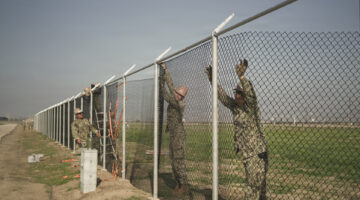
Why Bigger Fences Aren’t Enough in the Age of Drones
Traditional thinking about how to protect facilities must adapt to new threats such as drones or downstream attacks.
The orbit numbers are not simply orbit numbers; they are about manpower, and commitment of limited staff to a narrow set of missions. There are no resource-free choices on things like increasing numbers of UAVs and Orbits at the expense of other air mission requirements both in Afghanistan and elsewhere.
But throughout the book, Gates makes it clear that his sense of urgency is the imperative. Because of Gates’ decision, we now have a significant surplus of UAVs with the ending of large-scale forces in Afghanistan. What is the Air Force going to do with them? The challenge is to meet current needs and to invest in the evolving future. It is not easy and there will never by consensus on the balance.
But what Gates actions underscore is that an over emphasis on the immediate present guarantees that you will not have a force structure able to meet the needs of the next five years, not decades out but in the near term.
There are words throughout the book which suggest that Gates aimed for balance, but missed. Instead, he bet the ranch on wars like Iraq and Afghanistan being the norm for the future.
At West Point the same day, I delivered a lecture to the entire corps of cadets with a similar message about military leadership, knowing that my remarks there would be read throughout the Army. I told the cadets, In order to succeed in the asymmetric battlefields of the twenty-first century— the dominant combat environment in the decades to come, in my view— our Army will require leaders of uncommon agility, resourcefulness, and imagination; leaders willing and able to think and act creatively and decisively in a different kind of world, in a different kind of conflict than we have prepared for the last six decades.…
Throughout his book, Gates highlights his desire to be confronted with innovative thoughts and leaders. But he fired multiple airpower leaders (Secretary Wynne and Air Force Chief of Staff Mosely are only the most prominent; Marine Maj. Gen. David Heinz, the head of the F-35 program is among the others) suggesting to some observers that innovation has its cost in his presence.
Firings were done to enforce his own beliefs and predilections and his own narrowly considered orthodoxy; it was not to shape an innovative approach to transforming the military. One of the famous innovations Gates introduced were non-disclosure agreements. Senior officials were required to sign these personal commitments not to share budget data with outsiders.
Breaking Defense Video