UPDATED 11/21/24 at 6:19 pm ET: After publication of this report, ULA confirmed that the two national security missions slated to ride on Vulcan are now planned for early next year.
WASHINGTON — The United Launch Alliance’s Vulcan will not be able to conduct two planned national security missions on its launch manifest for this year after delays with certifying the heavy-lift rocket. The comments came hours after a Space Force official cast doubt that the missions could be completed before the end of 2024.
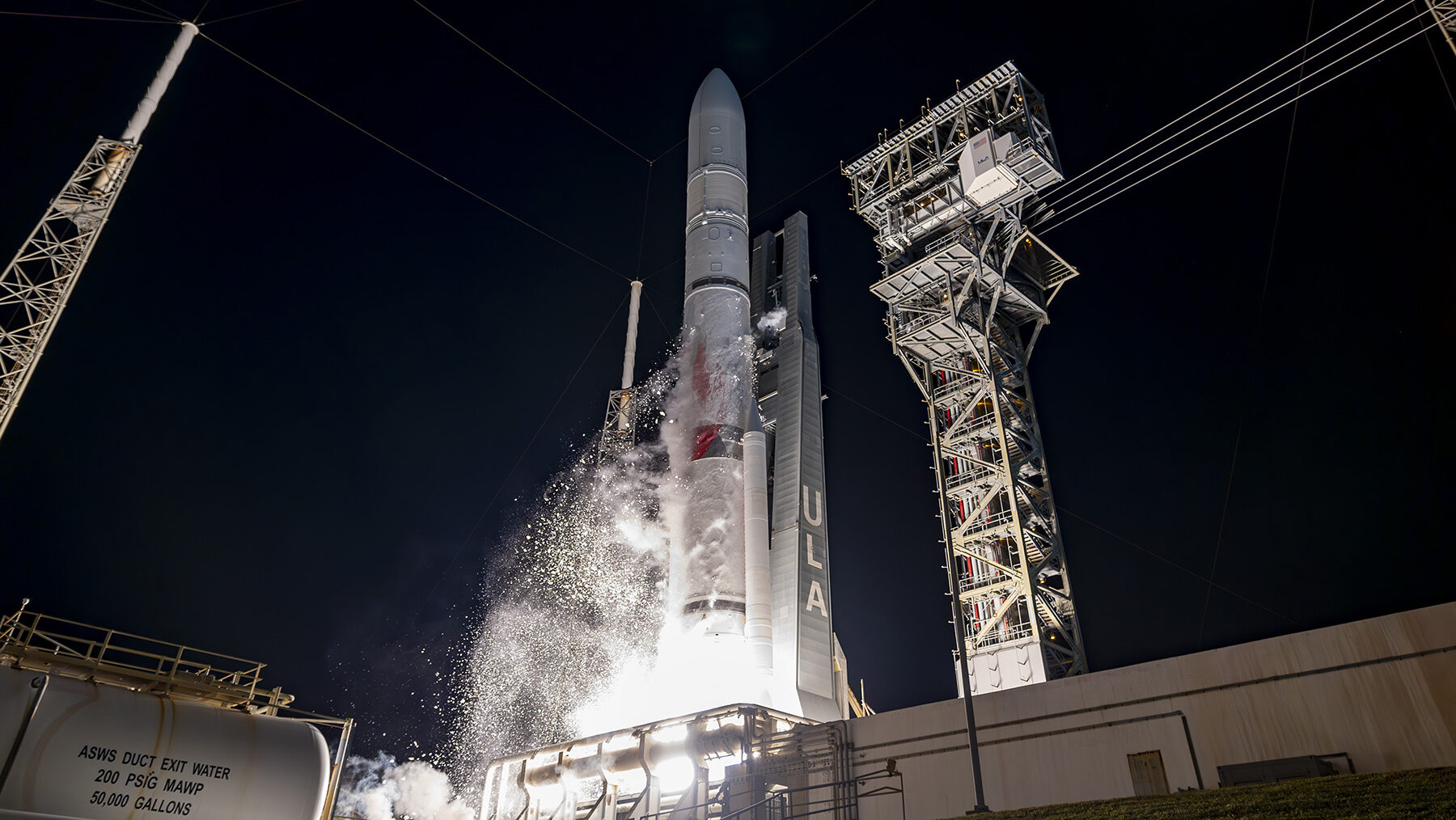
ULA launched its second certification flight in October, roughly a month behind schedule, following a first flight in January that was nearly four years behind schedule. The Space Force is still assessing data from the October launch in partnership with ULA to support the certification that will pave the way for the rocket to carry national security payloads. But even if that blessing comes swiftly, the calendar is unforgiving.
With only six weeks left in the year, and other steps required like mounting payloads on the rocket, “we are getting challenged to be able to launch this year,” Lt. Gen. Philip Garrant, head of the Space Force’s Space Systems Command, told reporters this morning during a breakfast hosted by the Defense Writers Group.
And how much schedule margin is left for 2024?
“Probably not much,” he replied, though he deferred to ULA for specifics. After publication of this report, a ULA spokesperson told Breaking Defense the two launch missions, USSF-106 and USSF-87, are now “planned for early next year.”

GPS: Still the gold standard in global navigation
The GPS network continues to prove its unmatched reliability, and it’s only getting stronger.
Amid dominance by Elon Musk’s SpaceX, the Pentagon has been eager to field more launch providers to help foster competition, drive down costs and provide redundant launch options. ULA has since been racing to certify Vulcan, particularly after retiring the Atlas V and Delta IV Heavy rockets from military service.
Two well-executed launches are requisite to achieve certification for carrying national security payloads, meaning ULA could soon be given the go-ahead for Defense Department missions following the October launch. The January launch was deemed a success, but there was an anomaly during the October flight with one of Vulcan’s solid rocket boosters that currently is under investigation. Nonetheless, Garrant noted, Vulcan was still able to achieve the criteria for certification by successfully continuing on its planned flight path.
“If they are not launching by the end of the year, we would delay those launches,” Garrant said of the two national security missions on Vulcan’s manifest. “We are working with [ULA] to evaluate the data from their second flight, and they are making significant progress.”
Garrant separately noted that the Space Force’s contract vehicle for launches, known as the National Security Space Launch (NSSL) program, is currently in limbo due to the ongoing continuing resolution (CR), which appears likely to stretch into 2025.
The service in June awarded the first contracts under the latest NSSL iteration, called Phase 3, to ULA, SpaceX and Amazon founder Jeff Bezos’s Blue Origin, for non-critical and/or lower altitude launches under the program’s first “lane.”
Due to the CR, the next tranche of awards under NSSL Phase 3 — for must-succeed missions under the program’s Lane 2 — will not move forward until the full fiscal year 2025 budget is passed, Garrant said.
While ULA’s Vulcan has not been certified, Blue Origin’s New Glenn rocket has yet to even make its maiden flight — though that could occur this month. Still, Garrant indicated the Space Force expects the two companies will be able to compete against SpaceX for NSSL Phase 3, Lane 2 contracts. (SpaceX is currently the only certified launch provider for those missions.)
“We anticipate that they will be certified,” Garrant said of ULA and Blue Origin, though he added it’s “probably too early to say how” the Space Force would divvy up contract awards between the three potential providers once the FY25 budget is passed.
Theresa Hitchens contributed to this story.