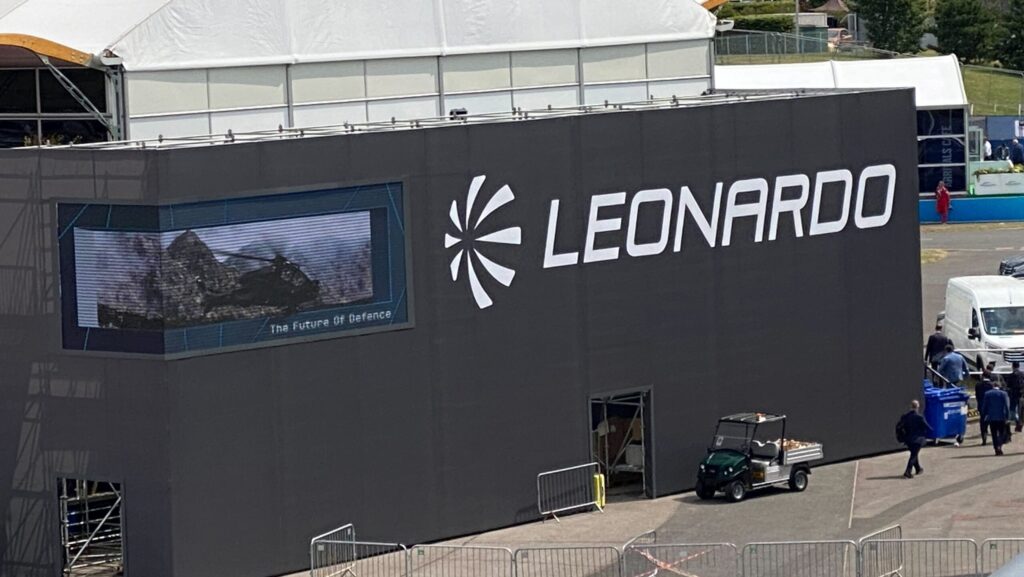
WASHINGTON — Italian defense giant Leonardo has acquired land vehicle firm Iveco Defense in a €1.7 billion ($1.94 billion) deal, the company announced this week.
The deal, which is expected to close by first quarter 2026, consolidates some of Italy’s defense sector at a time when European defense spending is on the rise.
Iveco produces a number of different ground vehicles for both ground and amphibious missions. Among them is the Centauro II wheeled tank, a coproduction of Leonardo and Iveco selected by the Italian army.
The firm has also stepped into autonomous ground vehicles, with the company selected earlier this month by a NATO office to work on concept development and experimentation on ground drones.
“The integration of Leonardo’s electronic systems — including a complete suite of combat electronics sensors and next-generation turrets — with Iveco Defence vehicles will ensure the utmost effectiveness of the proposed operational solutions,” the announcement notes, later adding that “Leonardo, in collaboration with its partner Rheinmetall, will evaluate potential opportunities on the heavy vehicle system.”
“The acquisition of Iveco Defence represents a key milestone in the execution of our inorganic growth strategy and supports the full implementation of our Industrial Plan,” Roberto Cingolani, CEO and General Manager of Leonardo, said in the statement. “This transaction reinforces Leonardo’s position as a reference player in the European land defence market, a segment expected to experience sustained growth in the coming years.”
Speaking to Breaking Defense a year ago, Lorenzo Mariani, the co-general manager of Leonardo, directly stated that “Consolidation is the only way” for European firms to be successful going forward.


European-made Black Hawk gets an armed upgrade
New kits turn Black Hawks into attack Hawks in just three hours.
In a note to investors last night, analyst Byron Callan of Capital Alpha Partners noted that “The Italian defense budget is expected to increase EUR 4 billion annually over the next five years to hit the 3.5% NATO commitment, which implies growth from EUR 17-18 billion to EUR 30 billion in revenues per management by 2030. Per management, that would entail 6.0-7.5 million more extra hours of engineering and 1.7-2.3 million hours of manufacturing.”
Breaking Defense Video