BEIRUT — Amid back and forth threats between the United States and Iran, US Central Command (CENTCOM) has opened a new air and missile defense coordination cell at Al-Udeid Air Base in Qatar.
“This is a significant step forward in strengthening regional defense cooperation,” said CENTCOM Commander Adm. Brad Cooper in a Tuesday statement. “This cell will improve how regional forces coordinate and share air and missile defense responsibilities across the Middle East.”
The new air and missile defense entity, dubbed Middle Eastern Air Defense — Combined Defense Operations Cell (MEAD-CDOC), will be part of the Combined Air Operations Center (CAOC). CAOC is a coalition established by the US 20 years ago in the Middle East, made up of 17 nations to coordinate the employment of military air defense assets in the region.
Air Force Central Commander Lt. Gen. Derek France said he expects the new cell to strengthen integrated air and missile defenses throughout the region.
“The MEAD-CDOC creates a consistent venue to share expertise and collectively create new solutions together with our regional partners,” he said.
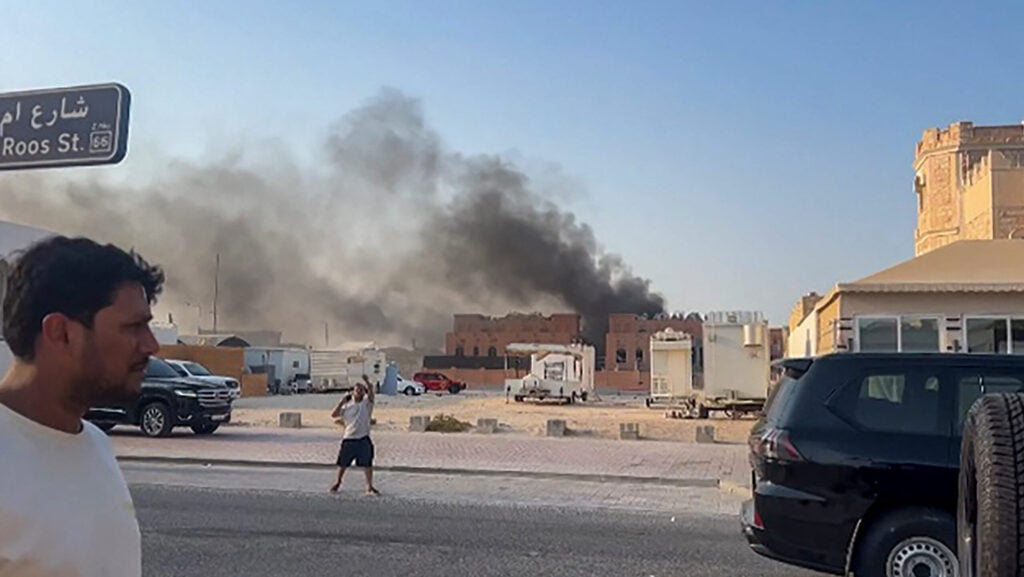
The interest in air defense systems in the region was heightened late last year, especially after sites in Qatar were struck by Israeli forces targeting Hamas figures and by Iranian forces targeting the US military presence there. The announcement comes as Iran threatened to attack US military bases in the Middle East if it was targeted by the US, though analysts who spoke to Breaking Defense said that the timing is not indicative of upcoming US military action.
But Senior Middle East and North Africa analyst at the RANE Network Ryan Bohl said today that he thinks the new air defense cell has been a long-planned step.


Keeping sensitive information safe in a new AI era
Why edge and endpoint security can’t be an afterthought.
“It’s almost certainly not just a response to the two attacks on Qatar last year, but also an attempt by the United States to reinforce the defense pact that it offered to Doha,” he said.
Kristian Alexander, senior fellow at the United Arab Emirate-based Rabdan Security and Defence Institute, said, “The timing should not be viewed as a direct response to Iranian domestic protests, nor as a precursor to imminent US military action against Iran. However, it is clearly connected to broader strategic signaling and contingency planning.”
Bohl added that “from Washington’s perspective, Iran is entering a period of internal volatility combined with external assertiveness. History shows that Tehran has, at times, used external escalation or proxy activity during moments of domestic pressure. The US and its partners are therefore focused on deterrence through preparedness rather than provocation.
“While air defenses will certainly play a role in shaping the contours of escalation, so too will political will; that is Iran will have to choose how far it wants to go with its still considerable arsenal in attacking US targets,” he said.
Alexander said the establishment of the US Air and Missile Defense Operations Cell in Qatar is significant “because it marks a shift from platform-centric defense toward regional integration and command-and-control coordination. Rather than focusing solely on deploying more interceptors or sensors, the cell is designed to synchronize early warning, threat tracking, and engagement decisions across multiple partner nations in near real time.”
He added that the new cell “is a response to the realization that regional air defense is no longer optional, and ad-hoc coordination is insufficient.”