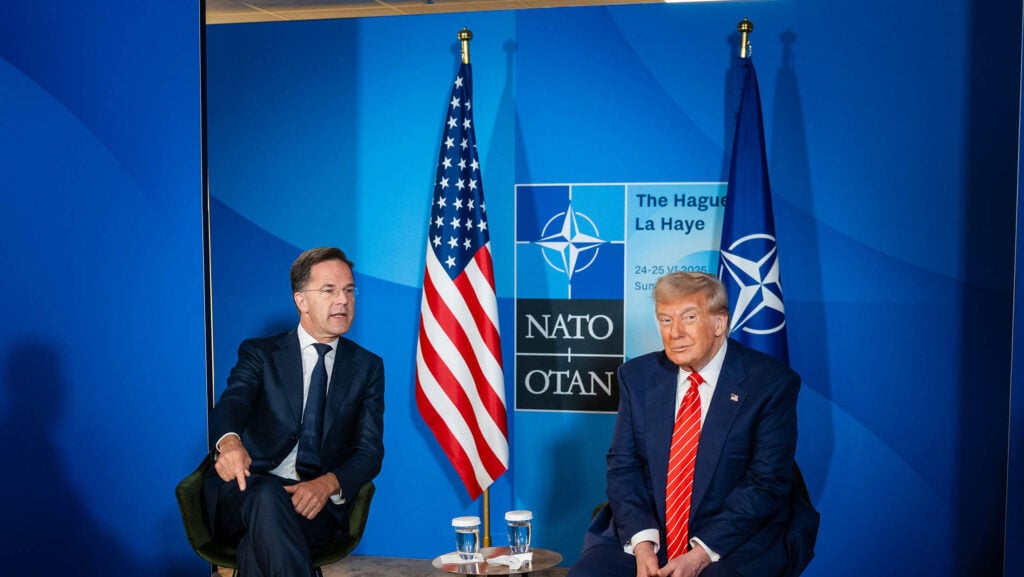
BELFAST — NATO today announced a command restructuring plan that will see the US giving up leadership of two allied operational-level commands to European senior officers.
The US will hand over charge of Joint Force Command Norfolk to the United Kingdom and relinquish leadership of Joint Force Command Naples to Italy, a statement from the alliance said. The statement also noted that Joint Force Command Brunssum will now be led by Germany and Poland on a rotational format.
Sharing more details of the shake up, the alliance said that changes involving a “new distribution of senior officer responsibility” were approved by allies last week, so “European Allies, including NATO’s newest members, will play a more prominent role” across leadership posts.
“As a result, all three Joint Force Commands (four star commands), which lead at the operational level in crisis and conflict, will be led by Europeans,” added the statement.
The alliance stressed that the US will keep hold of the Supreme Allied Commander Europe (SACEUR) post, currently occupied by Gen. Alexus G. Grynkewich. Additionally, Washington is “to lead all three theater component commands, newly taking up responsibility for Allied Maritime Command, and maintaining leadership of Allied Land Command and Allied Air Command.”
The sweeping changes are set to be gradually implemented over the “coming years,” and mark a “shift to more fairly share responsibility within NATO,” according to the alliance, but they come amid a troubling period for the 32-nation collective, with questions surrounding its future.
For instance, amid rhetoric from US President Donald Trump that Greenland should be part of the United States, Danish Prime Minister Mette Frederisen said that if the US attacked a NATO ally, it would be the end of the alliance. Trump later stated that he likely would not use force to take over the semi-autonomous Arctic island.

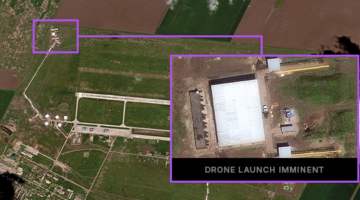
Europe’s military advantage depends on sovereign command of the ground truth
As NATO and European governments accelerate investment in space-based intelligence, decision advantage will depend on how quickly sovereign and commercial capabilities can be fused into a trusted operational picture.
Trump has insisted that control of Greenland is necessary for national security and Golden Dome planning, while criticizing European allies for not contributing enough to Arctic security.
NATO Secretary General Mark Rutte refused to comment on the Greenland issue when asked about it at the World Economic Forum in Davos, Switzerland, last month, but acknowledged that efforts were taking place “behind the scenes” to reach a deal.
On Monday, US ambassador to NATO Matthew Whitaker told a townhall meeting in Berlin that “a lot of great progress trilaterally” has been made in relation to negotiations over the Arctic island’s future.
Breaking Defense Video