WASHINGTON ― US Special Operations Command (SOCOM) has contracted Texas startup SkyFi to test a software platform built to deliver unclassified commercial satellite imagery directly to warfighters ― including a capability for commanders in the field to task a satellite to provide images in near-real time, the company announced today.
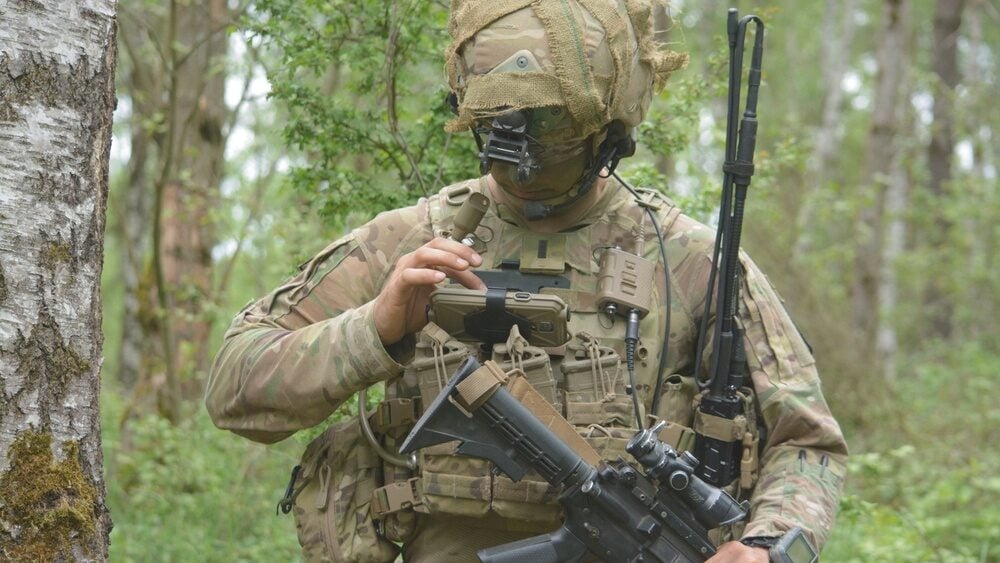
SkyFi’s web-based platform, in essence, is meant to serve as a network operator linking SOCOM users to the best available imagery provided by the company’s estimated 150 satellite remote-sensing providers via a plug-in to the Android Tactical Assault Kit (ATAK) application for mobile phones and tablets, Luke Fischer, the company’s CEO, told Breaking Defense.
“We’re building what’s called a Sovereign Intelligence Platform for SOCOM,” he said. “So, when we say Sovereign Intelligence Platform, it’s SOCOM’s own web application and ATAK application built off our existing infrastructure that is ‘SOC peculiar’, the very keyword in SOCOM.”
He explained that the “software fuses all the imagery requests to it and then pushes [information] to the edge” via the ATAK plug-in, which up to now has been used by SOCOM and other military forces for operations such as blue-force tracking. (SkyFi has been selling a commercial version of its imagery plug-in for about a year.)
While individual satellite companies do allow customers to task satellites, coverage at certain times of day over certain areas may not be immediately available due to a variety of factors ― such as the size and orbital location of the constellation, and the type of sensor being used in what climate conditions. SkyFi says that its app, on the other hand, can find which partner companies have satellites able to respond fastest, and fuse data from a variety of providers to create a clearer picture.
SkyFi has not disclosed the value of the SOCOM contract, but today’s announcement said that insights gained from this Phase I assessment effort “will inform potential follow-on activities, which may include expanded integration tasks, additional imagery delivery mechanisms, and further assessment of data processing and visualization approaches.” A spokesperson for SOCOM didn’t immediately respond to a request for additional details about the SkyFi contract.
SkyFi last May was one of 13 companies added by the Defense Innovation Unit (DIU) to its “Hybrid Space Architecture” program to integrate civil, commercial and military satellites to create a hack-proof Internet-of-Things, modern data-fusion techniques and “high performance edge compute” to move data and information in real-time from military sensors to shooters.
From directed energy to AI and hardening, JIATF-401 is widening counter-UAS options
There is no single answer to the drone threat, pushing the Pentagon toward a broader mix of defenses.
Fischer noted that the company also has a contract with the Space Force web-based service under the Tactical Surveillance Reconnaissance and Tracking (TacSRT) program.
“We’ve been working with TacSRT for about 16 months now … and we’re in continuing negotiations for the next phase of that,” he said.
That work involved building a software platform to serve as a kind of automated middleman to match requests from combatant commands to available commercial imagery from the Space Force’s commercial TacSRT partners.
“We ― through automation [and] based on the requests ― will select the best satellite company that gets their image, provide the analytics and produce a operational planning product for them, so they aren’t worried about which satellite with what resolution, or a contract negotiation and bidding back and forth,” he explained.
“And the value we are providing, is speed. You know, typically, it can take days or weeks to get unclassified imagery through various existing government mechanisms. We can do that in minutes and hours,” Fischer said.
Breaking Defense Video