MILAN — French President Emmanuel Macron said today that France, among other European countries, has been the target of Russian hybrid threats over the last few weeks.
“In recent weeks, the threat — particularly the Russian hybrid threat — facing Europeans and France has intensified,” Macron told reporters after a meeting at the Élysée, which was attended by presidential candidates and senior military, intelligence, and energy officials. (France will hold presidential elections on Sept. 28, and Macron will not be able to run for reelection, having served two mandates.)
According to an AFP report, the gathering was expected to address, in part, the rapid decline in global relations, including the wars in Ukraine and the Middle East, and their implications for French security and energy prices.
Only days before, France’s strategic planning body warned that Europe must increase military capabilities, reserves and societal resilience in preparation for more hybrid warfare attempts and major, prolonged conflicts.
The Haut-Commissariat à la Stratégie et au Plan (HCSP) on Tuesday published a 40-page document outlining Paris’ 2035 national security objective, highlighting that it anticipates an increase in confrontations on the seabed and in outer space by 2035.
“Critical digital infrastructure, the seabed and outer space will increasingly become areas of strategic confrontation between states, as well as between private and state actors,” the report says. “An increasing share of power — and also vulnerabilities — will be concentrated in these spaces, which are largely invisible to citizens.”
The HCSP report further highlighted the areas that would become points of tension between different actors. It noted that between 2022 and 2024, Russia-attributed hybrid warfare operations in Europe increased from fewer than 10 instances to nearly 50. Based on the increase, the report states that these actions are bound to multiply across different sectors, including cyber, economic and information.

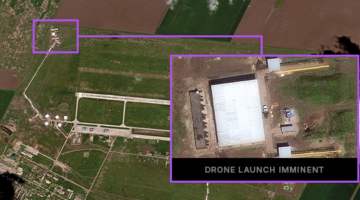
Europe’s military advantage depends on sovereign command of the ground truth
As NATO and European governments accelerate investment in space-based intelligence, decision advantage will depend on how quickly sovereign and commercial capabilities can be fused into a trusted operational picture.
Hybrid warfare refers to a combination of methods used by adversarial actors that fall below the threshold of open military conflict, ultimately making it harder to prove who is behind these attacks or attempts.
Looking toward 2035, the authors made several key recommendations for both Paris and Europe as a whole to be ready to operate in and face a “durably degraded” security landscape. First, they recommended fast-tracking the transformation of the military model to avert the threat of a major war in Europe. French military officials have urged the country to shift away from smaller, international counter-terrorism forces toward large-scale, high-intensity combat readiness, and to prioritize adopting a war-economy approach.
“The budgetary effort required of the nation must align with a clear European objective for 2035: the ability — acting among Europeans if necessary — to prevent any attack aimed at testing Europe’s unity and credibility,” it said.
A second recommendation is to end the continent’s technological dependency, including on US and Chinese suppliers, to favor European-made systems. The country has made greater efforts this year to make this a reality, particularly in digital and artificial intelligence. For instance, in January, it laid out plans to create a Digital Sovereignty Observatory to map the government and associated businesses’ reliance on non-European technology.
By 2035, the report says, the aim should not be “to build full European military integration,” but rather to bolster forms of collaboration with other like-minded actors that can deliver results quickly.
Finally, the plan recommends that France preserve national unity as a priority in the context of heightened hybrid warfare, highlighting that a key capability will be to identify and counter information-based attacks aimed at destabilizing societies. The report did not outline specific methods for how it plans to do this.
Breaking Defense Video