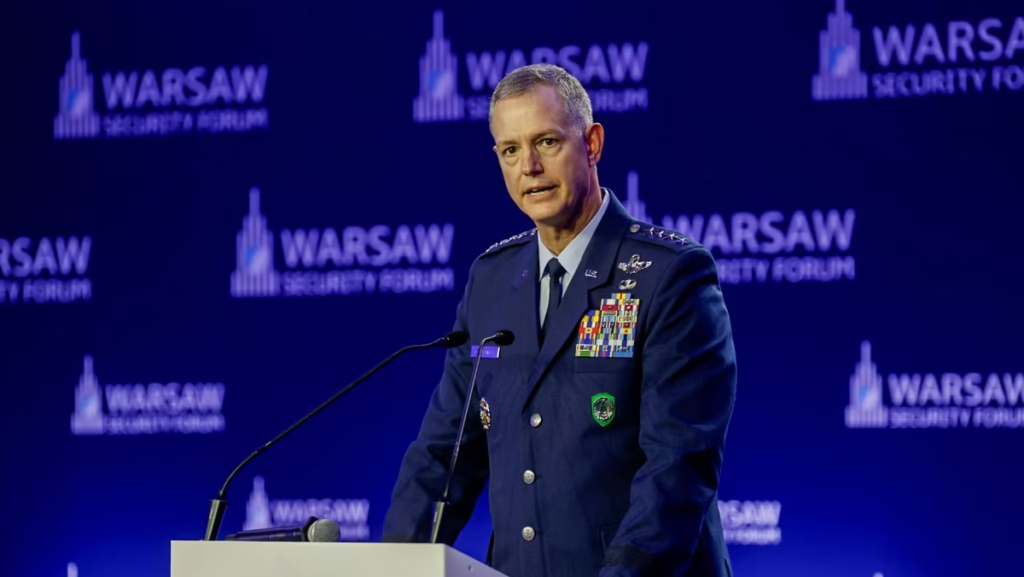
BELFAST — Despite assuring an audience today that a conflict on NATO territory is neither “imminent or inevitable,” Gen. Alexus Grynkewich, the alliance’s Supreme Allied Commander Europe, outlined a strategic “theory of victory” and offered a warning to potential aggressors.
He told the Warsaw Security Forum that NATO’s aim is to deter adversaries, “but if someone is foolish enough to attack us, we will fight,” adding that “any attack against any ally” will end up “utterly futile.”
NATO is capable of carrying out this vision by implementing its “theory of victory,” a classified version of which was agreed upon by all 32 alliance members “about three months ago,” according to Grynkewich.
Grynkewich, who also serves as commander of United States European Command, did not say against whom, exactly, the alliance would fight, but the speech comes as European capitals have increasingly called out Russia for what they alleged are a string of sabotage cases across the continent. Grynkewich said the incidents were making allied populations “a bit nervous.”
“What I want to do is assure the one billion citizens of the alliance that we’ve got this. We know what we need to do,” he said.
Grynkewich warned, “I want others to know who might be thinking about doing harm against us, that we’ve got this, and that they better not take any shot at the alliance.”
The theory of victory is structured around blocking, blunting and breaking an enemy — beginning with stymieing an initial attack and preventing an enemy advance by weakening it. Drawing on the final part of the theory, said Grynkewich, “we will break the enemy’s forces and the operational warfighting system that is arrayed against us.”
Concentrating more on the warfighting elements to execute the new doctrine, he noted the “synchronized employment of multi-domain effects down to the tactical level” in order to “overwhelm enemy formations in contact.”
The end result would see enemy forces degraded to such an extent that they would be unable to continue an attack, explained Grynkewich.
“Across the alliance, we’re taking steps to operationalize this theory and maximize the readiness of our forces,” he made clear. “If attacked, we are ready to fight tonight.”
Grynkewich’s comments come as Polish Foreign Minister Radosław Sikorski warned today that NATO allies must be prepared to deal with a deadly Russian hybrid attack.
Separately, when assessing the state of the Ukraine war, Grynkewich noted that the frontline has “largely stabilized” and that Russian long range attacks on Ukraine’s energy infrastructure, “probably” won’t break the will of the country’s civilian population.
Breaking Defense Video