Land Warfare

Lessons for CENTCOM from counter-drone experiments in the Arizona desert

Officials said the “realities of the desert” like intense heat, wind, dust and glare closely replicate the physical challenges faced by forces in CENTCOM.

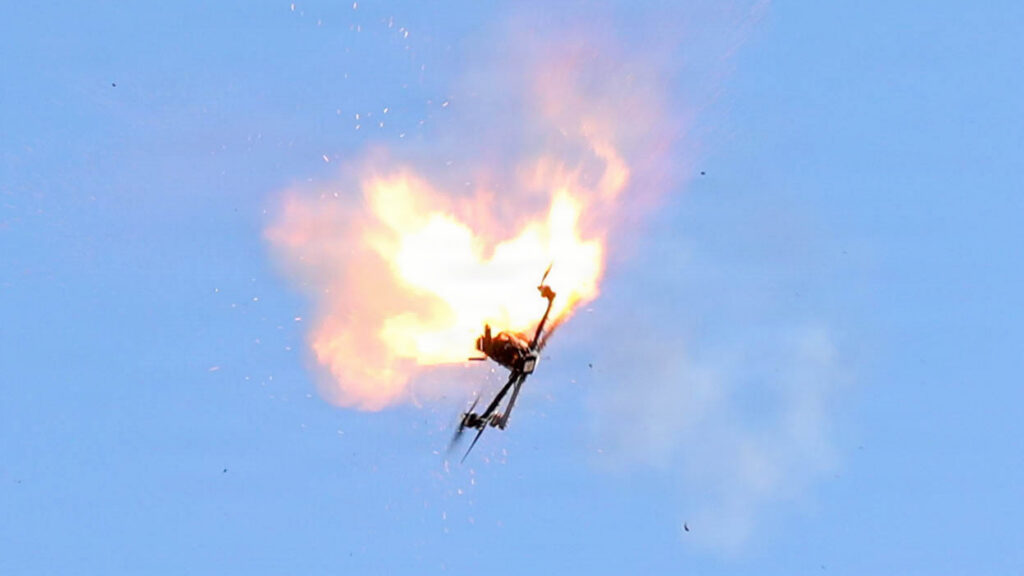
A drone shot down by Genesis Arms Gen-12 SBM during exercise Falcon Peak at Cibola Site 17, Yuma Proving Ground, Arizona, Sept. 22, 2026. (Dept. of War photo by SSgt. Colten Tessness)

YUMA PROVING GROUND, Ariz. — As American servicemembers sweated in the Arizona desert, stress testing various counter-drone technologies, some senior officials had their minds thousands of miles away — thinking about how lessons gleaned here could help protect troops under US Central Command in the Middle East.

“Operating capabilities day after day in extreme desert conditions provides invaluable data on system durability and operator usability that directly translates to contested environments like the CENTCOM AOR [area of responsibility],” Marine Col. Scott Humr, deputy director of science and technology for the Army-led Joint Interagency Task Force (JIATF) 401, told Breaking Defense last month shortly after the military concluded its most recent Falcon Peak exercise in Arizona desert.

He said the “realities of the desert” like intense heat, wind, dust and glare closely replicate the physical challenges faced by forces in CENTCOM in the Middle East. Handling such realities here in Yuma for Falcon Peak 26.2, put on by US Northern Command, allowed the team to “identify critical, highly practical sustainment needs that cannot be replicated in a laboratory.”

Related: Battling sand and wind, Pentagon evaluates counter-drone tech at southern border exercise

For instance, Humr said the task force had to pay close attention to how often solar panels powering the tech needed to be cleaned, as they would quickly become covered in dust. Soldiers had to make other “simple physical modifications” too, like getting new display shields so operators could read their screens in the unrelenting sunlight. 

That information, in turn, can enable industry to better outfit troops in commands like CENTCOM.

“Passing this direct feedback from our operators back to developers ensures that counter-UAS [unmanned aerial systems] are fully ruggedized and optimized before they are deployed to forward combat environments,” he said. 

Mike Wior, CEO of Allen Control Systems, the company that makes the counter-drone Bullfrog system, echoed Humr’s concerns over the wind. He told Breaking Defense on the sidelines of Falcon Peak that during the exercise his team had to adapt to the “gusts of wind that kind of come out of nowhere” and the crosswinds that affect the direction of the interceptors. 

“That has been kind of an eye opener,” he said. “We’ve already been out there shooting for quite a while, and so we’ve been getting used to it. But it’s really, really good, comparable stuff to CENTCOM.”

The sentiment was echoed by Joe Cornelius, who’s firm Perseus makes drone interceptors that the company says cost under $5,000 a hit.

“Some of the big takeaways we took from [the exercise] were like, we need to do more robust testing on different wind environments and things like that.” Cornelius told Breaking Defense. “The winds out here at Yuma are about twice what we’ve ever tested with down in Texas. So that was a pretty big thing that we learned.”

Regarding the lessons learned related to tech, Brig. Gen. Matt Ross, JIATF-401’s commanding general, told reporters on Sept. 24 that the task force plans to inform leaders from CENTCOM of its success with constructing a “layered defense” during the exercise — using different, overlapping defensive tech in a way that offers more than one chance to neutralize a threat. CENTCOM already uses layered defenses, but Ross said that beefing it up will be vital considering the ongoing risks Iranian Shaheed drones pose to US and allied bases in the region.

“We work in support of all the COCOMs, and so we and the services receive the requirements from them, and so we have provided support to [CENTCOM commander] Adm. [Brad] Cooper and CENTCOM,” Ross said. “I would say more than anything, [Falcon Peak] reinforced what we knew about the requirements for a counter-UAS ecosystem, meaning that we need a layered defense that consists of both active and passive sensing.”

He added that he’s seen how leaders in CENTCOM are “effectively” using the tools that are available, explaining that his task force’s role is to “try to give them some additional tools” so they can “layer them together in an effective manner to protect their critical assets.”

Though Ross didn’t specify what kind of tools could be offered to CENTCOM, during the exercise, the task force and NORTHCOM demoed three “lanes” of capabilities: sensing, kinetic interceptors (also known as drone-on-drone take downs) and ballistic take downs, which primarily consisted of small ammunition taking down the aircraft.

The Defense Innovation Unit (DIU) also played a role in finding relevant capabilities for CENTCOM during Falcon Peak. Angela Aspito, a director with DIU’s onramp hub in Arizona — which manages the continental US-based experimentation events for CENTCOM — told reporters DIU was successful in finding such capabilities, but she also did not specify on the types. But she said there are “gaps that we’re aware of that the warfighter needs to fill with technology.” 

“It’s pretty relevant right now to be out in Arizona, getting everything that’s happening with the war in Iran and Epic Fury. There’s a lot of relevant capability that needs to be transitioned into the Middle East, and so the opportunity to see that on the battlefield today is really real,” Aspito said.

PHOTOS: AUSA 2026

PHOTOS: AUSA 2026

Attendees file in during the first day of the 2026 Association of the US Army annual conference in Washington, DC, on October 12, 2026. (Breaking Defense)
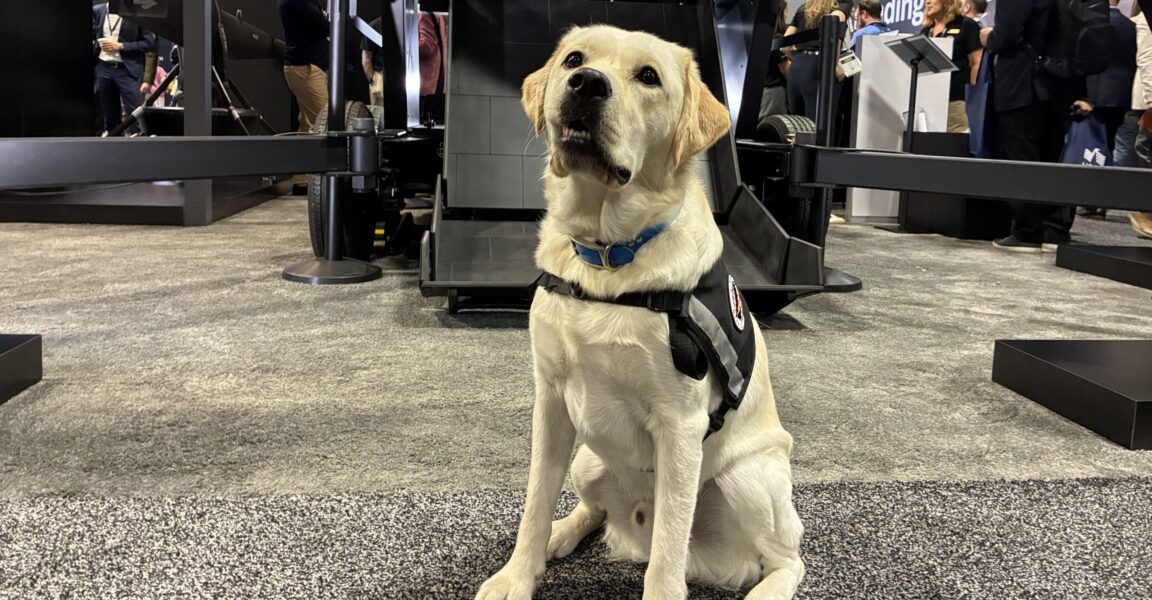
Patriot, who is expected to go to a wounded veteran when the dog’s training finishes, is happy to greet attendees outside the Shield AI booth on the show floor. (Breaking Defense)
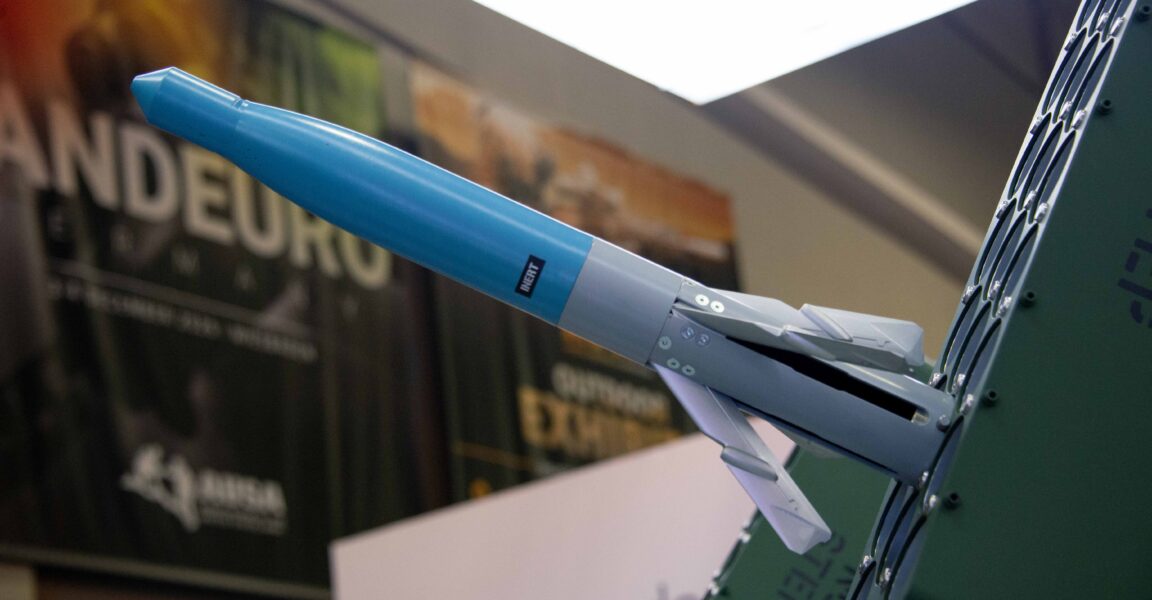
A close-up look at a munition from Sierra Nevada's Brawlr (Battery Revolving Advanced Weapons Launcher Reconfigurable) air-defense system, as seen at the 2026 AUSA conference. (Breaking Defense)
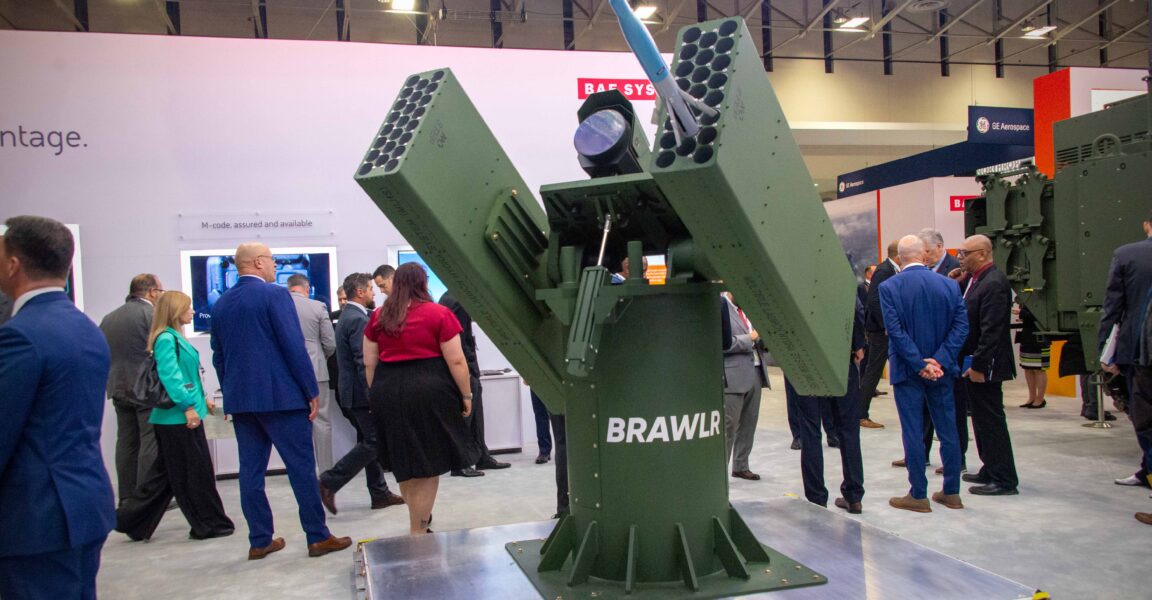
A wider shot of Sierra Nevada's Brawlr air-defense system at the 2026 AUSA conference. (Breaking Defense)
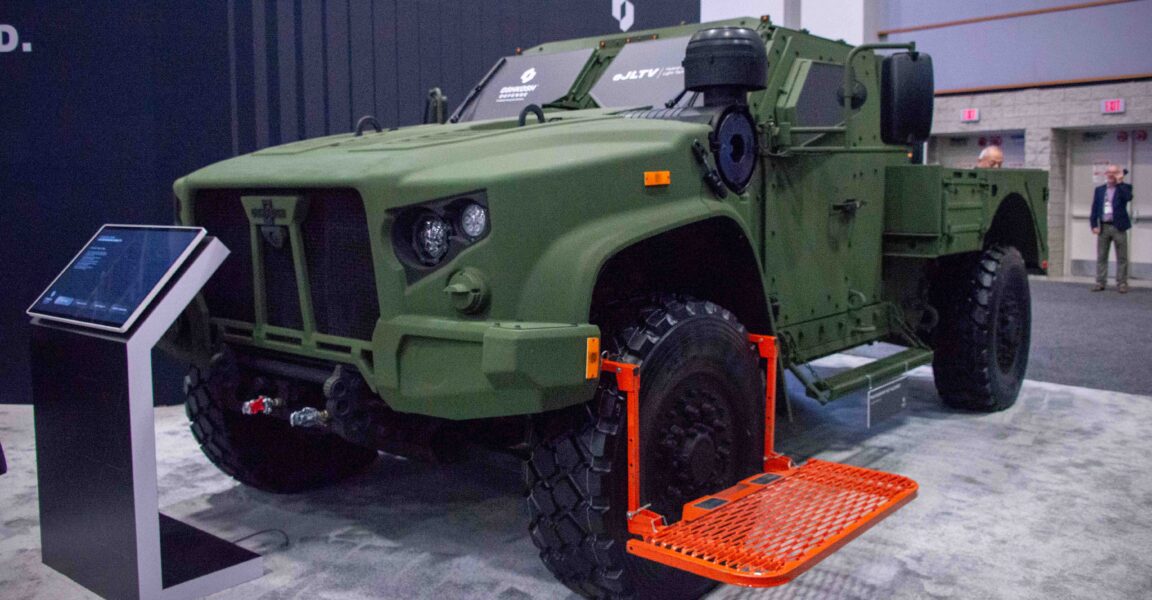
Oshkosh's electric Joint Light Tactical Vehicle on the AUSA show floor Oct. 12, 2026. (Breaking Defense)
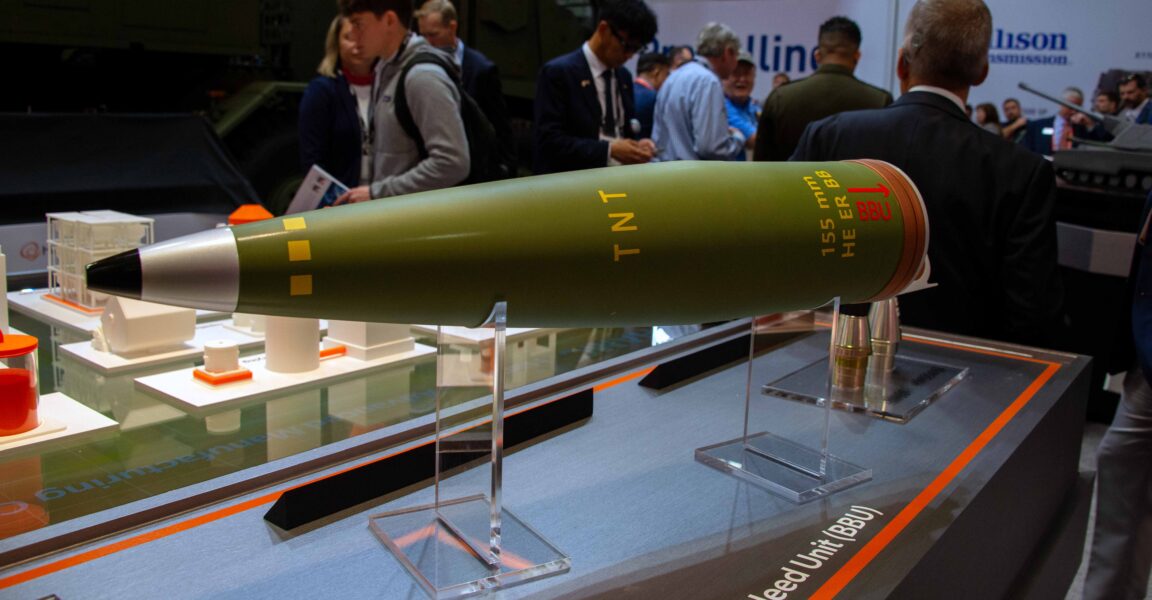
Hanwha Defense USA showed off its 155 mm artillery shells at the 2026 AUSA expo. (Breaking Defense)
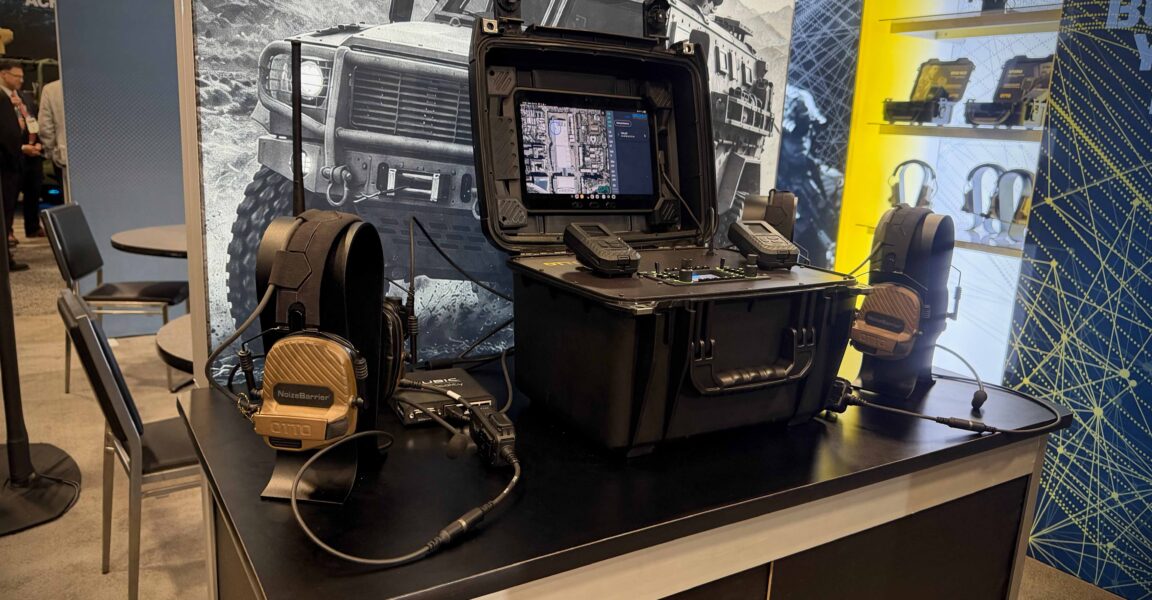
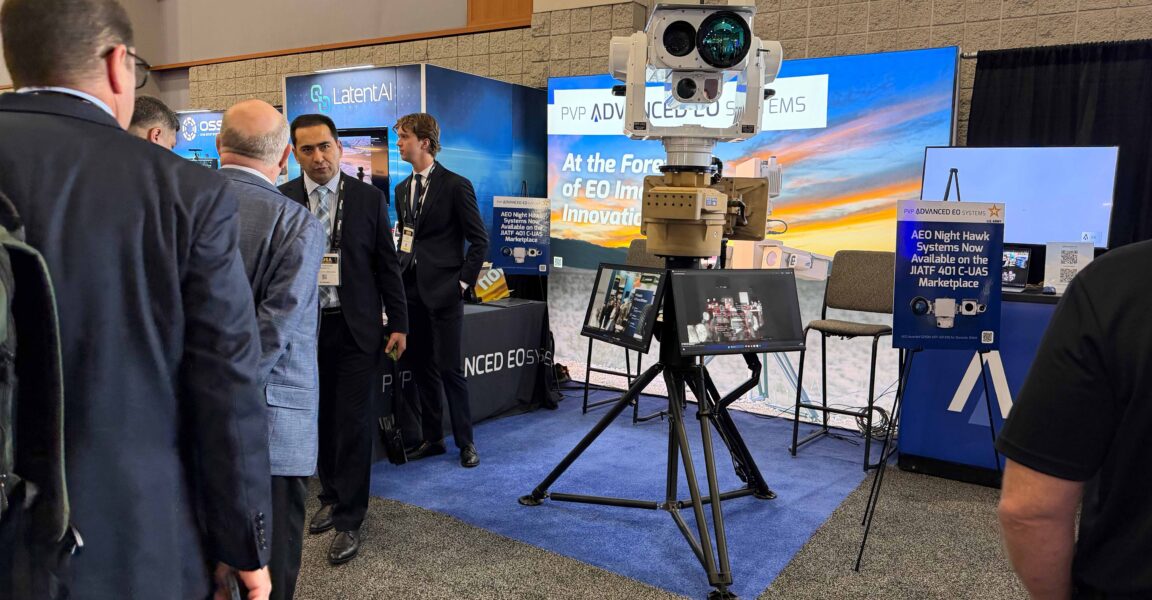
AEO Night Hawk Systems displayed their surveillance assembly, with sensors honing in on bystanders at the 2026 AUSA conference in Washington. (Breaking Defense)
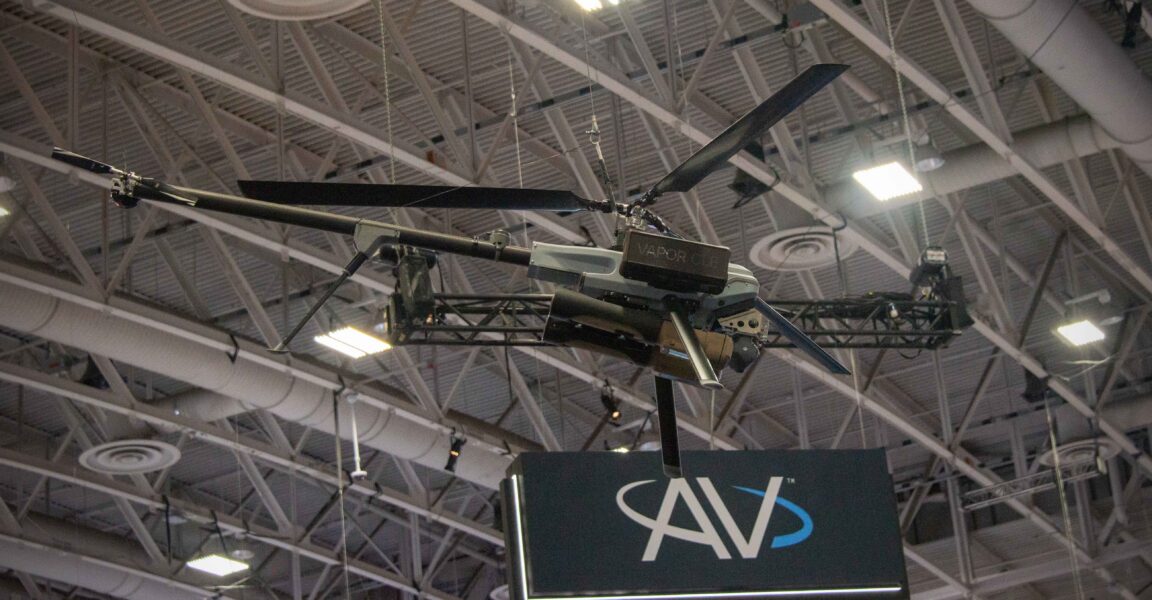
AeroVironment’s VAPOR is an all-electric, single-rotor vertical takeoff and landing (VTOL) helicopter unmanned aircraft system. Here it is suspended above attendees at the 2026 AUSA conference. (Breaking Defense)
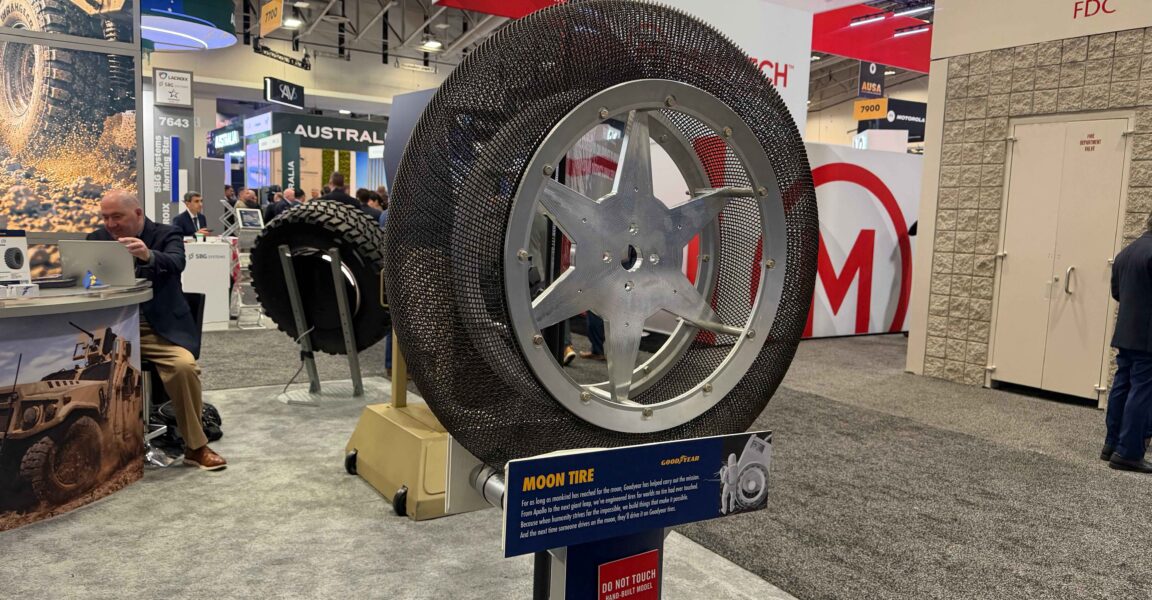
Goodyear representatives brought a sturdy but very unusual "moon tire" for lunar exploration to the 2026 AUSA expo. (Breaking Defense)
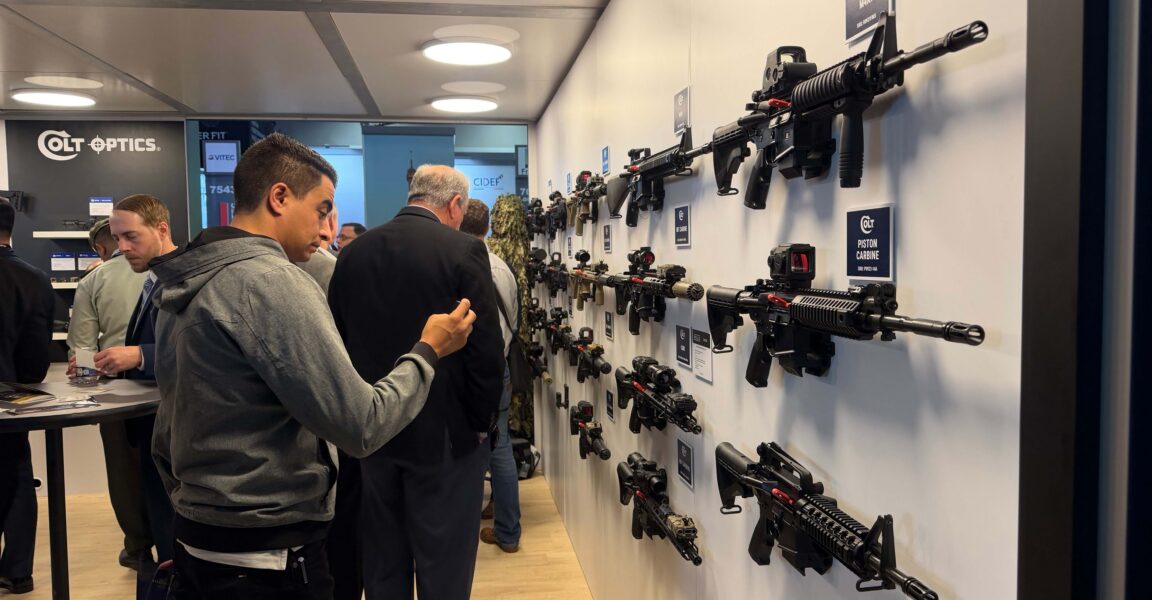
Colt optics had one of the busiest displays, with dozens of attendees observing a wall of assault rifles with specialized optics at the 2026 AUSA expo. (Breaking Defense)
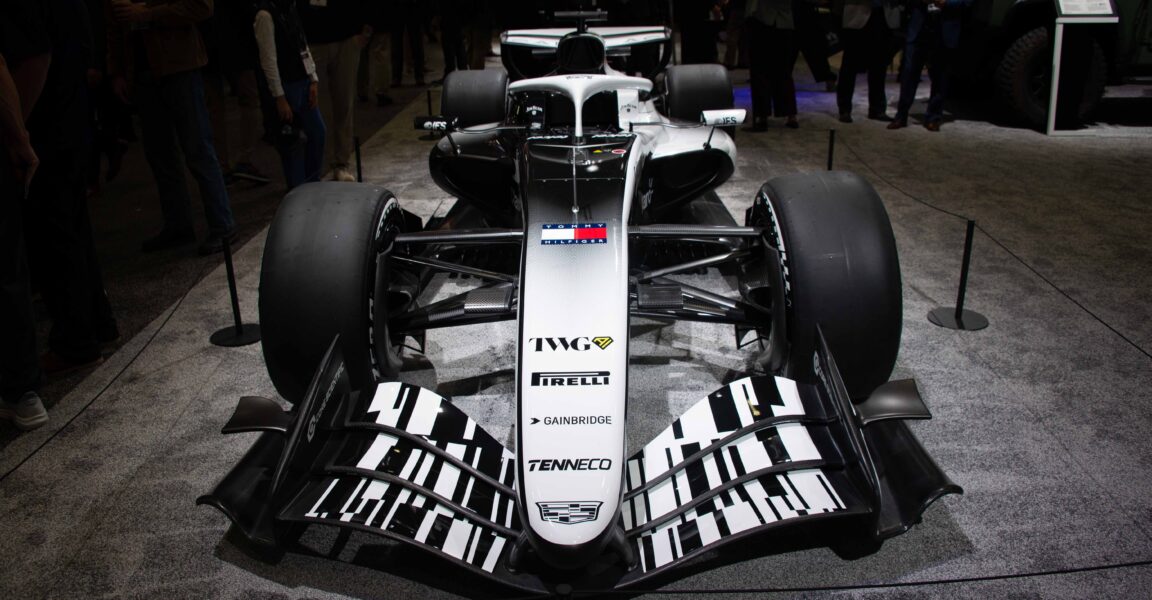
Cadillac brought its Formula 1 team racecar to the 2026 AUSA conference in Washington. (Breaking Defense)
AUSA mascots Sgt. Hero and George Washington descend the escalator at the 2026 annual conference. (Aaron Mehta / Breaking Defense)
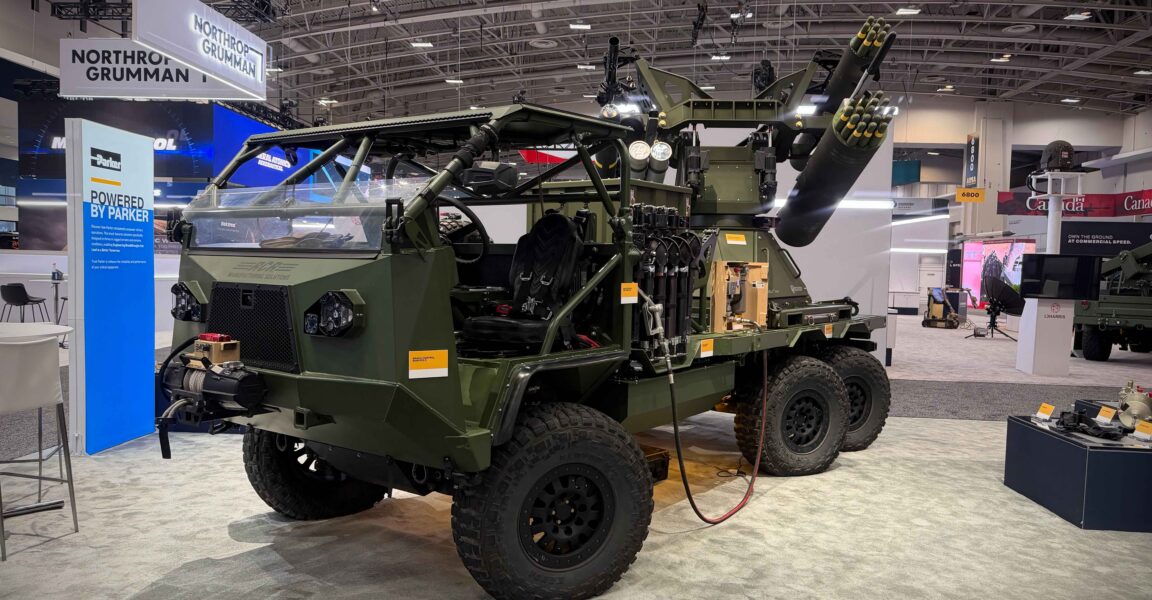
Parker Hannifin showcased many of its components onboard the MDH Strategic Services Airwolf c-UAS system, which is shown here fixed atop the RCR 6WAP vehicle. (Breaking Defense)
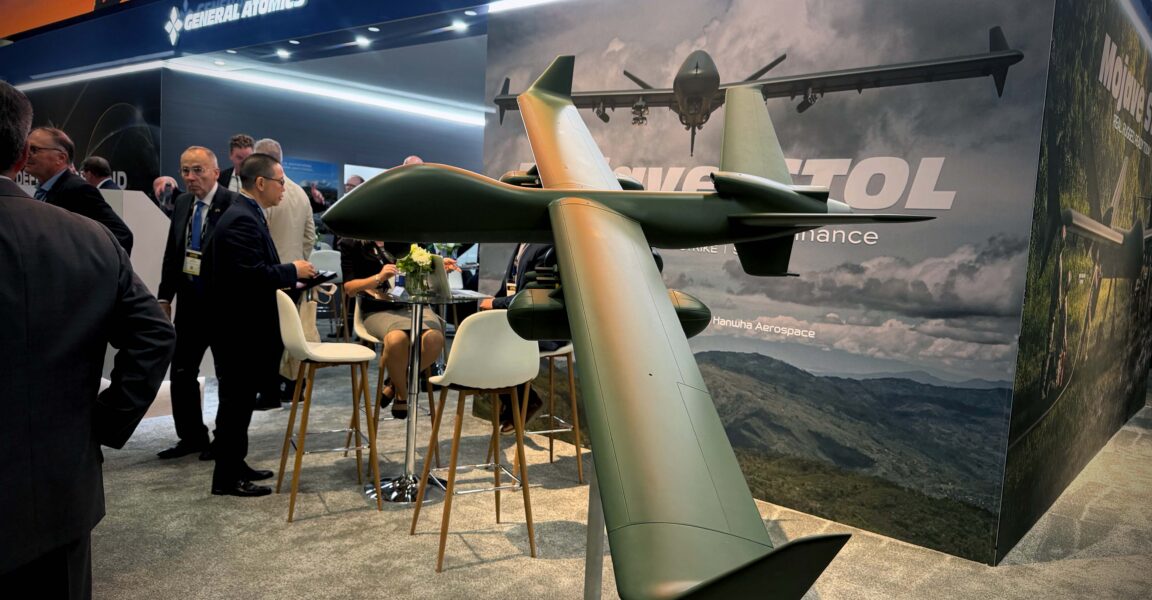
General Atomics Aeronautical Systems Inc. and Hanwha Aerospace co-developed the Mojave short takeoff and landing (STOL) uncrewed aircraft, pictured here at the 2026 AUSA trade show. (Breaking Defense)
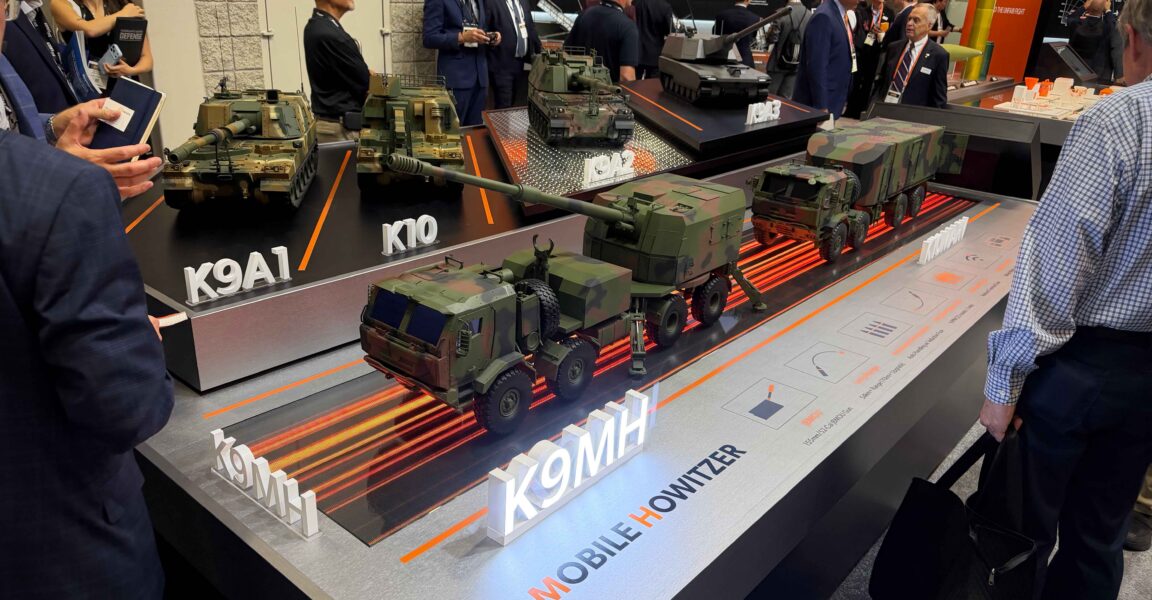
Hanwha Defense USA displayed a range of scale model armor and artillery systems on the AUSA show floor. (Breaking Defense)
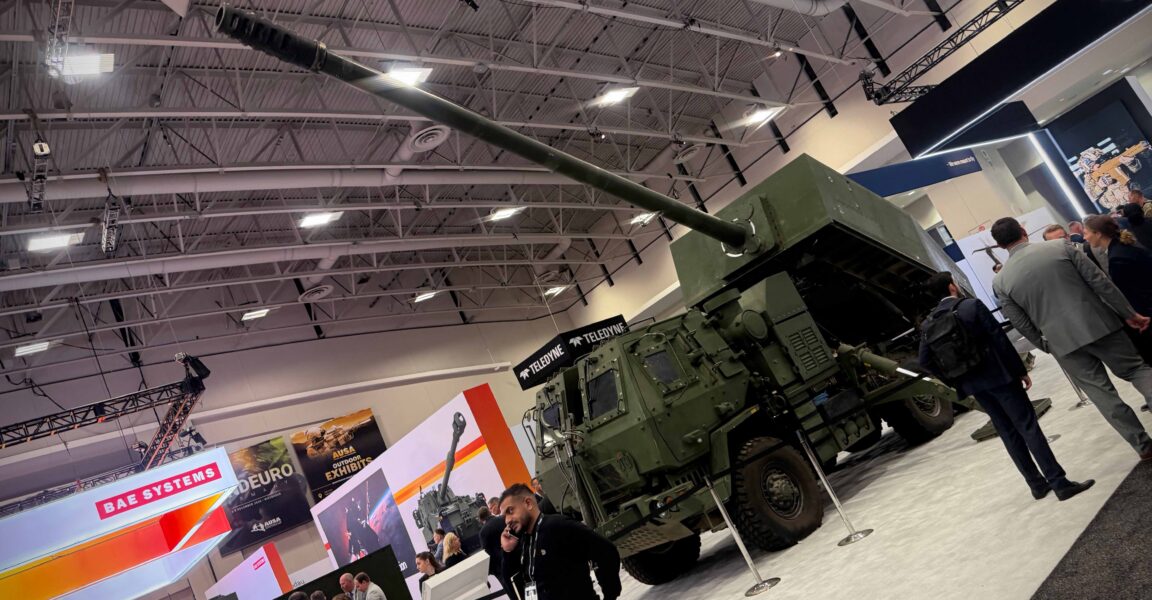
BAE’s Multi-Domain Artillery Cannon System stands tall at the 2026 AUSA trade show in Washington, DC. (Breaking Defense)
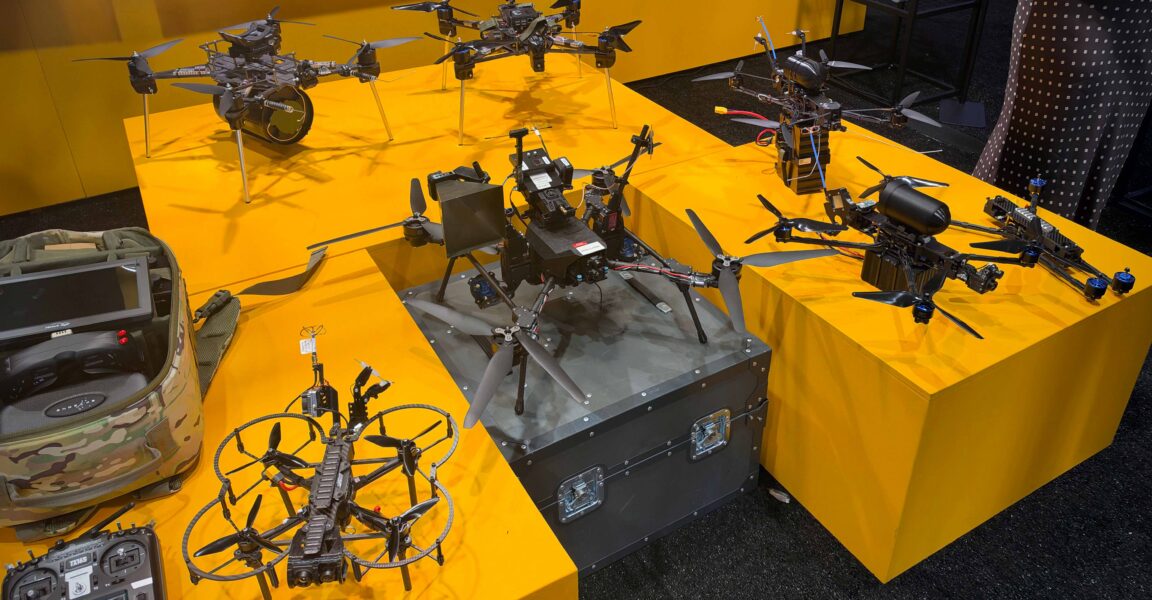
The Ukrainian military’s 3rd Army Corps brought a variety of small drones to the 2026 AUSA trade show. (Valerie Insinna / Breaking Defense)
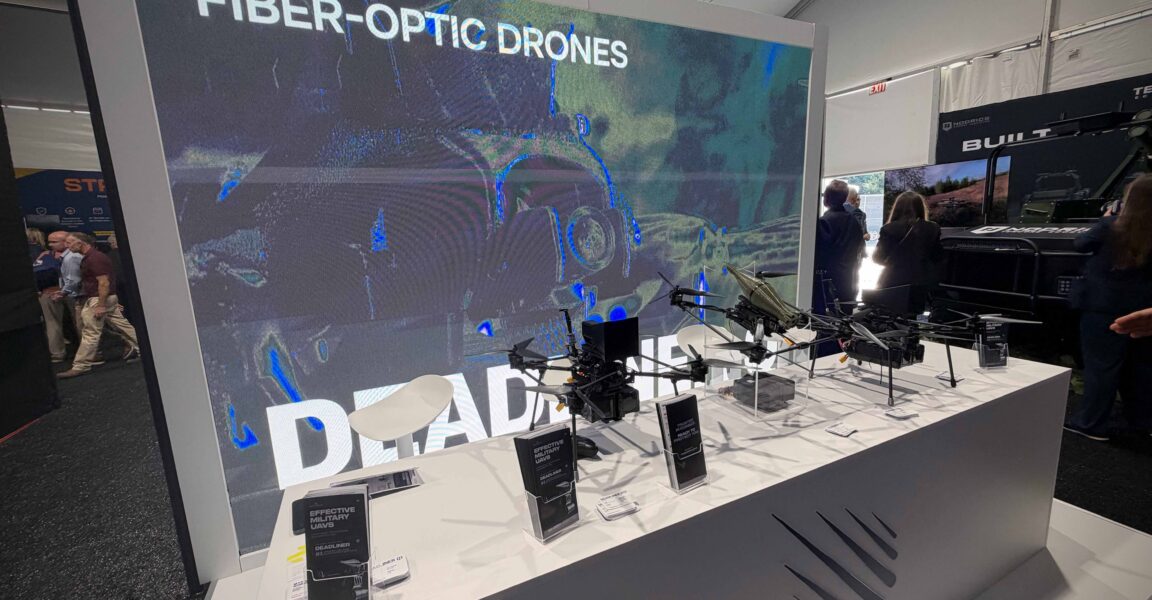
Kyiv-based defense tech firm Stellarion brought several fiber-optic drones to the 2026 AUSA expo. (Valerie Insinna / Breaking Defense)
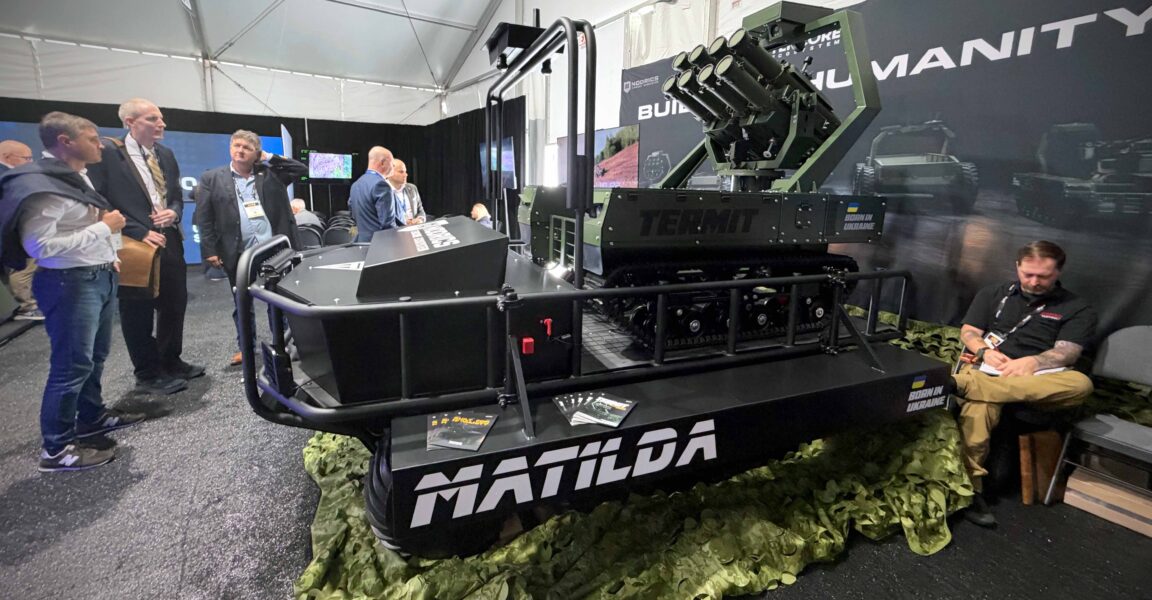
Ukrainian defense firm Tencore showcased an amphibious unmanned ground vehicle called MAT1LDA (Mesa Associates’ Tactical Integrated Light-Force Deployment Assembly), which is carrying Tencore’s TerMIT ground robot, at the 2026 AUSA trade show. (Valerie Insinna / Breaking Defense)
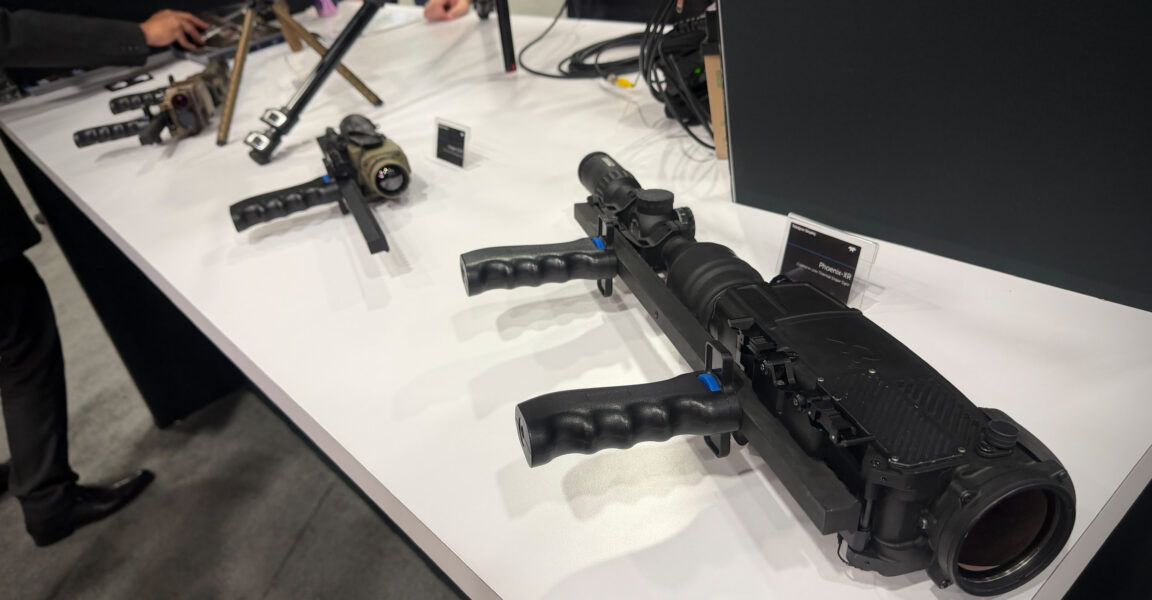
Teledyne Qioptiq brought several thermal weapons sights including the Phoenix-XR (right) and the Dragon-C12 S (middle) to the 2026 AUSA conference. (Breaking Defense)
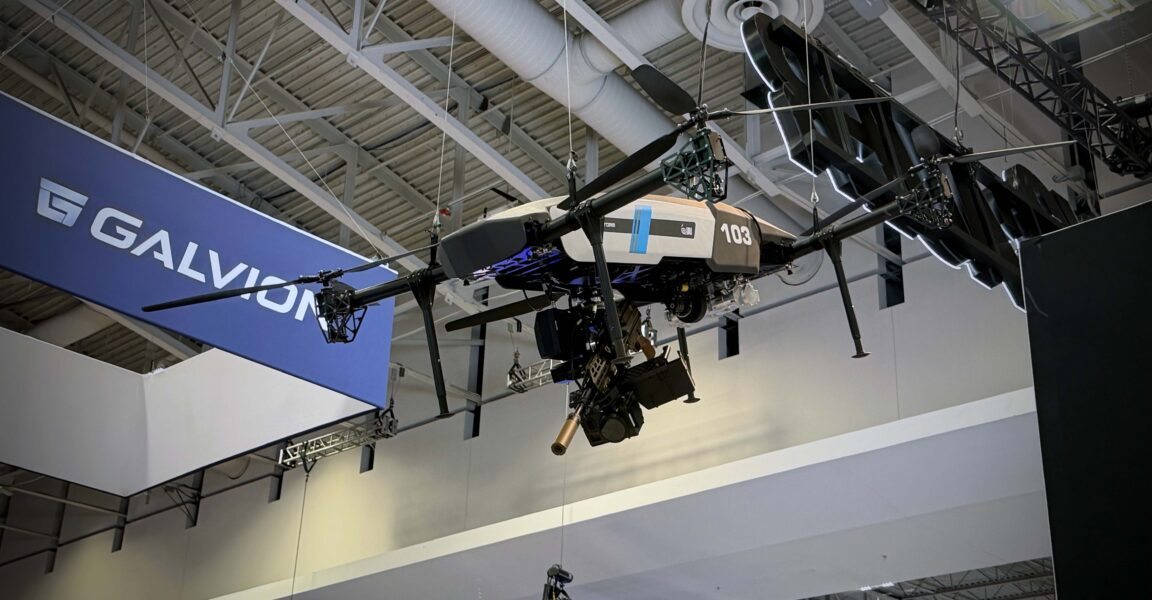
Israel Aerospace Industries’ and Sig Sauer’s Fire Storm 250 armed tactical quadcopter hangs above attendees of the conference. (Breaking Defense)
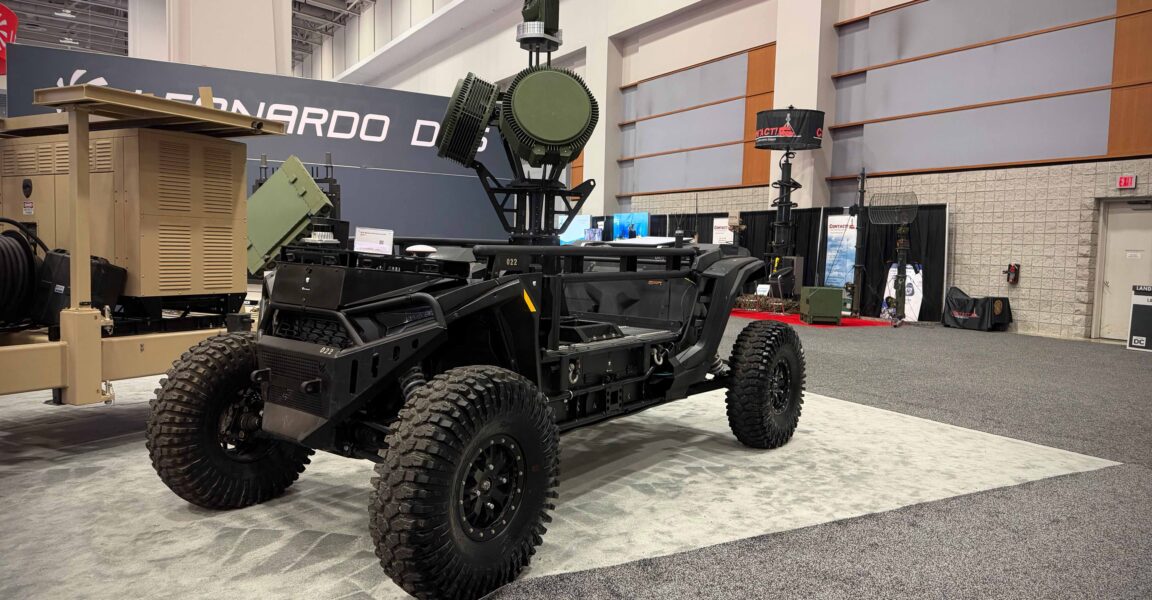
OverlandAI’s ULTRA autonomous ground system hosts a multi-mission hemispheric radar from Leonardo DRS, shown here at the 2026 AUSA expo. (Breaking Defense)
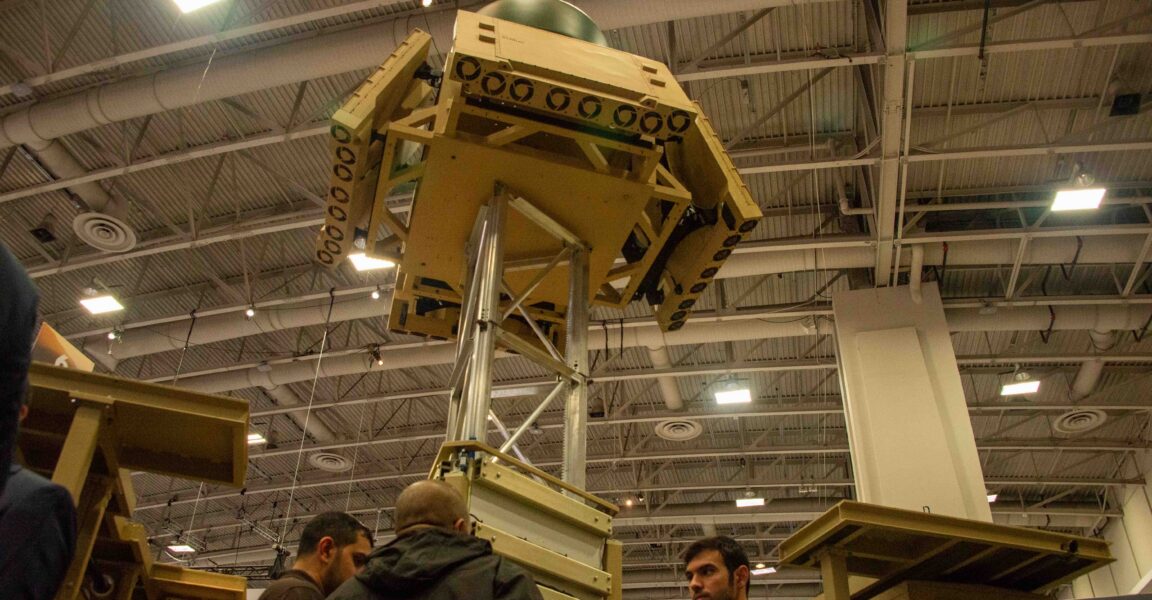
Leonardo DRS displays its Extended Mast Surveillance System, which features an exMHR radar system on a trailer platform with an extendable mast for a higher-altitude perspective. (Breaking Defense)
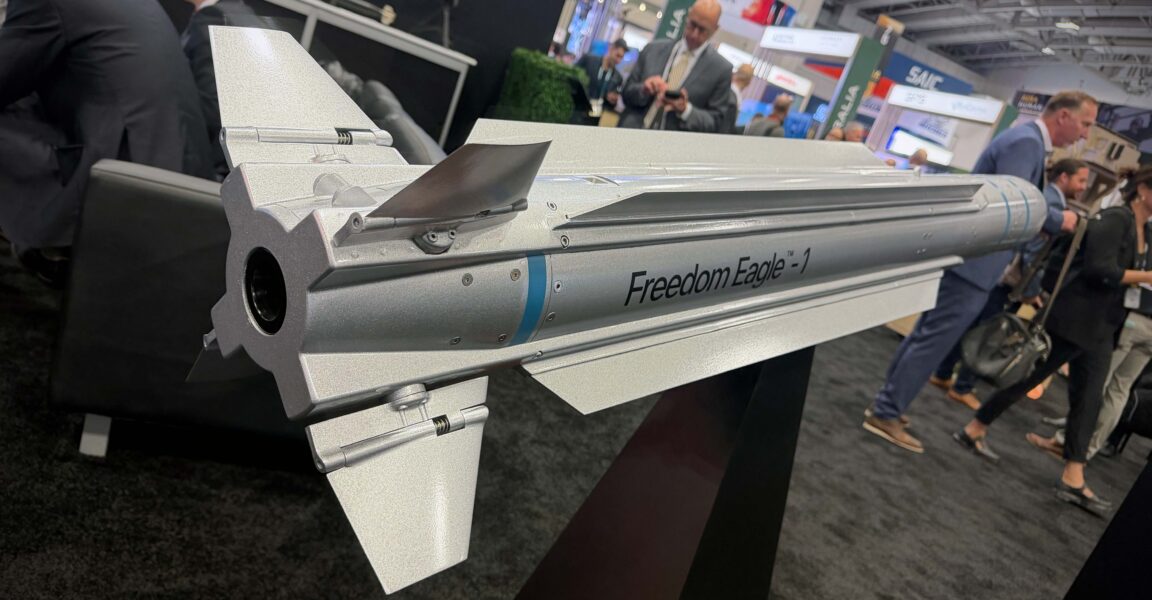
AeroVironment's Freedom Eagle-1 (FE-1) is marketed as a low-cost kinetic counter-UAV munition as well as a "long-range kinetic interceptor missile." (Breaking Defense)
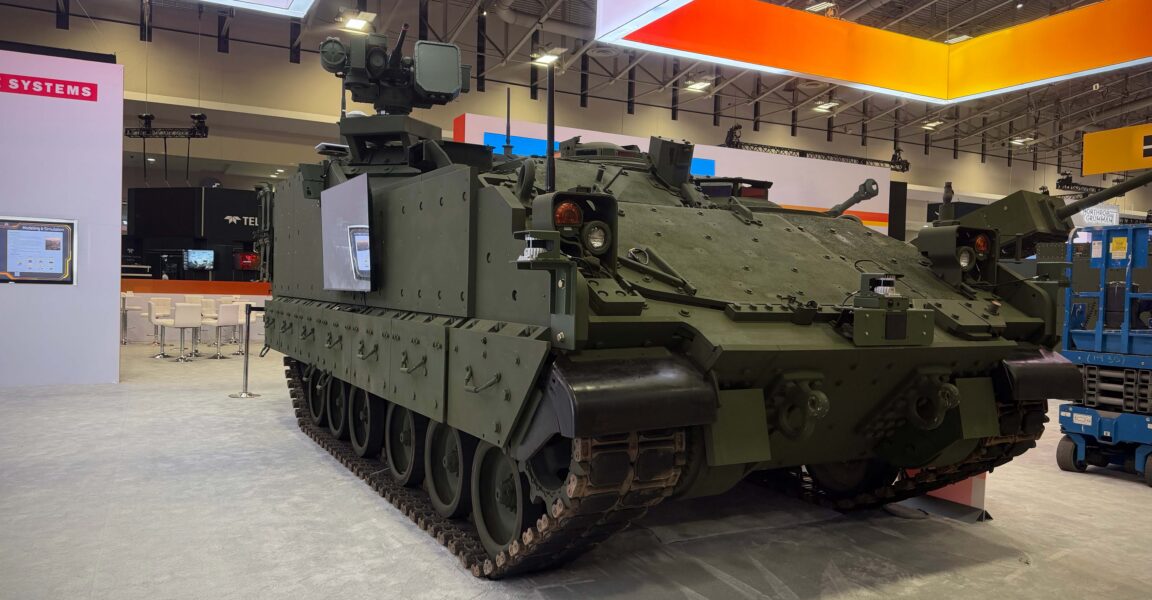
BAE's AMPV-30 (Armored Multi-Purpose Vehicle) is shown here on the trade show floor at the 2026 AUSA conference in Washington. (Breaking Defense)
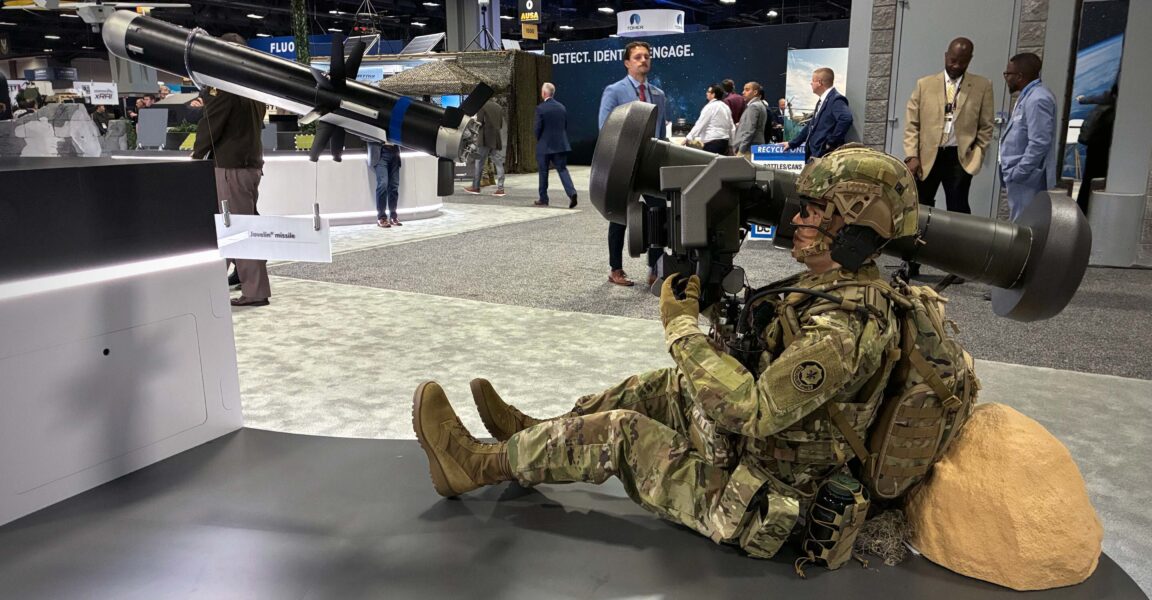
Here is the Javelin anti-tank guided munition system from RTX, as displayed with a fully-kitted soldier on the floor of the 2026 AUSA expo. (Aaron Mehta / Breaking Defense)
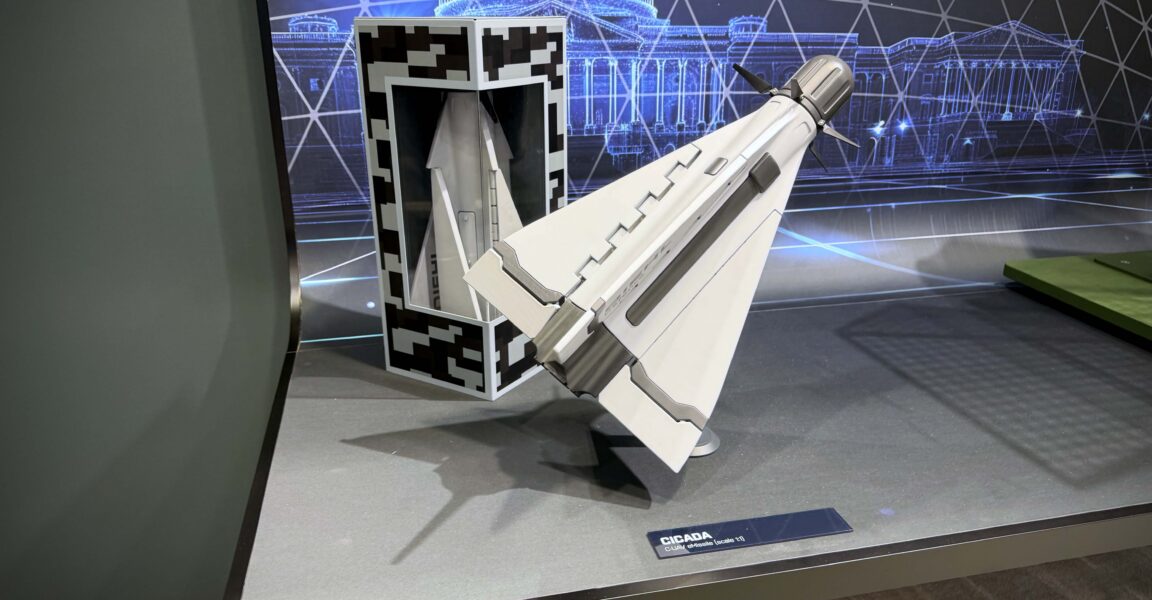
Diehl Defense's Cicada counter-drone munition is an electrically propelled missile that can feature a fragmentation warhead or a safety net. (Breaking Defense)
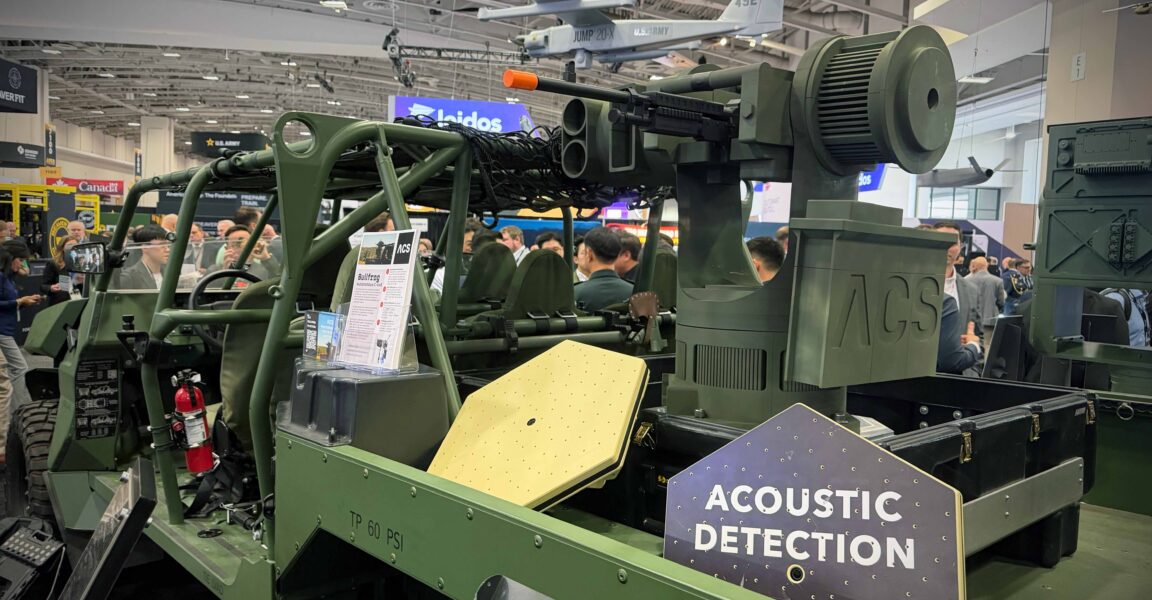
AeroVironment's Bullfrog M240 autonomous weapon system, seen here in the bed of a utility vehicle, has a range of 1,500 meters for defense against drone groups 1 through 3, according to AV. (Breaking Defense)
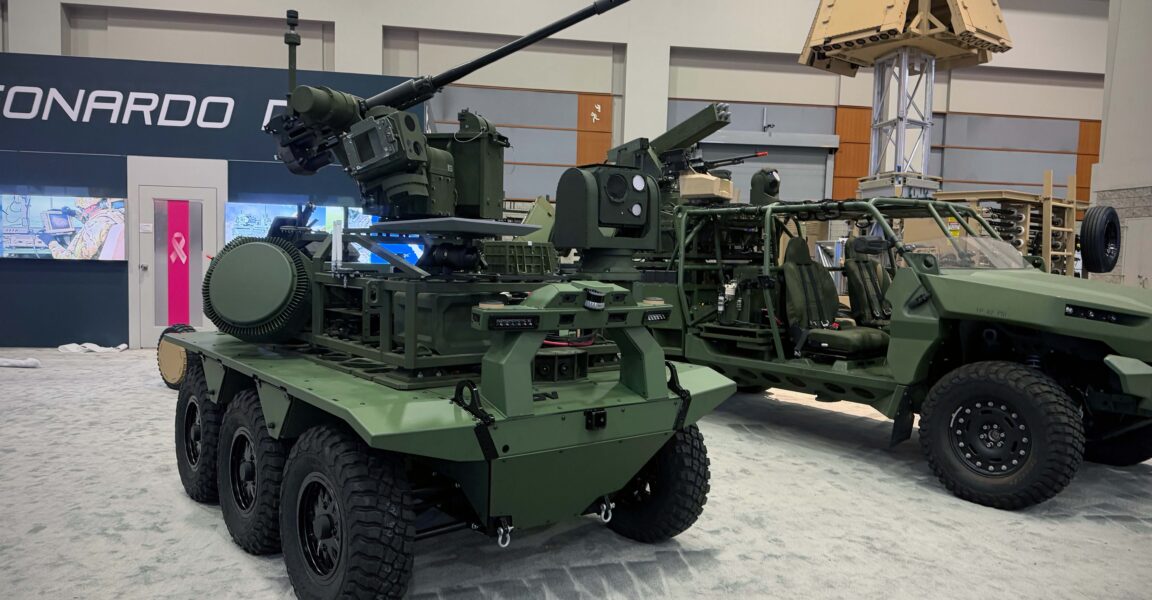
Leonardo DRS brought several vehicles and hardware to the 2026 AUSA conference, including the VIKING Uncrewed Ground Vehicle (left) equipped for air defense missions. (Breaking Defense)
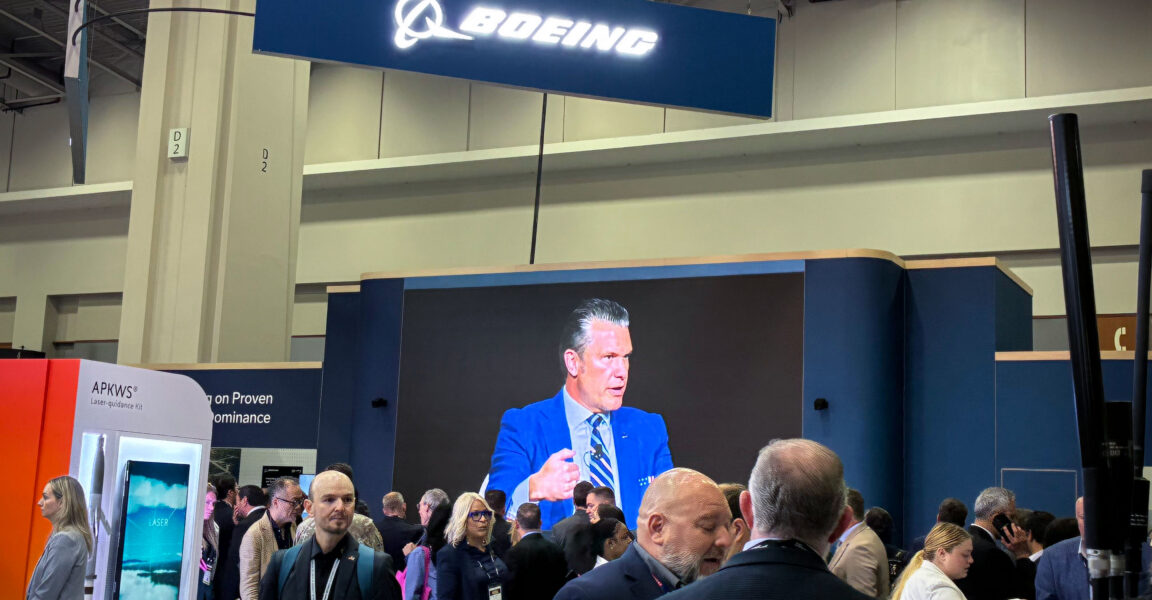
Defense Secretary Pete Hegseth's remarks at the 2026 AUSA expo were livestreamed at Boeing's booth on the show floor. (Breaking Defense / Aaron Mehta)
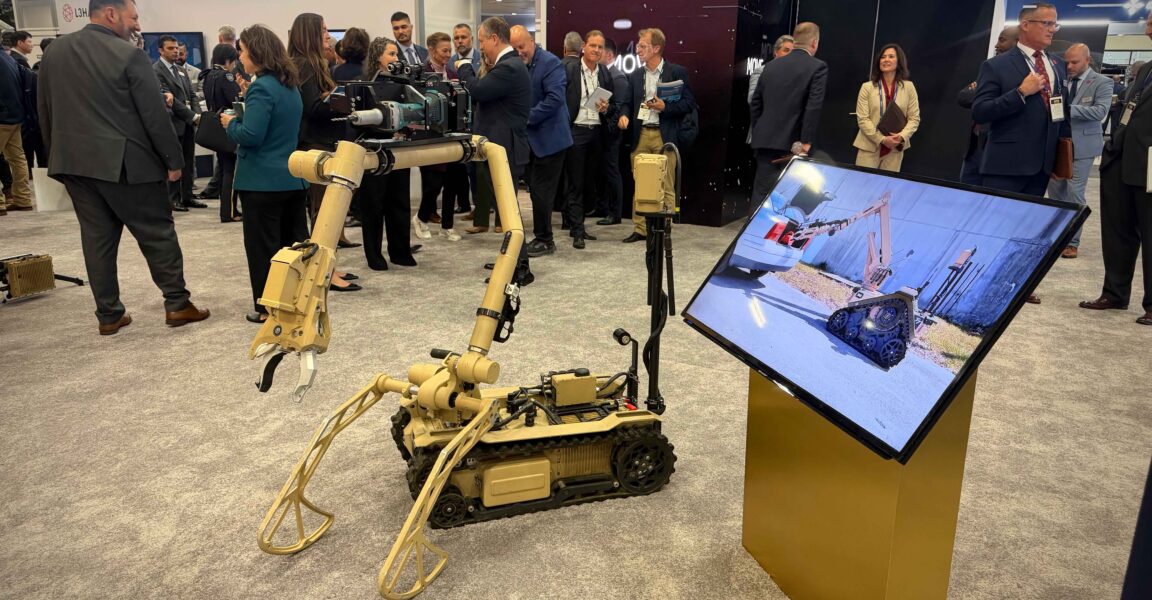
L3Harris brought its T4 Robotic System, an all-terrain unmanned ground vehicle intended for explosive ordnance disposal and hazardous materials clearance, to the 2026 AUSA conference. (Breaking Defense)
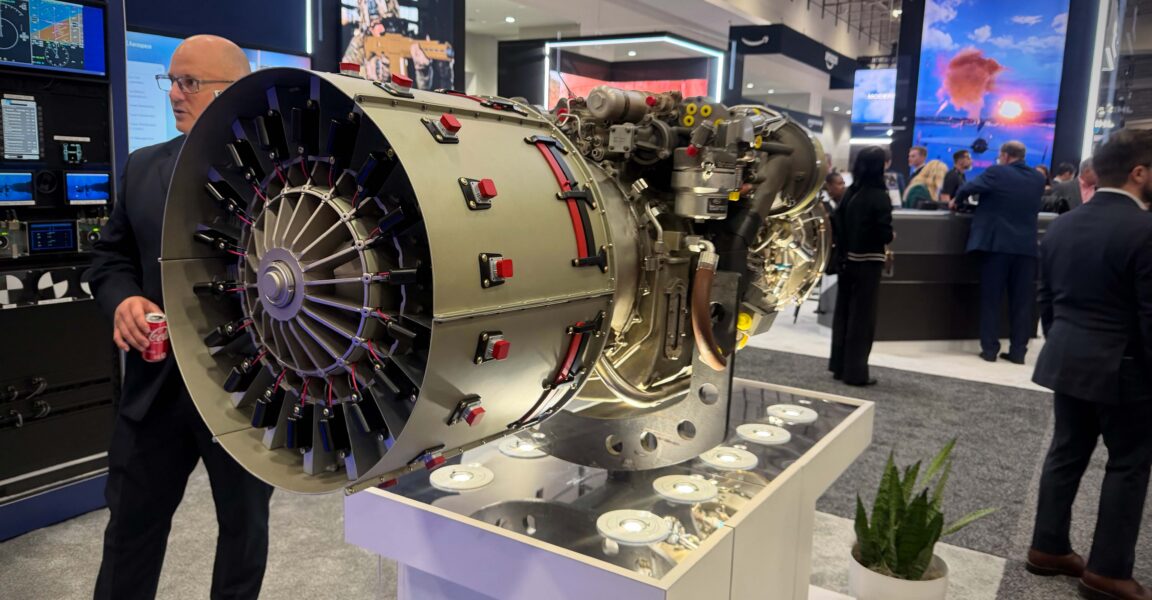
GE Aerospace showcased several large engine components -- including this hybrid-electric turbogenerator for the MV-250 autonomous, hybrid-electric vertical takeoff and landing cargo drone -- at the 2026 AUSA expo. (Breaking Defense)
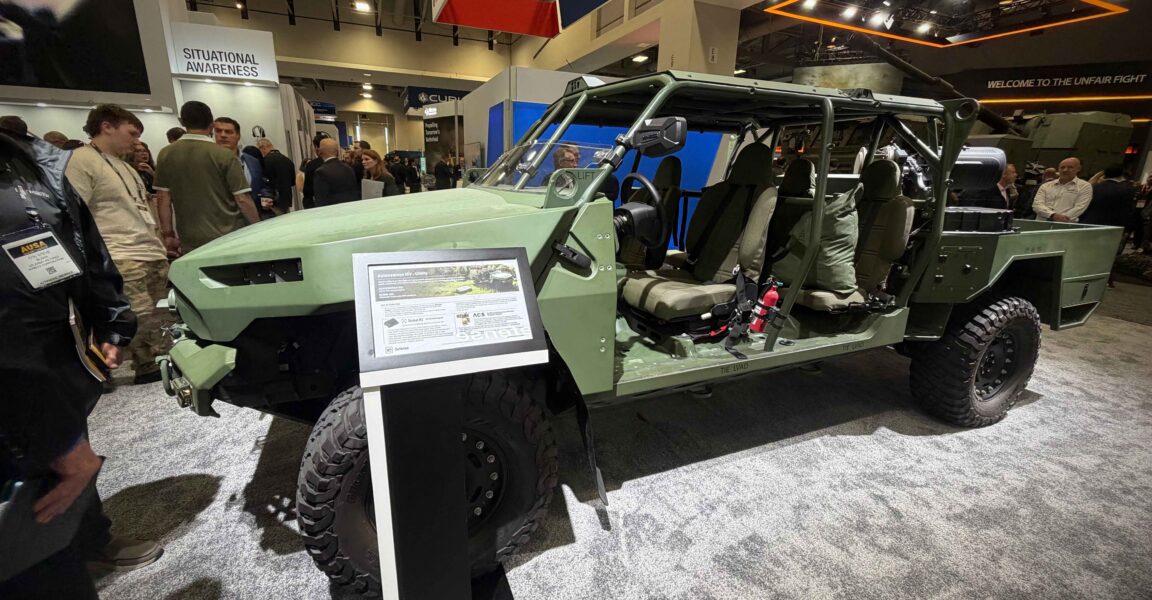
GM Defense's Autonomous ISV-Utility can accommodate up to five passengers as well as a wide range of equipment in the bed, including mortar systems, counter-drone as well as high-energy and electronic warfare systems. (Breaking Defense)
Illinois-based OTTO Engineering shared one of their hardened systems and associated equipment at the 2026 AUSA trade show. (Breaking Defense)
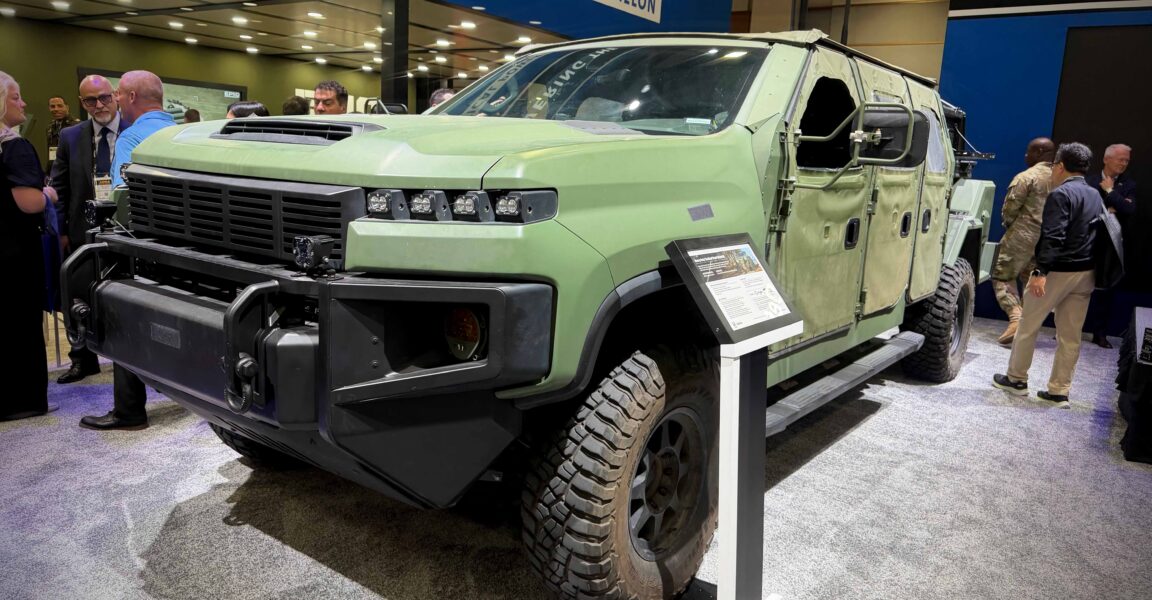
This is GM Defense's hybrid-powered Heavy Duty Tactical Truck, which is based on the Chevrolet Silverado. The truck includes a "silent" drive mode "to reduce acoustic and thermal signatures," the firm says at its 2026 AUSA display. (Breaking Defense)
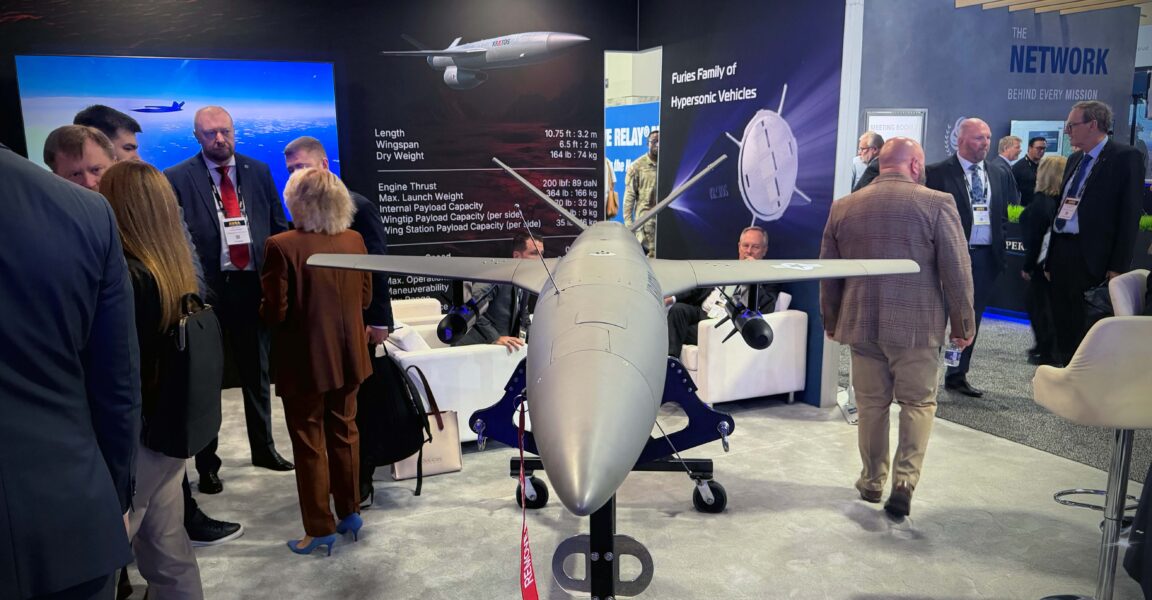
This is the Tactical Firejet from San Diego-based Kratos Defense & Security Solutions, Inc., pictured on the show floor at the 2026 AUSA expo. The Firejet is marketed as a low-cost drone that can fly at 0.8 mach speed and with a range of 500 nautical miles. (Breaking Defense)
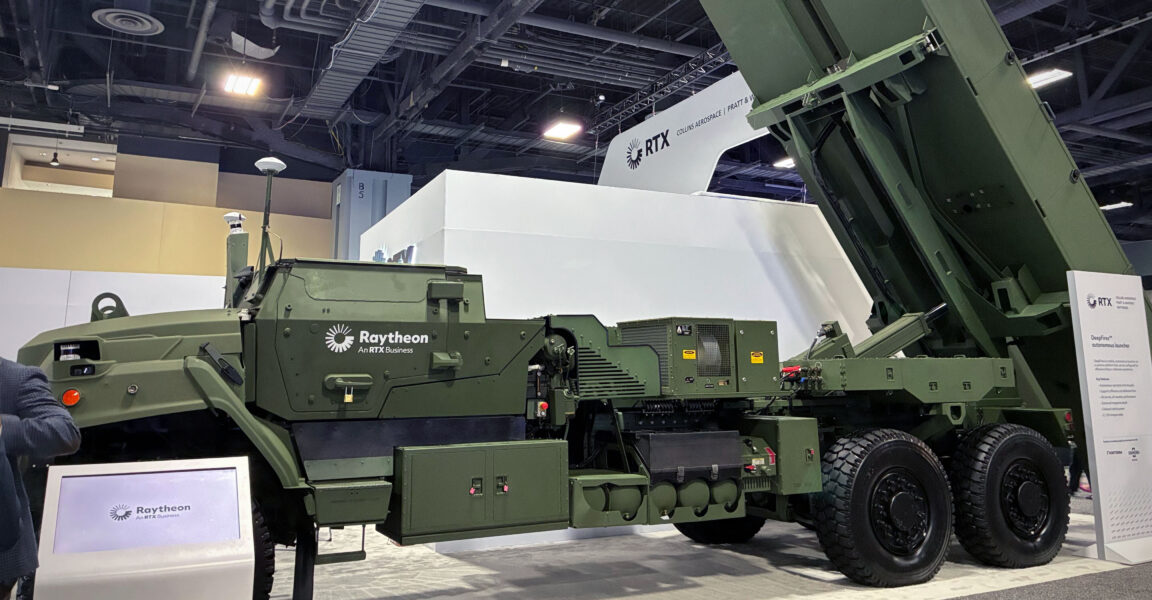
This is the DeepFires autonomous launcher from RTX, spotted on the show floor at AUSA 2026. It's an all-terrain, all-weather system that's transportable via C-130 cargo planes. (Aaron Mehta / Breaking Defense)
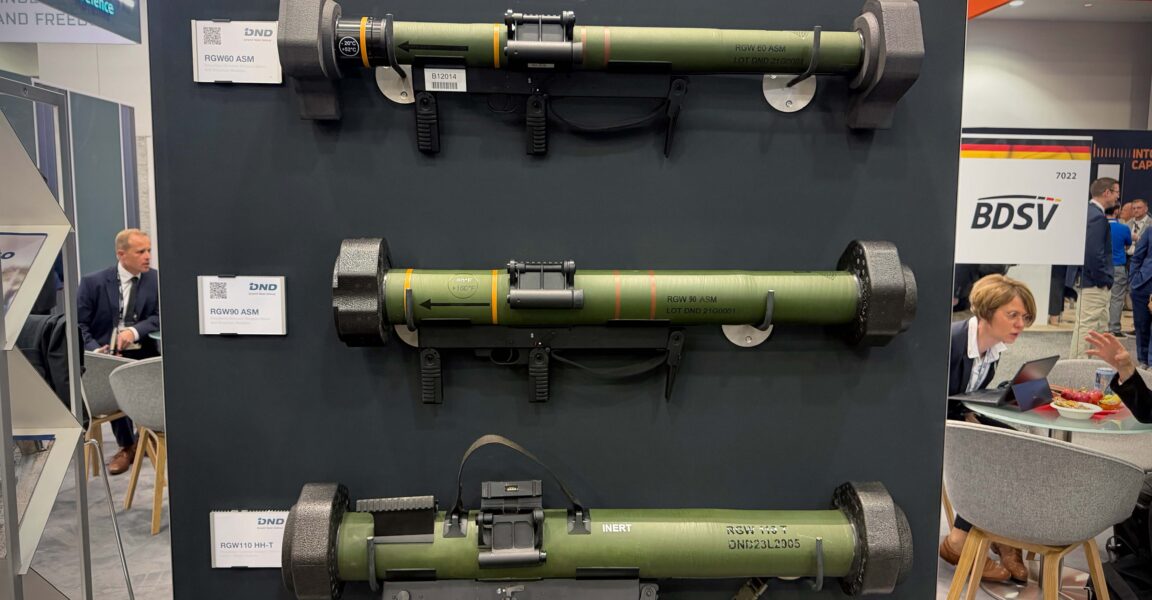
German defense firm Dynamit Nobel Defence GmbH (DND) showed shoulder-fired, anti-armor weapons at the 2026 AUSA expo. (Breaking Defense)