BELFAST — The European Parliament and the Council of the European Union have agreed to a 2027 defense and security budget valued at €3.1 ($3.4 billion), the bloc announced, spurred by the conflicts in Ukraine and the Middle East.
“To step up to the challenge of the current geopolitical situation” next year’s annual budget includes “major support to Ukraine,” based on Ukraine Support Loan funding and the Ukraine Facility, according to an EU statement released today.
The Ukraine Support Loan funding for the year is listed at €650 million, a boost to the previously promised pool of €90 billion. (The Ukraine Facility is a separate mechanism designed to facilitates tens of billions of euros to Kyiv in grants and loans.)
The announcement comes a month after Ukraine President Volodymyr Zelenskyy told European leaders that “we need at least €70 billion more from you” on top of the promised €90 billion in loans as the war with Russia looks set to enter its fifth year.
The UK’s Guardian newspaper reported that the EU appears to have heard Zelenskyy’s call, promising to dig up €45 billion with the remaining shortfall potentially made up by Canada and the UK. It wasn’t immediately clear how the recently announced budget plays into the proposed €45 billion, and a spokesperson for the bloc did not respond to a request for comment today.
The 2027 budget is the last from the EU’s existing Multiannual Financial Framework (MFF), before members decide on a new version covering longer-term spending plans between 2028-2034.
Those discussions are reportedly already engulfed in geopolitical drama. The Financial Times reported that German Chancellor Friedrich Merz has warned that he will block the future, multiyear budget, should any EU member states refuse to provide financial support for Ukraine. Hungary, Slovakia and the Czech Republic previously opted out of the EU’s initial €90 billion loan. Those three nations and Bulgaria have also signaled that they won’t contribute to future lending.


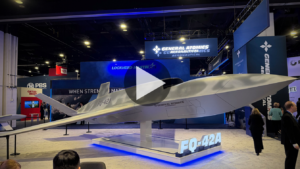
MQ-9B and Gambit Series: Advancing European Defense Capabilities
GA-ASI will build Gambit aircraft in Europe, partnered with European-based companies, with airframes available for international procurement starting in 2027.
“A collective commitment that all of us, without exception, will contribute fairly to closing [Ukraine’s financing] gap is an essential prerequisite for resolving this issue and for discussing any further matters, particularly those with financial implications,” Merz purportedly wrote in a letter sent to European Council President António Costa, per the business news outlet.
Outside of how future budget negotiations play out, the EU’s own budget preparation documents make clear that maintaining monetary support for the war-torn nation, while in parallel reacting to other regional or international events has become an increasingly difficult task.
“The EU budget has shown versatility, but it also demonstrated the limits of its current architecture, thus requiring a mid-term revision to adequately address additional needs for Ukraine, migration and its root causes, responding to the crises in the Middle East, reinforcing our capacity to respond to natural disasters, and support for boosting investments in critical technologies and defence,” noted a European Commission statement of estimates for FY2027.
Breaking Defense Video