
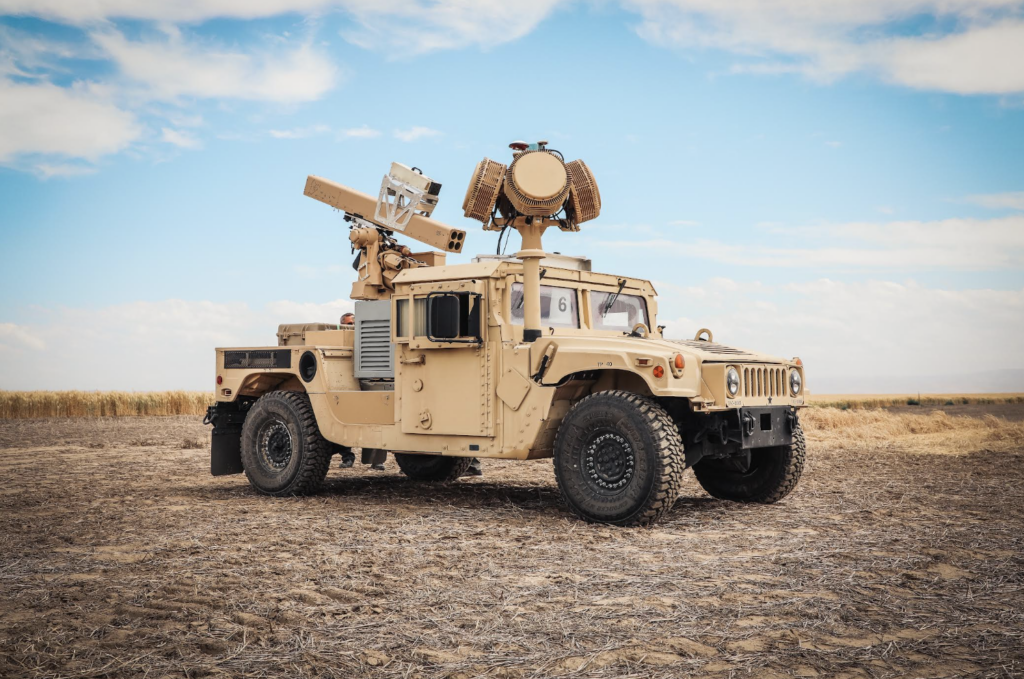
Missile and drone attacks in Ukraine and the Middle East are putting new pressure on the radars that underpin air-and-missile defense, driving demand for systems that can be fielded faster, in greater numbers, and be networked across a wider area.
Breaking Defense spoke with Joe Mollo, senior director of Advanced Programs at Leonardo DRS RADA Technologies business unit (DRS RADA), about surging demand for tactical radars, the push to expand manufacturing capacity, and how a new generation of sensors could change the way air defenses are built.
Breaking Defense: There’s been a lot of attention in Washington on defense-industrial base capacity and resilience, particularly in response to the new threats we’re facing in the CENTCOM region. Summarize what you view as the rapidly evolving threat?
Mollo: The Iranian-designed Shahed/Geran loitering munition has become the poster-child of this new threat environment, and it’s evolving on multiple axes at once. In Ukraine, we’ve seen single-day tactical drone employment exceed 10,000 units along the front line, while the long-range strike variant aimed at cities has simultaneously gone jet-powered – now representing over half of deep-strike sorties, shortening the already challenging warning time of the original propeller-driven design, requiring a defense that detects sooner, engages further, and acts faster.

Against Israel, we’ve now seen three massive, coordinated Iranian state barrages – April 2024, October 2024, and the 12-day war in June 2025 – each launching hundreds to over a thousand ballistic missiles, cruise missiles, and drones directly from Iranian soil. Layer on top of that the grinding, continuous fire from Iran’s proxies: 15,000-20,000-plus rockets, missiles, and drones from Hezbollah and the Houthis. The threat is constant and pervasive, requiring a defense that scales, costs less, and is mobile.
Operation Epic Fury and the parallel Houthi Red Sea campaign showed this threat has outgrown any single theater. Iran demonstrated both the willingness and the reach to strike across the entire Gulf – and, more troubling for us, the ability to take out major US IAMD sensor infrastructure.
Ballistic missiles and low-cost one-way attack drones together damaged or destroyed radar systems in Qatar, Jordan, the UAE, Saudi Arabia, Bahrain, and Kuwait – including a $1.1 billion early-warning radar. Those systems will take years to replace.
This requires a defense that can be produced faster and has a cost that supports dispersed operations for survivability. Such systems need to look at things that are low and slow or low and fast, the cruise missiles, the Group 3 drones. Tactical radars for survivability’s sake and the ability to look low have become a real hot item. If you’re going to have a big radar protecting a geographic area and that’s the first thing that gets hit, well now I need smaller, more dispersed radar capabilities.
The real issue is whether the US industrial base produces sensor and interceptor systems at the quantity and speed that this evolving threat demands in order to protect US and allied interests.
How does this translate to DRS RADA?
As a leading global supplier of tactical radar systems for counter-UAS, air-defense, and missile-defense applications, DRS RADA is feeling the stress of significant demand across both US and international markets. In the United States, demand is increasing from the Department of War and the Department of Homeland Security, as well as through Foreign Military Sales (FMS) and Direct Commercial Sales (DCS) to international partners.
DRS RADA also continues to see sustained demand from customers in the Middle East and Eastern Europe served through its non-US operations. This is reflected in record bookings in each of the past two quarters, underscoring both the breadth and urgency of this demand.
Ukraine came in at the end of 2023 with a single order in which they ordered more than we had sold the prior two years. All of a sudden we’re getting this tremendous demand for tactical radars.
Additionally, there is an increased emphasis on robust homeland missile defense, especially in light of the operational lessons demonstrating the vulnerability of our current inventory of long-range sensors. Looking at the Golden Dome concept, these expensive radars, which are necessary for your long-range ballistic missiles, are the first to be hit. And, oh by the way, they take four or five years to produce and cost half a billion to a billion dollars.
In response, we looked at any way we can use smaller tactical radars in a disaggregated way. This would include geographically dispersed sensors that are more affordable and manufacturable at scale, that can be networked to provide the coverage, resilience, and mission performance traditionally associated with a few exquisite systems. DRS RADA’s tactical radar portfolio is well aligned with this shift toward disaggregated, networked sensing.
DRS RADA also supports numerous prime contractors and system integrators that are responding to the same market demand. These customers require close engineering and program support to integrate DRS RADA radar systems into complete mission solutions spanning the detect-to-effect chain. As a result, growth in radar-unit demand is accompanied by increased requirements for product development, systems integration, technical support, and manufacturing resources.
Together, these dynamics – higher demand volumes, shorter delivery timelines, and increasingly challenging customer requirements – are driving substantial investment in accelerated product development and expanded manufacturing and test capacity.
How is DRS RADA addressing the surge in demand?
The 2022 merger with Leonardo DRS has been instrumental in enabling the company to scale in response to growing customer demand. This merger has enabled us to increase R&D investment to accelerate new-product development, capitalize expanded manufacturing and test capacity, and add the technical and business infrastructure needed to build and sustain a global presence.
DRS RADA currently manufactures six radar models spanning a range of sizes, power levels, and missions. We continue to sustain and advance these models through ongoing improvements informed by requirements derived from extensive operational deployments. For example, these changes may support new technical requirements, such as new electronic counter-countermeasures, ECCM, threats and integration requirements.
DRS RADA is releasing two new radar models this month, the result of significant R&D investment and extensive development, integration, and testing over the past several years.
In terms of capital investment, the company has committed to expanding capacity in the communities that have supported our growth, while leveraging its broader international footprint to strengthen the supply chain for critical materials. At our Germantown, Maryland, facility, RADA has expanded its engineering and manufacturing workforce from 30 to 150 employees with 60 more planned for early 2027.
Our footprint has increased nearly 10-fold and our complex test facilities by four times. We are planning another wave of expansion to accommodate our newest product, the cxMHR (RPS-502), which is larger and more complex than any of our other systems, requiring its own dedicated production and test facilitation. And we’ve got another expansion following what we’re doing right now.
We’ve been in Montgomery County for the entire time we’ve been in the US and we wanted to stay there, stay there with the people that have worked with us all that time, stay with the community that supported us. So we’ve made all that investment right at home in Germantown, Maryland.
However, our global development and manufacturing footprint has undertaken expansion across our multiple facilities similar in scale to our US operations. These facilities are located in operational areas of conflict or where regional restrictions require a physical presence. One of the benefits of this distributed manufacturing footprint is that it improves DRS RADA’s supply-chain resilience and cost efficiency by enabling each location to source appropriate materials from its respective regional market, which can then be made available company wide, reducing dependence on any single supplier base or geography.
What does the cxMHR bring operationally?
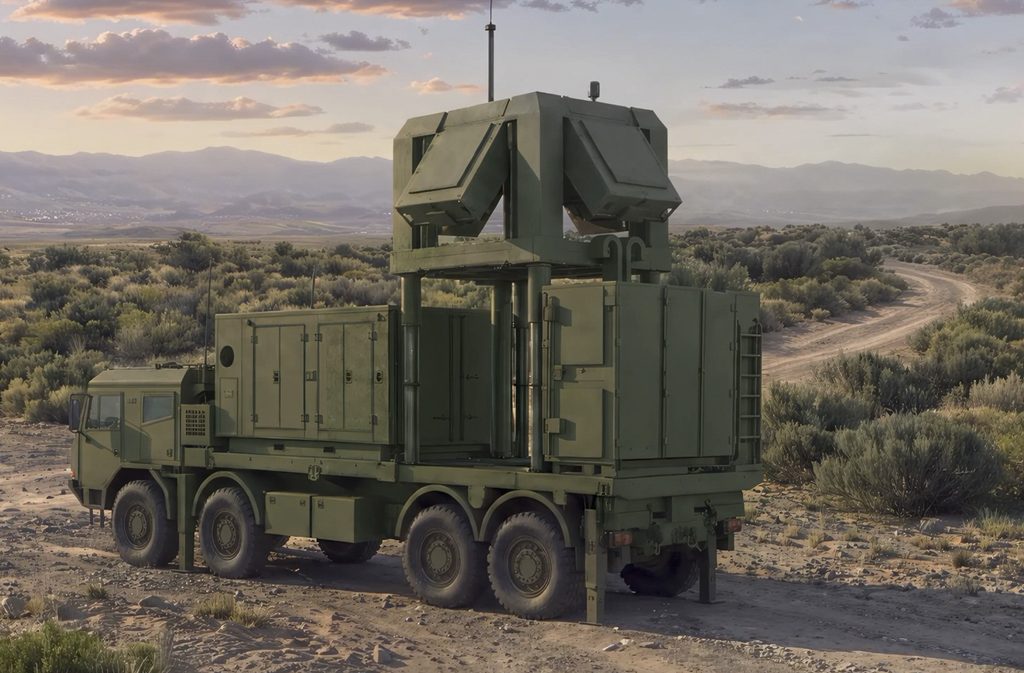
As I noted earlier, the cxMHR is significantly larger, more powerful, and more complex than our other radar models and represents a major technology step forward that delivers a clear operational advantage in the medium-range tactical radar market.
The cxMHR operates in C-band, which occupies a very useful middle ground. It provides the high-resolution and precision-tracking performance typically associated with higher-frequency X-band systems while offering range and weather benefits similar to S-band.
What is particularly unique and important is that the cxMHR uses a fully digital aperture. Like all of our radars, the cxMHR is a software-defined active electronically scanned array (AESA) system. AESA is the current state of the art for tactical radars, giving users tremendous flexibility to tailor performance for a specific mission or to support multiple missions simultaneously, all through software control. This is particularly important for evolving missions or multi-mission requirements and for resilience against electronic attack.
AESA technology represents a meaningful distinction from both conventional phased-array and metamaterial-based approaches. A conventional passive phased-array radar relies on a centralized transmitter and phase control across the aperture, which provides electronic beam steering, but less independent control over the individual radiating elements and less flexibility to generate or manage multiple, mission-specific functions simultaneously. Metamaterial apertures performance is far less effective in mitigating electronic attack because it is closely linked to the electromagnetic response of the physical surface and requires iterative aperture-specific optimization to achieve a particular use case.
With a fully digital array, the cxMHR takes AESA another step forward. The cxMHR’s fully digital AESA architecture provides true, independent, per-element control across the transmit/receive aperture. This gives the radar exceptional ability to tailor beams, waveforms, power distribution, and radar-resource allocation rapidly and repeatedly via digital control.
The operational advantages are profound. These include: up to 40 times faster volume scan; precision beam pointing, a narrower main beam, less SNR loss, longer detection range, and less multi-path interference; simultaneous search, track, and jammer localization beams; ECCM and EMI performance with less clutter and better jamming suppression; independent element calibration and control for less loss and graceful degradation; and frequency diversity for reduced multipath elevation errors and reduced RCS fluctuation, resulting in a higher Pd.
If it gets shot, you’re not going to take out half of the radar. You’re going to take out maybe one of these elements, maybe four of them. The radar will still continue to work. It’s not a spinner. It gives you the whole 360-degree constant view, and there’s no moving parts in the antenna assembly.
In terms of dealing with jammers and interference from other sources, there’s less clutter and more resistance to jamming.
With true per-element digital control, the cxMHR can make mission-driven adjustments through digital control in a faster, more repeatable, and more deterministic manner.
What are your thoughts on the future of DRS RADA?
DRS RADA is well positioned to help the United States and its allies address the rapidly evolving threats we’re seeing in the CENTCOM region and future battlespaces. Since entering the tactical radar market eight years ago, DRS RADA has consistently invested in technology, product performance, and responsiveness to operational user requirements.
From its first prototype, DRS RADA has designed its radars around gallium nitride (GaN) technology and software-defined AESA architectures. GaN enables higher performance in a smaller, lighter, and more power-efficient package than legacy gallium arsenide based (GaAs) systems. While the US continues to pay for vendors to upgrade its tactical-radar inventory from GaAs to GaN, DRS RADA’s radar portfolio was designed around GaN from the outset.
Equally important, DRS RADA’s products have been shaped by extensive operational experience and direct user feedback. It wouldn’t be out of the realm of possibility to say that more of our radars have been shot than some of our competitors have ever produced. We continue to sustain and advance our radar models through extensive R&D investment, incorporating improvements that address evolving mission requirements and emerging threats.
DRS RADA has always operated under a startup mentality with continuous innovation. It’s served us really well and it continues to serve us really well because our adversaries have that same pace of change.
DRS RADA radars led the way for US capabilities in mobile short-range air defense, counter-UAS, and active protection system missions. Building on that foundation, the company continues to deliver high-performing tactical radars and develop integrated sensor solutions that help warfighters detect, track, and respond to the new and evolving threats they face in battle.
That last quarter that just ended was a record breaker like none we’ve ever seen. The quarter before that was a record breaker like none that we’ve ever seen. It just doesn’t stop; the demand just keeps coming.