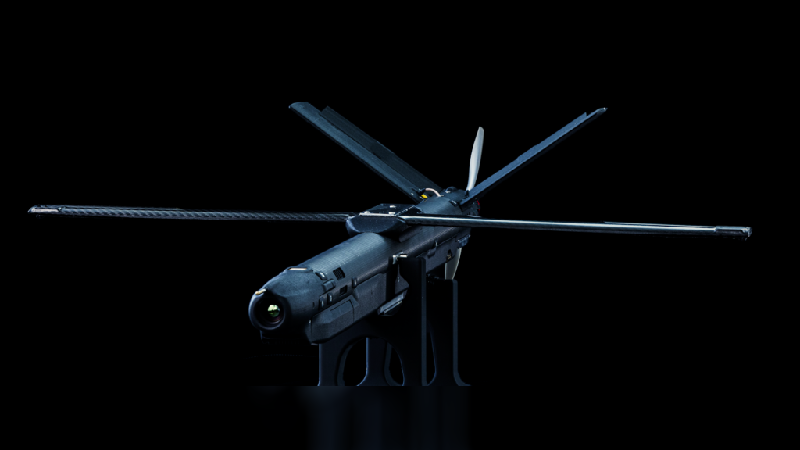
BELFAST — Swedish start up Nordic Air Defence (NAD) has unveiled an autonomous drone interceptor, dubbed K200 and destined for testing in Ukraine.
The Scandinavian firm said in a company statement today that the counter-unmanned aerial system (cUAS) weapon, a successor to the company’s Kreuger 100XR, is designed to intercept jet-powered types, including the Russian Geran-3a.
“NAD has opened a staffed office in Ukraine, where testing will inform further development of the K200 as the company prepares to introduce the system across multiple markets,” noted the statement.
It added that the system has been engineered in Stockholm and is built to intercept long-range attack drones “at a fraction of the cost of conventional air defence missiles, helping armed forces scale their defences as attacks grow in volume, speed, and accuracy.”
The announcement claims the K200 is both faster and capable of carrying a heavier, 500g (approximately 1 lb.) warhead compared to the older Kreuger 100XR. The system is also integrated with autonomous guidance, with a single-propeller and fixed wing design.
Additionally, a number of external radars and electro-optical/infrared (EO/IR) cameras allow the interceptor to fly toward a threat, before it relies on terminal guidance provided by an onboard IR camera for “final approach.” Should a target be missed, the interceptor can also “re-engage.”
The new weapon “supports tail-chase, head-on and crossing engagements and is designed to integrate with existing layered air defence systems through data links and associated radars,” the announcement outlined. The company said a family of launchers could support deployments from vehicles, fixed sites and vessels.

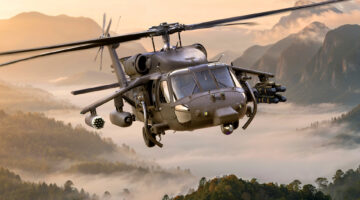
European-made Black Hawk gets an armed upgrade
New kits turn Black Hawks into attack Hawks in just three hours.
Drone interceptors are in high demand worldwide, but especially in Ukraine as it routinely faces barrages of Russian one way attack drones. Besides K200 trials in Ukraine, Ukraine President Volodymyr Zelenskyy told the Financial Times last month that Kyiv is testing five locally produced jet-powered drone interceptors.
Overnight, Moscow launched a wave of over 400 attack drones and more than 110 missiles, including 27 ballistic missiles, he noted on X today. He said that 79 cruise missiles had been shot down, but looking at ballistic missiles, “unfortunately, it is much more difficult, and that now depends not on our forces but on our partners supplying missiles.”
Ukraine generally relies on more expensive and sophisticated air defense missiles to combat incoming ballistic missiles, but a shortage of American-made Patriot interceptors has strained Kyiv’s ability to fend off Russia’s onslaughts.
Breaking Defense Video