
Kill Chain In The Sky With Data: Army’s Project Convergence
Over the southwest desert, drones large and small are autonomously avoiding anti-aircraft threats while feeding real-time targeting data over an AI network to troops on the ground.

Sydney J. Freedberg Jr. has written for Breaking Defense since 2011 and served as deputy editor for the site's first decade, covering technology, strategy, and policy with a particular focus on the US Army. He’s now a contributing editor focused on cyber, robotics, AI, and other critical technologies and policies that will shape the future of warfare. Sydney began covering defense at National Journal magazine in 1997 and holds degrees from Harvard, Cambridge, and Georgetown.
Over the southwest desert, drones large and small are autonomously avoiding anti-aircraft threats while feeding real-time targeting data over an AI network to troops on the ground.

Instead of the Joint AI Center building everything in-house, the JAIC is creating technical and contracting tools to help any Defense Department organization launch its own AI projects.


Expanding manufacturing capacity is critical to producing missiles, radars, and launch systems.

This fall’s first Project Convergence exercise aims to feed targeting data from satellites to artillery so fast that gunners can unleash precision fire in much less than a minute. And that’s just the start.

While China has invested heavily in “brute force” big data, Nand Mulchandani and aides said, US companies are far more innovative --- but will they work with the Pentagon?

After an AI beat humans 5-0 in AlphaDogfight simulations this summer, Mark Esper announced, a future version will be installed in actual airplanes for “a real-world competition.” But military AI will adhere to strict ethical limits, he said.

“Even though there's been a great deal of bipartisan legislation proposed, the majority leader [Sen. Mitch McConnell] has not let any of these bills come to the floor,” the Virginia Democrat said.

There is no single answer to the drone threat, pushing the Pentagon toward a broader mix of defenses.

Meant to target Chinese warships and Russia’s rear bases, the new intermediate-range missile will fill the gap between the 500+ km PrSM and the Long-Range Hypersonic Weapon.
Victory lies not in the weapons themselves, Nand Mulchandani says, but in AI algorithms that advise commanders on how best to wield them.

The new high-tech operations center at Fort Gordon lets Army Cyber Command spend less time defending US networks and more time attacking adversaries.

The Pentagon’s new Chief Data Officer says real-world surveillance missions must be redesigned to capture high-quality data to train machine-learning algorithms.

From autonomous warfare and drone innovation to acquisition reform and defense industrial base challenges, Breaking Defense examines the key developments and strategic priorities shaping the US Army’s future at AUSA 2026.

Robert Work, who pushed hard for AI under Obama, calls for major reforms to catch up with China and Russia. His model? Adm. Rickover's creation of the nuclear Navy in the 1950s.

COVID-19 and quality control problems at BAE’s York, Penn. plant had slowed the replacement of the Vietnam-vintage M113 armored vehicle.
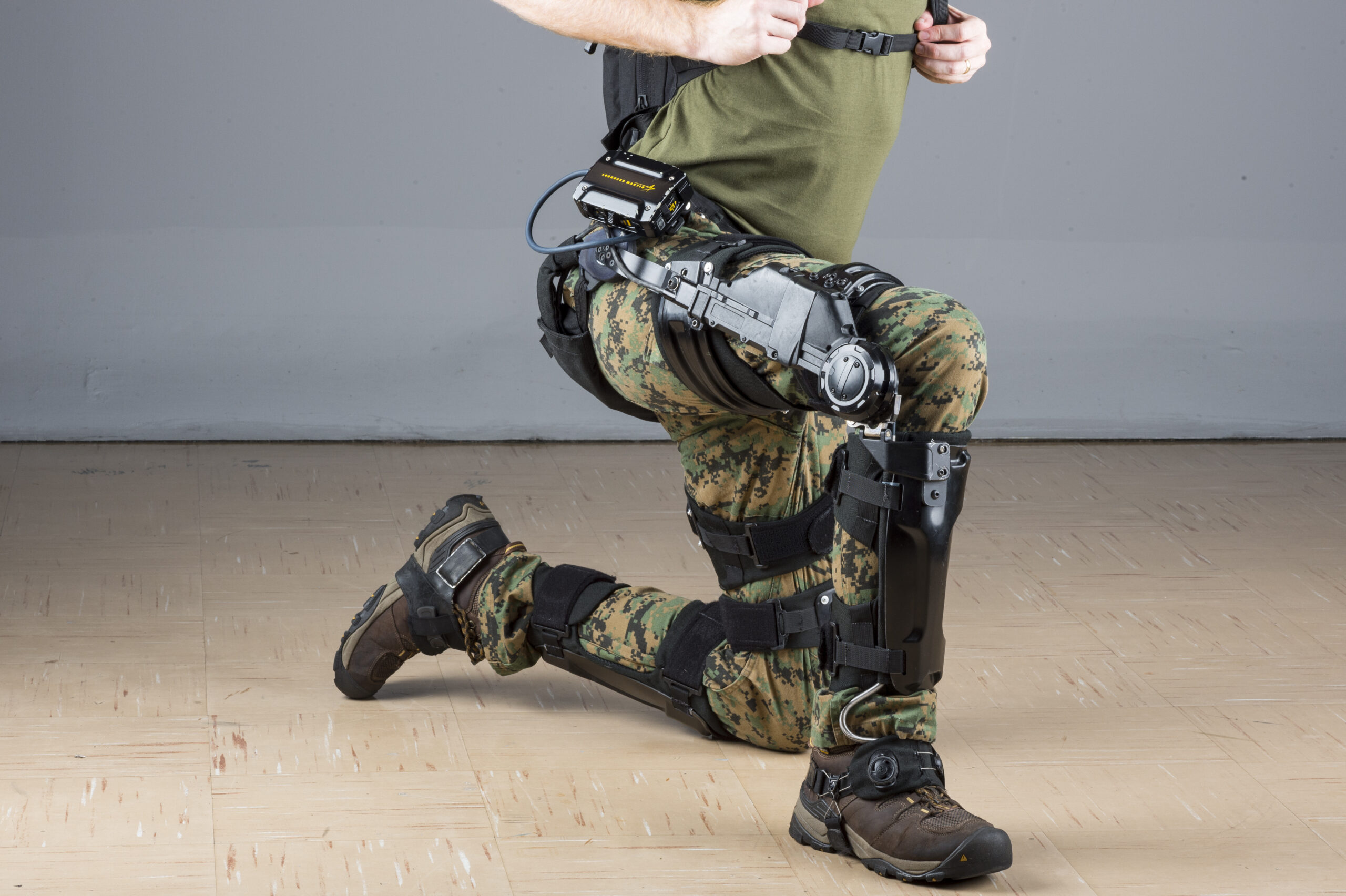
SOCOM couldn't build a bulletproof Iron Man. But Army experiments with more modest lower-body exoskeletons have shown real-world potential to help overburdened foot troops.

Could mini-drones and robot trucks, coordinating via 5G, replace vulnerable manned convoys?