
IBCS Defeats 2 Missiles in Flight – But 100s In Simulation
Thursday's near-simultaneous intercept of a cruise missile and a ballistic missile was far from the hardest thing the IBCS battalion has done.

Sydney J. Freedberg Jr. has written for Breaking Defense since 2011 and served as deputy editor for the site's first decade, covering technology, strategy, and policy with a particular focus on the US Army. He’s now a contributing editor focused on cyber, robotics, AI, and other critical technologies and policies that will shape the future of warfare. Sydney began covering defense at National Journal magazine in 1997 and holds degrees from Harvard, Cambridge, and Georgetown.
Thursday's near-simultaneous intercept of a cruise missile and a ballistic missile was far from the hardest thing the IBCS battalion has done.
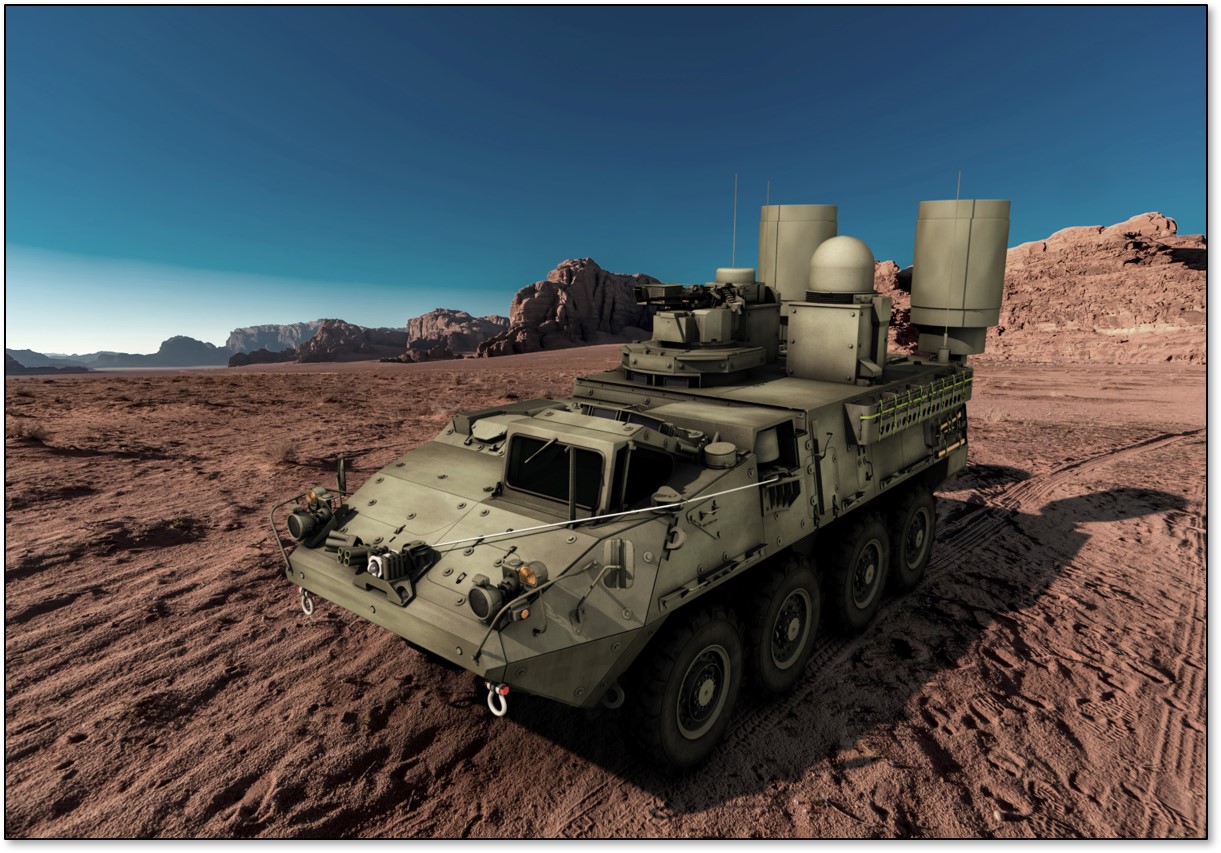
The Army has big ambitions for the Terrestrial Layer System, meant to detect, decrypt, and disrupt enemy communications. We spoke to the companies that actually have to build it.

Think of sensing and detection as a network as opposed to individual unmanned surface vessels.

To find targets for its new long-range weapons, the Army is experimenting with cloud computing and AI that can bridge the gap between intelligence networks and combat units.

Even with a relay taken down by jamming, the new IBCS network was able to fuse targeting data from Patriot and Sentinel radars, then shoot down two cruise missile surrogates with a single PAC-3 interceptor apiece.

The Joint Common Foundation will put a standard set of tools in the cloud, where any Defense Department AI project can use them.

The Stryker-mounted TLS and drone-borne MFEW are the first two nodes in a networked arsenal of sensors and jammers to combat high-tech foes.

From electronic warfare threats to coalition data sharing, discover how US and allied forces are strengthening the digital battlespace across the Indo-Pacific.

The Pentagon's draft “reference architecture,” which also covers high-powered microwave weapons, will be circulated for industry comment early next year.

An unprecedentedly quick 15-week review identified 100 mHZ of spectrum, now heavily used by military radars, that will be auctioned off in December 2021.

Experimental Robotic Combat Vehicles are outperforming Army expectations. But soldiers are finding plenty of quirks to fix.

The Army estimated the OMFV troop carrier would cost $46 billion and the MPF light tank would cost $16 billion. The GAO has doubts.

Lithium-metal batteries are one way to break the weight and endurance limits of today’s unmanned systems.

Experimental AI software, Prometheus and SHOT, can turn masses of data – from both government and commercial satellites – into precise targets for long-range missiles and cannon. But what do the humans do?

Contractors are already “bending metal” on components for both 50-kilowatt and 300-kW lasers, Army scientist Craig Robin said.

After weeks of COVID delays, combat soldiers are now testing both the IBCS network and the IM-SHORAD vehicle at White Sands. The first live shots against flying targets are just weeks away.

“One thing the pandemic has taught us is the unthinkable can happen,” said Sen. Angus King, co-chair of the Cyberspace Solarium Commission.