WASHINGTON: The Army will conduct alternative cost estimates and additional engineering reviews for its future armored fighting vehicles, prodded by a GAO report out today. By GAO’s count, the service has wasted $21.8 billion in the last 20 years on earlier, failed armor programs.
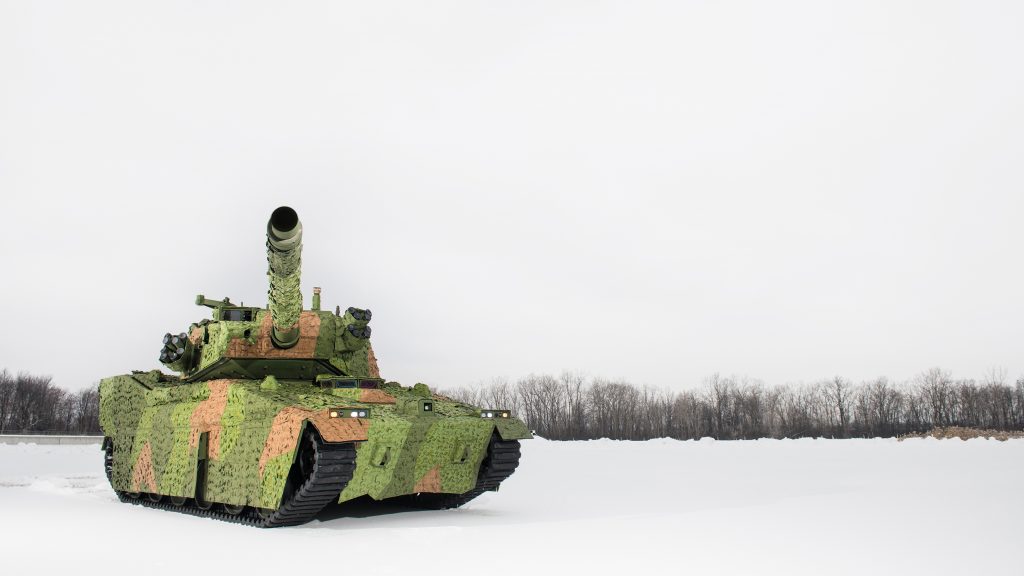
Eager to update its armored force against the Russian threat, the Army is using the accelerated Middle-Tier Acquisition process to develop both the Optionally Manned Fighting Vehicle (OMFV), a heavily armed troop carrier to replace the M2 Bradley, and the Mobile Protected Firepower (MPF) vehicle, an air-deployable light tank to support paratroopers and other infantry. (Both programs fall under the modernization team for Next Generation Combat Vehicles). BAE and General Dynamics have already built competing prototypes for the MPF, while the OMFV program was recently rebooted and is awaiting new industry proposals for designs.
Mid-tier acquisition, also known as Section 804 after the legislation that created it, skips many of the steps in the usual, laborious Pentagon process, reducing bureaucratic delay but at the price of raising the risk should a flawed assumption go uncaught.
On both programs, the Army has started work with some component technologies less mature than GAO would recommend, the report says. On both programs, the Army skipped an early “systems engineering review” that the traditional process would have required. On the OMFV program in particular, the Army’s schedule didn’t explicitly include such reviews at critical points in the future, either. (MPF’s plan was more detailed, since it started life as a traditional procurement before shifting to an 804). On GAO’s recommendation, the Army agreed to conduct the systems engineering reviews “at key decision points” to come.
GAO’s greatest concern, however, was more subtle than a missing step: It’s that the Army’s cost estimates look a lot more certain than they really are.

Why Bigger Fences Aren’t Enough in the Age of Drones
Traditional thinking about how to protect facilities must adapt to new threats such as drones or downstream attacks.
Yes, GAO said, the Army did properly take into account a “comprehensive” range of costs, from initial R&D through mass production, fielding, maintenance, and eventual retirement. Those “life cycle costs” were approximately $16 billion for MPF, which will be bought in smaller numbers – about 500 – and use largely off-the-shelf technology, and $46 billion for OMFV, which is more ambitious both in total numbers – potentially replacing thousands of Bradleys – and new technology, especially automation. The Army properly used historical data for comparison, GAO said, and even tried to factor in the risk of unexpected problems on both programs.
But the Army still boiled down its final estimate for each program to a single number. That hides a considerable uncertainty in how both MPF and OMFV will actually play out, GAO argued. Instead of a single number, GAO said, the better approach would be to give Army leaders a range of estimates, from best-case cost to worst.
“The Secretary of the Army should direct the … program to update its cost estimate to include analyses to support the development of a range of possible cost outcomes for decision makers in a manner consistent with GAO’s Cost Estimation Guide,” the report says.
The Army accepted this GAO recommendation as well. That means that military officials and, presumably, Congress will have access to a range of estimates for both programs in the future. Will the press and the public get to see? That’s something we’ll push for.
Breaking Defense Video