Project Freedom unlikely to pay off in Strait of Hormuz right away, analysts say
CENTCOM Commander Adm. Brad Cooper told reporters today that six Iranian small boats were destroyed by US forces as the operation began.
CENTCOM Commander Adm. Brad Cooper told reporters today that six Iranian small boats were destroyed by US forces as the operation began.
Overall, the Army, Navy and Air Force included about $3 billion in unfunded requests, all for military construction projects. US Southern Command included $229.9 million in its wishlist.


The challenge for Western democratic institutions is not a lack of capability — it is a structural one.
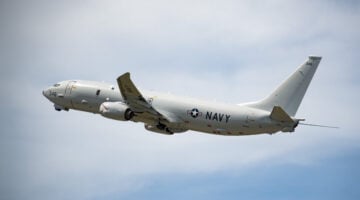
The request comes as the P-8A Poseidon Increment 3 Block 2 system recently reached initial operating capability.

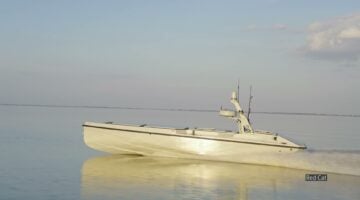
Red Cat, well known for its aerial drones, has launched Blue Ops, a new company to mass produce USVs.
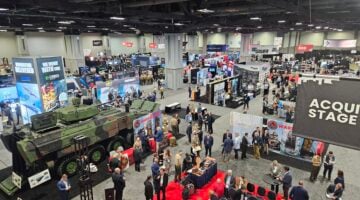
Check out a selection of photos from the Modern Day Marine show floor.

Navy and Marine Corps leaders said they are considering shaking up the 36-month Optimized Fleet Response plan, in lieu of a longer cycle that can accommodate two deployments.

From emerging data networks to missile tracking and cyber resilience, Breaking Defense’s latest eBook brings together essential reporting on the evolving role of satellites in national security.
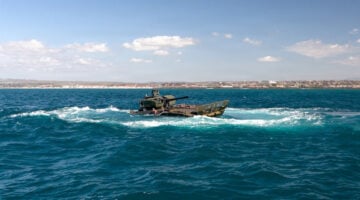
The Increment 2 iteration will consist of a counter unmanned aerial system variant, a recovery variant and one for precision fires.

“The Marine Corps has a very deliberate plan for not only training, but also personnel and additional preparation for that deployment,” Col. Kate Fleeger, the helicopter’s program manager, said. “So we are deliberately moving through those individual checklist items to get ready and are continuing to progress towards that 26th MEU deployment.”

Currently OFP-L systems from three manufacturers are being tested by units at Dugway Proving Grounds outside of Salt Lake City.

Next-gen sonobuoys for anti-submarine warfare are specifically designed to detect quieter Russian and Chinese subs.


Defending a country the size of the US from threats requires advanced sensing, communications and interception capabilities.
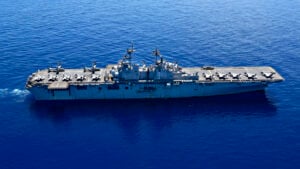
“The other LHDs — we've got to study to see if we can extend them, and the plan is going to be to do that,” a top Marine said.

Acting Secretary of the Navy Hung Cao delivered his first public remarks since stepping into the role.

This week on The Break Out, a tour of the Sea Air Space 2026 conference from scenic National Harbor, Md.
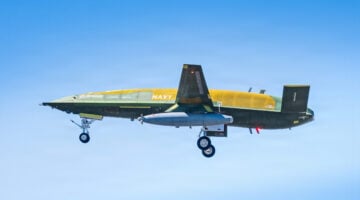
The aircraft took off from Boeing's facility at MidAmerica Airport in Mascoutah, Ill., for an approximately two-hour flight.