9 firms win orbital AMTI deals, Space Force says
The Space Force did not disclose when the contracts were awarded or their individual dollar values.
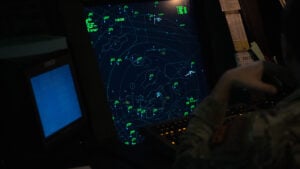
Awards will be issued “fairly shortly” for the first operational satellites that can track aircraft and from space, according to Air Force Secretary Troy Meink.
Missile warning and tracking programs, and the emerging Space Data Network being developed to ferry space sensor data to shooters on the ground, in the air and at sea are among the programs seeing huge increases.
Gen. Chance Saltzman, Space Force chief, said the work already done to design a satellite system for tracking ground targets should also help speed AMTI capabilities to orbit.
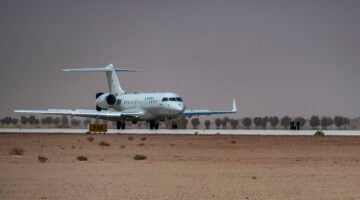
Separately, Air Force Secretary Troy Meink said the Air Force will continue work on two rapid prototypes for the E-7 Wedgetail, though he did not appear to fully commit to the program.
"So the focus is going to be on delivering AMTI [airborne moving target indication] capability very quickly," Air Force Secretary Troy Meink said.
Breaking Defense Europe will launch May 4 with Tim Martin and Elisabeth Gosselin-Malo as co-editors.
"I would say that we are at the point now where the technology has matured and it's commoditized, so that radar based AMTI from space is feasible," outgoing SDA Director Derek Tournear told Breaking Defense in an exclusive interview.
Grant Georgulis in this op-ed lays out why the E-7 program should not be cancelled, but rather developed alongside space-based AMTI.
Lt. Gen. DeAnna Burt, the Space Force’s deputy chief of space operations for operations, cyber and nuclear, also said the service expects to complete an analysis of alternatives by this fall for a separate but related effort to track airborne targets from the heavens.
The move is part of a long-running effort by Space Systems Command to reorganize acquisition programs along mission area lines, syncing up with the structure of the service's main operational arm, Space Operations Command.
Space-based capabilities could put current aerial tracking platforms in question, but top military brass have argued for options "from whatever domain or platform or system that comes [in]."
A request for information released by the service raises the possibility of integrating new upgrades on a platform “equivalent” to the E-7, though it’s not clear what that could be.
One of the key challenges for tracking enemy aircraft from space is that airplanes and drones move much faster than tanks, trucks and ships; confounded by the fact that satellites themselves also move around the Earth extremely fast.