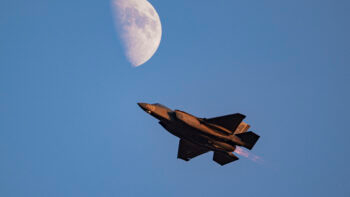
As F-35 readiness lags, Pentagon seeks $13.7 billion boost: GAO
The F-35’s full mission capable rate fell to to 25 percent in FY25, the government watchdog found.
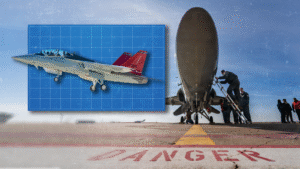
"We're confident in the design of the aircraft that we have," Air Force Program Executive Officer for Training Rodney Stevens told Breaking Defense. “We're ready to start proving that we can produce the aircraft at rate.”

Breaking Defense’s latest eBook brings together reporting from GEOINT 2026 on how intelligence leaders are shaping the future of space-based geospatial intelligence.
The Space Development Agency told Breaking Defense it "disagreed with the specifics of many of the report’s assertions," but promised to "work through" its recommendations.
The GAO's report was published the same day that the Navy released its own report on the V-22, saying it was committed to the program.
The office outlines 13 recommendations for the DoD and services that primarily revolve around revising weapon systems' test and evaluation policies to reflect “leading practices” for product development.
Nuclear experts from three different think tanks argue that it's time to take the idea of mobile launchers for America's ICBMs seriously.
“Today's GAO report confirms that we desperately need an independent review to hold Pentagon officials accountable for wasting and mismanaging billions of taxpayer dollars,” Sen. Elizabeth Warren told Breaking Defense.
The long awaited F-35 modernization effort is delayed at least another two years since the congressional watchdog's last estimate, and a total of at least five years from its original timeline.
DARC has been plagued with delays almost since its inception, according to a series of annual studies by the Government Accountability Office.
A spokesperson for Space Operations Command (SpOC) explained that government-led testing now will commence, but that an updated operational acceptance date "is not yet available."
Lockheed Martin’s ACES platform delivers a shared virtual battlespace that strengthens readiness, interoperability, and faster decision-making through advanced, integrated modeling and simulation capabilities designed for evolving global threats.
The troubled ICBM program was supposed to fly for the first time in 2026, but now the Air Force says that the date is unknown.
The GAO's report comes just days before the Navy is scheduled to host industry to discuss the new consolidated program.
The Government Accountability Office’s annual weapon system assessment also found that the Air Force is moving to field a hypersonic attack cruise missile in 2027, despite delays driving a compressed flight testing schedule.
Program officials overseeing the Next Generation Overhead Persistent Infrared (Next-Gen OPIR) effort told GAO investigators that the delay was caused not only by developmental problems, but also the Space Force's launch backlog.