You can’t have a fence high enough to protect your facility against drones
New threats, including downstream attacks, drive the need for improved tools to protect critical assets.

New threats, including downstream attacks, drive the need for improved tools to protect critical assets.

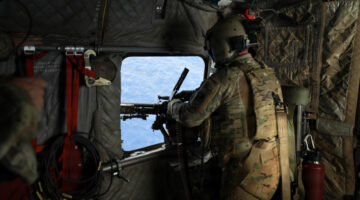
Distance, sparse infrastructure, and contested communications force a different approach to connectivity.
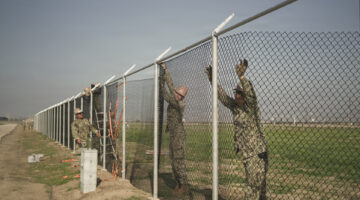
Traditional thinking about how to protect facilities must adapt to new threats such as drones or downstream attacks.
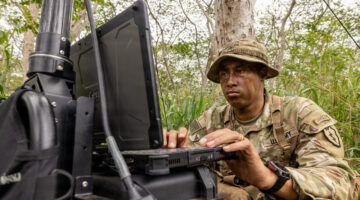
“It wasn't seamless, and we learned a lot,” Brig. Gen. Shane Taylor told Breaking Defense.

“What we’re building is a soldier that can adapt a piece of robotic kit to the mission, to the enemy, to the terrain,” said Maj. Gen. Jason Slider, commander of the John F. Kennedy Special Warfare Center and School.
The service’s new cybersecurity testing sandbox will stand up on Oct. 23, said acting Army CIO Gabe Chiulli, streamlining the current cumbersome, ad hoc arrangements for clearing commercial software for Army networks.

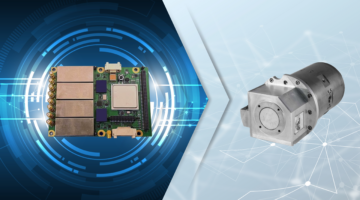
As threats continue to evolve, speed will increasingly depend on what is already available when the need emerges.

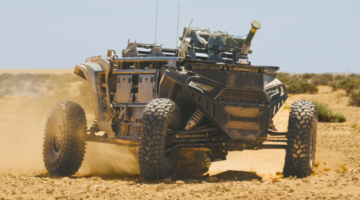
One commander, many robots: Fully autonomous ground vehicles are reshaping the battlefield.
The Army is making its first awards under Project Griffin, which eventually envisions AI prowling networks for malicious activity.
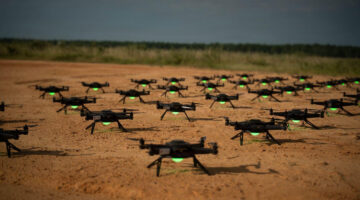
The Army innovation hub's first year also revealed the challenge of making sure promising technologies don’t stop at the prototype stage, FUZE Director Matt Willis told Breaking Defense.

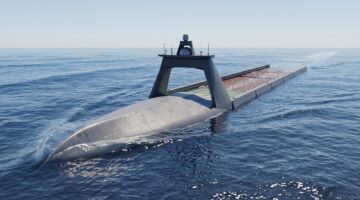
Systems that can work independently while still being part of a unit are critical to carrying out multi-domain operations.
“We do believe that there is an operational need and a solution based on our open standard, being able to address the sovereignty for the countries. We do believe that this solution is already fit for purpose regarding the Gulf,” Thales Vice President for Multi-Domain Operations Patrick Moreau told Breaking Defense.
AI is reshaping the Army’s approach to cyber, electronic warfare and command and control. At TechNet Augusta 2026, leaders outlined how they’re turning emerging technology into capabilities for the battlefield.
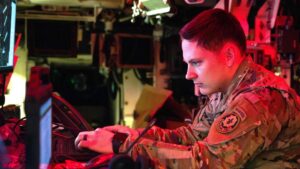
The next phase of Zero Trust reaches beyond users and devices, experts discussed during a Breaking Defense webinar.


Decentralized Embodied Collaborative intelligence enables better reconnaissance, logistics and combat capabilities.
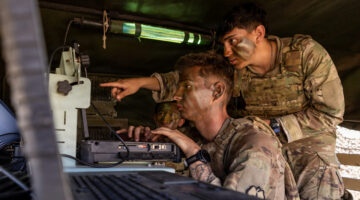
“Providing core software applications is a critical next step. It provides a foundation that can be rapidly scaled and trained with continuity across the force,” Joseph Welch, portfolio acquisition executive Command and Control (C2)/Counter C2, said in the release.
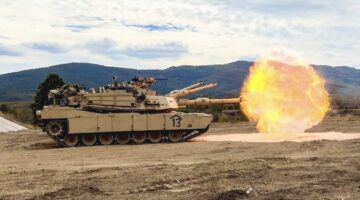
Like a militarized Alexa, Primordial Labs’ Anura AI is trained to understand soldiers’ voice commands and translate them into specific actions — but not deadly ones.