
SDA misses self-imposed deadline on orbital mesh network
“We are behind on that. We should be there already,” Space Development Agency Director G.P. Sandhoo said bluntly.
“We are behind on that. We should be there already,” Space Development Agency Director G.P. Sandhoo said bluntly.

Quantum sensors hold promise to serve as the core for new systems for positioning, timing and navigation (PNT) that could provide an alternative, or even replace, today's Global Positioning System satellites.


Avoiding vendor lock and providing more room for sensors and upgrades are critical considerations.

Even just "mapping the supply chain is hard stuff," said Reza Nikfarjam, deputy director of the Credit Program at the Pentagon's Office of Strategic Capital (OSC).
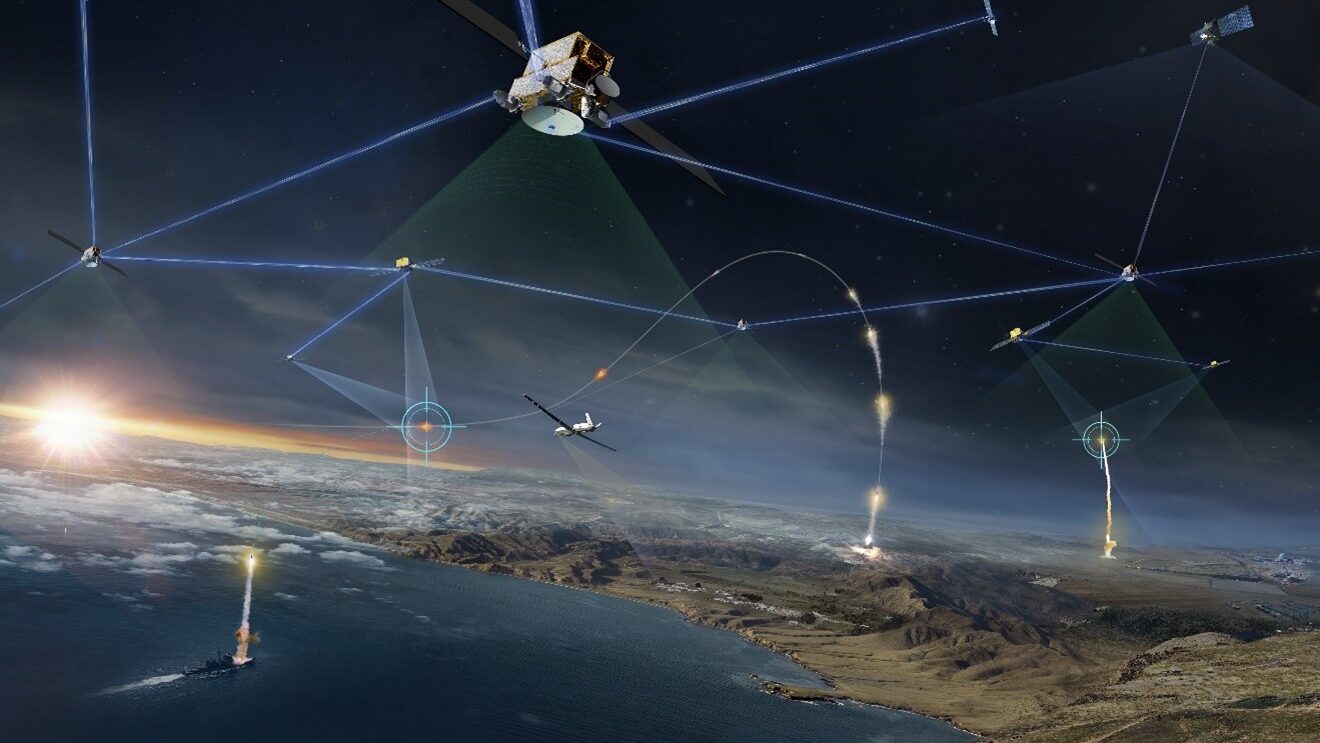
SDA originally had hoped to begin launching the Tranche 1 Transport and Tracking Layer constellations for its Proliferated Warfighter Space Architecture stationed in low Earth orbit in September 2024.

The Space Development Agency "has taken steps to develop laser communications technology but has not yet fully demonstrated it in space," finds a report released today by the Government Accountability Office.

“Others have already demonstrated the proof of concept that a laser link can be established between a satellite and a ground-station but we are proposing an actual product that exists and can be bought off-the-shelf," Jean-Francois Morizur, co-founder and CEO of Cailabs, told Breaking Defense.


"Being able to tell the commander you don't need to do something is actually a pretty powerful message, as well."


A new constellation with laser comms and compatibility with the Space Development Agency's Proliferated Warfighter Space Architecture is now taking shape.

"Translator" payloads are necessary because many of today's commercial remote sensing providers do not, and will not, have the ability to equip their satellites with optical inter-satellite links (OISLs) required to link to the agency's Transport Layer birds, said SDA Director Derek Tournear.

"I think what people will find is that this type of advancement, going from ground-to-space, changes the whole space economy," Aalyria's CEO Chris Taylor said. "I think it's going to be monumental."

Mandrake 2's next trick, after demonstrating optical intersatellite links, will be using lasers for space-to-ground communications.

There is no single answer to the drone threat, pushing the Pentagon toward a broader mix of defenses.

Slingshot 1 is a 12-unit CubeSat, about the size of a shoebox, carrying 19 experimental payloads — 16 of which were designed by Aerospace's lab. The experiments range from on-board processing software to a novel small thruster engine.

"I'm focusing on laser communication terminals because I think that's the strongest candidate to build in the US," Rob Geckle, CEO of Airbus U.S. Space & Defense, told Breaking Defense.

Included among the STP-3 mission's payloads is NASA’s Laser Communication Relay Demonstration (LCRD) aimed at enabling higher speed communications across the vast region of space between the Earth and Mars.

Two of the experiments, each involving two satellites, are focused on laser links: one between satellites themselves; the other from satellites to a MQ-9 Reaper drone on the ground.