
How the Pentagon wants to buy cyber outcomes, not equipment
The Pentagon has been exploring a new paradigm dubbed Cyber Effects-as-a-Service, aiming to purchase specific outcomes as opposed to bespoke capabilities.
The Pentagon has been exploring a new paradigm dubbed Cyber Effects-as-a-Service, aiming to purchase specific outcomes as opposed to bespoke capabilities.

In an interview with Breaking Defense, Gen. Francis Donovan said autonomous systems are “not just for testing anymore” but “taking the fight to the enemy.”


Architecture that linked sensors, C2, RF effects, and lasers into a distributed c-UAS kill chain.

“There's a lot of positive signaling, but we need to see the whites of the eyes: We need to see sustained, normalized demand,” said James Slider, CEO of Performance Drone Works.
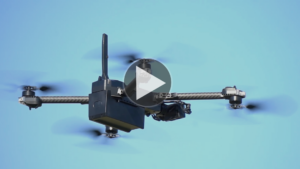
CTO Alex Miller sits down with Breaking Defense's Carley Welch to discuss the Army's unmanned initiatives.

“We're meeting with CENTCOM and doing the assessments right now from an installation perspective. Part of this is what will the global posture be in the future, and what does that require us to have?” a senior defense official told reporters today.

“We could continue to solely invest in it ourselves with the support of our current shareholders. We could think about broadening that base of investments, or we could think ... about separating the business,” Northrop CEO Kathy Warden said.


New threats, including downstream attacks, drive the need for improved tools to protect critical assets.
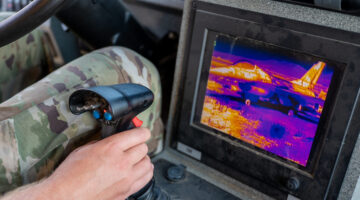
Liz Miranda, Army Materiel Command's executive deputy to the commanding general, said a White House order's requirements for companies to map their supply chain down to the raw material level “is no easy task.”

Democrats say a victory in November would put military assistance to Kyiv back on the congressional agenda.

Senior officials also revealed that the Defense Autonomous Working Group has been absorbed into a new Task Force Autonomous Warfare, which sits inside the Special Operations Command.
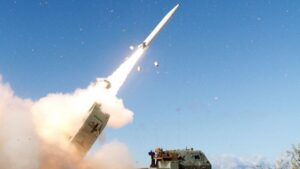
The deal will pave a path for Avio USA to become a new provider of motors on Lockheed Martin’s Extended Range GMLRS and the Precision Strike Missile.


Lithium-metal batteries are one way to break the weight and endurance limits of today’s unmanned systems.

The Army’s G-2 Andrew Evans told Breaking Defense the program is currently "completely" on cost and schedule, but a budget impasse threatens plans.

The Army gleaned a trio of observations about how those balloons operated, but it is not yet clear what path the service will pursue when it comes to stratospheric sensing capabilities, Andrew Evans said.

The Army innovation hub's first year also revealed the challenge of making sure promising technologies don’t stop at the prototype stage, FUZE Director Matt Willis told Breaking Defense.
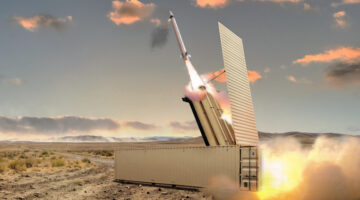
The aerospace giant intends to invest hundreds of millions of dollars of its own cash in the missile alone, alongside additional investments in its seeker and solid rocket motor, said Tim Cahill, president of Lockheed's missiles and fire control division.