Meeting Zero Trust goals while maintaining information dominance
Balancing security and access to data are critical to providing users with trustworthy, reliable data for real-time decisions.

Balancing security and access to data are critical to providing users with trustworthy, reliable data for real-time decisions.

Rather than getting networks back online quickly after an outage, focus more on defending the network in the first place, Air Force Chief Information Security Officer Aaron Bishop said.


Why edge and endpoint security can’t be an afterthought.

Weapon systems procurement is also evolving to include new Zero Trust cybersecurity measures that don't affect mission execution.
Convergence of offensive and defensive cyber is reshaping how they're developed, fielded, and integrated.


The artificial intelligence arms race will require the U.S. to invest heavily in compute power.


Securing data can help stop attack vectors like API calls and cloud uploads.

Knowing when to build on commercial systems and when to develop something new can be the difference between parity and information dominance.

The webinar originally scheduled for October 9th, featuring DoD CIO Zero Trust leader Randy Resnick, has been postponed. Please stay tuned for further updates on rescheduling.

Improved artificial intelligence and security is just a matter of taking advantage of chips already built into defense systems.

Jane Rathburn wrote about her exit online, but did not disclose why she made the move.

The move comes as the department is pushing to bolster its cybersecurity for weapons systems in other areas, such as establishing zero trust for weapons systems by 2035.

The network transport architecture for NGC2 could be a hybrid approach that combines high assurance communications with 5G, WiFi, and multi-orbit satellites.

“The CMMC certification will be proof — trust, verify that those companies have the cyber posture needed to secure the data that is critical to national security, like on programs like the F-47,” Katie Arrington, who is performing the duties of the DoD CIO told Breaking Defense.

Weapons systems are the last element of the Pentagon’s Zero Trust Implementation Plan to adopt zero trust architectures.
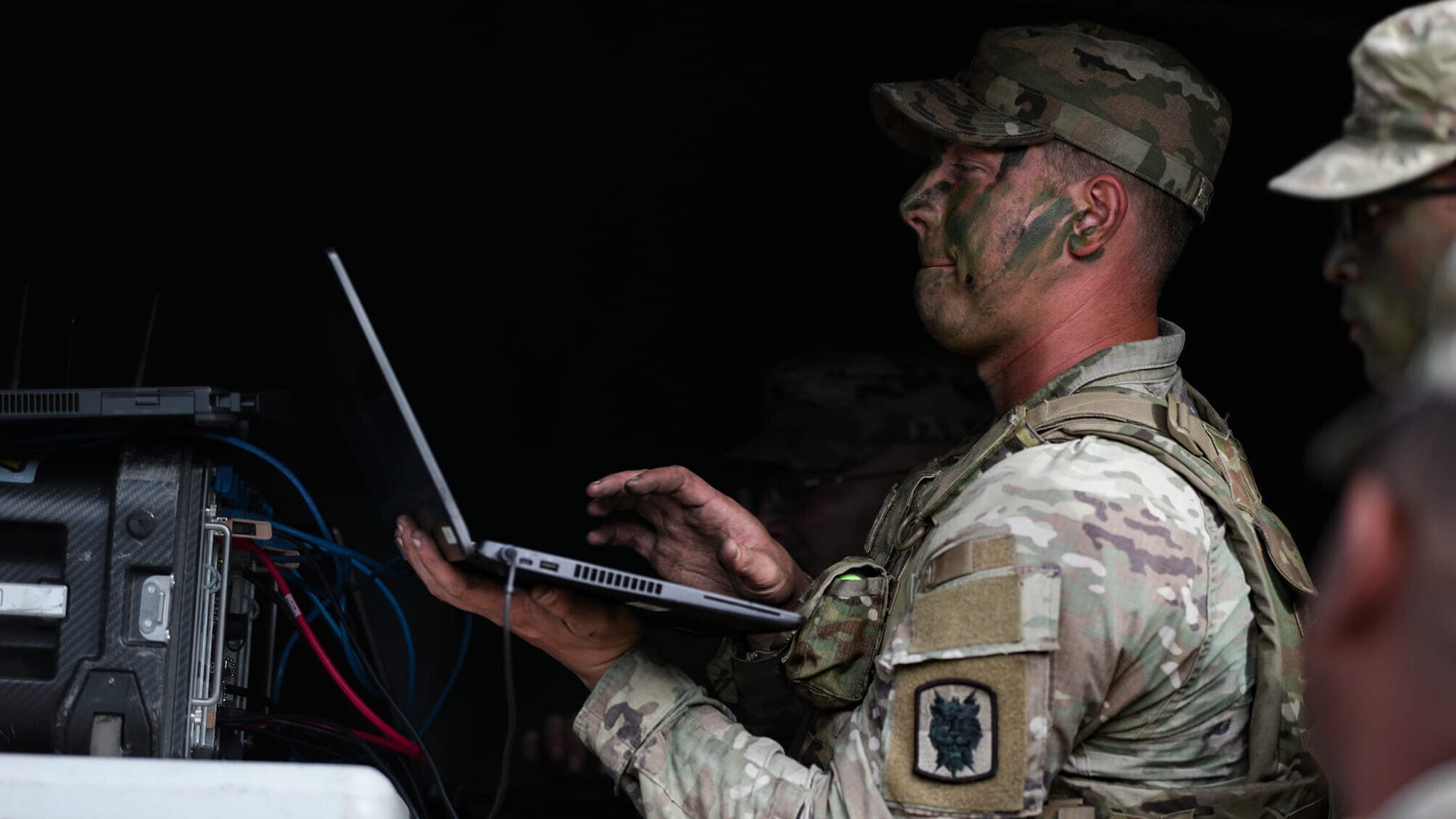
In the years since the first version of the plan, "a confluence of emerging technologies and events has transformed the world into a multidomain, persistently contested information environment that demands a far more data-centric approach to harness the power of the Army Network to fight and win," the Army said.
DISA plans to first achieve federated ICAM connection within the Army, followed by the Department of the Navy and Department of the Air Force.