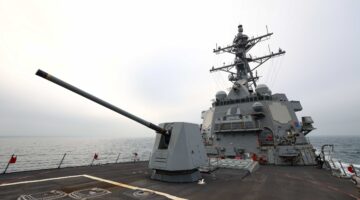
America is sailing through the Taiwan Strait less. Does it matter?
A Heritage Foundation study shows a significant drop in Taiwan Strait transits by the US military under the second Trump administration.
A Heritage Foundation study shows a significant drop in Taiwan Strait transits by the US military under the second Trump administration.

Following the port visit to Singapore, the ship will link up with the UK-led carrier strike group centered on the aircraft carrier HMS Prince of Wales, where the Australians will integrate and train with the multinational carrier strike group.

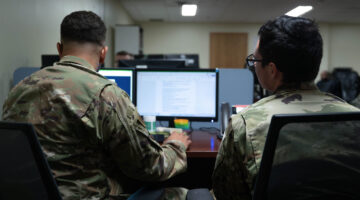
AI tools are critical components of modern warfare, but must be protected to ensure they are reliable.

Collin Joh, an analyst at the Institute of Defense and Strategic Studies of Singapore's Nanyang Technological University, noted that this effort is part of a "progression from just bilateral to trilateral, and now quadrilateral maritime cooperative activity (MCA) formats" in the region.

Keep your eyes on the Second Scarborough Shoal and other atolls in the South China Sea, where China has pressed an increasingly aggressive and dangerous campaign.

The biggest strategic shift in the Indo-Pacific was clearly the combination of China's economy faltering at the same time as turmoil roiled the top echelons of the Chinese Communist Party and its government.

"The big strategic goal is a Chinese-led international order, a Chinese century, where the US strategic primacy has ended. The US can basically move back to the Western Hemisphere and focus on itself, which is what he was saying," Malcom Davis, China expert at the Australian Strategic Policy Institute, said.
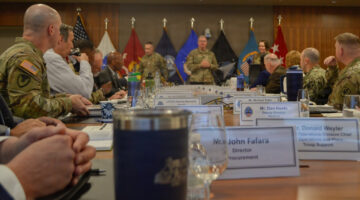
Supply chains are only as strong as their weakest link, which has been repeatedly proven to be true over the last few years.

Gen. Wei Fenghe described the US Indo-Pacific strategy as "an attempt to build an exclusive small group in the name of a free and open Indo-Pacific." It is designed "to create conflict and confrontation, to contain and encircle others."

"Everywhere we went, we were confronted with Chinese. They would come up to us in the hotels, out in the streets and just kind of get really in our face," Marine Maj. Gen. David Furness said of his recent service in East Africa. "And they'd basically tell us, we're coming after you. They weren't shy about it at all."

"Unfortunately, Beijing’s unwillingness to resolve disputes peacefully and respect the rule of law isn’t just occurring on the water. We have also seen aggression against India… destabilizing military activity and other forms of coercion against the people of Taiwan… and genocide and crimes against humanity against Uyghur Muslims in Xinjiang," Secretary Austin said.
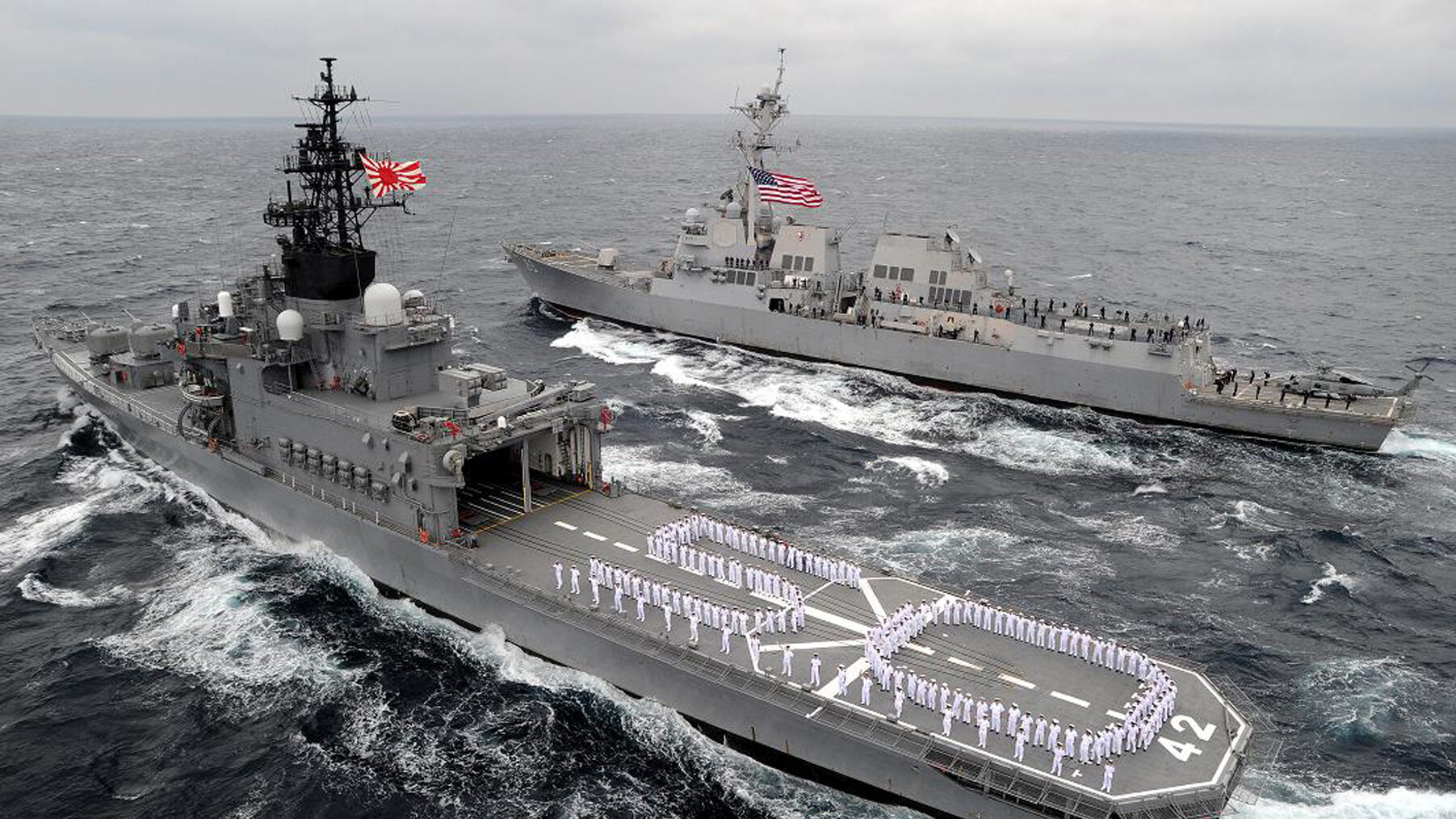
Chinese actions in the Pacific are posing a "grave concern" for Japan's military, a new official paper concludes.
A commercial prototype in a sandbox is different from deploying AI across classified networks.

Esper said "I've issued no orders to withdraw from the Republic of Korea" -- but rotational deployments may replace units permanently stationed there.

In rejecting Chinese claims to the South China Sea, the Trump administration is in the opening throes of a rhetorical offensive, promising more concrete moves
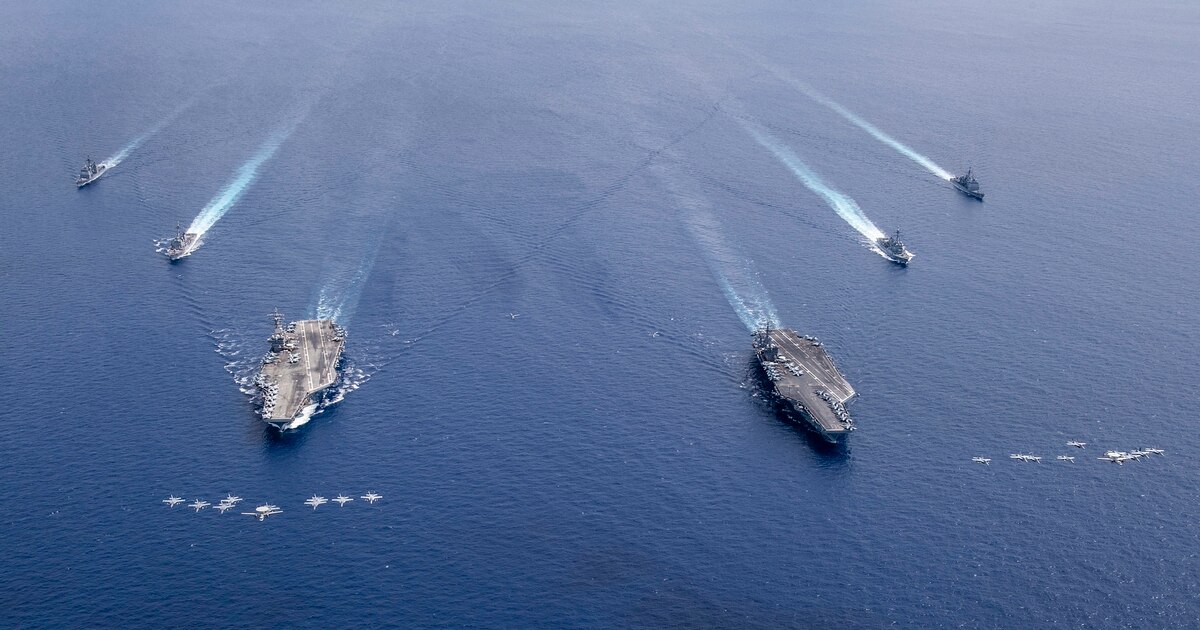
"Beijing’s approach has been clear for years," Mike Pompeo says. "In 2010, then-PRC Foreign Minister Yang Jiechi told his ASEAN counterparts that “China is a big country and other countries are small countries and that is just a fact.' The PRC’s predatory world view has no place in the 21st century."

WASHINGTON: China is not ready to wage war far beyond the shores of Taiwan, but it is pressing hard to develop some advanced weapons and increasingly wants to project power beyond its shores with an increasingly capable military. Those are the fundamental conclusions of the Defense Intelligence Agency in a unique report with its roots […]